


The World Cup has the whole South Shore playing again. Kids are in the yard reenacting goals, the town fields are full, and more than one dad has discovered mid-cookout that a first touch and a hamstring are two different things. Summer here is busy even before you add soccer to it – the garden, the beach traffic, the drive to the Cape.
At Peak, the injuries we see this time of year are rarely dramatic. They are the everyday kind: a tweaked hamstring at a pickup game, a sore back after landscaping, a stiff neck after the bridges. The fix is the same one we use with our athletes – prepare, move well, recover on purpose.
Quick hits
Warm up before you play or garden. Ease into full-speed soccer – your skills aged better than your hamstrings. Lift with your legs in the yard, brace your back on the road, and respect a ‘pop.’ Lingering pain or an unstable joint? We do return-to-sport for a living.
The Backyard Messi problem
Most summer soccer strains come from a body that has not sprinted or cut in months going full tilt at a cookout. A proper warm-up and an honest pace prevent the majority.
- Warm up like an athlete: jog, leg swings, and a couple of build-up sprints before you go 100 percent.
- Open at 80 percent. Ramp speed and cuts rather than launching into them cold.
- Hydrate and rotate out when tired – fatigue is when tweaks happen.
Is it just sore, or is it real?
Normal: a day or two of general soreness. Keep moving and it eases.
Get it looked at: a ‘pop’ with swelling, a knee or ankle that gives way, sharp calf or heel pain, or not being able to put weight on it. Those point to a muscle or ligament injury such as an ACL or an Achilles issue – the kind of thing our return-to-sport team assesses every day.
Prepping for the high school season
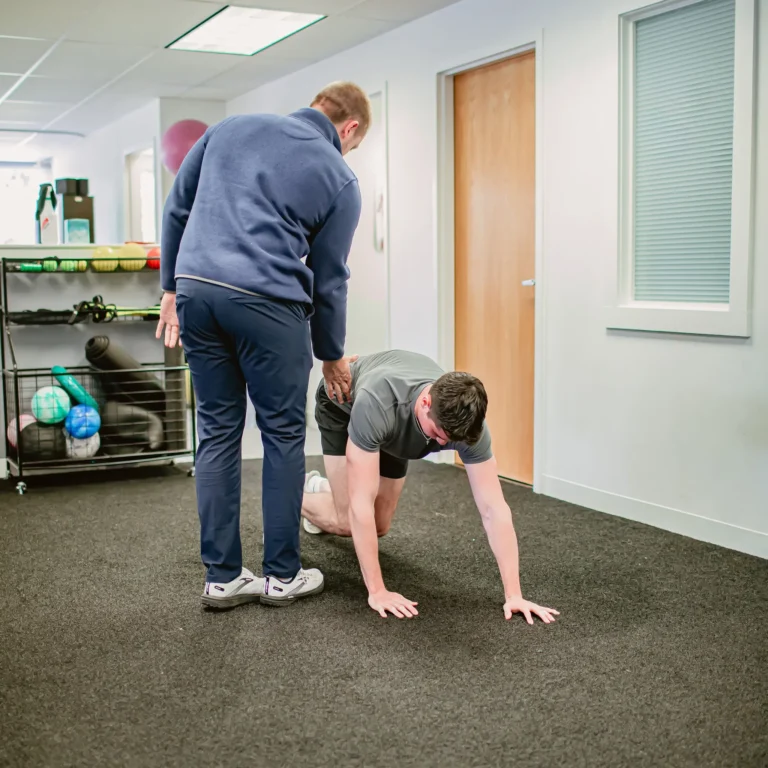
Tryouts and double-sessions are close. What you do over the next few weeks decides how the first ones feel.
- Build up gradually – add running and touches over weeks, not all at once.
- Warm up with the FIFA 11+ every session; it is proven to cut soccer injuries.
- Strengthen hamstrings and single-leg control (Nordic hamstring curls help), and fix nagging issues now. A quick movement or running screen at Peak can catch a weak link before the season does.
Why yard work leaves you sore
Yard work is a real workout most of us start cold. Repeated bending and lifting fatigues the lower back.
- Warm up, hinge at the hips and lift with your legs, and switch tasks every 20 minutes.
- Use long-handled tools and a cart; hydrate and take breaks.
Staying comfortable on long drives
Sitting still stiffens your joints and tires your postural muscles; luggage adds a spike of load.
- Support your lower back, recline slightly, and move every 60-90 minutes.
- Lift bags in stages and let rolling luggage carry the weight.
When to see a physical therapist
When an ache lasts past a week or two, keeps returning, or holds you back – and promptly for any pop, swelling, or unstable joint.
We look at how you move, including gait and running mechanics, so it does not keep resurfacing. In Massachusetts, direct access lets you start without a referral, and most new patients are seen within one to two business days.
Get back to your peak. Book across the South Shore – Braintree, Quincy, Norwell, Hanover, Scituate, Pembroke, Plymouth and more.
This article is for general educational purposes and is not a substitute for personalized medical advice, diagnosis, or treatment. Seek prompt care for a ‘pop’ with swelling, a joint that gives way, or inability to bear weight.
Frequently Asked Questions
How do I avoid pulling a muscle in a pickup soccer game?
Warm up with jogging and build-up sprints, start around 80 percent, hydrate, and sub out when tired. Cold and fatigued are when strains happen.
Is my soccer injury serious?
Everyday soreness fades in a day or two. A ‘pop’ with swelling, a joint that gives way, or inability to bear weight needs an evaluation – it can signal a tear or ACL injury.
How should my high schooler prep for soccer preseason?
Ramp gradually, use the FIFA 11+ warm-up every session, and build hamstring and single-leg strength. A movement screen can catch weak links early.
Do I need a referral to see a PT in Massachusetts?
No – direct access lets you start without one, and most new patients are seen within one to two business days.