Foot and ankle pain has a way of shrinking your world fast. One bad step getting out of the car in Quincy, one stubborn heel that flares up on your first few steps in the morning, one ankle that still feels loose after a pickup game or weekend run, and suddenly normal South Shore life gets harder than it should be.
That's usually when people start doing the same things. They wait a few weeks. They change shoes. They stop walking as much. They try to “push through it” on the boardwalk, at youth sports, on the golf course, or during a commute that already feels long enough. Sometimes that works for mild irritation. A lot of the time, it just drags the problem out.
The good news is that most foot and ankle issues respond well when treatment matches the problem and the timing is right. For people looking for foot and ankle physical therapy on the South Shore, MA, the goal isn't just pain relief. It's getting back to the things that make local life feel normal again, with a plan that makes sense for your body, schedule, and activity level.
Table of Contents
- Get Back on Your Feet on the South Shore
- Foot and Ankle Conditions We Treat Across the South Shore
- Your Personalized Treatment Plan at Peak Physical Therapy
- What to Expect From Your Foot and Ankle Recovery
- Simple Home Exercises to Support Your PT
- Your Guide to Starting Physical Therapy on the South Shore
- Find Foot and Ankle Care Near You Today
Get Back on Your Feet on the South Shore
A lot of foot and ankle problems don't start with one dramatic injury. They develop gradually. A heel starts barking after a walk in Weymouth. A forefoot gets sore during a long day on your feet in Braintree. An ankle sprain from months ago still feels “off” every time you try to cut, pivot, or jog.
That's frustrating because these problems interfere with ordinary routines first. Walking the dog. Standing at work. Getting through errands. Climbing stairs without thinking about it. By the time many people look for help, they're not asking for perfection. They just want to move without guarding every step.
Local life puts real demands on your feet
South Shore residents don't all need the same thing from rehab. One person wants to get back to weekend runs. Another wants to coach from the sidelines without limping. Another just wants to keep up with work, family, and a normal day without swelling and pain at night.
That difference matters. A good treatment plan should reflect what you do.
- For active adults: Rehab has to rebuild confidence with walking, hills, uneven ground, and higher-impact activity.
- For parents and busy professionals: The plan has to be efficient and realistic enough to fit into a packed week.
- For older adults: Balance, gait, and steady foot placement often matter just as much as pain relief.
Practical rule: If you've changed how you walk, stand, or exercise because of foot or ankle pain, it's worth getting it assessed. Compensations tend to create second problems.
What usually helps is simple, not fancy. Figure out what tissue is irritated. Reduce the wrong kind of stress. Restore motion where it's missing. Build strength and balance where control has dropped off. Then return to activity in a way that doesn't keep re-triggering the same pain.
That's the core of good foot and ankle physical therapy on the South Shore, MA. Local care should make it easier to start early, stay consistent, and keep your plan connected to real life here, not a generic handout that could apply to anyone anywhere.
Foot and Ankle Conditions We Treat Across the South Shore
Some foot and ankle issues come from sports. Others come from work, long periods of standing, walking changes, old injuries, or shoes that don't match the job you're asking your body to do. The pattern matters more than the label.
What tends to walk through the door
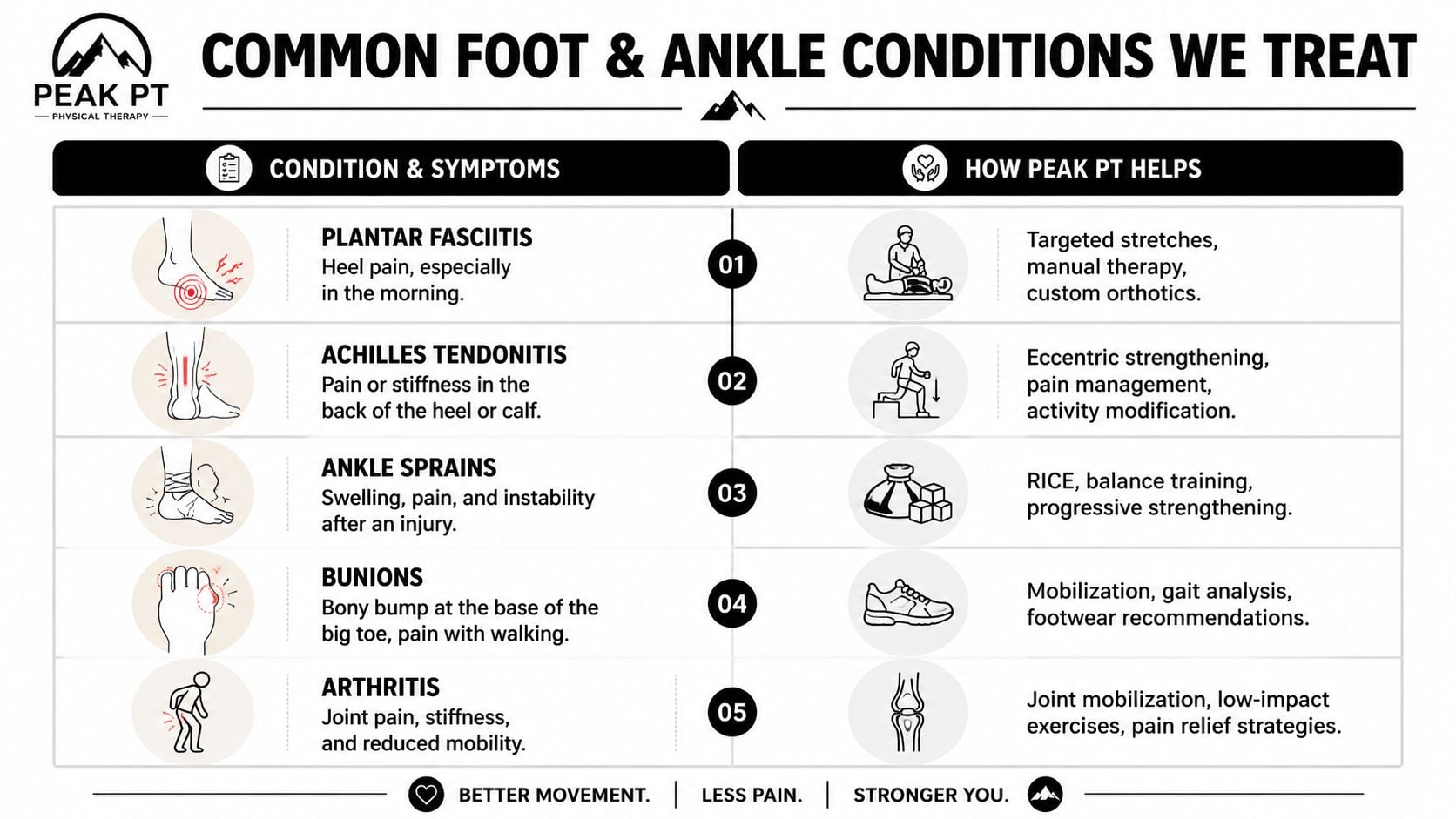
Here are some of the problems that commonly benefit from physical therapy:
- Ankle sprains and lingering instability: This is one of the biggest reasons people seek foot and ankle care, especially athletes and active adults. Ankle sprains represent about 10% to 30% of all sports injuries, and recurrence rates can reach about 40% to 70% if rehabilitation is incomplete, which is one reason South Shore care pathways often emphasize non-surgical treatment first, including PT, before moving toward more invasive options, according to South Shore Health's foot and ankle care guidance.
- Plantar fasciitis: Usually shows up as heel pain, often worse with the first few steps in the morning or after sitting.
- Achilles tendon pain: Common in runners, walkers, and people whose activity increased faster than their tissues were ready for.
- Tendon irritation around the ankle or foot: This can include pain along the inside or outside of the ankle, especially with walking, stairs, or uneven ground.
- Arthritis and stiffness: People often notice this as pain with longer walks, reduced push-off, and trouble with stairs or prolonged standing.
- Post-surgical rehab: After a procedure, people usually need guided progression for motion, strength, gait, and return to activity.
- Balance and gait problems: These may follow injury, surgery, or gradual changes in strength and control.
For people dealing with pain during everyday walking, this guide on ankle pain when walking can help you spot common patterns and know when an evaluation makes sense.
When a “small” foot problem becomes a bigger one
The foot and ankle don't work in isolation. If your ankle stops moving well, your body finds another way to get the job done. That often means a shortened stride, toeing out, shifting weight to the other leg, or stiffening through the knee and hip.
That's why waiting too long can be costly in a non-financial sense. The original irritation may still be there, but now your movement pattern is messier too.
A useful example is the runner who says their feet go numb only on longer efforts. Sometimes that's footwear or lacing. Sometimes it's swelling, loading, or mechanics. If that sounds familiar, this article on preventing running foot numbness gives a practical starting point. The bigger issue is whether the symptom is isolated or part of a broader foot and ankle problem that needs a more personalized plan.
A foot problem doesn't have to be severe to deserve attention. It just has to be limiting what you want or need to do.
Your Personalized Treatment Plan at Peak Physical Therapy
The most effective rehab plans aren't built around a diagnosis alone. They're built around how irritable the tissue is, what movements are limited, what strength has been lost, and what you need to get back to.
Why load management matters
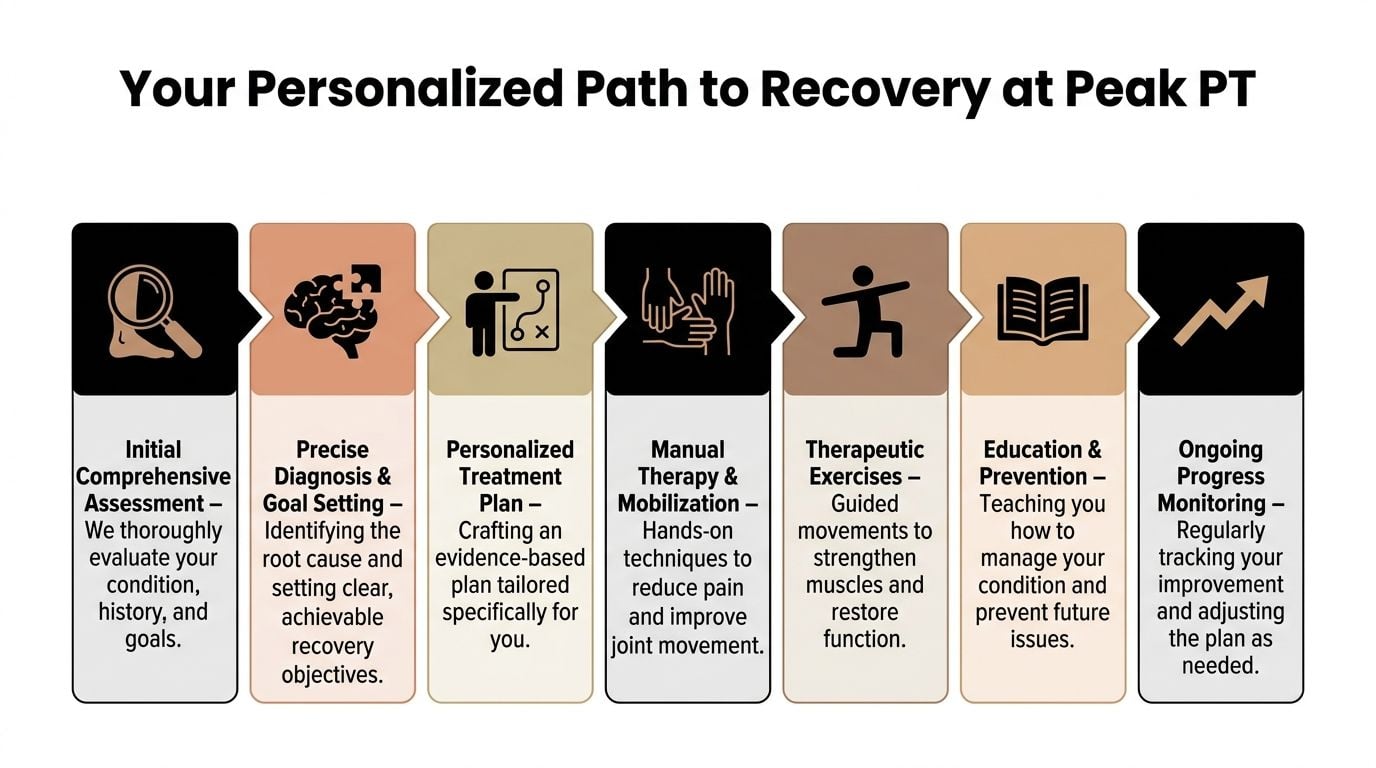
The key concept is load management. For foot and ankle rehab, that usually means you don't do nothing, and you also don't jump right back into full activity because the pain has eased for a day or two. South Shore orthopedic guidance describes physical therapy as a standard non-surgical option before splinting, orthotics, injections, or surgery when pain and mobility issues persist, and notes that effective rehab moves from swelling control and protected motion into progressive restoration of mobility, strength, and balance through South Shore Orthopedics foot and ankle care.
In practice, that means your program should change as your symptoms change.
| Phase of care | What the focus usually is |
|---|---|
| Early | Calm pain, manage swelling, protect irritated tissue, keep safe movement going |
| Middle | Restore joint motion, improve calf and foot strength, retrain balance |
| Later | Build walking tolerance, push-off strength, higher-level control, and activity-specific capacity |
If someone skips steps, problems tend to linger. If they stay in the protective phase too long, stiffness and weakness become the next issue.
What treatment may include
A strong plan usually blends several tools rather than leaning on one favorite technique.
- Hands-on treatment: Manual therapy may help improve joint motion, reduce guarding, and make walking feel more natural.
- Strength work that fits the problem: Some people need calf loading. Others need foot intrinsic work, ankle control, hip support, or single-leg stability.
- Balance and proprioception training: This matters a lot after sprains and for anyone who feels wobbly on uneven ground.
- Gait retraining: If your walking pattern has changed, exercises alone won't fully solve it.
- Activity modification: You may need a short-term change in mileage, impact, footwear, stairs, or work tasks so the irritated area can settle.
- Adjunct services when appropriate: Dry needling or aquatic therapy may fit certain cases, depending on the presentation and the person.
Peak Physical Therapy and Sports Performance provides orthopedic rehab, sports injury management, balance therapy, aquatic therapy, and post-surgical care across South Shore clinics. For patients, that means a foot or ankle plan can be built around the problem in front of them rather than squeezed into a one-size-fits-all template.
The right plan should feel progressive, not random. You should understand why you're doing each part and what would count as real progress.
Good care also accounts for trade-offs. Rest alone usually doesn't rebuild tolerance. Stretching alone rarely fixes an unstable ankle. Supportive shoes may calm symptoms, but they won't replace lost strength and control. Treatment works best when each piece has a reason.
What to Expect From Your Foot and Ankle Recovery
Recovery goes better when expectations are realistic. Individuals often achieve better results when they know what phase they're in, what they should be able to do now, and what still needs work before they push further.
Recovery usually moves in phases
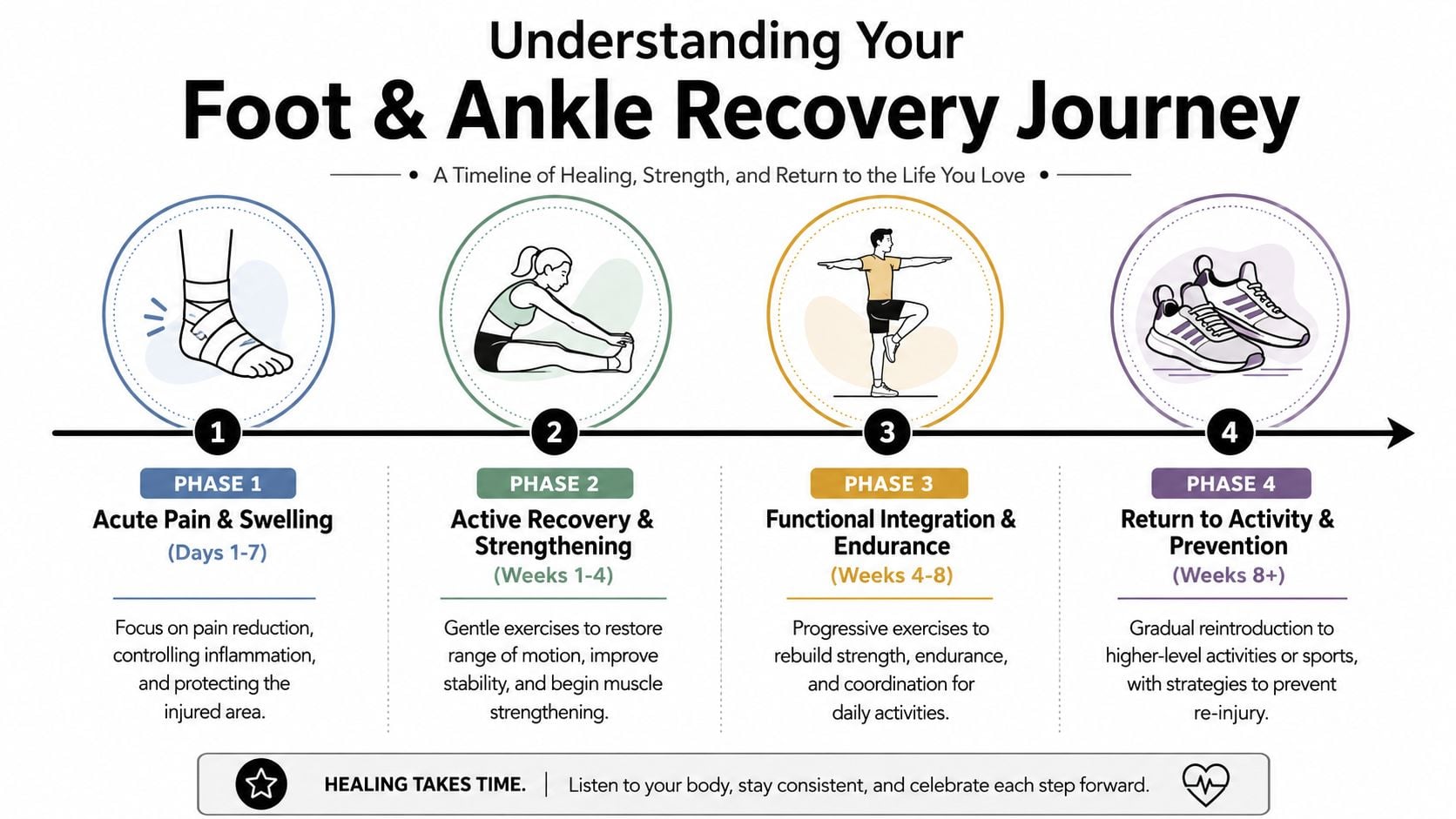
Early on, the priorities are usually straightforward. Reduce pain. Settle swelling if it's present. Protect the irritated area without completely shutting movement down. That may involve temporary changes in walking, exercise, or footwear.
Then the work gets more active. Motion has to improve. Strength has to come back. Balance needs to be retrained. For many people, this is the point where things feel better enough to get careless. That's often where setbacks happen.
A simple way to think about it:
- First, calm it down: Reduce irritation and keep safe motion going.
- Then, rebuild basics: Range of motion, calf strength, foot control, and balance.
- Then, return to function: Longer walks, stairs, uneven ground, faster movement, sport, or work demands.
For readers who want a deeper educational breakdown of anatomy and recovery principles, Highbar Health has broader resources at highbarhealth.com. That's a good place for condition education, while local clinic care stays focused on your actual recovery plan.
Return to sport should be earned
This matters most for ankle sprains and chronic instability, but it applies broadly. Feeling better isn't the same thing as being ready. Evidence-based sports medicine guidance continues to emphasize function-based return-to-sport criteria, including milestones like hop testing, strength symmetry, and restored proprioception, because those are more reliable than clearing someone by time alone, as discussed in this review of return-to-activity principles after ankle injury.
That's especially relevant on the South Shore, where people often want to get back to running, field sports, court sports, training, or long days on their feet as soon as symptoms ease.
If you can walk without pain but still can't trust a cut, hop, landing, or quick change of direction, you're not all the way back yet.
The same logic applies to non-athletes. If your goal is a full workday, a beach walk, or keeping up with grandkids, rehab should test and prepare for those demands, not just measure whether you're less sore than you were two weeks ago.
Simple Home Exercises to Support Your PT
Home exercise matters because the clinic is only part of the picture. The right plan gives your body frequent, manageable input between visits so progress keeps moving.
A few examples people often use
These are common examples. They're not a universal prescription, and they shouldn't replace an evaluation.
- Calf stretch against a wall: Often useful when ankle motion is limited and walking mechanics feel stiff.
- Towel scrunches or short-foot work: Can help wake up the muscles that support the arch and improve foot control.
- Ankle alphabet or gentle range-of-motion drills: Often used early when stiffness is a bigger issue than heavy loading.
- Double-leg to single-leg calf raises: A common progression for rebuilding push-off strength.
- Single-leg balance near a counter: Helpful when stability and confidence are lagging after a sprain.
If you're recovering after a sprain, this guide on how to strengthen ankles after sprain is a useful next read.
What home exercise should not do
Home work shouldn't spike your symptoms for the rest of the day. It also shouldn't be so easy that nothing changes.
A better target is a dose that challenges the area without making it angrier by evening or the next morning. That's one reason personalized plans work better than copying random exercises online. The same heel pain diagnosis can call for very different home programs depending on whether the underlying issue is stiffness, overload, weakness, balance loss, or a walking pattern that keeps feeding the problem.
A good therapist adjusts the plan as you improve. Some exercises get removed quickly. Others become more specific to your goals. The point isn't to collect a long list. The point is to do the right few things consistently.
Your Guide to Starting Physical Therapy on the South Shore
Starting is usually easier than people expect. The bigger challenge is often deciding to stop waiting.
What to bring and how to prepare
For a first visit, it helps to bring a few basics:
- Your insurance information: Staff can help you understand benefits and next steps.
- A list of symptoms and questions: Think about what makes the pain worse, what helps, and what activities you're avoiding.
- Relevant imaging or referral information if you have it: Helpful, but not always necessary to begin.
- Shoes you wear often: Everyday footwear can tell a lot about what your foot and ankle deal with each day.
Wear something you can move in comfortably. Expect to talk, walk, and perform a few movements so the therapist can see what's happening, not just where it hurts.
When to get checked sooner
Not every foot or ankle issue should wait on a routine timeline. Some symptoms deserve prompt medical attention.
Watch for red flags such as:
- Inability to bear weight: If you can't take a few steps, don't just “give it a couple days.”
- Sudden major swelling or visible deformity: Especially after a twist, fall, or impact.
- Severe pain that doesn't settle with rest: That can suggest something more than a mild strain or sprain.
- New numbness, unusual color change, or other alarming symptoms: Those need proper evaluation.
For everyone else, earlier care usually means a cleaner recovery. It's easier to correct a movement problem before you've spent weeks limping, unloading one side, and changing your whole routine around the injury.
Getting help early doesn't mean the problem is serious. It often means you're making it less likely to become serious.
Find Foot and Ankle Care Near You Today
If your foot or ankle is limiting how you move, waiting for it to magically resolve usually isn't the most efficient plan. Targeted rehab can help restore motion, rebuild strength, and get you back to daily life with a clearer path forward.
For people searching for foot and ankle physical therapy South Shore MA, convenience matters almost as much as clinical skill. When care is close to home or work, it's easier to stay consistent, and consistency is where progress usually happens.
South Shore locations
There are South Shore clinic options in:
- Braintree
- Quincy
- Weymouth
- Cohasset
- Duxbury
- East Bridgewater
- Hanover
- Kingston
- Milton
- Norwell
- Pembroke
- Plymouth
- Scituate
If you're near Quincy and want to explore local care options, this page on physical therapy in Quincy, MA is a practical place to start.
Why local access matters
Foot and ankle rehab works best when the plan fits your real week. That means appointments you can reach, exercises you'll consistently do, and progressions that match whether your goal is walking comfortably, training again, or keeping up with work and family.
Local care also means local context. South Shore routines aren't generic. They include beach walks, uneven ground, youth sports fields, commuter schedules, and long stretches on your feet. Treatment should reflect that.
If you've been limping through it, modifying every activity, or wondering whether this is “just something you have to live with,” it's worth getting a real plan.
If foot or ankle pain is slowing you down, Peak Physical Therapy and Sports Performance can help you take the next step with care that's close to home across the South Shore. Book an appointment to get a personalized evaluation, clear answers, and a practical recovery plan built around how you live, work, and move.