


When you’re in pain, figuring out whether to use ice or heat can feel like a confusing choice. But as physical therapists, we can tell you the basic principle is actually quite simple: ice is for new, swollen injuries (think the first 48 hours), while heat is for chronic muscle stiffness and aches that aren’t swollen.
We understand how frustrating it is to be sidelined by pain, wondering if you're making the right choice for your recovery. Knowing which one to grab right away can make a huge difference in how you feel and how quickly you get back to your life.
A Quick Guide to Using Ice vs Heat
Being in pain is frustrating, and it’s even worse when you’re not sure what to do about it. Whether you twisted an ankle on a weekend run around a local Massachusetts park or you're dealing with a stiff back from your daily commute, the first step to relief is deciding between an ice pack and a heating pad.
The right choice comes down to one thing: are you trying to control inflammation or increase blood flow? This flowchart breaks it down to help you decide.
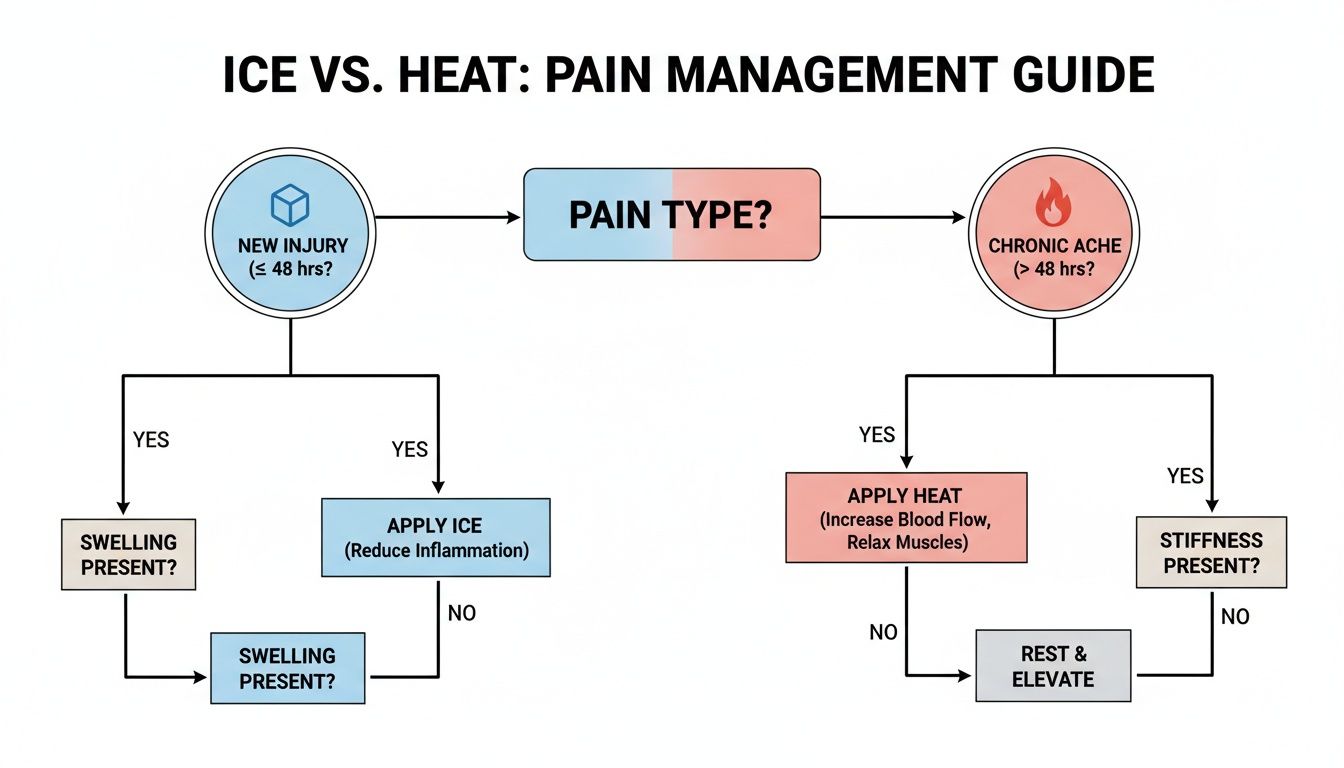
As you can see, the main factor is whether your pain is from a fresh injury or a lingering, chronic ache.
To give you an even quicker reference, our physical therapists at Peak Therapy put together this simple table. Think of it as a cheat sheet for immediate pain management, so you can make a confident choice when you need it most.
Quick Guide: Ice vs Heat at a Glance
| Therapy Type | Best For | Mechanism of Action | When to Apply |
|---|---|---|---|
| Ice (Cryotherapy) | New injuries (first 0-72 hours), sprains, strains, post-surgery, or any injury with visible swelling and inflammation. | Constricts blood vessels to reduce swelling, numb pain, and slow inflammation. | Immediately after an injury occurs and for the following 2-3 days. |
| Heat (Thermotherapy) | Chronic pain, muscle stiffness, lingering soreness, and arthritis (when not actively inflamed). | Widens blood vessels to increase blood flow, relax tight muscles, and soothe aches. | Before activity to loosen muscles or for persistent, non-swollen pain (after the first 72 hours of an injury). |
This table lays out the core differences, but there's one mistake we see people make all the time.
Key Insight from Our Therapists: The biggest mistake is applying heat to a fresh, swollen injury. This actually increases inflammation and can set your recovery back. When in doubt with a new injury, always start with ice.
Why Ice Is Your First Line of Defense for Acute Injuries
Imagine you’ve just rolled your ankle during a weekend soccer game or are dealing with the sharp pain and swelling that comes after surgery. In these moments of sudden, acute injury, your first thought should almost always be ice. Applying cold therapy, also known as cryotherapy, is a cornerstone of initial injury management for very good reasons.
When you apply a cold pack to a fresh injury, it triggers a process called vasoconstriction. This simply means your blood vessels narrow down, which is a critical first step in controlling the body's immediate response to trauma.
How Ice Reduces Pain and Swelling
By constricting blood vessels, ice accomplishes three crucial goals right away:
- Minimizes Swelling: Reduced blood flow means less fluid leaks into the surrounding tissues. This is what helps control that tight, throbbing sensation of swelling.
- Calms Inflammation: While inflammation is a natural part of healing, too much of it can increase pain and slow down recovery. Cold therapy helps slow the cellular activity that drives that initial inflammatory rush.
- Numbs Nerve Endings: Cold has a natural analgesic effect, temporarily numbing the local nerve endings. This provides immediate, noticeable pain relief when you need it most.
For example, if you twist an ankle and it starts to swell and throb, ice is the hero. Our licensed physical therapists perform a comprehensive evaluation to determine the root cause of your pain, but for a typical ankle sprain, we often recommend applying ice for the first 48-72 hours. A good rule of thumb is 15 minutes at a time, 3-4 times a day, to significantly cut down on pain and swelling. This is fundamental guidance we provide at our clinics across Massachusetts.
Expert Insight: Promptly icing after trauma, like the swelling that follows a total knee replacement, is essential. Applying ice for 15-20 minutes every hour can help control the swelling and even help you start activating your quad muscles sooner for a faster rehab journey.
The RICE Method: Safe and Effective Icing
The most trusted protocol for managing acute injuries is known as RICE. This acronym has been a gold standard for decades because it provides a simple, memorable framework for what to do in the first 24-48 hours.
Here’s how our physical therapists at Peak Therapy break it down:
- Rest: Stop the activity that caused the injury. Avoid putting weight on or using the injured body part to prevent further damage.
- Ice: Apply a cold pack to the injured area. This is your key step for reducing pain and swelling in that initial phase.
- Compression: When not icing, you can gently wrap the area with an elastic bandage. This light, steady pressure helps further minimize swelling.
- Elevation: Prop the injured limb up above the level of your heart. Gravity is your friend here, helping to drain excess fluid away from the injury site.
This simple but powerful method works for injuries like a sprained ankle, a pulled muscle, or even an acute hamstring strain. Following these steps can make a huge difference in your initial recovery.
How to Apply Ice Correctly
To get all the benefits of ice without causing any harm, just follow these simple guidelines:
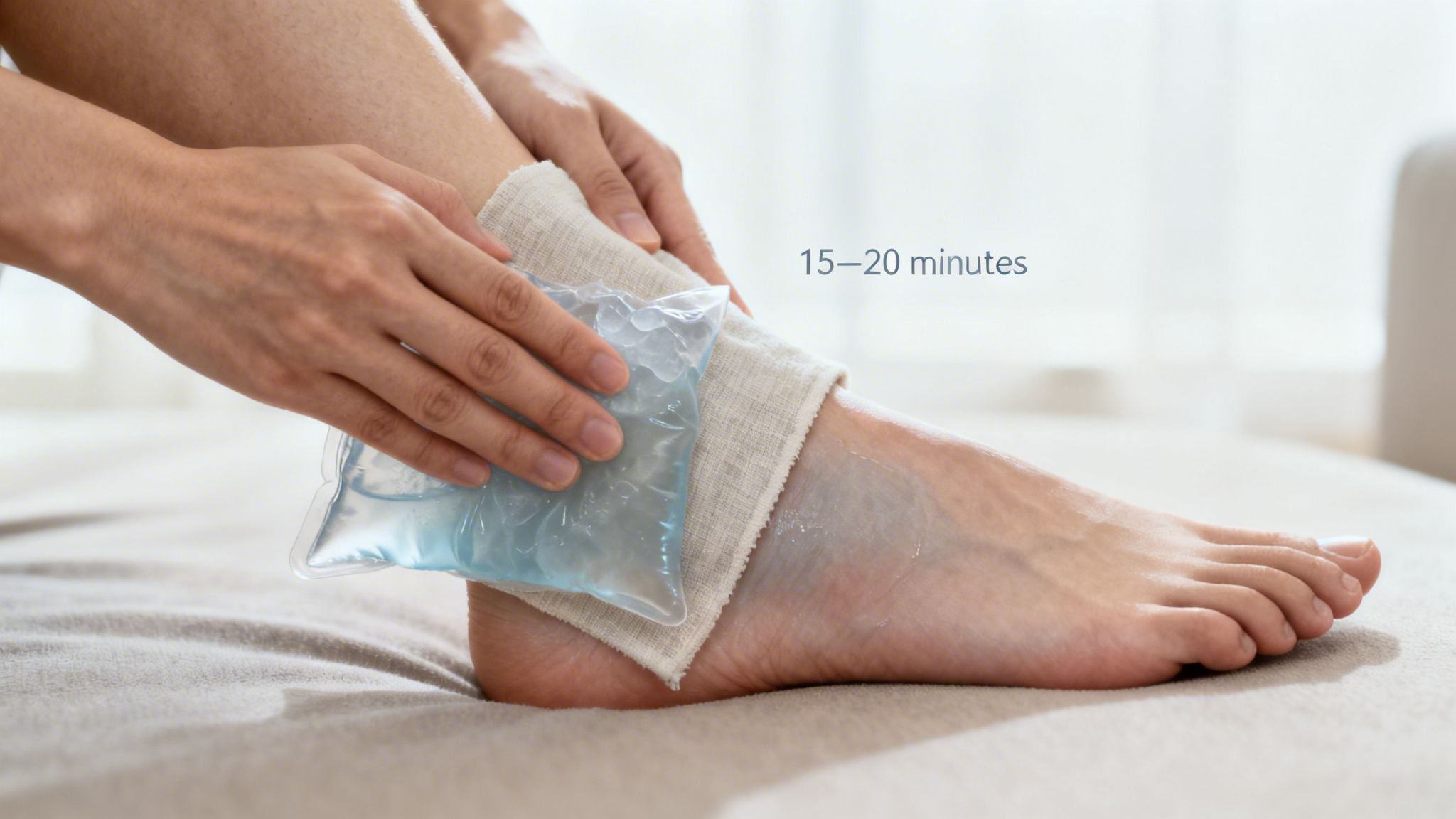
- Use a Barrier: Never place ice or a gel pack directly on your skin. Always wrap it in a thin towel or cloth to prevent frostbite or skin irritation.
- Time it Right: Apply ice for 15 to 20 minutes at a time. Icing for longer than 20 minutes doesn’t add any benefit and can potentially damage skin, nerves, and other soft tissues.
- Be Consistent: For the first 48 hours after an injury, try to ice the area every 2-3 hours while you are awake. This consistency is what really keeps inflammation and pain under control.
You don’t need any fancy equipment for this. A commercial ice pack, a bag of frozen peas, or a plastic bag filled with ice cubes will all do the job perfectly. The most important thing is to act quickly and apply the cold safely.
When to Use Heat for Chronic Pain and Muscle Stiffness
While ice is the clear winner for fresh, swollen injuries, heat therapy—what we call thermotherapy—is what you’ll want for those aches and stiffness that have stuck around. If you’ve been living with that persistent low back pain after a long commute, or the nagging neck stiffness from hours at a desk, we understand how exhausting that can be. These are the perfect moments for a little warmth to bring some much-needed relief.
Heat works its magic through a process called vasodilation, which is the exact opposite of what ice does. Instead of shrinking blood vessels, heat therapy widens them. This simple change kicks off a powerful and comforting healing response.

How Heat Eases Chronic Aches and Stiffness
When you apply a heating pad to a sore area, you're essentially opening the floodgates to improve circulation. This boost in blood flow delivers more oxygen and nutrients straight to tired, tight muscle tissues, helping them relax and release tension.
By helping those muscles and connective tissues unwind, heat can also improve your flexibility and range of motion. This makes it easier to move with less pain, which is exactly why it feels so good on conditions like chronic back pain, delayed onset muscle soreness (DOMS) after a workout, or the joint stiffness that comes with arthritis.
Best Scenarios for Using Heat
Heat is most effective when there’s no active swelling. If the area isn’t puffy, red, or hot to the touch, heat is a safe and beneficial choice. It’s a great way to prepare your body for the day or wind down in the evening.
We often recommend heat for these common situations:
- Chronic Back or Neck Pain: For that deep, dull ache, heat can help relax the tense muscles causing the discomfort.
- Arthritis Stiffness: Applying heat before you start your day can ease the morning joint stiffness that often comes with osteoarthritis.
- Muscle Soreness After Activity: Once the initial 48-72 hour window for a new strain has passed, heat can soothe any lingering muscle soreness.
- Before Stretching or Exercise: Using heat for 15 minutes before physical therapy or a workout can warm up stiff muscles, making movement easier and more effective.
A PT's Tip: Many of our patients at Peak Therapy find that a warm shower in the morning is a fantastic way to reduce stiffness before starting their day. This is a simple, effective form of heat therapy that can make a real difference.
Safe and Practical Ways to Apply Heat
Just like with ice, you need to use heat safely to avoid injury. The goal is gentle, soothing warmth—not intense heat that could cause burns. We always tell our patients to keep it simple and safe.
Effective Methods for Applying Heat:
- Electric Heating Pads: These are convenient and provide consistent, controllable heat. Just be sure to always start on the lowest setting.
- Microwavable Heat Packs: Gel packs or even a sock filled with rice can be heated in the microwave and mold nicely to different body parts.
- Warm Moist Towels: Soak a towel in warm water, wring it out, and place it on the sore spot. You can put a plastic bag over it to hold the warmth in longer.
- Warm Baths or Showers: Soaking in a warm tub or letting the shower hit a sore back is an easy and relaxing way to apply heat.
To learn more about how physical therapy can help with ongoing discomfort, check out our guide to managing chronic pain after sports injuries.
Critical Safety Rules for Heat Therapy
To get relief without any risk, always follow these safety guidelines:
- Protect Your Skin: Never apply a heating device directly to your skin. Wrap it in a towel to create a protective barrier.
- Watch the Clock: Only apply heat for 15 to 20 minutes at a time. Using it any longer increases the risk of skin burns.
- Don't Sleep with a Heating Pad: You could easily fall asleep and suffer a serious burn. Always stay awake and alert when using heat.
- Avoid Heat on New Injuries: Never apply heat to an acute injury that is swollen or inflamed. It will increase blood flow and only make the swelling worse.
- Be Cautious with Certain Conditions: If you have diabetes, circulation problems, or decreased sensation in an area, please talk to your doctor or physical therapist before using heat.
Choosing Ice vs. Heat for Specific Conditions
Knowing the science behind ice and heat is one thing, but figuring out what to do for your own pain can be confusing. The dull, persistent ache in your back after a day of yard work feels totally different from the sharp, sudden pain of a twisted ankle—and it should be treated differently, too. Here at Peak Therapy, we walk patients through these exact situations every day, helping them make the right choice for faster relief.
Let’s break down some of the most common conditions we see at our Massachusetts clinics and clear up the ice vs. heat debate for good.
For That Aching Back Pain
Back pain is one of the top complaints that brings people into our clinics, but the right treatment all comes down to what caused it.
- Acute Strain (Ice): Did you feel a sudden "zing" in your back while lifting a heavy box or shoveling after another New England snowstorm? That's an acute injury. You'll want to use ice for the first 48-72 hours to help calm the inflammation and numb that sharp pain.
- Chronic Stiffness (Heat): Is your back more of a constant, tight, and achy problem from sitting at a desk or your long commute on the Mass Pike? This is muscle stiffness, not a new injury. Use heat to help relax those tight muscles, boost blood flow, and soothe the ache.
Our PTs' Advice for Back Pain: For a sudden back strain, ice is your best friend for the first two days. After that, if the pain becomes a lingering, dull ache, switching to heat can help relax the tense muscles that are contributing to the discomfort.
Managing Arthritis Pain
Living with arthritis means navigating two kinds of pain: the day-to-day stiffness and the sudden, intense flare-ups. Your game plan should change depending on which one you're dealing with.
- Daily Joint Stiffness (Heat): Waking up with stiff, achy joints is a hallmark of arthritis, especially during our cold, damp Massachusetts winters. Applying heat for 15-20 minutes in the morning can increase circulation and improve your joint flexibility, making it easier to get your day started.
- Acute Flare-Up (Ice): If one of your joints suddenly becomes swollen, red, and incredibly painful, you're having an inflammatory flare-up. In this case, ice is the answer. It will help calm the inflammation and provide much-needed numbing relief. Heat would only make the swelling and pain worse.
Treating a Fresh Ankle Sprain
Whether you rolled your ankle on a cobblestone street in Boston or during a weekend soccer game, your immediate response should always be the same. A sprained ankle is a classic acute injury, and that means you'll see swelling and inflammation almost immediately.
For the first 48 to 72 hours, ice is your only option. Applying cold right away constricts the blood vessels, which is crucial for minimizing swelling and controlling pain. For the best results, combine icing with rest, compression, and elevation (you might know it as the RICE method). Heat has no place here until all the swelling is gone, which usually takes several days.
For Soreness After a Workout
We've all felt it—that muscle ache that sets in a day or two after a really tough workout. It’s called Delayed Onset Muscle Soreness (DOMS), and it’s not an injury, but tiny micro-trauma to your muscle fibers as they adapt and get stronger.
For this kind of general soreness, heat is usually the way to go. A warm bath or a heating pad can increase blood flow to those tired muscles, helping to flush out metabolic waste and ease the tightness. Of course, preventing injuries is just as important as treating them. Active people can minimize soreness and injury risk by following a smart workout plan, like those from a Personalized strength training app.
Aiding Post-Surgical Recovery
After an orthopedic surgery like a knee or hip replacement, the main goal is to get post-op swelling and pain under control. Our physical therapists work side-by-side with patients recovering from procedures at local hospitals, and our advice is always consistent.
Ice is the primary tool you'll use in the first phase of recovery. The inflammation after surgery is significant, and cold therapy is absolutely essential for managing it. Your surgeon and physical therapist will give you a specific schedule, but it will almost always involve icing frequently for the first few weeks to keep swelling down and manage pain. Heat is generally kept far away from the incision until your therapist gives you the green light.
Dealing with ongoing shoulder discomfort can also be complex. To understand more about targeted approaches, you might be interested in our guide on home therapy options for shoulder pain.
Critical Mistakes to Avoid When Using Ice and Heat
Using ice and heat seems straightforward, but a few common mistakes can slow your recovery or even cause harm. Knowing the right way to use these therapies is just as important as knowing when to use them. At Peak Therapy, we want you to feel confident and safe when managing pain at home.
Avoiding these frequent errors will help you get the most out of your home care. The most critical mistake we see is applying heat to a new, swollen injury, which will only make the pain and swelling worse and delay your healing.
The Wrong Therapy at the Wrong Time
The single biggest error is using the wrong therapy for the stage of your injury. If you've just twisted your ankle playing basketball or strained your back shoveling snow, you're dealing with an acute injury, and that means active inflammation.
Applying heat in this situation is a mistake because it opens up the blood vessels, which ramps up swelling and pain. For the first 48-72 hours, you should only be using ice. Heat is reserved for chronic, non-swollen stiffness and aches that come later.
A Critical Safety Reminder: If you have an injury that is swollen, red, or feels warm to the touch, do not use heat. This is your body’s sign of active inflammation, and heat will only intensify it. Always start with ice.
Putting Your Skin at Risk
Another common but dangerous mistake is putting an ice pack or heating pad directly on your skin. Both extreme cold and extreme heat can damage skin tissue, leading to frostbite or burns before you even realize it.
Always use a protective barrier. A simple, thin towel or even a layer of clothing is enough to protect your skin while still letting the therapeutic temperature reach the underlying tissues. This is a non-negotiable rule for safe and effective treatment.
Going Over the Time Limit
When it comes to temperature therapy, more isn't better. Leaving ice or heat on for too long can be counterproductive and even harmful.
Ice: Keep applications to 15-20 minutes at a time. Icing for longer than 20 minutes doesn't add any extra benefit and increases the risk of nerve or tissue damage.
Heat: Similarly, limit heat applications to 15-20 minutes. Extended heat, especially from an electric heating pad, can cause serious skin burns—a real risk if you happen to fall asleep.
Setting a timer on your phone is a simple way to make sure you stick to these safe timeframes.
Ignoring Important Health Conditions
Finally, you should never use ice or heat without considering your overall health. Certain medical conditions, known as contraindications, can make these otherwise helpful therapies unsafe for you.
You should never apply ice or heat to:
- Areas with Numbness: If you have nerve damage (neuropathy) or decreased sensation for any reason, you might not feel if the area is getting too cold or hot, which can lead to severe skin damage.
- Open Wounds or Stitches: Heat can increase bleeding and get in the way of healing, while ice can damage fragile new tissue.
- Poor Circulation: If you have a condition that affects blood flow, like peripheral vascular disease, using ice can restrict circulation even further.
If you have diabetes, circulatory issues, or any other health concerns, it's always best to consult with one of our physical therapists or your doctor before using ice or heat at home. Your safety is our top priority.
When Your Injury Needs More Than Home Care
While ice and heat are fantastic for managing aches and pains at home, they aren't a cure-all. There comes a point when self-treatment just isn’t enough, and continuing to do so might be masking a bigger problem. Knowing when to switch from home care to professional help is key to making sure a small issue doesn't become a long-term one.
We get it—the first instinct is often to try and manage pain on your own. But some symptoms are your body's way of telling you it needs an expert opinion. Every day at Peak Therapy, we see patients who waited too long, hoping the pain would simply go away on its own. Recognizing the signs early can make all the difference.
Red Flags That Signal You Need a Physical Therapist
If you're experiencing any of the following, it’s time to stop guessing between ice and heat and schedule an appointment. These "red flags" are clear indicators that your injury needs a deeper look from a licensed physical therapist.
- Severe pain or swelling that doesn’t get better after 24-48 hours of trying to manage it at home.
- Inability to put weight on a limb, like your leg or foot, after an injury.
- A joint that looks visibly deformed or seems out of place.
- Numbness, tingling, or weakness spreading into the affected arm or leg.
- Pain that gets worse over a few days instead of better, even with rest and icing.
- Pain that disrupts your sleep or keeps you from doing normal daily activities.
Ignoring these warnings can lead to chronic pain, loss of function, and a much tougher recovery down the road. You shouldn’t have to stop doing what you love because of pain that just won't heal.
At Peak Therapy, we believe that understanding the "why" behind your pain is the first step to truly resolving it. Ice and heat only treat symptoms; a physical therapist finds the root cause.
Beyond Ice and Heat: The Value of a PT Evaluation
When you visit one of our Peak Therapy clinics in Massachusetts, our first goal is to give you a clear diagnosis. Our licensed physical therapists perform a comprehensive evaluation to determine the root cause of your pain. We will assess your movement patterns, check your strength, and test your range of motion to pinpoint the exact source of your discomfort.
This detailed assessment allows us to create a personalized treatment plan designed just for you. Your plan will include targeted, hands-on therapies and corrective exercises that address the underlying issue—something an ice pack or heating pad can never do. It’s the difference between temporarily muting the pain and building a foundation for lasting recovery so you can get back to living fully.
Frequently Asked Questions About Using Ice and Heat
Even with a good understanding of the basics, real-life situations always bring up questions about managing pain at home. We’ve gathered some of the most common questions our physical therapists hear at our clinics to give you expert answers you can trust.
Can I Alternate Between Ice and Heat?
Yes, you can. This technique is called contrast therapy, and it can be very effective—but only after the initial swelling from an acute injury has settled down. Alternating between hot and cold creates a “pumping” action in your blood vessels, which can help flush out lingering inflammation and ease stiffness.
A common routine is to apply heat for a few minutes followed by ice for one minute, repeating the cycle for about 15 minutes. It’s a favorite among athletes for promoting recovery and is also great for stubborn subacute injuries that are no longer actively swollen.
How Soon After a Workout Should I Use Ice or Heat?
This really depends on the kind of pain you're experiencing.
- For sudden, sharp pain (an injury): If you feel a "pop" or a sharp, immediate pain during your workout, treat it as a new injury. Stop what you’re doing and grab an ice pack right away to get the inflammation under control.
- For general muscle soreness (DOMS): If you’re just feeling the typical muscle aches a day or two after a tough session, heat is your best friend. A warm shower or a heating pad will help relax those tight, sore muscles.
Is a Bag of Frozen Peas as Good as a Gel Pack?
In a pinch, absolutely. The main goal of cold therapy is just to lower the temperature of the tissue. While reusable gel packs are convenient and often stay colder longer, a simple bag of frozen peas or corn has a unique benefit: it molds perfectly around tricky joints like an ankle, knee, or shoulder, giving you better overall coverage.
Ultimately, what you use is less important than applying it safely and consistently after an injury.
What if the Pain Gets Worse After Applying Ice or Heat?
This is your body's way of telling you to stop. If applying ice or heat makes your pain worse, it’s a clear sign that you’re either using the wrong approach for your condition or that the injury is more serious than you realized.
When home care isn't working, a physical therapist can guide you through functional physical therapy exercises to ensure a full and lasting recovery. Never push through increased pain—listen to your body and seek professional advice.
If you're unsure about your pain or it isn't improving, don't guess. The licensed physical therapists at Peak Physical Therapy and Sports Performance can provide a clear diagnosis and a personalized treatment plan to help you recover safely and effectively. Schedule your evaluation today by visiting https://peaktherapy.com.