


A hard cough can do it. So can a sneeze in the checkout line, a lingering cold after the kids bring something home from school, or a chesty cough that starts after a winter bug. One second you’re fine. The next, you feel a sharp grab in your lower back and suddenly every cough makes you brace.
That pattern is common across the South Shore. We hear it from people in Quincy who can’t sit comfortably through work, from parents in Hanover trying to keep up with weekend sports, and from walkers in Duxbury and Scituate who notice that even an easy stroll feels different once coughing starts to irritate the back. The pain may be brief and startling, or it may settle into an ache that sticks around between coughs.
Lower back pain deserves attention because it’s so common. Nearly 80% of people experience at least one episode of lower back pain during their lifetime, and it’s a major cause of disability worldwide, as noted in this clinical review of lower back pain epidemiology and biomechanics. When coughing enters the picture, the issue usually isn’t random. There’s often a mechanical reason the back is reacting.
Table of Contents
- That Jolt of Back Pain When You Cough? You’re Not Alone on the South Shore
- Why a Simple Cough Can Trigger Lower Back Pain
- Common Causes of Cough-Related Back Pain We See in Our South Shore Clinics
- Red Flags When to See a Doctor Immediately Near Plymouth or Quincy
- Safe At-Home Strategies for Managing Your Back Pain Today
- How Physical Therapy at Peak Provides Lasting Relief for Back Pain
- Your Next Step to a Pain-Free Life on the South Shore
- Frequently Asked Questions About Lower Back Pain and Coughing
That Jolt of Back Pain When You Cough? You’re Not Alone on the South Shore
It usually starts with surprise. A cough hits, your body tightens, and a fast stab of pain runs through the lower back. After that, you start thinking ahead. You brace before every cough. You avoid bending to tie your shoes. You wonder whether carrying groceries in Braintree or walking the beach in Plymouth is going to set it off again.
For some people, the pain feels like a pulled muscle. For others, it’s deeper and more threatening, like something is catching or shifting. The common thread is that coughing suddenly exposes a problem you may not have noticed before.
Why this catches people off guard
A lot of back pain builds gradually. This kind often doesn’t. You may have been a little stiff from a long drive, a few weekends of yardwork, or too many hours at the kitchen table with a laptop. Then a coughing spell makes the area light up.
That’s why lower back pain and coughing can feel more alarming than ordinary soreness. The trigger is so specific that people start asking very practical questions:
- Is this just a strain? Maybe. Sudden pain with coughing often comes from irritated muscles or joints.
- Could a disc be involved? Sometimes, especially if pain starts to travel into the buttock or leg.
- Should I wait it out? It depends on what else is happening, including weakness, numbness, fever, or other red flags.
What patients notice first: “It only hurts when I cough” often turns into “now I’m guarding all day.”
What this looks like in everyday South Shore life
This problem doesn’t stay neatly contained to the moment of the cough. It changes how you move through the day. People cut their walks short in Cohasset. They stop lifting laundry baskets in Kingston. They try to sleep flat and wake up more uncomfortable because getting out of bed becomes the hardest part.
If that sounds familiar, you’re not overreacting. A sharp pain with coughing usually means the back is struggling to handle pressure and force well. That’s a mechanical problem, and mechanical problems respond best when someone identifies the exact structure involved and the movements that keep aggravating it.
Why a Simple Cough Can Trigger Lower Back Pain
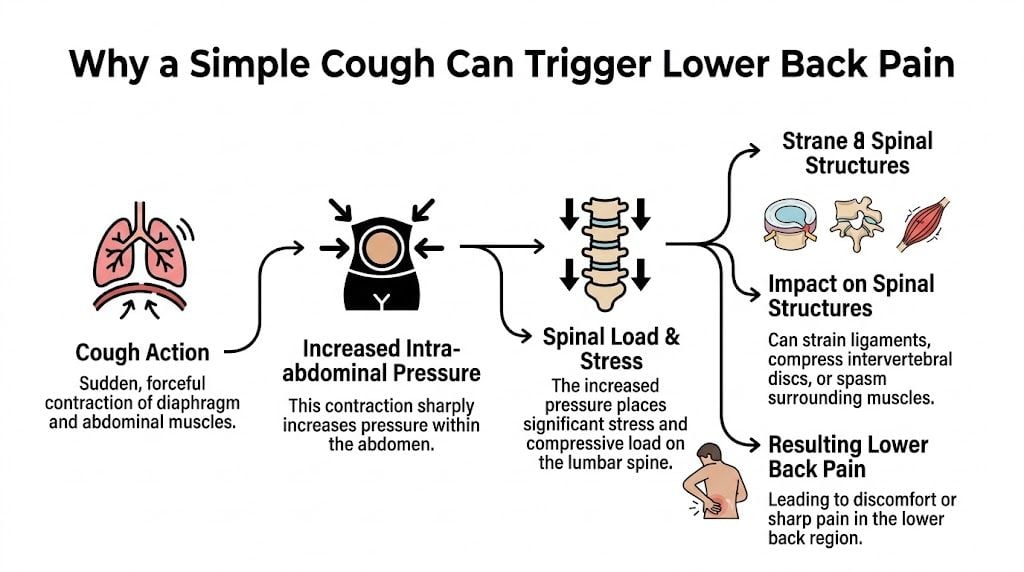
A cough feels like a chest event, but your lower back gets pulled into the action immediately. The easiest way to understand it is to think of your trunk like a sealed canister. Your diaphragm sits on top, your abdominal wall wraps around the middle, and your pelvic floor and deep core muscles help manage pressure from below. When you cough, that whole system fires fast.
A simple analogy helps. If you squeeze a water balloon, pressure pushes in every direction. Your abdomen behaves similarly during a forceful cough. The pressure doesn’t just move air out of your lungs. It also pushes load through the trunk and into the lower back.
The chain reaction inside your body
Here’s the basic sequence:
- A cough starts with a forceful muscle contraction. The diaphragm, intercostals, and abdominal muscles tighten quickly.
- Pressure rises sharply. That pressure helps create the explosive exhale of a cough.
- The lumbar spine absorbs load. If the back is already irritated, that extra force can trigger pain.
- Sensitive tissues react. Muscles may spasm, joints may compress, and discs may feel more irritated.
That last step is where symptoms start to vary from person to person. Muscle strain and spasm are the most common cause of cough-related back pain, and coughing can also aggravate herniated discs, facet joint dysfunction, and spinal stenosis, as explained in this overview of back pain while coughing.
Why one person coughs without pain and another doesn’t
The cough itself isn’t always the whole problem. Often, the cough is exposing a system that isn’t tolerating force well.
A few examples make that clearer:
- A deconditioned core may not coordinate well enough to share load.
- An irritated disc may become more sensitive when pressure rises.
- Stiff spinal joints can react badly to repeated jolts.
- Overworked back muscles may do too much of the bracing and then spasm.
A cough is brief. The force is not small.
What tends to work, and what usually doesn’t
What works starts with reducing the back’s sensitivity while improving how the trunk handles pressure. That often includes better body positioning, restoring motion where it’s limited, and retraining deep core support so the lower back doesn’t take the full hit every time you cough.
What doesn’t work is chasing the symptom alone. Resting for a day or two may calm things down, but complete inactivity often leaves the back stiffer and more reactive. Aggressive stretching can also backfire, especially if a disc or irritated nerve is part of the picture. The right plan depends on whether the pain is muscular, joint-driven, disc-related, or something that needs medical screening first.
Common Causes of Cough-Related Back Pain We See in Our South Shore Clinics
Cough-related back pain usually falls into a few recognizable patterns. The location of the pain, what it feels like, and what movements make it worse help narrow things down quickly. That matters because lower back pain and coughing isn’t one diagnosis. It’s a symptom pattern with several possible causes.
Acute muscle strain and spasm
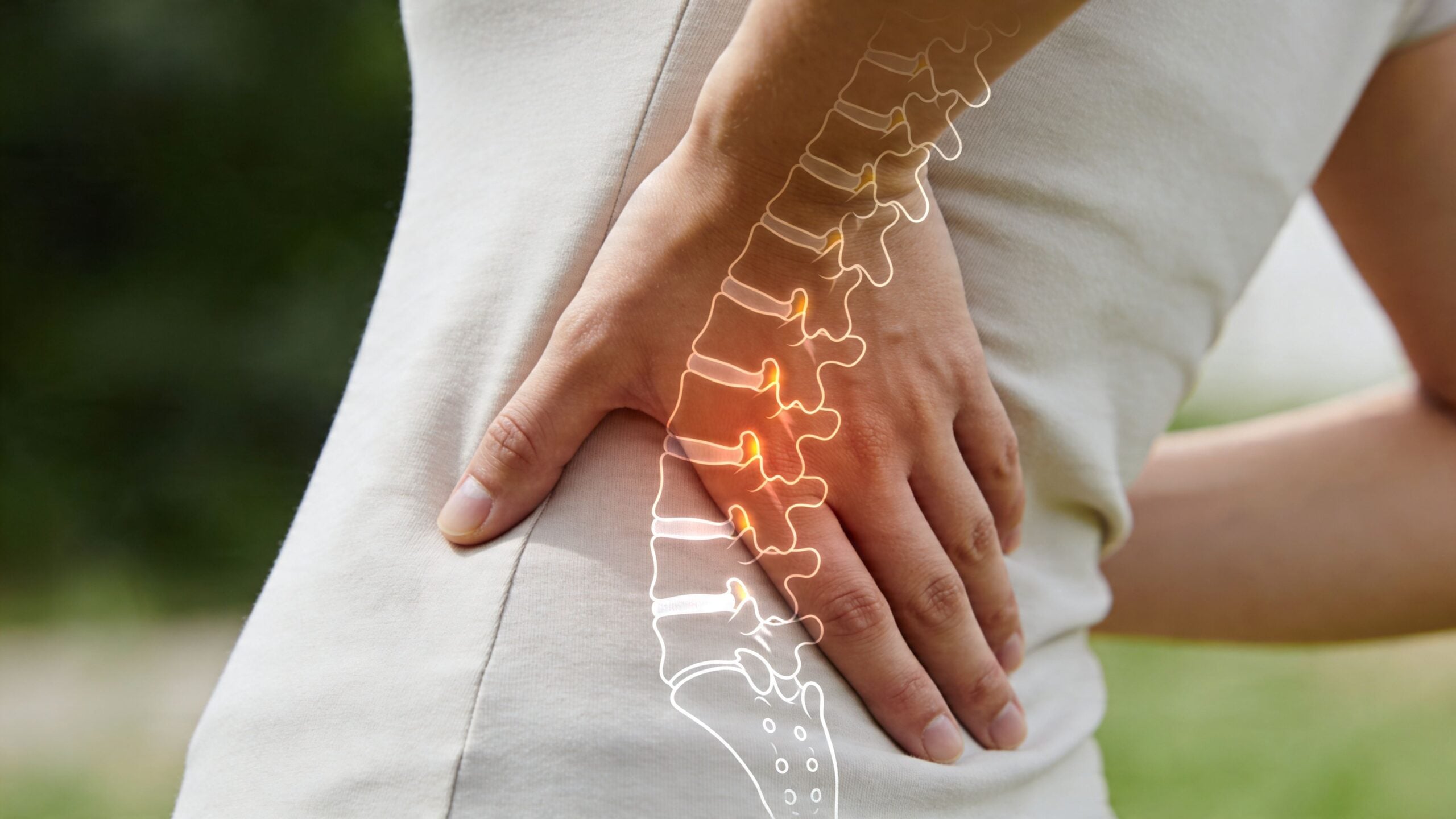
This is the most common presentation. Someone has a cold, allergy flare, or stubborn cough. The back starts to feel tight, then one stronger cough causes a sharp pull. After that, the area may seize up.
Typical clues include:
- Pain stays mostly in the lower back. It may be on one side or across the belt line.
- Movement feels guarded. Rolling in bed, standing up, or changing positions can hurt.
- The pain is sharp first, then achy later. Spasm often follows the initial strain.
This pattern often improves with smart movement, supported coughing, and gradual return to normal activity. What usually doesn’t help is staying frozen for days because the muscles get even more protective.
Disc irritation and nerve symptoms
When a disc is part of the problem, coughing often feels more provocative. People may say the cough “shoots” pain rather than just creating soreness. Pain can refer into the buttock, and sometimes symptoms travel farther down the leg.
A quick symptom comparison is useful:
| Pattern | What people often feel | Common aggravators |
|---|---|---|
| Muscle strain | Sharp or tight pain in the low back | Coughing, twisting, getting up |
| Disc irritation | Back pain with buttock or leg symptoms | Coughing, sitting, bending forward |
| Facet joint irritation | Local ache or pinch near the spine | Standing, arching back, quick rotation |
If leg symptoms are present, the next question is whether they’re mild and stable or whether they’re changing fast. Progressive weakness or numbness is not a watch-and-wait issue.
If a cough sends pain below the buttock, pay closer attention to nerve signs.
Facet joint irritation and spinal stiffness
Facet joints are small joints in the back of the spine. When they’re irritated, a cough can create a quick pinch or deeper ache close to the spine. Some people notice this more after they’ve been standing a while or when they lean backward.
This type of pain often has a different rhythm than a disc problem. It may ease with sitting or a slight forward bend. It usually stays more local rather than traveling down the leg.
Other situations that can amplify pain
A cough can also aggravate existing spinal stenosis or other longstanding back issues. Older adults and people with weaker bone density may need more caution, because repeated violent coughing can put more stress on the spine than many realize. If the symptoms don’t match a simple mechanical strain, or if they escalate instead of settling, the next step shouldn’t be guesswork.
Red Flags When to See a Doctor Immediately Near Plymouth or Quincy
Most cases of lower back pain and coughing are mechanical. That means muscles, joints, discs, or nerves are reacting to force and pressure. Mechanical pain is often treatable and often responds well to conservative care. But a small group of symptoms calls for urgent medical evaluation, not a home exercise trial.
The first red flag is pain in the upper back that worsens with breathing, especially if it comes with clear respiratory symptoms. Another is coughing up blood. Those aren’t typical mechanical back pain features.
Symptoms that should move you to urgent care or the ER
Use this checklist if you’re trying to decide what to do today:
- Upper back pain with breathing symptoms. This can point away from a straightforward lumbar strain.
- Coughing up blood. This needs prompt medical attention.
- Unexplained weight loss. That’s not a normal feature of a simple back strain.
- Fever. Back pain with fever can suggest something other than a mechanical spine issue.
- Sudden leg weakness or numbness. Rapid neurologic change needs urgent evaluation.
These warning signs are highlighted in this guide to lower back pain when coughing and red flags that warrant urgent evaluation.
Mechanical pain usually behaves differently
A plain mechanical pattern often looks like this:
- Pain is in the lower back, not the upper back
- It tends to change with position
- It’s worse with coughing, bending, twisting, or getting up
- It usually doesn’t come with fever or coughing up blood
That doesn’t mean you should ignore it. It means the path is usually outpatient care, not emergency care, unless the pattern changes.
A practical decision rule
If you’re in Plymouth, Quincy, or anywhere else on the South Shore and you’re unsure, ask two questions:
- Is this acting like a back problem, or like a medical problem?
- Are my symptoms stable, or are they worsening quickly?
Safety check: Back pain that changes with movement is often mechanical. Back pain with systemic symptoms needs medical attention first.
Bowel or bladder changes also require emergency evaluation. So does rapidly progressing weakness. Those symptoms move the conversation out of routine musculoskeletal care and into urgent medical screening.
Safe At-Home Strategies for Managing Your Back Pain Today
If your symptoms look mechanical and you’re waiting for an appointment, a few simple changes can reduce strain right away. The goal isn’t to “fix” the problem in one afternoon. It’s to calm the back down, avoid the positions that keep provoking it, and make coughing less jarring.

Use support before the cough, not after
One of the most helpful tricks is bracing gently before you cough. Tighten your lower abdomen as if you’re preparing to take a light punch, and keep your ribs stacked over your pelvis instead of folding forward hard. Many people also do better holding a pillow against the abdomen when coughing, especially during a lingering illness.
Try these today:
- Brace first. A small abdominal contraction can make the cough feel less explosive through the back.
- Stay tall. Slumping often increases the sense of collapse and strain.
- Exhale after the cough settles. Don’t hold your breath and keep bracing longer than needed.
Pick positions that reduce tension
Rest matters, but position matters more. If lying flat makes the pain bite, try lying on your back with a pillow under your knees or on your side with a pillow between your knees. When getting out of bed, roll to your side first and push up with your arms instead of jackknifing straight forward.
A few people also find warmth soothing for muscular guarding. If that sounds like you, this article on sauna for pain relief offers a practical overview of how heat can fit into a broader comfort strategy.
Gentle motion beats aggressive stretching
The right amount of movement usually helps. The wrong kind can stir things up. If the pain is recent and sharp, start with very small, controlled motions rather than deep stretching.
Good options include:
- Pelvic tilts. Gentle rocking can reduce stiffness without forcing range.
- Short walks around the house. Frequent easy movement often beats one long walk.
- Supported pool movement. If you tolerate the water well, swimming pool exercises for lower back pain can be a useful next step.
What usually doesn’t help is trying to “stretch it out” aggressively, doing repeated toe touches, or pushing through leg pain that gets sharper with each repetition.
How Physical Therapy at Peak Provides Lasting Relief for Back Pain
The most useful physical therapy plan starts by identifying which structure is getting irritated and why the cough keeps exposing it. Some people need help calming down a muscle spasm. Others need a strategy for disc irritation, nerve sensitivity, or poor pressure management through the trunk. The answer isn’t the same for everyone, which is why a quick internet checklist often falls short.

What the first visit usually focuses on
A good evaluation looks at more than where it hurts. It also looks at how you move, how symptoms behave with repeated motions, whether pain is staying local or traveling, and whether the back is failing under load, stiffness, or coordination problems.
Common parts of that process include:
- Symptom mapping. Is the pain central, one-sided, or running into the leg?
- Movement testing. Does bending, standing upright, rotating, or coughing change symptoms?
- Strength and control. Can you manage trunk stability without overgripping with the low back?
- Screening for red flags. If the pattern doesn’t look mechanical, PT isn’t the first stop.
For many South Shore residents, this is the first time the problem starts to make sense. The pain stops feeling random because there’s a clear movement pattern behind it.
Why core retraining matters so much
A cough can increase intra-abdominal pressure by up to 200 mmHg, which sends compressive force into the lumbar spine. In lumbar strain cohorts, physical therapy programs that target transversus abdominis activation have been shown to reduce pain recurrence by 65%, according to this summary of coughing-related spine loading and core stabilization outcomes.
That’s why treatment often includes deep core retraining, not just general exercise. The goal is not to make your stomach muscles “harder” all the time. It’s to improve timing and support so the spine has help when force shows up fast.
Better bracing is less about force and more about coordination.
What treatment often includes
The plan depends on the cause, but a practical PT program often combines several pieces rather than relying on one technique.
Movement correction and symptom reduction
Early on, the focus may be on finding positions and motions that settle symptoms instead of provoking them. That can mean changing how you sit, cough, get out of bed, or lift a laundry basket. Small changes matter when the back is irritable.
Targeted exercise progressions
Examples often include:
- Dead bug variations for controlled trunk stability without overloading the back
- Bird-dog work to build cross-body control and reduce collapse through the lumbar spine
- Glute bridges to improve hip contribution so the back doesn’t do all the work
- Gentle repeated movements chosen based on whether flexion, extension, or neutral positions help
Exercises aren’t useful just because they’re popular. They have to match the symptom pattern. A person with muscle guarding may need a different starting point than someone with nerve irritation.
Hands-on treatment when it fits
Manual therapy can help when stiffness, guarding, or pain is limiting movement. That may include soft tissue work, joint mobilization, or other hands-on approaches chosen to make movement easier. The point isn’t passive treatment forever. It’s to create a window where exercise and normal movement work better.
Return to life, not just return to the table
A key benchmark is function. Can you cough without bracing in fear? Can you carry groceries in Quincy, walk the harbor in Plymouth, golf in Pembroke, or get through a workday in Braintree without planning every movement around your back?
For a broader overview of condition-specific care pathways, Peak Physical Therapy and Sports Performance’s low back pain treatment page gives a useful local starting point. If you want deeper anatomy and recovery education, visit Highbar Health at highbarhealth.com, where the more detailed educational content lives.
Your Next Step to a Pain-Free Life on the South Shore
If coughing keeps triggering sharp lower back pain, the message isn’t “just live with it until the cough goes away.” The message is that something in the back isn’t tolerating force well right now. That’s a problem you can address.
The best next step is to stop guessing. If your symptoms fit a mechanical pattern, getting assessed early can help you avoid weeks of guarding, stiffness, and movement changes that make the back more sensitive. If your symptoms include red flags, you’ll know to get medical care promptly instead of losing time.
People across the South Shore deal with this every year, from Quincy and Weymouth to Hanover, Norwell, Kingston, Duxbury, Pembroke, Scituate, Milton, East Bridgewater, Cohasset, Braintree, and Plymouth. You don’t need to map your life around every cough.
If you’re near the coast or farther inland and want a local starting point, the Plymouth physical therapy center page is one way to book care close to home. The right plan can help you move more normally again, breathe easier through a coughing spell, and get back to everyday life without that jolt in your back.
Frequently Asked Questions About Lower Back Pain and Coughing
How long does back pain from coughing usually last?
It depends on the cause. A simple muscle strain may settle as the cough improves and the back calms down. If pain lingers, starts spreading, or keeps flaring with basic activities, it’s worth getting checked rather than waiting indefinitely.
Is heat or ice better?
Either can help, depending on what your body responds to. Heat often feels better for muscle guarding and stiffness. Ice may feel better if the area feels acutely irritated after a coughing spell. Comfort is a reasonable guide here.
Should I keep exercising?
Usually, yes, but keep it gentle and specific. Walking, easy position changes, and controlled mobility are often better choices than intense workouts or deep stretching. If exercise causes sharper leg pain, stop and get guidance.
What if the pain is higher up in my back?
That deserves more caution. Lower back pain and coughing is often mechanical, but upper back pain with breathing symptoms or other concerning signs needs medical evaluation. Don’t assume it’s the same issue.
When should I consider a specialist?
If symptoms are persistent, recurring, or complicated by nerve signs, a specialist may be part of the plan. For a broad overview of the kinds of problems specialty clinics may address, this page on conditions a pain clinic treats can help you understand the overall picture. It’s still important to start with the right screening so you know whether your next step is medical care, physical therapy, or both.
If lower back pain and coughing are disrupting your day, schedule an appointment with Peak Physical Therapy and Sports Performance. With convenient South Shore locations in Braintree, Quincy, Weymouth, Cohasset, Duxbury, East Bridgewater, Hanover, Kingston, Milton, Norwell, Pembroke, Plymouth, and Scituate, it’s easy to get local care and a clear plan for relief.