


You’re trying to stay active, get ready for birth, and make it through the workday without feeling like your pelvis, low back, and bladder are all negotiating separately. Maybe you’ve noticed pressure when you’re walking in Hingham, soreness after setting up the nursery in Pembroke, or leaking when you cough while chasing an older child around a Duxbury playground. Those changes are common in pregnancy, but common doesn’t always mean you have to just live with them.
That’s where pelvic floor physical therapy South Shore MA becomes practical, not intimidating. For many pregnant people, pelvic health PT is less about “fixing a problem” and more about preparing the body for labor, delivery, and recovery with better support, better movement, and fewer surprises after birth. Pelvic floor dysfunction affects up to 25% of U.S. women, with prevalence often higher in active communities like those across the South Shore. This highlights the importance of specialized, local care to support women through pregnancy and beyond, reducing the risk of issues that contribute to an estimated $5.7 billion in annual healthcare costs nationwide for untreated pelvic disorders according to MomLife Health & Wellness.
On the South Shore, that matters. Pregnancy doesn’t happen in a vacuum. It happens while you’re commuting, walking the dog, lifting groceries, getting kids in and out of the car, and trying to keep up with everyday life. If you want a local overview of support for pregnancy and postpartum physical therapy, it helps to start with what pelvic health care can do for you during pregnancy, not just after delivery.
Table of Contents
- Your Pregnancy Journey on the South Shore
- What Pregnancy Means for Your Pelvic Floor
- Signs You May Need a Pelvic Health PT
- Your First Pelvic Health Visit What to Expect
- Personalized Pregnancy PT for South Shore Moms
- Navigating Your Care Timing Insurance and Locations
- Real Stories from South Shore Moms
- Your Questions About Pregnancy PT Answered
Your Pregnancy Journey on the South Shore

Pregnancy on the South Shore has its own rhythm. You might still be taking evening walks near the water, climbing stairs in an older New England home, or trying to keep up with a toddler who has no interest in your round ligament pain. A lot of pregnant patients come in thinking they need to wait until something becomes severe before asking for help. They don’t.
Small changes can feel big in pregnancy
The first signs are often easy to brush off. You feel heavier by the end of the day. Rolling in bed takes planning. Standing on one leg to put on pants suddenly feels unstable. Sneezing becomes a moment of suspense.
Those changes can leave people wondering whether their body is “just doing pregnancy” or whether something needs attention. Usually, the answer sits in the middle. Pregnancy changes are normal, but support matters, and getting support early often makes the rest of pregnancy feel more manageable.
Pregnancy is a moving target. The body changes week to week, so the right plan has to change with it.
Local care matters when life is already full
A pelvic health plan only works if it fits real life. On the South Shore, that means care has to be close enough to your home, work, daycare route, or prenatal appointments that you’ll keep going. It also needs to match your goals.
For one person, the goal is to keep walking comfortably through the third trimester. For another, it’s to reduce pelvic pressure during work shifts. For someone else, it’s learning how to push without over-tightening, breathe through effort, and recover more smoothly once the baby arrives.
That’s the practical value of local pelvic floor physical therapy South Shore MA. It gives you a place to sort through what’s normal, what’s modifiable, and what tends to respond well when you stop guessing and start working from a plan.
A better birth experience often starts before labor
The pelvic floor tends to get attention only after delivery, but pregnancy is when a lot of the groundwork happens. Better pressure management, stronger coordination, and improved mobility can all make day-to-day movement easier before labor even starts.
A proactive approach doesn’t mean aggressive treatment. It usually means a few smart adjustments, the right exercises, hands-on support when needed, and a clear understanding of what your body is doing. That kind of preparation can make you feel less anxious and more capable as delivery gets closer.
What Pregnancy Means for Your Pelvic Floor
The easiest way to think about the pelvic floor is as a supportive hammock at the bottom of your core. It helps manage support, pressure, bladder and bowel control, and coordination with breathing and abdominal muscles. During pregnancy, that hammock doesn’t just “get weak.” It has to adapt to more load, more stretch, and changing mechanics.
It’s not just about strength
Many people assume pelvic floor issues are always a strength problem. In pregnancy, that’s often too simple. Some muscles are working hard but not coordinating well. Some are under strain because posture changed. Others stay tense because the body is guarding against pressure, discomfort, or instability.
That’s why more Kegels on your own aren’t always the answer. If the pelvic floor is overworking, poorly timed, or not syncing with the rest of the core, adding more squeezing can make symptoms feel unchanged or sometimes worse.
Everyday South Shore life puts these changes to the test
You notice pelvic floor function during regular tasks, not in theory. Walking on uneven sidewalks in Milton. Carrying a laundry basket upstairs in Hanover. Lifting a child into a car seat in Quincy. Standing in line at the grocery store after a long day when your low back and hips are already tired.
These moments challenge how your body handles load and pressure. If the pelvic floor and deep core aren’t coordinating well, you may feel heaviness, leaking, tailbone discomfort, hip pain, or a sense that your body isn’t moving as smoothly as it used to.
Common pregnancy shifts that affect function
- Growing abdominal pressure: As the baby grows, your system has to manage more downward pressure.
- Postural changes: The ribcage, pelvis, and spine all adapt, which can change how you breathe and stabilize.
- Hormonal effects: Tissues may feel less stable and more sensitive to repetitive strain.
- Movement compensation: If one area feels vulnerable, other muscles often start doing too much.
Practical rule: If a movement feels harder, less stable, or more pressurized than it used to, that’s useful information. It doesn’t mean something is wrong. It means your strategy may need to change.
Function matters more than anatomy trivia
Most pregnant patients don’t need a detailed anatomy lecture. They need to know why coughing causes leakage, why turning in bed hurts, or why a short walk suddenly creates pressure. That’s the useful part of pelvic health PT during pregnancy.
If you want a deeper educational breakdown of pelvic anatomy, muscle roles, and recovery concepts, Highbar Health keeps that kind of broader clinical content at highbarhealth.com. For local decision-making, the key point is simpler. Your pelvic floor works best when it can contract, relax, lengthen, and coordinate with the rest of your body at the right time.
Signs You May Need a Pelvic Health PT
A lot of pregnant people wait too long because they’ve been told their symptoms are “normal.” Some are common. That’s different. If symptoms are limiting your walking, sleep, exercise, workday, or confidence, it’s worth getting them assessed.
What’s worth paying attention to
If you’re dealing with any of the following, pelvic health PT is reasonable to consider:
- Leaking with coughs, sneezes, or exercise: Even small leaks are a sign that pressure management needs work.
- Pelvic heaviness or dragging: This can show up after standing, walking, or by the end of the day.
- Low back, SI joint, hip, or pubic bone pain: Pregnancy changes often shift how force travels through the pelvis.
- Pain with rolling in bed or getting out of the car: Transitional movements can reveal stability and coordination problems.
- Persistent abdominal doming or poor core control: This may show up during effort, lifting, or getting up from the floor.
- Fear around labor pushing or postpartum recovery: Preparation is a valid reason to start care, even if pain isn’t severe.
Common Pregnancy Symptoms and How Pelvic PT Can Help
| Common Symptom During Pregnancy | How Your Peak Physical Therapist Can Help |
|---|---|
| Leaking with sneezing or coughing | Assess pressure management, breathing strategy, and pelvic floor timing during effort |
| Pelvic pressure with walking or standing | Modify movement patterns, reduce strain, and build better support through the core and hips |
| Low back or hip pain | Address posture, load transfer, joint irritation, and muscle overcompensation |
| Pain rolling in bed | Teach better movement strategies and reduce irritation in sensitive tissues |
| Feeling disconnected from your core | Use targeted cues and progressive exercises to improve coordination |
| Anxiety about labor or recovery | Build a realistic plan for pushing, breathing, mobility, and early postpartum activity |
Good reasons to come in before symptoms get worse
The biggest advantage of early care is that it’s easier to coach movement before bad habits get reinforced. When someone has been leaking, clenching, or avoiding activity for months, progress can still happen, but it usually takes more unlearning.
A proactive visit also helps sort out what needs treatment versus what needs reassurance. Some people need hands-on treatment and exercise progressions. Others mostly need education, a few targeted changes, and a roadmap for later pregnancy.
If you’re wondering whether your symptoms are “bad enough,” that’s usually a sign it’s worth asking.
What usually doesn’t work
Patients often try to power through, stop moving altogether, or do random online exercises without knowing whether they need more strength, more relaxation, or better coordination. That trial-and-error approach wastes energy.
The better approach is to identify what’s driving the symptom. The same complaint, such as pressure or leaking, can come from different movement patterns. Treating the right driver is what makes therapy feel specific instead of generic.
Your First Pelvic Health Visit What to Expect
Walking into a first pelvic health visit can feel like a big step, especially if you’re pregnant and already getting advice from every direction. The visit should feel calm, private, and clear. It shouldn’t feel rushed or mysterious.

If you’d like a separate overview focused just on the appointment experience, this guide on what to expect from pelvic floor therapy is a helpful starting point.
The conversation comes first
The first part of the visit is talking. You’ll discuss symptoms, pregnancy history, prior births if relevant, activity level, work demands, exercise habits, bladder or bowel concerns, and what you want to be able to do more comfortably.
For a pregnant patient, goals are often very practical. Sleep with less pain. Walk without pressure. Keep exercising safely. Feel more prepared for labor. Return to activity after delivery with less fear and more control.
The assessment is tailored and consent-based
After the history, the therapist typically looks at how you move. That may include posture, breathing, abdominal control, hip strength, mobility, and how you manage pressure during tasks like standing up, squatting, or lifting a leg. These external findings often explain a lot.
An internal exam may also be offered when it’s appropriate and useful. It is never automatic. It depends on your symptoms, your comfort level, and your consent. Internal assessment can help identify the root cause of issues that aren’t obvious from the outside, and Southcoast Health notes that comprehensive internal assessments are crucial for identifying the root cause of issues like stress urinary incontinence, which affects up to 40% of postpartum women, while therapists use the Oxford Scale to progress strength from 3/5 to 5/5.
What an internal assessment can clarify
- Muscle coordination: Whether you can contract, relax, and lengthen at the right time
- Tone and tenderness: Whether muscles are guarded, irritated, or overactive
- Strength quality: Not just whether a squeeze happens, but whether it’s sustained and functional
- Symptom reproduction: Whether certain tissues or patterns match the pressure, pain, or leaking you feel
You should leave with answers, not just exercises
A good first visit doesn’t end with a printout and confusion. You should understand what the therapist found, what likely matters most, and what you need to work on first. Sometimes that means home exercises. Sometimes it means manual treatment, movement retraining, and changing how you breathe during effort.
What works best is a plan that fits your real week. If a pregnant patient gets a long list of complicated drills that never happen, that isn't a good plan. The best home programs are specific, doable, and tied to symptoms you care about.
A pelvic health evaluation should increase your sense of control. If you understand your body better by the end of the visit, the appointment did its job.
Personalized Pregnancy PT for South Shore Moms
No two pregnancy plans should look the same. Someone training through the second trimester has different needs from someone who’s mainly trying to get through work without pelvic pain. The treatment tools may overlap, but the priorities are different.
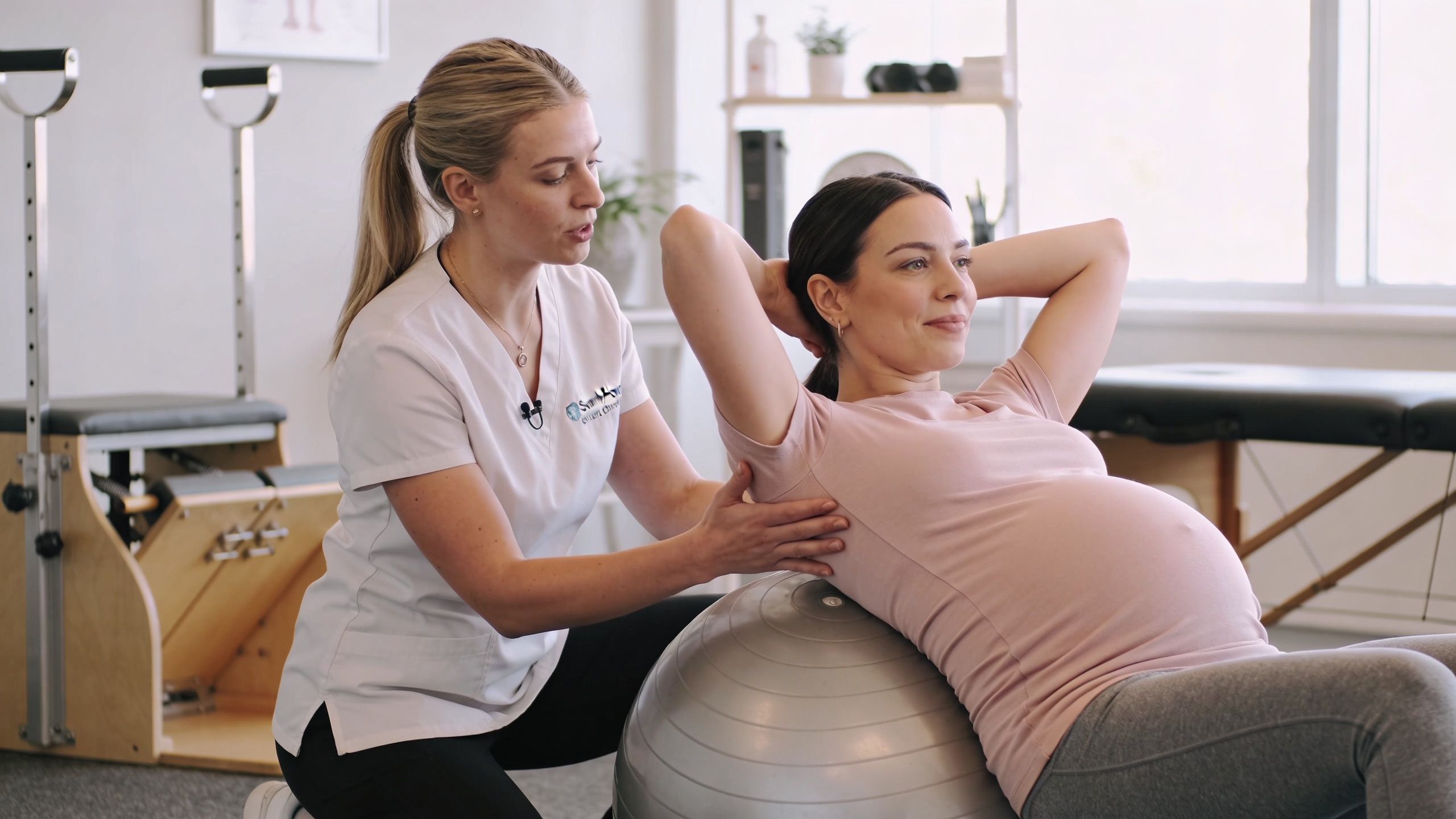
What treatment often includes
Pelvic health treatment during pregnancy usually combines a few categories of care rather than relying on one technique.
Movement and strength work
Many patients begin with exercises targeting the deep core, hips, breathing mechanics, posture, and pelvic floor coordination. The goal isn’t to make pregnancy feel like a boot camp. It’s to help daily movement feel steadier and less pressurized.
Some people need more support and control. Others need to stop over-gripping and learn to lengthen and relax. That distinction matters.
Hands-on treatment
Manual therapy can help when muscles and joints are irritated or guarding. This may focus on the low back, hips, adductors, glutes, abdominal wall, or pelvic region. During pregnancy, hands-on care should feel measured and symptom-directed.
This is especially useful when someone says, “I know I should move, but everything feels tight and cranky.” If tissue irritation is blocking progress, hands-on treatment can make exercise more effective.
Biofeedback and coordination training
For patients who struggle to feel what their pelvic floor is doing, biofeedback can turn abstract cues into something more concrete. That’s helpful for both underactive and overactive patterns.
For abdominal separation concerns, biofeedback-assisted protocols used in South Shore clinics can reduce inter-recti distance from over 2 cm to less than 1 cm over 8 to 12 weeks, and patients frequently report “huge differences” in core strength and function. That kind of progress matters because core function in pregnancy and postpartum is about pressure control, not just appearance.
Plans change based on your goal
A personalized plan should reflect what you’re trying to do.
- Staying active through pregnancy: Treatment may focus more on load management, exercise modifications, walking tolerance, and impact decisions.
- Preparing for labor: Sessions may spend more time on breathing, pelvic floor relaxation, pushing mechanics, positioning, and mobility.
- Planning for postpartum recovery: Treatment may include education on early recovery, scar considerations, lifting mechanics, and how to return to activity without rushing.
What tends to work better than generic routines
Generic online routines miss the context. They can’t tell whether your symptoms come from weakness, stiffness, fear of movement, poor timing, or just too much load on a tired system.
One local option for this kind of care is Peak Physical Therapy and Sports Performance, which offers pelvic health services in South Shore locations including Braintree, Norwell, and Scituate. The practical value of in-person care is that the plan can be adjusted as pregnancy changes your symptoms, schedule, and activity level.
Navigating Your Care Timing Insurance and Locations
Most pregnant patients ask the same practical questions first. When should I start. How often should I go. Will insurance cover it. Can I find a clinic that fits my route between home, work, and appointments.

When to start
Many pregnant people benefit from starting when symptoms first show up or when they want a plan before symptoms escalate. For others, the second trimester feels like the right time because energy is steadier and the body is beginning to handle more visible change.
If you’re already uncomfortable, there’s no prize for waiting. Earlier support often means fewer workarounds later.
How often visits usually happen
Visit frequency depends on symptoms, goals, and stage of pregnancy. Some patients need more frequent support for a short period. Others do well checking in periodically, then increasing visits later for labor prep or postpartum planning.
The right frequency is the one you can realistically follow. Consistency beats intensity.
Insurance and the practical side
Coverage depends on your individual plan, referral requirements, deductible status, and network details. If insurance language feels confusing, a plain-English health insurance guide for 2026 can help you understand common terms before you call and verify benefits.
For readers looking specifically at local pelvic health availability, the Braintree pelvic health center page is a useful place to check service details and scheduling options.
South Shore locations that make care easier
A local footprint matters because pregnancy care works best when appointments fit real life. Highbar Health’s South Shore network includes clinics in:
- North and central South Shore: Braintree, Quincy, Weymouth, Milton
- Coastal and nearby communities: Cohasset, Scituate, Duxbury
- Inland and family-route locations: Hanover, Pembroke, East Bridgewater, Norwell
- Further south access points: Kingston, Plymouth
The best clinic is often the one you can get to without turning treatment into another stressful task on your calendar.
Real Stories from South Shore Moms
The most convincing part of pelvic health care usually isn’t the exercise sheet. It’s the moment a patient realizes everyday life feels easier again.
The walker who stopped planning every route around bathrooms
A Weymouth mom described early pregnancy as a season of constant calculation. She knew where every restroom was, avoided longer walks, and braced every time she sneezed. After a few sessions focused on breathing, pressure control, and movement strategy, she said walks felt more normal again and less like a risk assessment.
She didn’t need a dramatic overhaul. She needed the right cues at the right time.
The patient who wanted confidence more than anything else
A Cohasset patient came in with less pain than fear. She was worried about labor, pushing, tearing, and whether her body would know what to do. What helped most wasn’t a single technique. It was understanding when to relax, when to support, and how to use breath instead of fighting against it.
“I stopped feeling like I had to guess. That changed everything.”
The parent preparing for life after delivery
A Pembroke mom wanted to keep up with a preschooler while preparing for a second baby. Her main concern wasn’t just birth. It was the first few months after birth. Lifting, carrying, getting off the floor, and returning to neighborhood walks without feeling depleted.
That kind of goal is common on the South Shore. People aren’t training for abstract milestones. They’re trying to live in their bodies with less strain and more trust.
What these stories have in common
The common thread isn’t perfection. It’s specificity. Each person needed a plan that matched symptoms, schedule, and what mattered at home. That’s why pelvic floor physical therapy South Shore MA works best when it feels personal, local, and grounded in the movements you do every day.
Your Questions About Pregnancy PT Answered
A lot of pregnant patients ask these questions after a walk on Nantasket Beach starts feeling heavier than usual, or after a simple lift, roll in bed, or sneeze suddenly feels different. Those changes can be normal. They still deserve attention, especially if the goal is a more comfortable pregnancy, a better birth experience, and an easier return to everyday life after delivery.
Is pelvic health PT safe during pregnancy
Yes, if care is matched to your trimester, symptoms, medical history, and any guidance from your obstetric team. Treatment during pregnancy should feel measured and specific. The point is to support your body as it changes, protect comfort, and help you stay active in ways that make sense for you.
Will the evaluation hurt
It should not feel forceful or rushed. Some areas can be tender if muscles or tissues are already irritated, but the visit should move at a pace that feels respectful and clear.
Internal assessment is always based on consent. You can ask questions, pause, or decline any part of the exam. At Peak’s neighborhood clinics, that conversation matters as much as the hands-on care.
Is this just doing Kegels
No. Pregnancy PT often includes breathing work, pressure management, hip and core support, posture changes, labor preparation, and practical movement strategies for daily life.
Some patients need pelvic floor strengthening. Others need to learn how to relax overactive muscles, reduce bearing down, or stop bracing through every movement. Kegels help in some cases, but they are not the whole plan.
Can PT help even if I’m not in severe pain
Yes. Many pregnant patients start before symptoms become intense because they want to stay ahead of pressure, leaking, back pain, or delivery concerns.
That proactive approach often pays off. It is easier to build good breathing, pushing awareness, and movement habits during pregnancy than to sort through the same issues while recovering postpartum and caring for a newborn.
What if getting to appointments is hard
That is common on the South Shore. Work, childcare, school pickup, bridge traffic, and plain old fatigue can make one more appointment feel unrealistic.
If in-person visits are hard to schedule, ask what options are available and what parts of care can still be handled efficiently. Some pieces of pregnancy PT, like education, exercise progressions, body mechanics review, and early guidance, can start with a conversation. Other parts are better done in person, especially if hands-on assessment or treatment is needed. The right format depends on your symptoms, your schedule, and how much support you need.
How do I know if now is the right time
Now is a good time if you are leaking urine, feeling pelvic heaviness, dealing with back, hip, or pubic pain, dreading exercise, or feeling unsure about labor and recovery.
It is also a good time if nothing feels dramatically wrong, but your body feels less reliable than it did a month ago. That is often when early PT is most useful.
What should I wear and bring
Wear comfortable clothes you can move in easily. Bring your questions, any referral or insurance information you have, and anything relevant from prior pregnancies, births, surgeries, or pelvic symptoms.
If you have specific goals, say them out loud. Some patients want less pain on walks. Some want to keep working out safely. Some want to feel ready to push during labor and recover well enough to get back to stroller walks, beach days, and chasing a toddler around a Duxbury playground.
What’s the next step
Schedule an evaluation at a clinic that fits your routine and get a clear starting point. The first visit is about figuring out what your body needs now and what will effectively help over the next few months.
If you’re looking for practical, local support during pregnancy, Peak Physical Therapy and Sports Performance can help you get started with pelvic health care that fits South Shore life. Whether your goal is less pressure on walks, more confidence for labor, or a smoother postpartum recovery, booking an appointment is a simple next step.