


A lot of people start looking for physical therapy quincy ma at the same moment they realize a problem isn’t going away on its own. It might be the back pain that shows up after the drive home, the shoulder that still complains every time you reach into the back seat, or the knee that turns a simple walk near Wollaston Beach into something you have to think about.
That kind of pain is frustrating because it doesn’t just hurt. It changes your routine. You skip your workout, cut your dog walk short, pass on a local league game, or avoid yard work because you already know how you’ll feel later. At that point, more theory isn't what's needed. They need a clear plan and a local team that understands how they live.
Table of Contents
- Your Partner in Recovery on the South Shore
- Understanding Physical Therapy for Your Goals
- Pain Relief for Your Active Quincy Lifestyle
- Our Advanced Physical Therapy Services
- Meet Your Neighbors and Expert Therapists
- Booking Your Appointment in Quincy is Simple
- Your Quincy Physical Therapy Questions Answered
Your Partner in Recovery on the South Shore
A Quincy resident’s story often sounds familiar. A desk job and commute leave the neck tight by Thursday. Weekend tennis adds a sharp shoulder pinch. Then even carrying groceries or sleeping comfortably becomes harder than it should be. That’s usually when people stop asking, “Will this pass?” and start asking, “Who can help me fix this?”

Good physical therapy should feel practical from day one. You should walk out understanding what’s driving the pain, what needs to improve, and what’s realistic in the next few weeks. You shouldn’t feel like you were handed generic exercises and told to hope for the best.
What local care should feel like
On the South Shore, people want to get back to specific things. Walking the beach. Playing pickup basketball. Keeping up with kids in the yard. Finishing a workday without the low back tightening up by lunch. The treatment plan has to match those goals or it usually misses the mark.
That’s why local context matters. A runner training through changing weather, a parent lifting a toddler, and a retiree trying to garden without flaring up hip pain don’t need the same approach.
Practical rule: If your treatment plan doesn’t clearly connect to the activity you want back, it probably needs adjustment.
What tends to work and what usually doesn’t
What works is a combination of hands-on evaluation, targeted exercise, and honest progression. Start with the movements that matter most, clean them up, build strength around them, and keep the plan simple enough to follow.
What doesn’t work is chasing symptoms without addressing habits, movement patterns, or load. Rest alone rarely solves an issue that keeps coming back. Neither does pushing through pain with no strategy.
For Quincy and South Shore residents, the right PT plan should help you feel better and move more freely in the places and routines that matter to you most.
Understanding Physical Therapy for Your Goals
Physical therapy is often easier to understand if you think of it as a coach for how your body moves. Not a coach who just tells you to work harder. A coach who figures out what’s limiting you, shows you what to change, and builds a step-by-step plan to get you back to the life you want.
That’s why good PT starts with goals, not just symptoms. “My shoulder hurts” matters. But “I want to get back to serving in my local tennis league” tells us much more. The same is true for someone who wants to lift a grandchild comfortably, return to a gym routine, or walk the neighborhood without hip pain building halfway through.
What physical therapy is really trying to do
At its best, PT helps you do three things:
- Calm symptoms down: Reduce pain, stiffness, or irritation enough that movement feels possible again.
- Fix the movement problem: Improve strength, mobility, balance, control, or mechanics that are keeping the issue going.
- Build confidence: Help you trust the body again, which matters more than many people realize after an injury or surgery.
A lot of patients are surprised to learn that therapy isn’t just about the painful area. Knee pain may involve hip strength. Neck pain may involve posture, upper back motion, and work setup. Foot and ankle problems may show up because balance and loading patterns changed months earlier.
What a personalized plan looks like
A useful plan is specific. It should match your schedule, your stress level, and what your body can tolerate right now.
For example, these are common differences between a plan that fits and one that doesn’t:
| Situation | Usually helpful | Usually not helpful |
|---|---|---|
| Busy workweek | Short home exercises you’ll actually do | Long routines that get skipped |
| Pain during daily tasks | Modify movement, then rebuild capacity | Avoid all activity indefinitely |
| Return to sport | Gradual sport-specific progressions | Jumping straight back into full intensity |
Physical therapy works best when the program fits your real life, not an idealized version of it.
If you want deeper educational content on anatomy, recovery timelines, or condition-specific guidance, that’s exactly what Highbar Health’s resource library is for. This page stays focused on the local side of physical therapy quincy ma, namely how to get evaluated, treated, and back to doing what you enjoy on the South Shore.
The partnership matters
The strongest outcomes usually come from teamwork. The therapist brings clinical judgment. You bring feedback, consistency, and real-world context. If something hurts, feels confusing, or isn’t working, say so. The plan should adapt.
That collaborative piece matters because bodies don’t recover in a straight line. Some weeks feel easy. Some don’t. The right PT relationship keeps progress moving even when recovery is a little messy.
Pain Relief for Your Active Quincy Lifestyle
A lot of Quincy patients wait until pain starts changing their routine. The runner cuts a Wollaston Beach loop short because the knee tightens halfway through. The parent feels their back grab when lifting groceries out of the car. The weekend basketball player tells himself the shoulder will loosen up, then realizes he can no longer throw comfortably.
That is usually the point where physical therapy becomes useful. The goal is not just to calm symptoms down for a few days. The goal is to figure out why the pain showed up, what keeps feeding it, and how to get you back to daily life and recreation with more confidence.
The problems we see most often around Quincy
Life on the South Shore creates predictable stress points. Long commutes, desk time, uneven training habits, yard work, rec leagues, and home projects all load the body in repeated ways. Over time, a small issue can turn into a stubborn one.
Common examples include:
- Back and neck pain from commuting and desk work: Stiffness builds during the day, then simple tasks like turning, reaching, or getting out of the car start to feel harder.
- Shoulder pain from lifting, sports, or overhead work: This often shows up with gym training, tennis, pickleball, house projects, or repeated carrying.
- Knee pain with running, stairs, or longer walks: Many people notice it during training, after games, or while trying to stay active with regular walking.
- Foot and ankle pain: Sometimes it starts after a rolled ankle. Other times it builds gradually from overuse, poor control, or a sudden jump in activity.
Pain rarely stays in one neat box. People start shifting weight, shortening stride, avoiding one arm, or bracing through motion. Those workarounds can keep you functioning for a while, but they also tend to keep the problem alive.
Relief usually comes from the right kind of movement
Complete rest has a place, but not as often as people think. For many orthopedic problems, the body responds better to modified movement, guided loading, and steady progression than to stopping everything.
That trade-off matters.
Push too hard and symptoms flare. Do too little and strength, mobility, and confidence drop off. Good PT lives in the middle. It gives the irritated area a chance to settle while rebuilding the capacity you need for real life, whether that means getting through a workday, returning to a South Shore running route, or kneeling in the garden without paying for it later.
What good local care should feel like
In a place with a lot of options, the right clinic should make care feel specific to your goals, not generic. A useful evaluation looks at the painful area, but it also looks at the joints above and below it, the way you move, and the demands of your week.
Ask practical questions:
- Do they connect treatment to activities I care about?
- Can they explain why this keeps coming back in plain English?
- Will the plan fit my work schedule and home responsibilities?
- Do they know how to progress someone from pain relief back to sport, exercise, or physical work?
At Peak PT, that local fit matters. Quincy and South Shore residents are not all training for the same thing. Some want to finish a race. Some want to play in an adult league. Some just want to walk the beach, keep up with kids, or get through a weekend of yard work without a flare-up on Monday. Our Quincy physical therapy team builds plans around those real goals.
The best plan is the one you can follow, adjust, and trust long enough to get better.
Our Advanced Physical Therapy Services
Advanced care matters when recovery stalls, surgery changes your movement, or your goal is bigger than getting through the day with less pain. A runner trying to get back to training on the South Shore, a parent lifting kids in and out of the car, and a retiree who wants to walk Wollaston Beach comfortably do not need the same plan. They need treatment matched to the way they live.
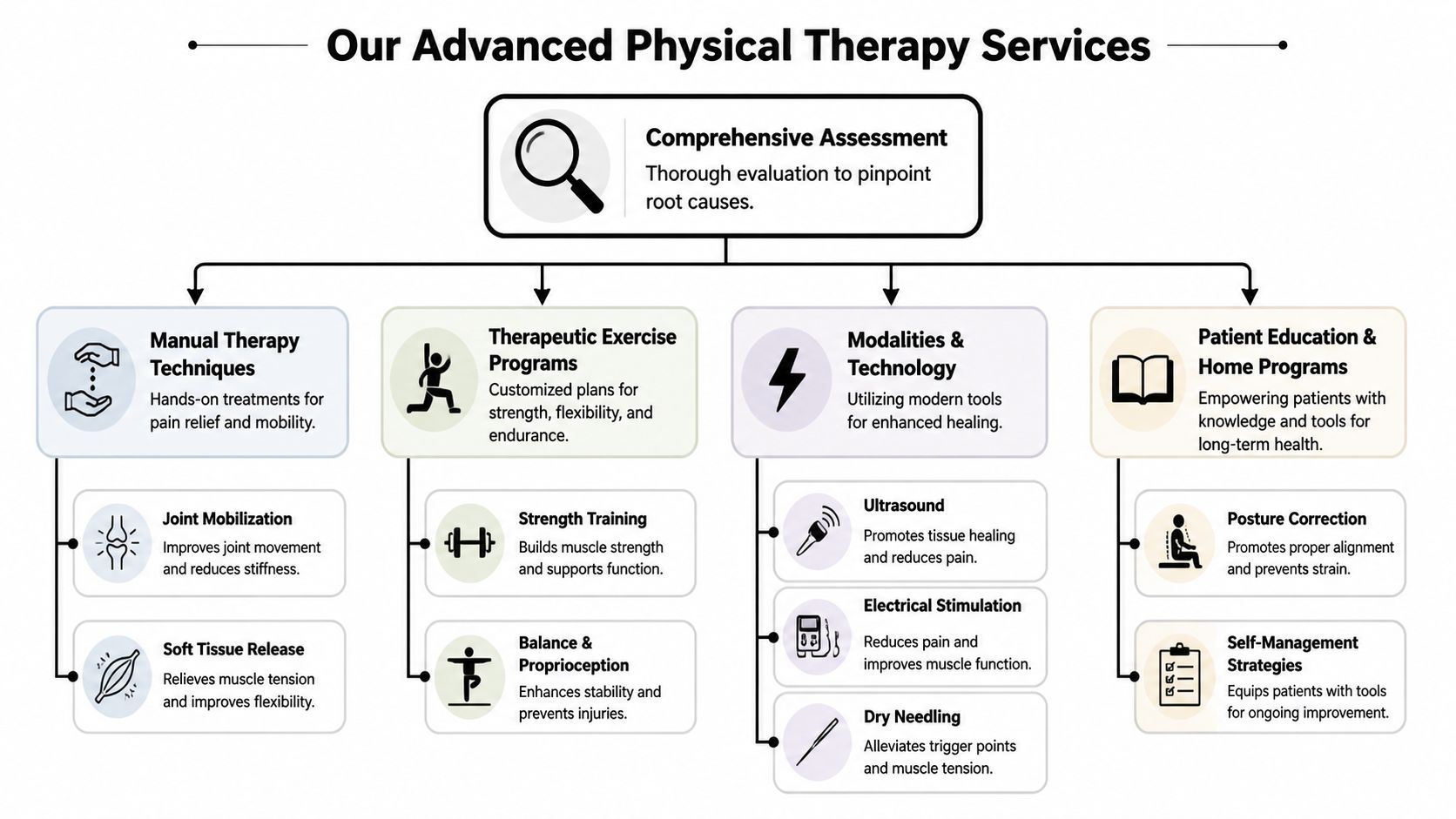
In practice, that usually means combining hands-on care, exercise, movement retraining, and clear home guidance. Aquatic therapy can help people who are limited by joint loading. Sport-specific training helps athletes return with better control and lower re-injury risk. Education matters too, because patients who understand why something hurts and what load they can tolerate usually make steadier progress between visits.
Orthopedic and post-surgical rehab
Post-surgical rehab needs timing and progression.
Early on, the job is often to calm swelling, restore motion, and teach safe movement. Later, the focus shifts to strength, balance, endurance, and trust in the body again. That progression is different after a joint replacement than it is after shoulder surgery or ACL reconstruction, which is why generic handouts rarely get someone all the way back.
A few common examples in Quincy clinics:
- Joint replacement recovery: Walking with less compensation, climbing stairs more comfortably, and getting up from a chair without shifting away from the surgical side.
- Rotator cuff or shoulder surgery: Restoring motion first, then building strength for reaching, lifting, and overhead tasks.
- ACL or other knee surgery: Improving strength symmetry, landing control, and confidence before a return to running or league sports.
For a closer look at the kinds of physical therapy treatment options in Quincy, it helps to review services with your diagnosis and goal in mind.
Sports rehab and performance-minded care
Active adults usually need more than pain relief. They need to cut, sprint, jump, rotate, or change direction without that guarded feeling that shows up when the body is not fully ready.
Good sports rehab looks at movement quality as much as symptoms. If a basketball player can jog but still lands stiffly, or a runner has no pain on flat ground but flares on hills, the rehab is not finished. The program has to rebuild force, control, and tolerance for sport demands.
That often includes:
- Movement analysis: Checking mechanics, control, and compensations that can keep symptoms around.
- Strength progressions: Building tissue capacity step by step instead of guessing.
- Sport-specific drills: Reintroducing speed, cutting, jumping, or throwing in a graded way.
This is also where access to a larger clinical ecosystem helps. Peak PT patients can use Highbar Health resources for deeper learning, which is useful when someone wants to understand the rehab process beyond the clinic and stay engaged between visits.
Pediatric care for growing bodies
Children need a different approach, both clinically and emotionally. Pediatric physical therapy can address motor delays, balance issues, torticollis, plagiocephaly, and developmental hip concerns through age-appropriate assessment and treatment. Sessions work best when they are structured, playful, and targeted to the child’s stage of development.
Parents usually want practical answers. Is my child meeting movement milestones? Are these falls typical? What can we do at home without turning daily life into therapy all day? Good pediatric care answers those questions clearly and gives families strategies they can use.
Other specialized options that can make a difference
Some cases improve faster with a broader set of tools. Depending on the problem, that may include pelvic health therapy, dry needling, balance training, fall prevention, or aquatic therapy.
| Need | Helpful approach |
|---|---|
| Joint pain with weight-bearing | Aquatic therapy or graded loading |
| Lingering stiffness and guarded movement | Manual therapy with active exercise |
| Athletic comeback | Strength progressions plus sport-specific drills |
| Developmental concerns in children | Play-based pediatric PT |
The method should fit the person, the problem, and the goal. That same practical mindset matters behind the scenes too, especially for clinics handling scheduling and patient communication securely. For practices evaluating systems, choosing compliant practice management software is part of running care well.
Meet Your Neighbors and Expert Therapists
People usually remember two things about physical therapy. They remember whether it helped, and they remember how they were treated while they were vulnerable. Skill matters. So does feeling heard.
That’s one reason local care can feel different. South Shore patients tend to want direct answers, a practical plan, and a therapist who talks like a person. They don’t want to be rushed through an appointment or left wondering whether anyone is tracking the bigger picture.

What good therapist relationships look like
A strong PT team doesn’t just deliver exercises. They notice when fear is slowing someone down after surgery. They catch the subtle limp a patient no longer realizes they have. They know when to push, when to modify, and when to explain the same concept in a simpler way.
That kind of care is especially important across age groups. Pediatric specialists, for example, need a calm and structured approach. As noted on Peak’s pediatric care page earlier in this article, those clinicians assess children from birth through age 14 and build individualized plans that use play-based exercise to improve coordination, balance, and everyday function.
Local expertise feels personal
On the South Shore, many therapists are treating the same types of goals week after week. Adults who want to get back to walking comfortably. Students trying to return to sports. Parents balancing rehab with work and childcare. Older adults who want steadier balance and more confidence moving around town.
That repetition builds useful pattern recognition. It also builds empathy. Therapists see how pain affects work, sleep, family routines, and mood. The best ones don’t treat those details as side notes.
What patients need most: clarity, encouragement, and a plan that changes as they improve.
If you’d like to get a sense of the clinicians serving the area, you can browse the Peak Physical Therapy team page. It helps to know who you’ll be working with before you walk in.
The right atmosphere helps recovery
Recovery goes better when the environment feels positive and focused. Patients tend to do better when they can ask questions, understand why they’re doing an exercise, and leave each visit with one or two clear priorities.
That may sound simple, but it matters. Consistency gets easier when the clinic feels welcoming and the therapist-patient relationship feels like a partnership, not a transaction.
Booking Your Appointment in Quincy is Simple
Starting PT shouldn’t feel complicated. Patients often wait longer than they should because life is busy, pain is annoying but manageable, or they’re unsure what the first visit involves. A simple booking process removes a lot of that hesitation.
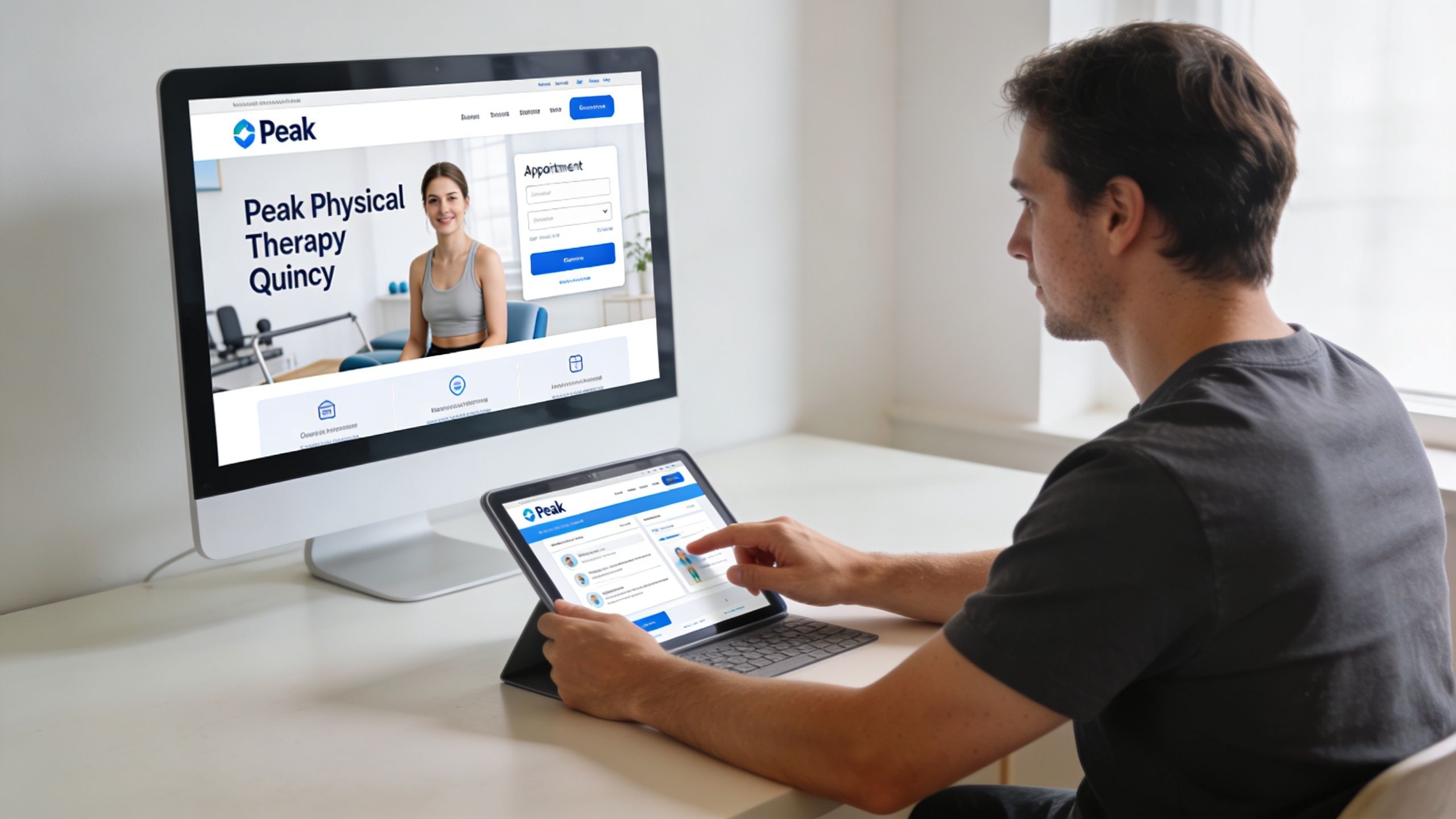
A straightforward way to get started
The easiest path is usually:
- Request an appointment online or by phone. Pick the clinic location that makes the most sense for your commute, home, or family schedule.
- Confirm insurance and intake details. Front desk teams typically help verify the basics and let you know what to bring.
- Complete forms before the visit if possible. That gives you more time face-to-face with the therapist.
- Come to the evaluation ready to talk about your real goals. “Less pain” is a start. “Back to pickleball” or “walk the beach without stopping” is even better.
For patients who want to start right away, the direct option is to schedule an appointment online with Peak.
What to expect at the first visit
Your first session usually includes a conversation, movement assessment, and an initial treatment plan. Expect questions about when symptoms started, what makes them better or worse, what you’ve tried already, and what you need to get back to doing.
Wear something comfortable enough to move in. If the problem involves your knee, shoulder, or back, choose clothing that lets the therapist see that area move without a struggle.
A good first visit should leave you with:
- A working explanation of what’s likely driving the issue
- A short-term plan for symptom relief and better movement
- A clear next step so you know what happens after the evaluation
Small details that make scheduling easier
People often underestimate how much the logistics matter. Convenient locations across the South Shore can help if Quincy isn’t the most practical stop on a given day. For some patients, a nearby clinic in Braintree, Weymouth, or Milton may fit better with work or school pickup.
On the administrative side, many healthcare groups also think carefully about digital workflows and patient privacy. If you’re curious how healthcare organizations approach secure scheduling systems behind the scenes, this overview of choosing compliant practice management software gives useful context.
A first appointment should lower stress, not add to it. The simpler the process, the easier it is to start getting better.
Your Quincy Physical Therapy Questions Answered
Do I need a doctor’s referral to start physical therapy
Sometimes yes, sometimes no. It can depend on your insurance plan and your situation. If you’re unsure, the fastest move is to contact the clinic and ask before booking so there are no surprises.
How long does a typical appointment last
The initial evaluation is usually longer than a follow-up visit because it includes your history, assessment, and treatment plan. Ongoing visits are more focused on treatment progression, exercise, and response to care.
What should I wear to PT
Wear comfortable clothing that lets you move easily. Athletic shoes are usually helpful. If your issue involves the shoulder, knee, or hip, clothing that makes the area easier to assess can save time.
How many visits will I need
That depends on the problem, how long it’s been going on, your goals, and how consistently you can follow the plan between visits. A simple strain and a post-surgical recovery won’t follow the same timeline.
Is physical therapy only for serious injuries
Not at all. Many people start because a smaller issue keeps returning and they want to stop managing around it. PT is often most useful before a problem becomes a bigger interruption.
Can PT help if I’m not an athlete
Absolutely. A large part of physical therapy quincy ma is helping everyday people move more comfortably through work, home life, walking, stairs, and recreation.
If pain is changing how you live, train, work, or move around Quincy, it’s a good time to get answers. Peak Physical Therapy and Sports Performance helps South Shore patients build practical recovery plans that fit real life, with local clinics and care designed to get you back to the activities you miss most.