
Your hand starts talking to you long before it fully gives out. It's the sharp catch when you lift a coffee mug in Braintree, the numb fingers halfway through a workday in Quincy, or the sore grip that makes yard work in Norwell feel like a chore instead of a Saturday routine. For some people it shows up after a fall, for others after surgery, and for plenty of South Shore residents it builds slowly through repetitive use until everyday tasks stop feeling easy.
That's where hand therapy becomes less mysterious and much more practical. If pain, stiffness, weakness, tingling, or loss of motion is getting in the way of work, hobbies, sleep, or simple daily tasks, focused care for the hand, wrist, and elbow can make a real difference. Around the South Shore, that matters. Local life asks a lot from your upper extremities, whether that means typing, driving, lifting, gardening, golfing, carrying kids, or getting back out on the water.
Table of Contents
- Regaining Your Grip on Life on the South Shore
- What Exactly Is Hand Therapy
- Common Conditions We Treat at Our South Shore Clinics
- Your First Hand Therapy Visit What to Expect
- Why Choose Peak for Hand Therapy on the South Shore
- Booking Your Appointment and Using Insurance
- Frequently Asked Questions for South Shore Residents
Regaining Your Grip on Life on the South Shore
Hand and wrist pain has a sneaky way of shrinking your world. First you avoid one task. Then you start compensating. Before long, you're opening jars with your other hand, changing how you carry groceries, and thinking twice before doing things you normally wouldn't even notice.
On the South Shore, those losses feel personal. Maybe your wrist flares up while casting off Plymouth. Maybe your fingers go numb after a long stretch at a desk in Quincy. Maybe your thumb aches every time you pull weeds in Duxbury or grip the steering wheel on the way to Weymouth. These aren't dramatic injuries in every case, but they can still chip away at your routine.
A hand problem doesn't need to be severe to be disruptive. If it changes how you work, sleep, drive, cook, or use your phone, it deserves attention.
The encouraging part is that many hand, wrist, and elbow problems respond well when treatment matches the problem instead of relying on generic rest, random stretches, or a brace bought in a hurry. Good therapy isn't about giving you a sheet of exercises and hoping for the best. It's about figuring out what tissue is irritated, what movement is limited, what daily demand keeps provoking it, and what needs to change so you can use your arm normally again.
For South Shore residents, convenience matters too. Recovery is usually smoother when care is close enough to fit into real life. If getting to appointments feels hard, people delay care, skip visits, or stop too soon. For an issue that affects how you button a shirt, type an email, swing a racket, or carry a bag, consistency often matters as much as intensity.
Small symptoms can become big workarounds
A lot of people wait because they assume hand pain will settle on its own. Sometimes it does. Often it doesn't.
Common signs that it's time to get checked include:
- Pain with gripping: turning keys, lifting pans, carrying shopping bags
- Numbness or tingling: especially at night or during desk work
- Stiffness: trouble making a fist or fully straightening fingers
- Weakness: dropping objects or struggling with lids and buttons
- Post-surgical uncertainty: not knowing how much movement is safe
When your hand stops cooperating, it affects independence fast. That's why hand therapy South Shore MA searches often come from people who aren't looking for theory. They want practical help that gets them back to daily life.
What Exactly Is Hand Therapy
Hand therapy focuses on the upper extremity. That includes the hand, wrist, forearm, and elbow, and sometimes the shoulder if it is affecting how the arm works.
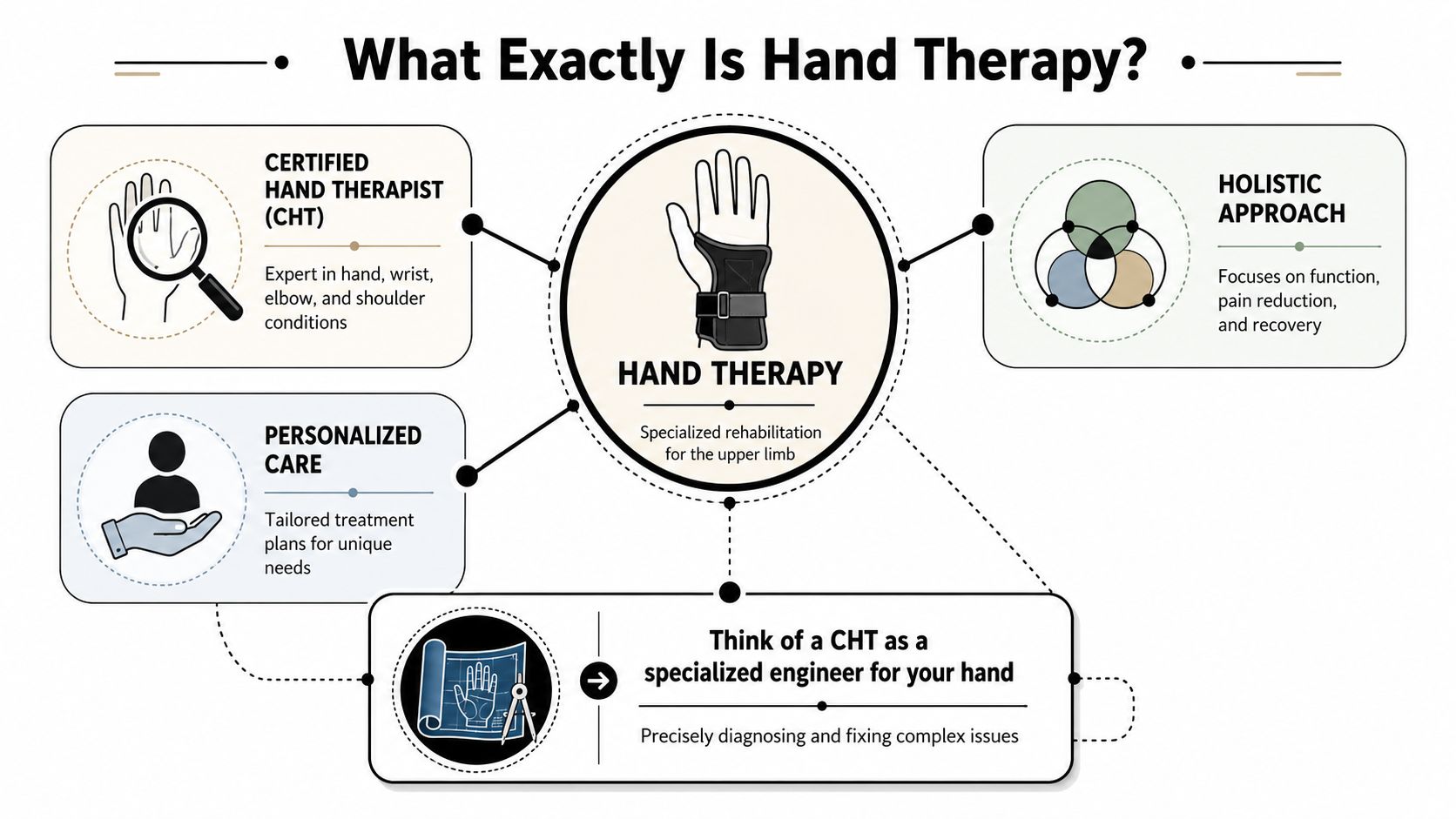
For South Shore residents, that usually means one practical question. Can you use your arm well enough to do what your week requires, whether that is pruning in Duxbury, lifting groceries in Hingham, carrying gear to the field, or typing through a full workday in Quincy?
Why this specialty exists
The hand is small, but the job is precise. A few degrees of lost finger motion, a stiff scar, ongoing swelling, or an irritated nerve can change how you button a shirt, hold a coffee mug, turn a key, or open a jar.
That level of detail is why Certified Hand Therapists, or CHTs, have a separate area of expertise. We look closely at tendon glide, joint motion, swelling, sensation, scar mobility, grip patterns, and tissue healing timelines. General rehab can help many injuries. Hand therapy gets more specific when the problem involves fine motor control, custom splinting, post-operative protection, or symptoms that keep returning during daily use.
How it differs from general rehab
Hand therapy is more task-specific and more protective when needed. Some patients need movement right away. Others need a short period of support so healing tissue is not stressed too early. The trade-off matters. Push too hard and symptoms flare. Protect too long and stiffness can set in.
Treatment may include:
- Custom splinting: to protect a healing structure or improve joint position
- Edema and scar care: to reduce swelling and keep soft tissue moving
- Tendon and nerve mobility work: to improve motion without overstressing irritated tissue
- Dexterity retraining: for pinching, fastening, writing, keyboard use, and other fine motor tasks
- Strength progression: based on healing stage and real-life demands at home, work, or sport
Patients often ask how hard they should work during exercises. That depends on the diagnosis, the stage of healing, and what the tissue can tolerate that day. Strive Workout Log's RPE guide gives a simple explanation of effort levels, and that same idea can help patients understand why hand therapy programs are progressed carefully instead of by guesswork.
If numbness and night pain are part of the picture, treatment may also center on nerve irritation and wrist mechanics. For that kind of problem, our page on carpal tunnel syndrome treatment options explains the condition in more detail.
A good hand therapy plan should match the actual problem and the actual demands of your life on the South Shore. If the goal is getting back to gardening, carpentry, childcare, office work, racquet sports, or using your hand without guarding it, the program should reflect that from the start.
Common Conditions We Treat at Our South Shore Clinics
Hand, wrist, and elbow problems rarely stay small for long. A little numbness during a Quincy workday can turn into waking up at night shaking out your hand. A sore elbow after yard work in Duxbury can start interfering with lifting groceries, carrying a grandchild, or pouring coffee the next morning.
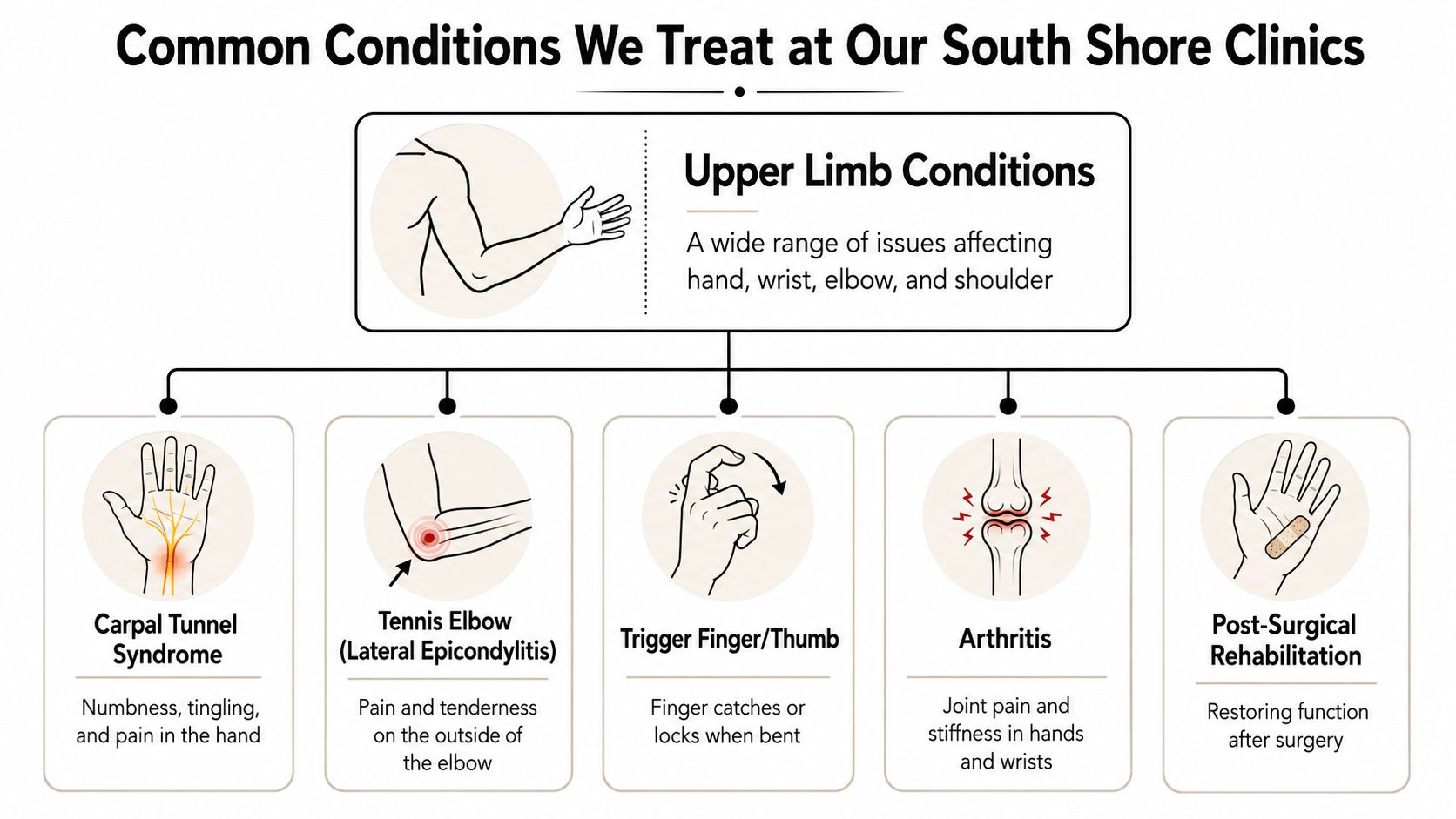
Problems that show up again and again
Carpal tunnel symptoms are one of the most common reasons people come in. The pattern is usually familiar. Numbness or tingling in the thumb, index, and middle fingers, hand fatigue with typing or driving, and symptoms that flare at night. Good treatment aims to calm the nerve, improve wrist mechanics, and make everyday tasks easier again. Patients dealing with those symptoms often start with our page on carpal tunnel syndrome treatment to understand the condition more clearly.
Tennis elbow often catches people off guard because it is not limited to sports. I see it in office workers using a mouse all day, tradespeople gripping tools, parents lifting children, and South Shore residents trying to keep up with golf, pickleball, or weekend projects. The trade-off here is important. Rest alone may settle pain for a short time, but it usually does not build tendon tolerance. Therapy focuses on loading the tendon gradually, improving forearm strength, and changing the habits that keep the area irritated.
Trigger finger or trigger thumb can start as a mild annoyance and become a daily problem fast. People describe catching, snapping, or locking when they grip a steering wheel, hold gardening tools, or pick up a pan from the stove. Treatment may include splinting, tendon gliding, and changes to repetitive gripping tasks so the finger can settle down without getting stiff.
Hand Therapy Solutions for South Shore Residents
| Condition | How Hand Therapy Helps | Common in South Shore Activities Like… |
|---|---|---|
| Carpal tunnel syndrome | Reduces irritation, improves nerve comfort, guides bracing and movement changes | Typing, commuting, tool use, long desk days |
| Tennis elbow | Builds tendon tolerance and improves lifting mechanics | Golf, racquet sports, yard work, carrying gear |
| Trigger finger or thumb | Calms painful catching and improves smooth finger motion | Gripping gardening tools, cooking, childcare |
| Arthritis in the hand or wrist | Protects joints, improves mobility, supports daily function | Walking with a leash, opening containers, dressing |
| Post-surgical recovery | Restores motion and function while protecting healing tissue | Returning to work, driving, household tasks |
Arthritis in the hand or wrist is another frequent issue, especially for adults who notice morning stiffness, aching after use, or less confidence with grip. The goal is not to make every joint feel brand new. The goal is to keep you functional and comfortable enough to do what matters, whether that means buttoning clothes, opening containers, cooking, or holding a dog leash on a beach walk.
Post-surgical recovery needs careful timing. After a hand procedure, a tendon repair, or a fracture, doing too little can lead to stiffness, but pushing too hard can irritate healing tissue. That balance is a big part of skilled hand therapy. We guide motion, swelling control, scar management, and strength progression based on healing stage and what your surgeon allows.
Waiting too long after surgery or a serious hand injury often turns stiffness into the main problem.
We also treat wrist fractures, tendon injuries, thumb pain, nerve irritation, elbow pain, and hands that feel weak, swollen, guarded, or unreliable. The diagnosis matters, but function matters more. If you cannot type through a full shift, carry a bag in from the car, return to childcare duties, or get back to hobbies you enjoy, that gives us something specific to treat.
For some patients, the uncertainty is as frustrating as the pain itself. The process is often easier to understand once people see how therapy sessions work. Different setting, same basic idea. A clear plan tends to reduce anxiety and help people stick with treatment.
Your First Hand Therapy Visit What to Expect
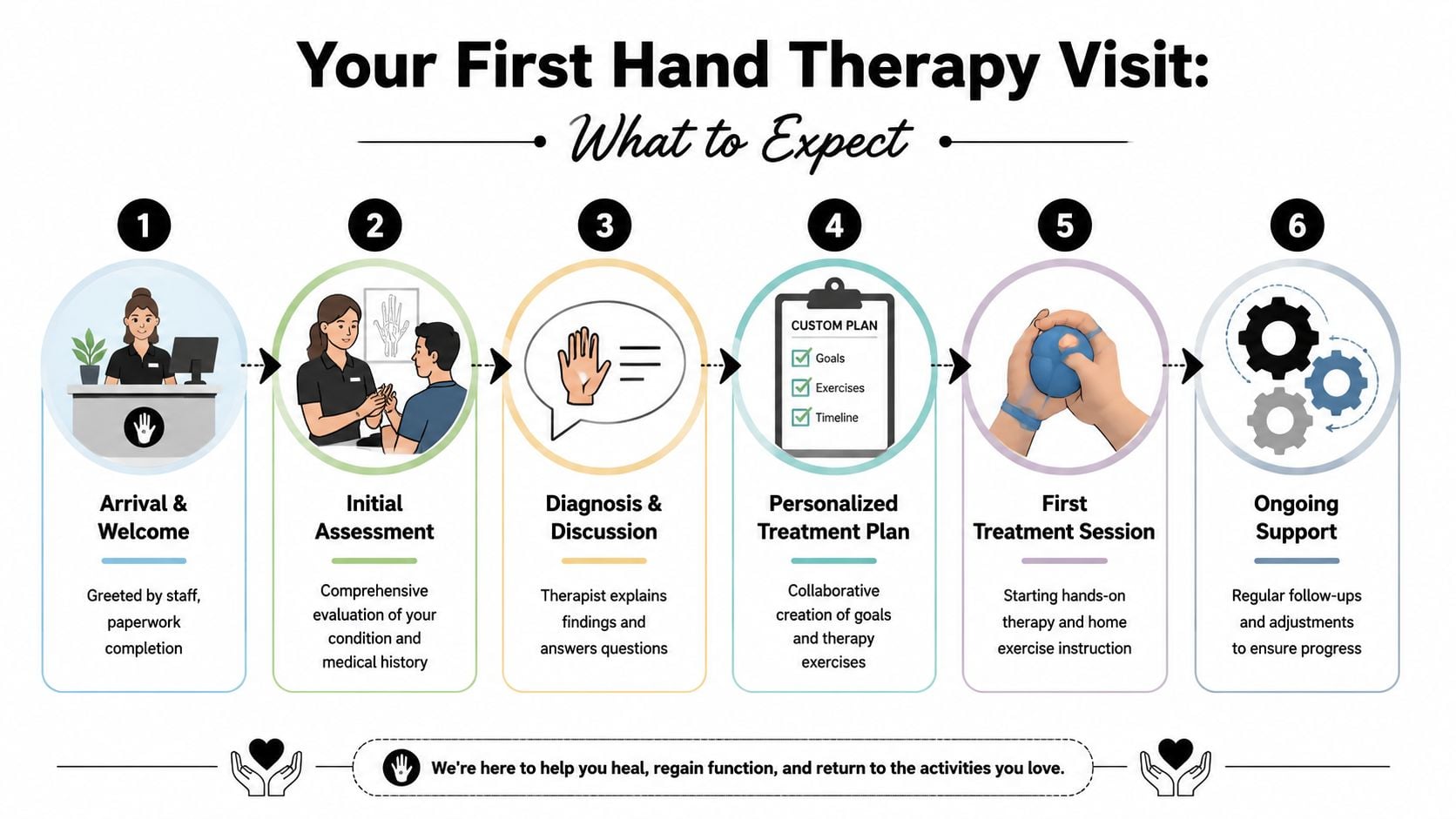
You wake up in Scituate with a stiff thumb, drive to work in Quincy, and realize by midmorning that gripping the steering wheel, typing, and opening your water bottle all feel harder than they should. That is the kind of problem a first hand therapy visit is built to sort out. The goal is to figure out what is irritated, what is weak or stiff, and what you can safely do right now.
What happens in the evaluation
The first visit starts with your story. We ask what happened, how symptoms behave through the day, what work or home tasks set things off, and what you need to get back to. For a South Shore patient, that might mean pruning in Duxbury, lifting a grandchild in Braintree, handling tools in Hanover, or getting through a full computer day in Milton without increasing pain.
Then we examine how the arm is functioning. That usually includes motion, grip or pinch, swelling, tenderness, scar mobility if you had surgery, sensation changes like numbness or tingling, and the specific movements that reproduce symptoms. A hand problem is rarely just about where it hurts. The pattern matters more than the pain location alone.
We also look for trade-offs. Protecting a sore wrist can overload the elbow. Resting too long can calm pain but increase stiffness. Pushing strength too early can flare tissue that is still healing.
People often feel less anxious once they know the structure of care. That is one reason a simple article on how therapy sessions work can be reassuring. Different field, same idea. A good first visit should leave you with a clearer plan than the one you walked in with.
What your plan may include
Treatment depends on the diagnosis, the stage of healing, and the demands of your day. Someone recovering from surgery needs a different pace than someone trying to calm down overuse from repetitive typing or childcare. In hand therapy, timing matters.
Your plan may include:
- Targeted exercises: to restore motion, tendon glide, grip, pinch, or forearm strength
- Custom splinting or bracing: to protect healing tissue or reduce stress on an irritated joint or nerve
- Hands-on treatment: to address stiffness, swelling, scar restriction, or guarding
- Task-specific coaching: changes in grip, posture, tool use, or work setup that reduce strain
- A home program: short, realistic work you can keep up with between visits
At Peak, that care is directed by clinicians who focus on upper-extremity recovery, including a Certified Hand Therapist on our team, Rebecca Wolongevicz, MS, OTR/L, CHT. That matters when the plan needs to balance healing with real-life use instead of giving generic advice.
What helps: the right amount of movement at the right stage, with a plan tied to your actual routines.
What slows progress: guessing, overtesting the hand at home, or avoiding use so long that stiffness becomes the bigger problem.
By the end of the first visit, you should know what we are treating, what to avoid for now, what you can keep doing, and what improvement should look like over the next few weeks. That kind of clarity makes it easier to stick with care, whether you are coming from Weymouth, Plymouth, or a lunch break appointment near the office.
Why Choose Peak for Hand Therapy on the South Shore
You feel it on an ordinary day first. Your wrist catches when you lift a grocery bag in Weymouth. Your thumb aches halfway through spring planting in Duxbury. Your forearm starts burning before lunch at a Quincy desk. At that point, the right clinic needs to be both skilled and close enough to fit real life.
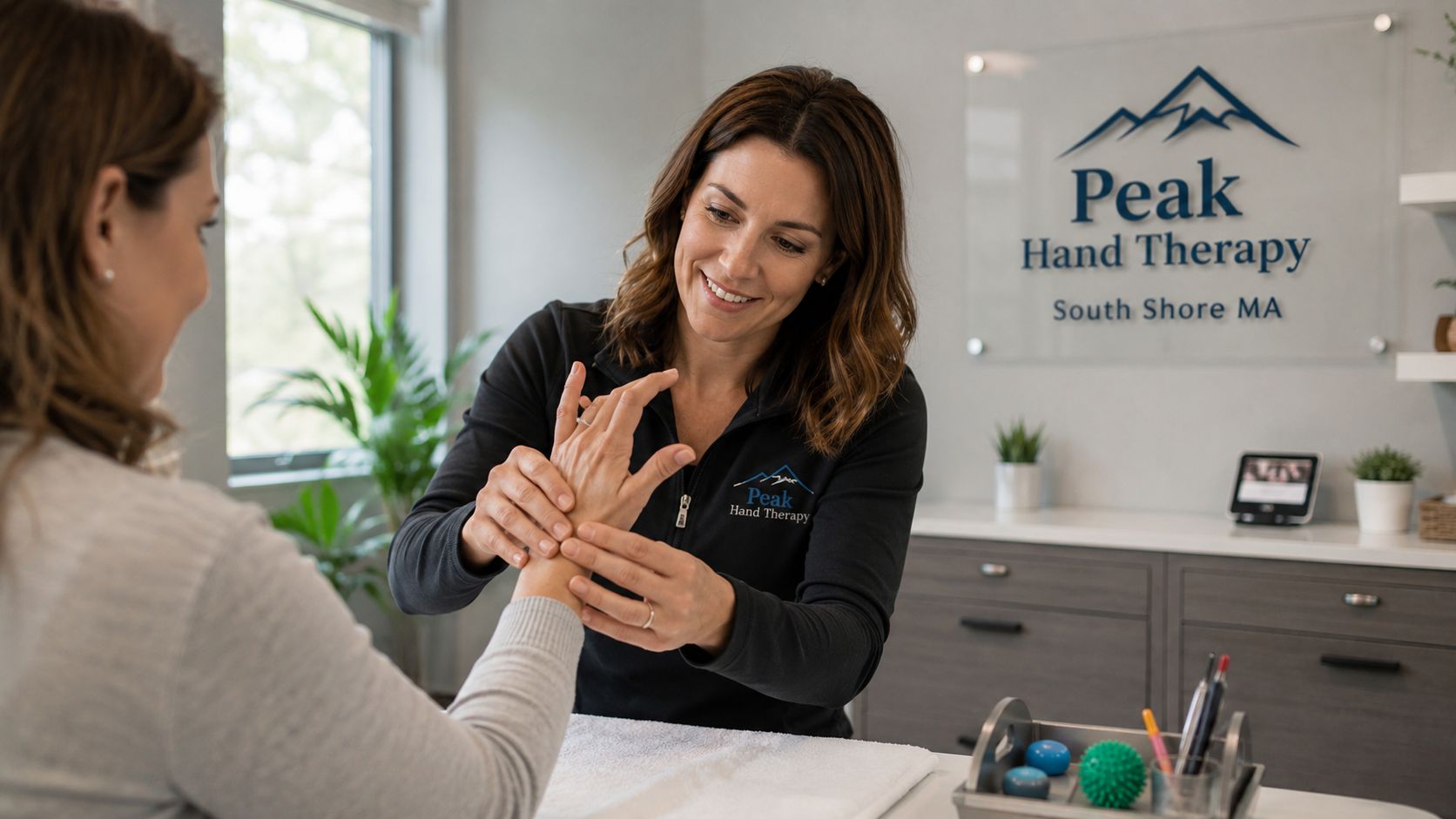
Peak stands out for a simple reason. Good hand therapy depends on precision, but progress also depends on showing up often enough to build on each visit. If care is hard to reach, people cancel, stretch out appointments, or try to push through symptoms too long. I see that trade-off all the time.
Access that works with South Shore routines
On the South Shore, convenience is part of treatment. A nearby clinic makes it easier to come in during the phase when swelling, motion, pain, and activity tolerance are changing week to week. It also helps later, when the focus shifts to grip, endurance, and getting back to specific tasks without a setback.
That matters for people commuting through Braintree, working in Quincy, raising young kids in Hanover, or balancing seasonal work near Plymouth. It matters for retirees who want to get back to golf, gardening, or home projects without turning a manageable problem into months of compensation.
Peak's clinic network serves Braintree, Quincy, Weymouth, Cohasset, Duxbury, East Bridgewater, Hanover, Kingston, Milton, Norwell, Pembroke, Plymouth, and Scituate. For South Shore residents, that usually means you can choose a location that fits your drive, workday, or school pickup schedule instead of rearranging your whole week around therapy.
Hand-specific skill matters
Hand, wrist, and elbow problems are different from general orthopedic complaints. Small changes in tendon glide, joint stiffness, scar mobility, grip pattern, or nerve irritation can have an outsized effect on daily function. Treatment has to match the tissue involved and the stage of healing.
That is why hand-specific training matters. Peak patients have access to a Certified Hand Therapist, Rebecca Wolongevicz, MS, OTR/L, CHT, which gives the team deeper upper-extremity knowledge when a case needs a more exact plan.
The goal is not to rest the hand forever or to push it aggressively. The goal is to load it appropriately, protect healing structures, and keep you using the arm in ways that support recovery.
Care that fits the way you actually use your hands
A useful plan has to make sense for your day. A parent in Scituate who is lifting a toddler needs different advice than an electrician in Pembroke, an office worker in Quincy, or someone in Milton recovering after surgery. The diagnosis may sound the same on paper, but the demands are not.
That is one of the advantages of a larger local rehab network. If a hand issue overlaps with shoulder pain, post-surgical rehab, work conditioning, or other musculoskeletal care, treatment can stay coordinated instead of fragmented across separate offices.
The best clinic is the one that can treat the problem correctly and fit the rhythm of your life on the South Shore.
A good choice usually comes down to three practical questions:
- Can the team treat hand, wrist, and elbow problems with real upper-extremity experience?
- Is the clinic close enough that I can attend consistently?
- Will the plan reflect what I need to do at home, at work, and around town?
When those pieces line up, people usually make steadier progress and feel more confident using the hand again.
Booking Your Appointment and Using Insurance
Once you're ready, scheduling should be simple. You can book in one of two ways: either requesting a visit online or calling the clinic location that's most convenient for home or work.
A few tips make the process easier:
- Choose the closest location: convenience helps you stay consistent
- Mention your main issue clearly: hand, wrist, elbow, post-surgical care, numbness, or weakness
- Share timing details: when symptoms started, whether you had surgery, and what activities are limited
- Ask about insurance early: that removes surprises and helps you plan
If insurance is one of your main concerns, it helps to start with the clinic's insurance information page. The administrative team can help verify coverage and explain next steps before your first appointment.
If you've been putting this off because scheduling feels like another task on an already full list, keep it simple. Pick the nearest clinic, request the first available visit that works for your week, and get the process started. Hand problems tend to become more frustrating the longer you work around them.
Frequently Asked Questions for South Shore Residents
Do I need a doctor's referral to start hand therapy in Massachusetts
That depends on your insurance plan and your situation. Some patients can begin directly, while others may need a referral or prescription for coverage. The fastest way to avoid confusion is to contact the clinic and ask based on your insurance.
Which South Shore locations are most convenient for hand therapy
That depends on where you live and where you spend your day. If you work in Quincy but live farther south, you may prefer a clinic near the office. If your schedule revolves around home and family logistics, the nearest hometown location usually works best. The easier the commute, the easier it is to stay consistent.
How long does a typical hand therapy session last
Session length varies based on the condition, stage of healing, and what needs to be done that day. An evaluation is usually more detailed than a follow-up visit because it includes history, testing, and plan development. Follow-ups may focus on hands-on treatment, splint checks, exercise progression, and functional retraining.
What should I bring to my first visit
Bring any referral paperwork if you have it, your insurance card, a list of medications if relevant, and any brace or splint you've been using. If you've had surgery, bring the post-op instructions if available. Wear or bring clothing that lets the therapist see the affected area easily.
Is hand therapy only for people after surgery
No. Many people come in for overuse injuries, nerve symptoms, arthritis, tendon problems, sprains, stiffness, or pain that's interfering with work and daily life. Surgery is only one pathway into care.
If hand, wrist, or elbow pain is limiting your work, hobbies, or daily routine, Peak Physical Therapy and Sports Performance makes it easy to get care close to home across the South Shore. You can book at a nearby clinic, ask questions about insurance, and get a plan built around the activities you want to return to, whether that's typing comfortably, gardening, lifting, or getting back to life without second-guessing every grip.