


From a baby's first wobbly steps to a teenager scoring the winning goal at a game in Hingham, a child's ability to balance is fundamental to nearly every activity. Strong balance skills are crucial not just for sports, but for everyday tasks like navigating a crowded school hallway, climbing stairs, and even sitting still in a classroom chair. This ability is the silent foundation of coordination, physical confidence, and injury prevention.
Yet, many parents find themselves wondering if their child's clumsiness is just a normal phase or a sign of an underlying issue needing attention. Balance is a complex skill involving the brain, inner ear (vestibular system), and muscles working together to understand the body's position in space, a sense known as proprioception. When these systems are well-tuned, a child moves with greater efficiency and safety. For young children, many fundamental skills, including balance, are developed through engaging in various gross motor activities for preschoolers.
This guide provides a definitive collection of fun and effective balance exercises for kids, organized by type and progression. You will learn how to:
- Perform specific exercises like Single-Leg Stands, Tandem Walking, and Balance Beam activities.
- Incorporate progressions using tools like foam pads or creating obstacle courses.
- Understand when it might be time to seek expert guidance from a pediatric physical therapist at one of our Massachusetts clinics for a personalized evaluation. Let's build a foundation of stability, one playful step at a time.
1. Single-Leg Stand (Flamingo Pose)
The single-leg stand, often called the "flamingo pose" by kids, is a foundational balance exercise. It involves standing on one foot for as long as possible while keeping the other leg either bent at the knee or held straight out. This simple action is one of the most effective balance exercises for kids because it requires the small muscles in the feet and ankles to make constant, tiny adjustments to maintain stability. It directly targets proprioception, the body's awareness of its position in space, and strengthens the core muscles that act as a stabilizing center.
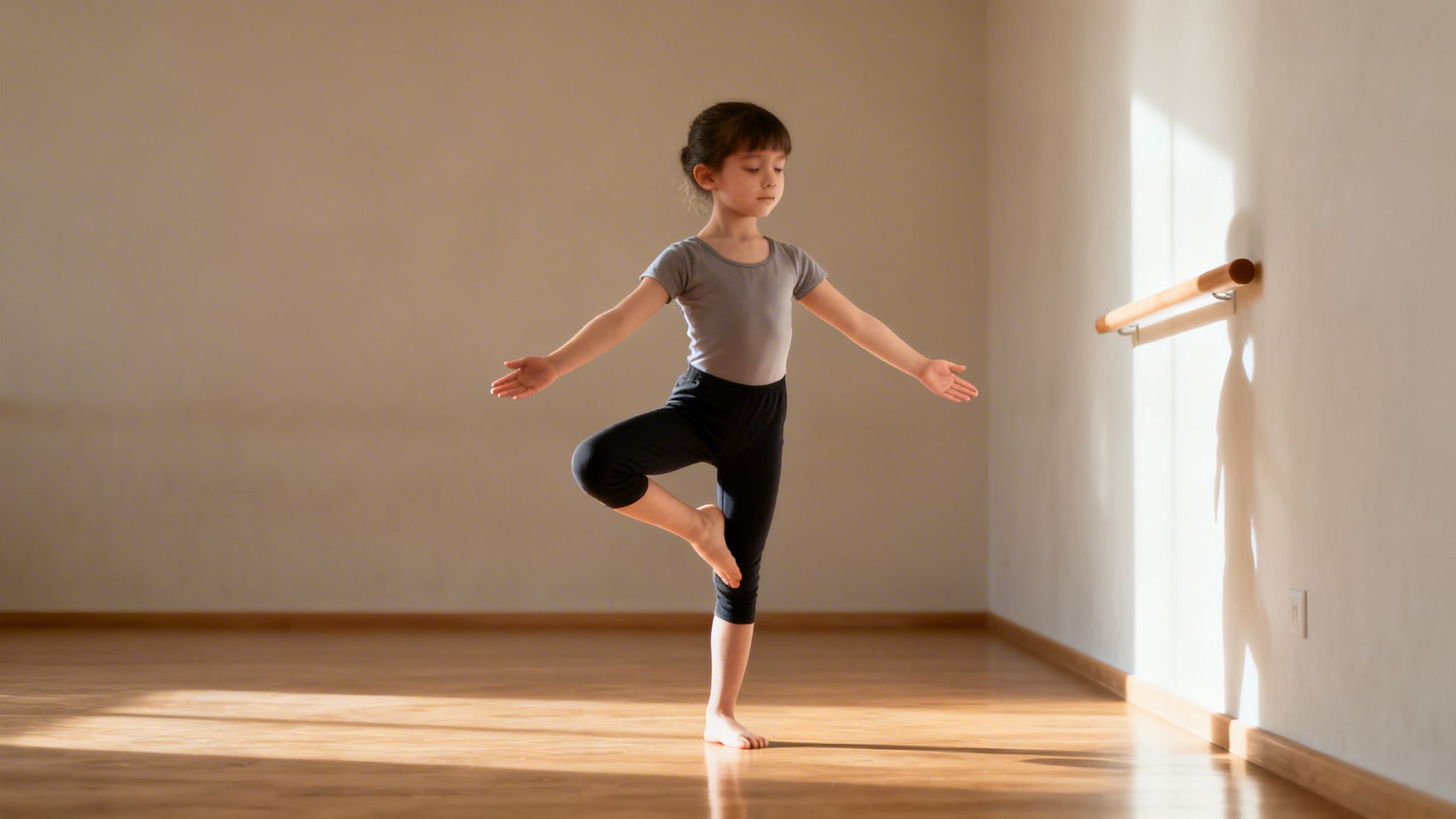
At Peak Physical Therapy, our licensed physical therapists frequently use the single-leg stand as part of a comprehensive evaluation to measure a child's balance and stability. It's an essential diagnostic tool and a core part of treatment for conditions ranging from ankle sprains to post-surgical ACL recovery. The data gathered helps our team develop a personalized treatment plan to improve motor control and reduce the risk of future injuries. This is a key part of our commitment to early intervention, which can make a significant difference in a child's long-term physical development and confidence.
How to Implement the Flamingo Pose
Making this exercise fun and effective is simple. Turn it into a game by seeing who can hold the "flamingo" pose the longest.
- Start with Support: Have your child stand next to a wall or sturdy chair, placing one or two hands on it for initial support.
- Lift and Hold: Instruct them to lift one foot off the ground, bending the knee to a comfortable position. Their standing leg should have a slight, soft bend-not locked straight.
- Focus the Eyes: Encourage them to pick a spot on the wall in front of them to stare at. This visual anchor point greatly improves stability.
- Count Aloud: Count how many seconds they can hold the pose. This creates a clear metric for tracking progress and adds a motivational challenge.
- Switch Sides: Ensure they practice on both legs equally to develop balanced strength and coordination.
Physical Therapist Tip: For an added challenge, progress to practicing with eyes closed for a few seconds. Removing visual input forces the body to rely entirely on its internal sense of balance (proprioception), which significantly strengthens the neuromuscular pathways responsible for stability.
2. Tandem Walking (Heel-to-Toe Walking)
Tandem walking, also known as heel-to-toe walking, is a dynamic balance exercise that challenges a child's coordination while they are in motion. It involves walking along a straight line by placing the heel of the front foot directly against the toes of the back foot with each step. This movement narrows the base of support, forcing the body to rely more heavily on its vestibular (inner ear balance) and proprioceptive systems to maintain an upright posture. It’s an excellent way to improve gait quality, dynamic stability, and lower body coordination.
At Peak Physical Therapy, tandem walking is a fundamental component of our pediatric balance assessments and post-concussion rehabilitation programs. Observing a child's ability to walk heel-to-toe helps our licensed physical therapists perform a comprehensive evaluation to identify subtle impairments in gait and dynamic balance that might not be apparent during static tests. This information is crucial for developing effective, personalized treatment plans for children with neurological conditions or for young athletes returning to play after an injury. It allows us to measure progress and ensure a child can move safely and confidently.
How to Implement Tandem Walking
This exercise can be easily set up at home or in your yard using simple household items. The key is to focus on control and precision over speed.
- Create a Guideline: Use painter's tape on the floor, a chalk line on a Braintree sidewalk, or even a garden hose stretched out in your backyard to create a visible path for your child to follow.
- Demonstrate the Walk: Show your child how to place their heel directly in front of the toes of their other foot. Encourage them to look forward, not down at their feet, as this improves balance.
- Start with Assistance: Walk alongside your child, offering a hand for support if needed. This provides safety and reassurance as they get used to the narrow walking pattern.
- Focus on Control: Remind them that it’s not a race. Slow, deliberate steps are more effective for building balance than rushing.
- Practice on Both Sides: Although this involves walking forward, ensure they start with both the right and left foot to avoid developing a preference.
Physical Therapist Tip: To advance this exercise, have your child try walking the line backward. This significantly challenges their coordination and proprioception. You can also introduce dual-tasking by having them count backward from 20 or name different animals as they walk, which trains the brain to maintain balance while processing other information.
3. Balance Beam Walking
Balance beam walking takes the challenge of static balance and puts it into motion. Children walk along a low beam or even a simple line on the ground, which requires constant adjustments to their posture and foot placement. This is one of the most practical balance exercises for kids because it closely mimics real-world situations, like stepping on a curb in Quincy or navigating uneven terrain at a local park. It directly improves dynamic balance, coordination, and core stability, forcing the brain and body to work together to maintain an upright position while moving.
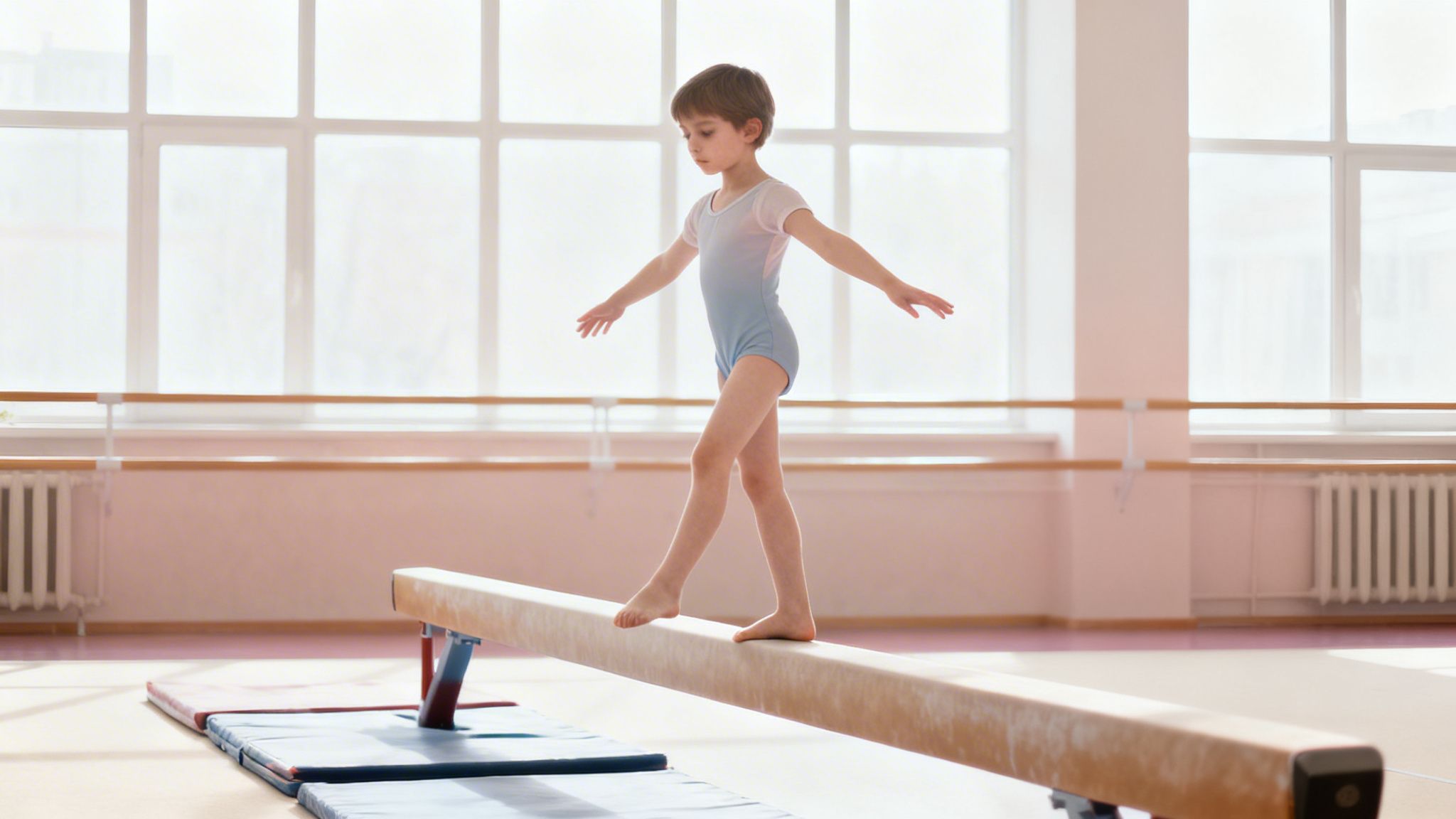
At Peak Physical Therapy, we use low balance beams extensively in our pediatric physical therapy programs. It is a fundamental tool for helping children with motor skill delays, sensory processing disorders, or those recovering from lower-body injuries. Walking on a beam provides immediate sensory feedback, helping a child develop better body awareness and postural control. This controlled environment allows our licensed physical therapists to safely challenge a child’s balance and create a foundation for more complex movements, which is vital for building confidence in sports and daily activities.
How to Implement Balance Beam Walking
You don't need a professional gymnastics beam; a line of tape on the floor or a sturdy plank of wood laid flat in the grass works perfectly.
- Start on the Ground: Create a straight line on the floor with painter's tape. Have your child practice walking heel-to-toe along the line.
- Introduce a Low Beam: Progress to a low, wide beam (like a 2×4 piece of wood on its wider side) placed on the ground. Ensure the area is clear of obstacles.
- Keep Arms Out: Encourage them to hold their arms out to the side like airplane wings. This helps with initial stability.
- Walk Forward and Backward: Once they are comfortable walking forward, challenge them to walk backward slowly. This requires even more focus and control.
- Add Challenges: Have them try side-stepping or carrying a light object like a beanbag. This divides their attention and improves their ability to balance while performing other tasks.
Physical Therapist Tip: To increase the proprioceptive demand, have your child try walking the line or beam with "dinosaur stomps" (lifting their knees high with each step) or "tiptoe walking." These variations change the center of gravity and require different muscle groups to activate, making the exercise more effective for motor planning.
4. Foam Pad or BOSU Ball Balance Activities
Introducing an unstable surface like a foam pad or a BOSU ball dramatically increases the difficulty and effectiveness of balance exercises for kids. Performing activities on these surfaces forces the body into a highly reactive state. The constant wobble requires the small stabilizer muscles in the ankles, knees, and hips to fire continuously, making thousands of micro-adjustments to maintain upright posture. This process is a direct and powerful way to train proprioception and improve neuromuscular control.
Using unstable surfaces creates a challenging environment that mimics the unpredictable nature of sports and active play. These tools are staples in pediatric physical therapy and advanced sports conditioning programs for this very reason. Whether it's a child recovering from an ankle sprain or a young athlete working on injury prevention, unstable surface training builds a more resilient and responsive body. At Peak Physical Therapy, our clinics across Massachusetts are equipped with these tools to help children rebuild stability and confidence after an injury, often as part of a return-to-play protocol.
How to Implement Unstable Surface Training
The key is to start slow and prioritize safety. The goal is to challenge balance, not cause a fall. Always supervise your child during these activities.
- Start with Support and Two Feet: Have your child stand with both feet on the foam pad or the flat side of a BOSU ball. Position them next to a wall or a sturdy counter where they can place their hands for support.
- Progress to Hands-Free: Once they feel comfortable, encourage them to lift their hands from the support and find their balance. They should keep their eyes fixed on a point in front of them.
- Introduce Dynamic Movement: When they can stand confidently, add a dynamic task. Have them toss a soft ball back and forth with you, reach for objects in different directions, or perform small squats.
- Advance to Single-Leg Stands: For a significant challenge, have them try a single-leg stand on the unstable surface, again starting with hand support and progressing to hands-free.
- Ensure Proper Footwear: Have your child wear supportive sneakers during these exercises. Bare feet can be an option, but good shoes often provide the necessary structure to prevent ankle rolling.
Physical Therapist Tip: To track improvement, time how long your child can perform each task (e.g., 30 seconds of two-footed standing, 10 seconds on one leg). Documenting this progress is a fantastic motivator and provides valuable data on their developing motor control and stability.
5. One-Leg Hop and Hold
The one-leg hop and hold is a dynamic balance exercise that elevates the challenge from static holds to active stabilization. It involves hopping on one leg and then immediately freezing in a stable, balanced position upon landing. This powerful activity develops reactive balance, which is the ability to recover stability after a sudden movement, like a hop or a jump. It challenges proprioception under load and strengthens the muscles, tendons, and ligaments around the ankle and knee, making it one of the most effective balance exercises for kids involved in sports.
At Peak Physical Therapy, our sports medicine specialists frequently integrate hop-and-hold progressions into ACL injury prevention programs and return-to-play protocols for young athletes in our South Shore communities. This exercise is invaluable for assessing and building the neuromuscular control required for sports like soccer, basketball, and volleyball, where jumping and landing are constant. Our licensed physical therapists analyze a child's landing mechanics to identify and correct movement patterns that could lead to injury, a core part of our mission to keep kids active and safe. You can learn more about how physical therapy helps children improve these abilities by exploring our resources on motor skills development.
How to Implement the Hop and Hold
This exercise feels like a game and is excellent for building explosive power and control. Always start with smaller hops and prioritize good form.
- Start with Two Feet: Begin with a simple two-foot hop-and-stick. Have your child jump forward a short distance and "stick" the landing, holding still for 3 seconds. This teaches the landing mechanics safely.
- Progress to One Leg: Once they master the two-foot landing, have them stand on one leg. Instruct them to perform a small hop forward on that same leg.
- Stick the Landing: The goal is to land softly on the ball of the foot and immediately stabilize, holding the position without wobbling or putting the other foot down. The landing knee should be bent.
- Hold and Count: Challenge them to hold the landing position for 3-5 seconds. You can count aloud to make it a clear goal.
- Vary the Direction: Once forward hops are mastered, introduce lateral (side-to-side) hops to challenge different muscle groups and improve agility.
Physical Therapist Tip: Pay close attention to the knee's position during landing. It should track straight over the foot and not collapse inward, which is a common risk factor for knee injuries. Using a mirror can provide helpful visual feedback for your child to self-correct their alignment.
6. Star Excursion Balance Test (SEBT)
The Star Excursion Balance Test (SEBT) is a more advanced, multi-directional balance exercise that challenges a child's stability in multiple planes of motion. It involves standing on one leg while reaching with the other leg toward eight distinct points arranged in a star pattern on the floor. This dynamic test is a superb way to assess and improve a child’s proprioception, core strength, and hip stability all at once. Because it requires coordinated movement while maintaining a stable base, the SEBT is one of the most functional balance exercises for kids, closely mimicking the demands of sports and complex play.
At Peak Physical Therapy, our sports medicine and pediatric specialists use the SEBT as a critical assessment tool, especially for youth athletes in towns like Pembroke and Hanover. It helps our licensed physical therapists screen for injury risk, identify subtle balance deficits, and establish return-to-play criteria after an injury like an ankle sprain or ACL reconstruction. Measuring the reach distances in each direction provides objective data to track progress and uncover asymmetries between the left and right sides, guiding a more precise and effective personalized treatment plan.
How to Implement the Star Excursion Balance Test
This test can be set up easily at home using tape or chalk. The goal is to reach as far as possible without losing balance or putting the reaching foot down for support.
- Create the Star: Use tape to mark eight lines extending from a central point on the floor, like spokes on a wheel. You can start with just four directions (forward, backward, left, and right) to simplify it for younger children.
- Establish the Stance: Have your child stand on one leg in the center of the star. The standing knee should be slightly bent, and their hands can be placed on their hips.
- Reach and Tap: Instruct them to reach with their free foot and lightly tap the floor along one of the lines, going as far as they can while maintaining their balance. They should then return the foot to the center without touching down.
- Repeat in All Directions: Continue this process for all eight directions before switching to the other leg.
- Focus on Form: Ensure your child keeps their torso upright and avoids excessive bending at the waist. The movement should primarily come from the hips and legs.
Physical Therapist Tip: To make this a measurable game, mark the child's maximum reach distance on each line with a small object or a piece of tape. On their next attempt, challenge them to beat their previous mark. This turns a clinical test into a fun, motivational goal and is a great way to track improvements in dynamic balance over time.
7. Tandem Stance (Semi-Tandem and Full Tandem Standing)
The tandem stance is a static balance challenge that involves standing with one foot directly in front of the other, as if on a tightrope. This heel-to-toe position drastically narrows the base of support, forcing a child's body to rely heavily on its proprioceptive and vestibular systems to maintain an upright posture. It is one of the most fundamental balance exercises for kids because it directly isolates and improves postural control without the added complexity of movement, making it a powerful tool for building foundational stability.
At Peak Physical Therapy, our licensed physical therapists use the tandem stance as a critical component in our pediatric balance assessments. It is a standard part of post-concussion baseline testing for young athletes in Massachusetts communities and is used to evaluate progress for children with developmental delays or sensory integration challenges. Observing a child's ability to hold this stance helps our physical therapists perform a comprehensive evaluation to pinpoint specific weaknesses in their balance system and create a personalized treatment plan to improve stability and prevent falls.
How to Implement the Tandem Stance
The key to this exercise is gradual progression. Start with a wider, more stable position and slowly move toward the full heel-to-toe stance.
- Start with Semi-Tandem: Instruct your child to stand with the heel of one foot aligned with the big toe of the back foot. This slightly offset position is a great starting point. Have them stand near a wall for hand support.
- Progress to Full Tandem: Once they are comfortable, have them move to a full tandem stance where the heel of the front foot touches the toes of the back foot.
- Engage the Core: Remind them to stand tall with shoulders back and their tummy muscles tight. Proper posture is essential for maintaining balance.
- Track the Duration: Time how long your child can hold the position without losing their balance or touching the wall. Aim for 30-60 seconds as a goal.
- Remember to Switch: Practice with each foot in front to ensure symmetrical development of balance and strength on both sides of the body.
Physical Therapist Tip: To significantly increase the difficulty, have your child try the tandem stance on a less stable surface, like a pillow or a foam pad. This challenges the small stabilizing muscles in the ankles and feet even more. For an advanced variation, try tossing a soft ball back and forth while they hold the stance to work on dynamic balance.
8. Gait Training with Balance Perturbations (Obstacle Course Walking)
Gait training with balance perturbations, which is a clinical way of saying "obstacle course walking," is a dynamic and highly effective method for improving a child's balance. It involves navigating a path with various objects to step over, duck under, or walk around, all while maintaining stability. This activity is one of the most functional balance exercises for kids because it closely mimics the unpredictable nature of real-world environments, like a busy playground or a cluttered room. It actively challenges a child's reactive balance, proprioception, and ability to adapt their movements on the fly.
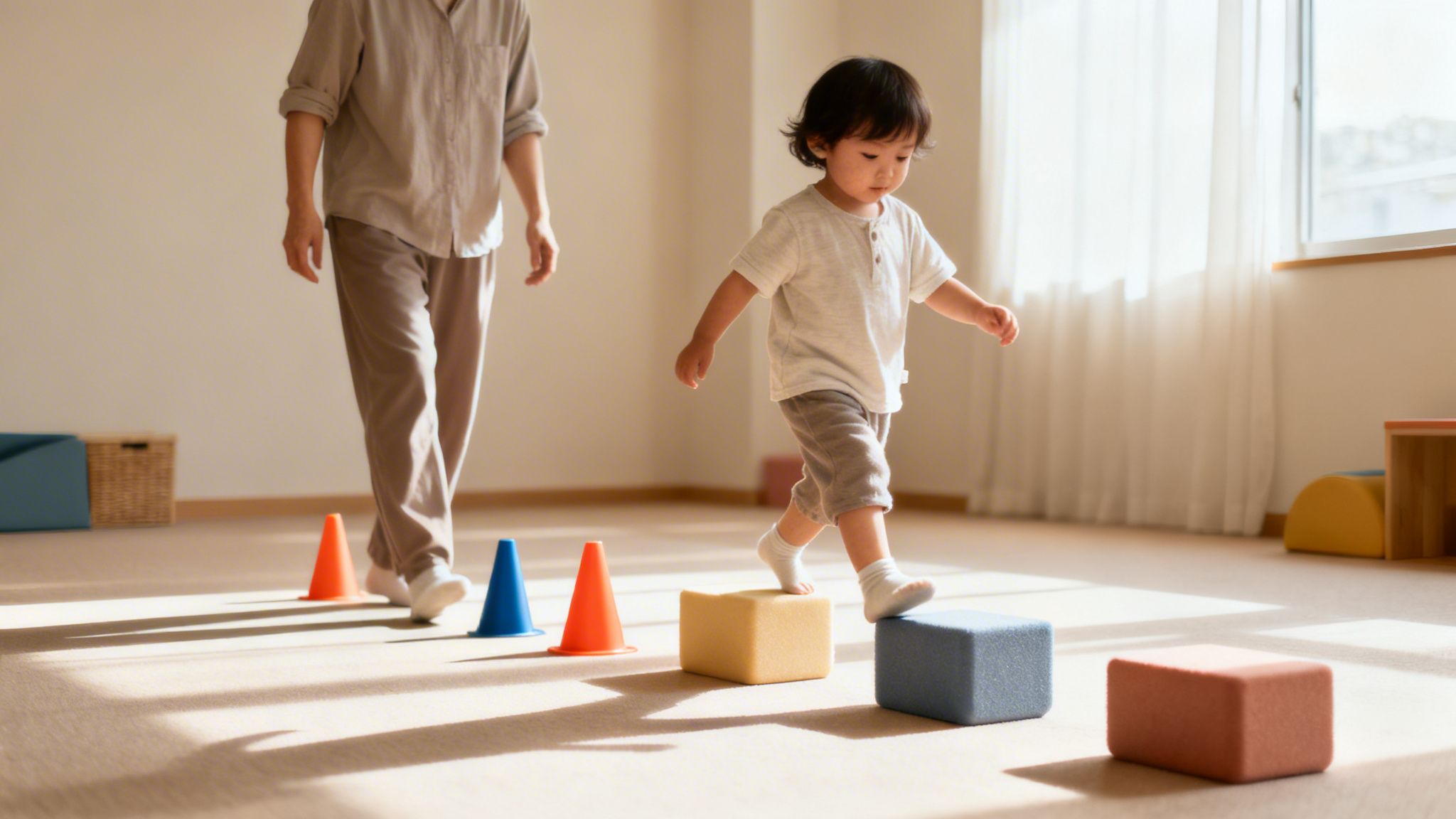
At Peak Physical Therapy, our pediatric specialists frequently design customized obstacle courses to treat children with developmental delays, neurological conditions, or post-injury coordination deficits. This approach allows our licensed physical therapists to create specific challenges that target a child's unique areas of weakness in a controlled, safe environment. For example, we might incorporate uneven surfaces for a child recovering from an ankle sprain or require quick directional changes for a young athlete looking to prevent future injuries. This type of training is central to our evidence-based treatment plans for conditions like functional gait disorder, where the brain's signals to the legs are disrupted.
How to Implement an Obstacle Course
Transforming your living room into a safe and effective obstacle course is a fantastic way to keep kids engaged. For practical ideas, you can set up a simple indoor obstacle course for toddlers using household items.
- Start Simple: Begin with low-to-the-ground obstacles like pillows to step over, painter's tape to walk along, and chairs to crawl under. Ensure pathways are wide and clear.
- Create Variety: Use a mix of items that require different movements. For example, use cones to weave around, a small stool to step up and down from, and pool noodles to step over.
- Incorporate Cognitive Tasks: Add a layer of difficulty by asking your child to count their steps aloud, name colors as they pass them, or carry a light object like a stuffed animal from start to finish.
- Vary Surfaces: If possible, have the course move across different textures, such as from a rug to a tile floor or onto a yoga mat, to challenge their feet and ankles.
- Track Progress: Time how long it takes to complete the course or count how many times they lose their balance. This helps you see improvement and know when to increase the difficulty.
Physical Therapist Tip: To advance this exercise, try having your child walk the course while gently tossing a soft ball or beanbag back and forth with you. This "dual-tasking" forces their brain to manage both balance and a separate motor skill simultaneously, which is excellent for building the automatic, reactive stability needed for sports and daily life.
Kids Balance Exercises: 8-Exercise Comparison
| Exercise | Implementation complexity | Resource requirements | Expected outcomes | Ideal use cases | Key advantages |
|---|---|---|---|---|---|
| Single-Leg Stand (Flamingo Pose) | Low — simple instructions, easy progression | None required; optional wall for support | Improved static balance, ankle and core stability | Early childhood development, screening, home programs | Accessible, low risk, quick assessment |
| Tandem Walking (Heel-to-Toe) | Low–Medium — requires controlled gait instruction | Open straight space, tape or line marker | Improved dynamic gait balance and coordination | Gait assessment, post-concussion, pediatric PT | Functional, identifies gait issues, easy to progress |
| Balance Beam Walking | Medium — progressive skills, need for spotting | Beam or marked line, safety mats, space | Enhanced proprioception, postural control, confidence | Gymnastics, PT, school PE balance circuits | Engaging, measurable progression, sport-relevant |
| Foam Pad or BOSU Ball Activities | Medium — requires supervision to avoid compensation | Foam pads/BOSU/discs, mats, appropriate footwear | Increased proprioceptive engagement and stabilizer strength | Rehab, injury prevention, sports conditioning | High proprioceptive challenge, highly adaptable |
| One-Leg Hop and Hold | High — requires coaching on landing mechanics | Open space, mats, close supervision | Improved reactive balance, explosive power, readiness for sport | Return-to-play testing, athlete training, post-injury rehab | Sport-specific, measurable, builds power and stability |
| Star Excursion Balance Test (SEBT) | High — complex pattern, needs clear instruction | Markers/tape, measuring tool, ample floor space | Multi-directional balance assessment, identifies asymmetries | Athletic assessment, research, targeted rehab planning | Comprehensive, quantifiable, sensitive to deficits |
| Tandem Stance (Semi/Full) | Low — simple static positions to administer | Minimal space, optional wall contact | Baseline static balance and vestibular/proprioceptive screening | Clinical screening, fall risk, concussion baseline | Quick, safe, minimal equipment |
| Gait Training with Perturbations (Obstacle Course) | Medium–High — design and progression planning needed | Space, cones/blocks/pool noodles, varied surfaces | Improved adaptive/reactive balance and spatial planning | Functional rehab, PE classes, adaptive balance training | Highly engaging, functional, infinitely variable |
When to See a Physical Therapist for Your Child’s Balance
Watching your child wobble, adapt, and eventually master the exercises in this guide, from a simple single-leg stand to more complex obstacle courses, is a rewarding experience. These activities are designed to build not just physical stability but also the self-assurance that comes with it. By integrating balance exercises for kids into your family's routine, you are providing the fundamental building blocks for coordination, athletic skill, and injury prevention that will serve them for a lifetime.
However, we understand the worry that comes when a child’s balance challenges go beyond what can be addressed with at-home exercises alone. While every child develops at their own pace, certain signs may indicate an underlying issue that warrants a professional evaluation. Trust your parental instincts. If you feel a persistent sense of worry about your child’s movement, it’s always best to seek an expert opinion.
Recognizing When Professional Help is Needed
It can be difficult to distinguish between typical childhood clumsiness and a more significant balance deficit. The key is to look for patterns that seem unusual for your child's age group or that interfere with their daily life and happiness.
Here are specific red flags that suggest it’s time to consult a pediatric physical therapist:
- Frequent, Unexplained Falls: A toddler will fall often, but a school-aged child who consistently stumbles or falls without a clear reason, especially on flat surfaces, may need an assessment.
- Significant Asymmetry: Do you notice your child consistently favors one side of their body? Perhaps they only hop on their right foot or always lean to the left when trying to balance. This can point to muscle imbalances or neurological issues that a licensed physical therapist can evaluate.
- Difficulty with Age-Appropriate Skills: If your child is struggling to keep up with peers in activities like running, jumping, or climbing, or if they can't perform basic skills like standing on one foot for a few seconds by age five, it could signal a delay.
- Avoidance of Physical Activities: Sometimes, children who are insecure about their balance will actively avoid playgrounds, sports, or games. This can look like a preference for sedentary activities, but it may be rooted in a fear of falling or feeling "bad" at physical play.
- Unusual Gait or Walking Patterns: Pay attention to how your child walks. Persistent toe-walking, a limp with no known injury, or an unusually wide or clumsy gait are all reasons to seek a professional evaluation from a licensed physical therapist.
At Peak Physical Therapy and Sports Performance, we understand how concerning it can be when your child isn't moving with the confidence you expect. Our pediatric specialists in our Massachusetts clinics, from Quincy to Plymouth, are trained to perform a comprehensive evaluation to identify the root cause of balance problems.
A licensed physical therapist can conduct a thorough assessment to pinpoint the specific systems contributing to your child's difficulties. This could involve issues with:
- Vestibular System: The inner ear's system that governs our sense of balance and spatial orientation.
- Proprioception: The body's ability to sense its own position, motion, and equilibrium.
- Vision: Visual tracking and focus are critical for maintaining balance.
- Musculoskeletal System: Core strength, ankle stability, and hip control are all essential for steady movement.
Based on this comprehensive evaluation, your physical therapist will develop a personalized, play-based treatment plan that feels less like therapy and more like fun. Through targeted games and activities, we help children build strength, improve sensory processing, and gain the confidence they need to navigate their world safely and joyfully. Addressing these issues early doesn't just prevent falls; it empowers a child to participate fully in school, sports, and social play, setting them on a path for a healthy, active life.
If you've noticed any of these signs or simply feel that something isn't right with your child's balance, our team at Peak Physical Therapy and Sports Performance is here to provide answers and support. Our pediatric physical therapists across Massachusetts create fun, effective, and individualized plans to help your child find their footing and thrive. Schedule an evaluation at one of our convenient locations by visiting us at Peak Physical Therapy and Sports Performance today.