


If you want to reduce swelling fast, the key is to protect the injured area, elevate it above your heart, avoid anti-inflammatory medications for the first couple of days, and apply gentle compression. This approach, part of the modern PEACE & LOVE protocol, works with your body’s incredible healing process, not against it.
The result? A better, faster recovery that helps you get back to your life.
Why Swelling Happens and Your First Response
When you twist an ankle on a Plymouth running trail or tweak your back while shoveling snow, that immediate puffiness is a sign your body has sprung into action. We understand how frustrating swelling can be—it’s painful, stiff, and stops you from doing what you love. However, swelling, or edema, is actually the most visible part of your body's natural inflammatory response. It’s not the enemy; it’s the first responder.
Your body rushes fluid filled with white blood cells and healing proteins to the site of the injury. While this process protects the damaged tissue, it also brings along that familiar pain and stiffness. Understanding this is the first step to managing swelling effectively without interfering with essential repairs.
Moving Beyond RICE
For decades, the go-to advice for any sprain or strain was RICE—Rest, Ice, Compression, and Elevation. It’s simple and easy to remember, but our clinical understanding has evolved. We now know that in some cases, aggressive icing and complete rest can actually slow down your long-term healing.
These older methods can pump the brakes on the natural healing factors your body is trying to deliver to the injury. Today, our licensed physical therapists recommend a more thoughtful approach: the PEACE & LOVE framework. It’s a smarter way to guide you through both the immediate and later stages of recovery.
PEACE & LOVE: The Modern Standard for Injury Care
This two-part acronym is a much smarter, evidence-based roadmap for healing. PEACE guides your actions in the first few days, while LOVE outlines what you need for a full, lasting recovery. It’s a big shift from aggressive intervention to supportive, active care.
To see just how much our understanding has evolved, it helps to compare the old method with the new one.
From RICE to PEACE & LOVE: A Modern Approach to Swelling
| Component | Traditional RICE Method | Modern PEACE & LOVE Protocol |
|---|---|---|
| Protection | Rest: Often interpreted as complete immobilization. | Protect: Unload the area for 1-3 days but avoid prolonged rest to encourage gentle movement. |
| Elevation | Elevation: Raise the limb above the heart. | Elevate: Same principle—raise the limb above the heart to help with fluid drainage. |
| Inflammation | Ice: Aggressive and prolonged icing to reduce inflammation. | Avoid Anti-inflammatories: Avoid ice and NSAIDs (like ibuprofen) to allow the natural, necessary inflammatory process to work. |
| Compression | Compression: Wrap the area to limit swelling. | Compress: Use gentle compression with a bandage or taping to manage excessive fluid buildup. |
| Patient Role | Not explicitly addressed. | Educate: Understand your body's healing process and learn about active recovery to reduce anxiety and promote better outcomes. |
This updated protocol respects the body's natural healing capabilities and sets you up for a much more effective recovery down the road.
The PEACE Protocol for Immediate Care
For the first 1-3 days after an injury, your goal is to create the best possible environment for healing to begin.
P for Protect: Unload or restrict movement in the injured area for a short period. This is just to stop you from making the injury worse right away.
E for Elevate: Keep the injured limb propped up higher than your heart as much as you can. This lets gravity do the work of draining excess fluid.
A for Avoid Anti-inflammatories: Hold off on medications like ibuprofen and naproxen, and don't overdo it with ice. Believe it or not, that initial inflammation is a critical part of the healing process.
C for Compress: Use an elastic bandage or compression tubing to apply gentle, even pressure. This can help limit severe swelling without shutting down the healing response.
E for Educate: Your body is incredibly smart and knows how to heal. A physical therapist can perform a comprehensive evaluation, explain what’s happening, manage your expectations for recovery, and help you trust the process.
When dealing with swelling in specific, localized areas—like hemorrhoids, for instance—the treatment methods often involve quick, targeted home remedies. For more on that topic, you can check out these 7 Fast Relief Tips for Hemorrhoid Swelling Treatment.
By sticking to the PEACE protocol for musculoskeletal injuries, you're setting the stage for a much smoother and more successful recovery journey.
Mastering Compression and Elevation at Home
When it comes to getting swelling under control, two of the most powerful tools are already in your home: compression and gravity. But just like anything else in recovery, how you use them matters. Doing it right can make a huge difference in your comfort and healing time, whether you're a Duxbury resident recovering from knee surgery or an athlete nursing a sprain.
We often see patients make a couple of common mistakes. They might wrap an injury so tightly it causes numbness, or they’ll prop a leg up on a single pillow, which simply isn’t high enough to do much good. The whole point is to gently help your body clear out that excess fluid, not work against it.
Getting Compression Right
Compression gives an injured area gentle, consistent pressure. This does two things: it helps stop extra fluid from pooling in the tissue and provides a bit of support that can make you feel more secure when you move.
An elastic bandage, like a classic ACE wrap, is perfect for a swollen ankle or knee. Here’s how we teach our patients to apply it for the best results:
- Start Away from Your Heart: Always begin wrapping at the point farthest from your body’s center (like your toes or fingers) and work your way in. This helps guide fluid back toward your core where it can be processed.
- Overlap by Half: As you wrap, each new layer should cover about 50% of the one before it. This creates a smooth, even pressure without any gaps or tight spots.
- Keep It Snug, Not Tight: The wrap should feel supportive, but it should never be painful. If you start to see any discoloration, feel numbness, or get that "pins and needles" sensation, it’s definitely too tight. Take it off and try again with a little less tension.
The Power of Proper Elevation
Elevation is your best friend when fighting the effects of gravity, which loves to pull fluid down into an injured arm or leg. But for it to really work, the swollen area needs to be positioned comfortably above the level of your heart.
Simply propping your ankle on a coffee table while you sit on the couch won’t cut it. The most effective way is to lie down and stack a few firm pillows under your leg to create a steady, gentle slope. This small change is one of the most impactful things you can do for swelling at home.
This simple visual shows how those key first steps—Protection, Elevation, and eventually, appropriate Loading—create the foundation for a smart recovery plan.
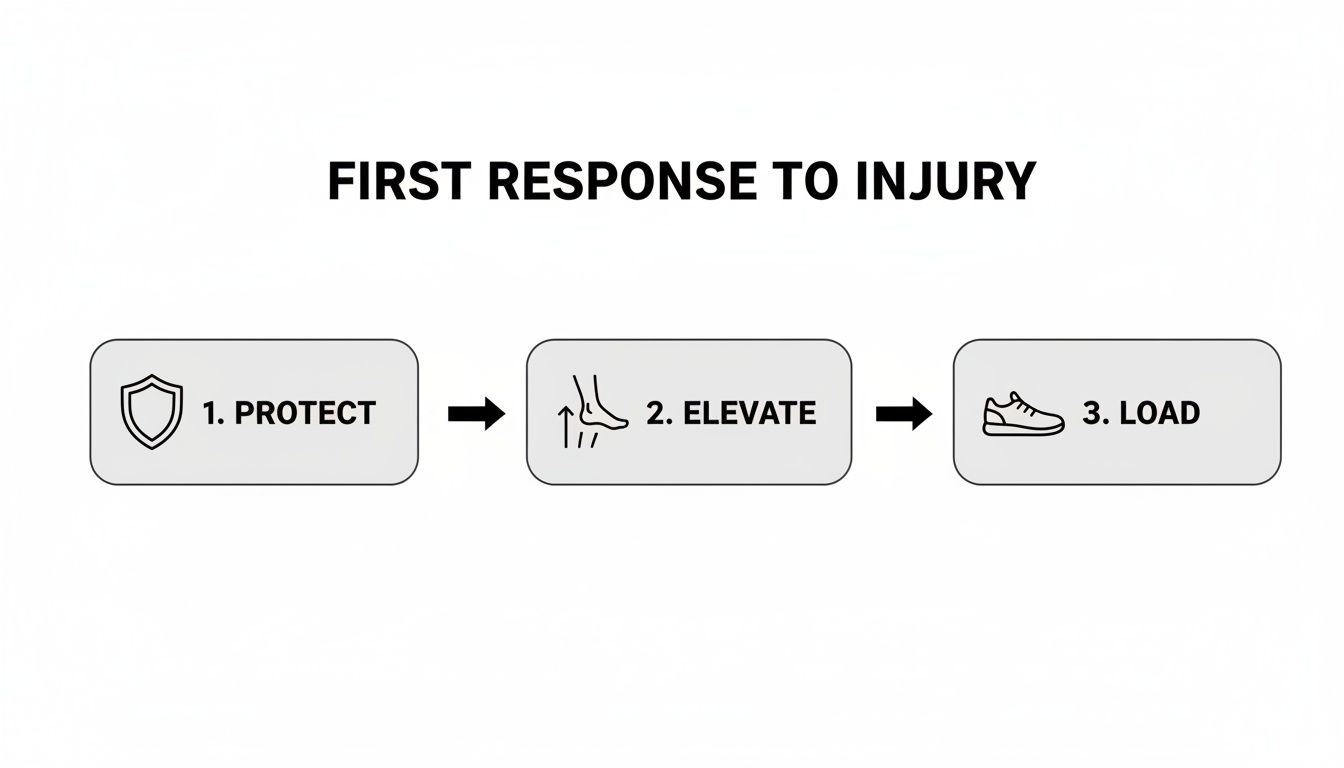
This approach really highlights that managing swelling isn't a passive waiting game. It's an active process that combines smart protection with strategic actions like elevation to help your body heal itself.
Using Gentle Movement to Reduce Swelling
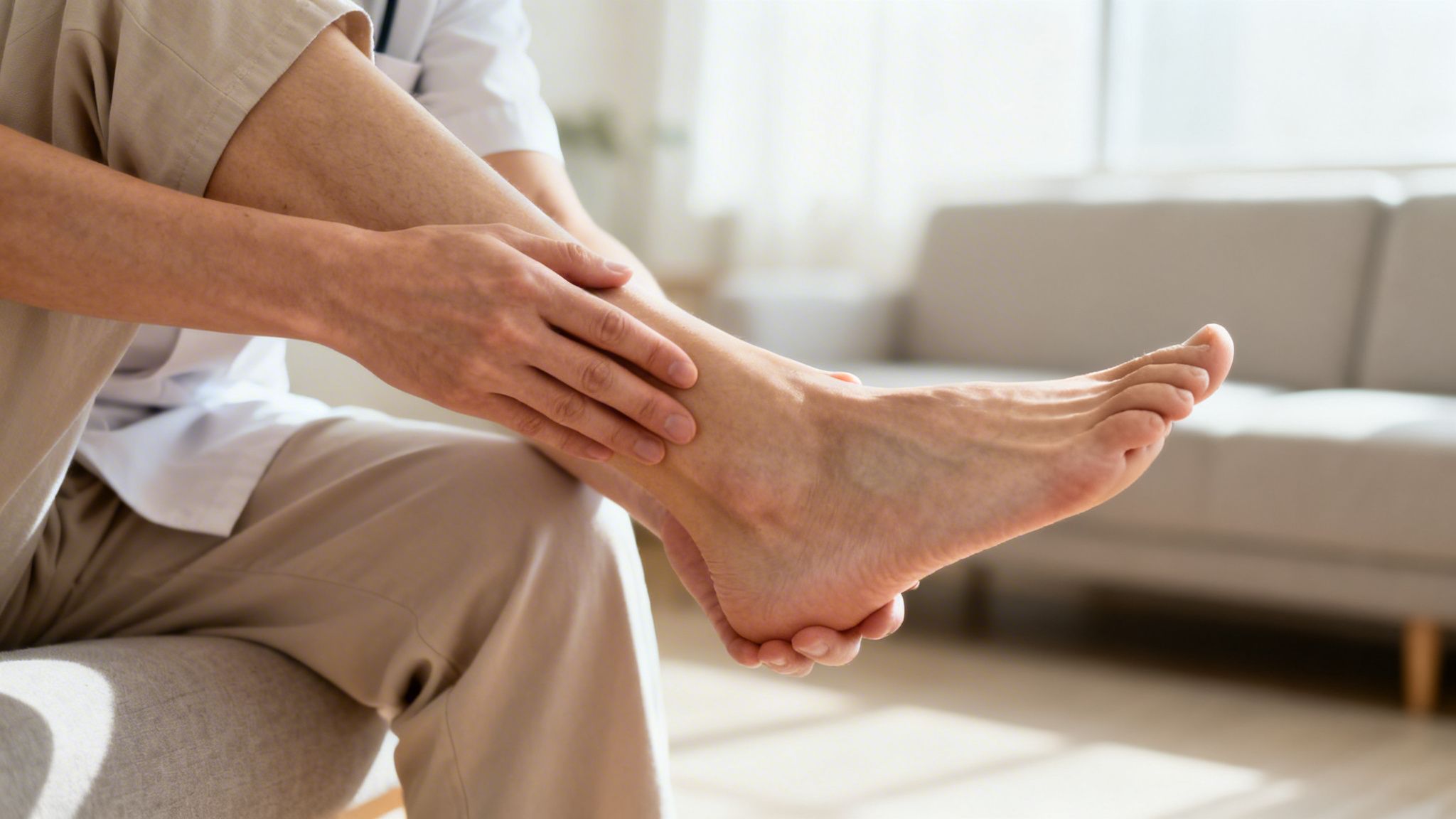
It might seem counterintuitive to move an area that’s swollen and sore, but incorporating the right kind of movement is actually one of the most powerful things you can do. Your muscles act as a natural pump for your lymphatic system, which is in charge of clearing out all that excess fluid and cellular debris from an injury.
When you stay completely still, that system isn't getting much help. But with gentle, controlled exercises, you activate this "muscle pump" and start pushing stagnant fluid out of the swollen tissue and back toward the body's core for processing. This isn't about gritting your teeth through pain or trying to get back to your normal workout. It's about small, targeted movements that encourage healing without adding more stress to the injury.
Safe Movements to Try at Home
The goal is always to engage the muscles around the swollen joint without actually putting weight or strain on it.
- For a Swollen Ankle or Foot: Ankle pumps are your best friend. While your leg is elevated, gently point your toes away from you, then flex them back toward your shin. Aim to repeat this 10-15 times every hour to keep that fluid from pooling.
- For a Swollen Knee: Quad sets are incredibly effective. While sitting or lying down, just tighten the big muscle on the front of your thigh (your quadriceps), hold it for five seconds, and then relax completely. That simple contraction helps squeeze fluid out of the knee area.
This is a delicate balance. The idea is to stimulate fluid movement without causing more inflammation. If you feel sharp pain, you’re pushing too hard, too soon.
This is exactly where professional guidance makes a huge difference. A licensed physical therapist can evaluate your specific injury and develop a personalized treatment plan that finds the sweet spot between strategic movement and necessary rest, so you heal properly without any setbacks.
For injuries where even a little bit of weight-bearing is painful, exercising in water can be a game-changer. The buoyancy of the water supports the joint, allowing you to move without the impact of gravity. If you want to learn more, check out the benefits of aquatic therapy in our article. It's an amazing tool for a safe and productive recovery.
Advanced Treatments for Stubborn Swelling
Sometimes, you can do everything right at home—elevation, gentle movement, compression—and still be left with swelling that just won’t quit. We know how frustrating this roadblock can feel, especially when you’re trying to recover from a significant injury or surgery and just want to feel normal again.
When swelling sticks around, it’s not just uncomfortable; it can stall your healing. That's when our physical therapists bring in more advanced, hands-on techniques to give your body the boost it needs to clear out that stubborn fluid and get you back on track.
Manual Lymphatic Drainage
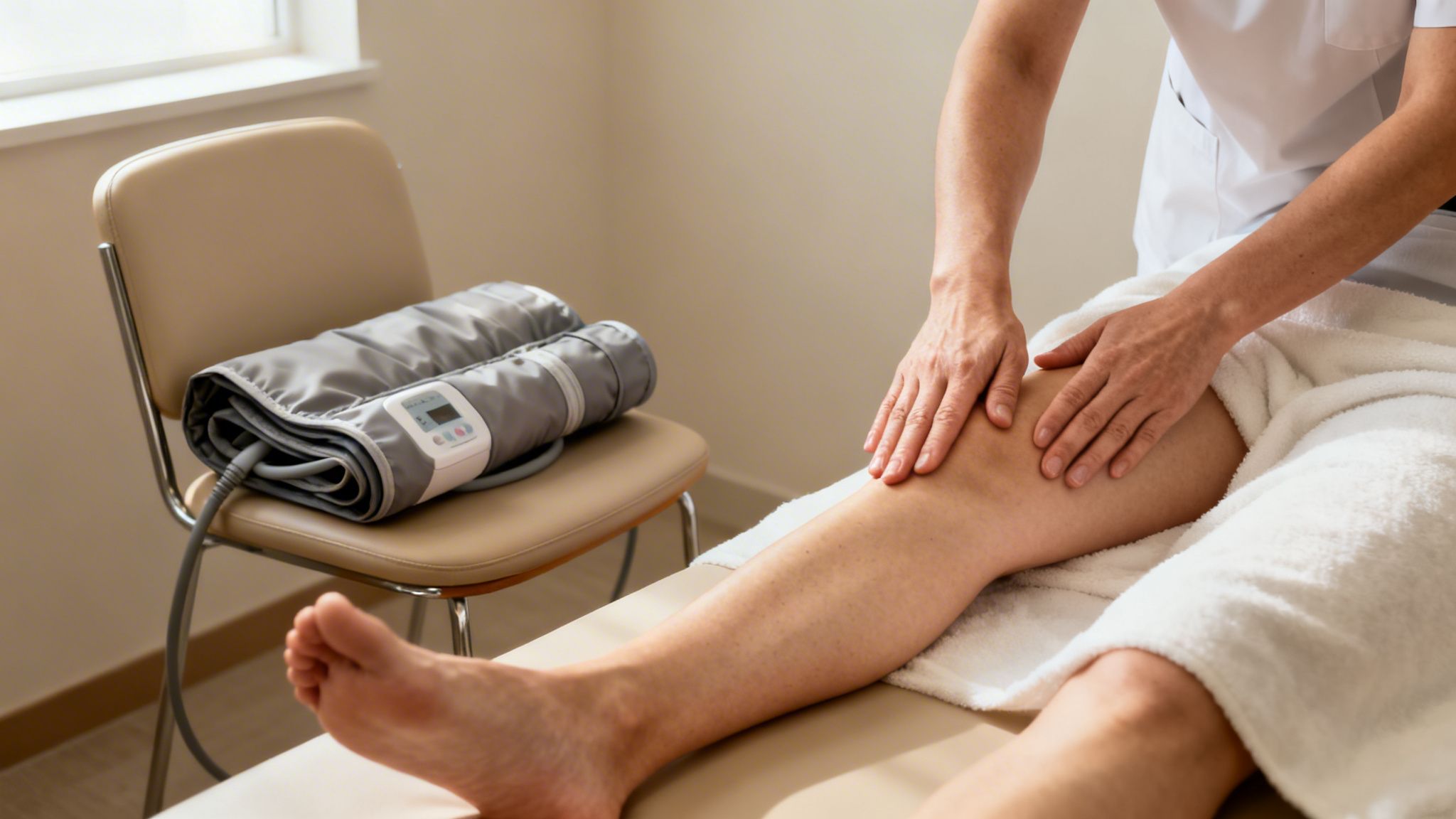
One of the most powerful tools in our clinic is Manual Lymphatic Drainage (MLD). This isn't a typical deep tissue massage. It’s a highly specific, gentle technique that requires advanced training for our therapists to perform correctly.
Our therapists use light, rhythmic hand movements to manually guide lymphatic fluid away from the congested area. We’re essentially rerouting the traffic, encouraging the fluid to move toward healthy lymph nodes that can process and clear it out. It’s an incredibly effective way to reduce pressure and discomfort.
Research backs this up, too. One systematic review found that MLD, when added to standard physical therapy, led to significantly better reduction in hand swelling than conventional therapy alone.
Intermittent Pneumatic Compression
For more widespread or persistent swelling, we often turn to an intermittent pneumatic compression (IPC) device. This involves wearing a specialized sleeve or boot that's connected to a pump.
The sleeve contains a series of air chambers that inflate and deflate in a specific sequence, creating a gentle, wave-like squeezing motion up the limb. This "milking" action physically pushes the excess fluid back toward the body's core. It’s a comfortable, passive treatment that can make a huge difference, particularly in managing post-operative swelling.
If you're facing a recovery from surgery, our guide to managing post-operative swelling through effective rehabilitation dives deeper into these strategies.
A Note on Medications Like NSAIDs
For a long time, the go-to response for any swelling was to grab an anti-inflammatory like ibuprofen (Advil). But we’ve learned a lot since then, and newer protocols like PEACE & LOVE actually advise against using them right after an injury.
That initial inflammation, while uncomfortable, is a critical part of how your body starts the healing process.
Why Reconsider NSAIDs?
Blunting the initial inflammatory response with medication can sometimes delay the natural healing process. While they can be very helpful for managing pain, their role in managing swelling should be carefully considered and discussed with your physical therapist or doctor.
This doesn't mean you should throw your NSAIDs away. They still have a role in managing pain, especially a few days post-injury. The key is to use them strategically, not automatically. We can help you understand the right timing so that every part of your recovery plan is working together to help you heal as efficiently as possible.
Managing Chronic Swelling and Lymphedema
What happens when swelling doesn't go away after an injury? For many people, persistent swelling is a frustrating and chronic condition known as lymphedema. Unlike the temporary swelling that follows a sprain, lymphedema occurs when the lymphatic system is damaged or blocked, often after surgery, cancer treatment, or due to other health issues. This damage causes fluid to get trapped, leading to swelling that simply won’t resolve on its own.
Living with this can feel overwhelming, but you don't have to navigate it alone. Our certified lymphedema therapists at our clinics, including those serving communities like Scituate and Cohasset, specialize in this exact condition. There is hope, and there is a clear, effective path forward.
The Gold Standard of Care
The most successful and evidence-based approach for managing lymphedema is called Complete Decongestive Therapy (CDT). This isn't just a single treatment; it's a comprehensive program that tackles the condition from all angles, which is why it's considered the gold standard in care.
CDT is built around four key components:
- Manual Lymphatic Drainage (MLD): This is a specialized, gentle massage technique. Our therapists use it to manually redirect trapped lymph fluid away from the swollen areas and toward healthy lymph nodes that can process it properly.
- Compression Therapy: This is a critical step for maintaining progress. It starts with multi-layered, short-stretch bandages that prevent fluid from flowing back into the area. Later, we’ll help fit you for custom compression garments for effective long-term management.
- Decongestive Exercises: We'll design a specific exercise routine for you to perform while wearing your compression bandages. These simple movements activate your body’s natural muscle pump, which helps stimulate lymph flow and reduce swelling even further.
- Skin and Nail Care: Lymphedema makes the skin in the affected area more fragile and prone to infections like cellulitis. A huge part of CDT is learning how to keep your skin clean, moisturized, and protected to avoid any complications.
Managing lymphedema is a journey, not a quick fix. Having an expert team to guide you through CDT is essential for reducing swelling, improving your mobility, and regaining your quality of life.
Hope Through Specialized Therapy and Research
The world of lymphedema care is always moving forward. While a groundbreaking Stanford study has identified a potential future drug treatment, hands-on, conservative management remains the most effective care available today. In fact, a global assessment showed that appropriate lymphedema therapy can fully resolve 30–40% of cases, with treatments like MLD and compression making a massive difference in daily life. You can learn more about these innovative lymphedema findings and see how they reinforce the value of specialized physical therapy.
At Peak Therapy, providing this high level of care is our commitment. Our certified lymphedema therapists have the advanced training required to create and implement a full CDT program just for you. We partner with you every step of the way, giving you the hands-on treatment and education you need to take back control and live more comfortably.
When to See a Physical Therapist for Swelling
While you can often manage minor swelling from an ankle sprain or overexertion at home, how do you know when it’s time to call in a professional? Some situations are clear-cut and require immediate medical care.
If you experience swelling that comes with a fever, shortness of breath, a red and hot feeling in the skin, or sudden, unexplained swelling in one limb, you should seek medical attention right away. These can be signs of more serious issues, like an infection or a blood clot, that need to be addressed by a physician.
When Physical Therapy Is Your Best Next Step
Once you've ruled out an emergency, there are several key moments when seeing a physical therapist is the most direct path to a full recovery. If at-home care isn’t getting the results you’d hoped for, that’s a clear sign you need an expert evaluation.
Consider scheduling an appointment with us if you're experiencing any of the following:
- Swelling Isn't Improving: You’ve been diligent with elevation and compression for a few days, but the swelling isn't going down—or it's getting worse.
- Pain and Stiffness Persist: The swelling is accompanied by pain that isn’t getting better, limiting your ability to move comfortably.
- You Can't Do Your Daily Activities: The swelling is so significant that it stops you from walking, working, or even sleeping well. This is a sign that the issue is impacting your quality of life.
- You Feel Unsure About Your Recovery: After an injury or surgery, it’s common to feel uncertain about what you should or shouldn’t be doing. Professional guidance provides a safe and effective roadmap.
You shouldn't have to guess about your recovery. Getting a professional evaluation is the fastest way to understand the root cause of your swelling and start a plan that’s built specifically for you.
Our licensed physical therapists serve patients from communities all across the South Shore, from Quincy to Braintree and beyond. We don't just look at the swelling; we perform a full assessment to identify the underlying injury. From there, we create a personalized treatment plan that uses hands-on techniques and specific exercises to not only reduce swelling but also restore your strength and mobility.
Taking that step moves you from a passive "wait and see" approach to an active, empowered recovery. For instance, successfully recovering from a meniscus injury with physical therapy often depends on managing post-surgical swelling effectively to regain full function. We provide the expert guidance needed to get you back on your feet safely.
Common Questions About Swelling
In our Massachusetts clinics, we hear a lot of the same questions about dealing with swelling. It's a natural response to injury, but it can be uncomfortable and confusing to manage. Let's tackle some of the most common questions we get with clear, straightforward advice.
Should I Use Ice or Heat for Swelling?
This is the age-old debate, and the answer has evolved over time. For a fresh injury—within the first 48-72 hours—the immediate goal is usually pain management. A little bit of ice can help numb the area and constrict blood vessels, which provides some relief.
However, modern protocols like "PEACE & LOVE" caution against aggressive icing because it can actually slow down your body's natural healing process. Gentle, short-term icing for pain is okay. Heat, on the other hand, is best saved for chronic muscle soreness or stiffness, as it increases blood flow and can make initial swelling worse.
How Long Does Swelling Take to Go Down?
There's no single answer here—it really depends on the person, the location of the injury, and how severe it is. Minor swelling from a simple ankle sprain might clear up in just a few days. Significant swelling after surgery, however, can stick around for several weeks or even months as the tissues heal.
Key Takeaway: If your swelling isn’t improving at all after a week of consistent home care, it's a good idea to get it checked out by a physical therapist. We can figure out what's going on and create a solid recovery plan.
Can Diet and Hydration Affect Swelling?
Absolutely. What you eat and drink plays a surprisingly big role in how your body manages inflammation and fluid.
- Stay hydrated. It might seem counterintuitive, but drinking plenty of water is crucial. It helps your system flush out excess fluid and waste products from the injured area.
- Watch your salt intake. High-sodium foods encourage your body to retain water, which can lead to more puffiness and swelling.
- Eat anti-inflammatory foods. Incorporating foods rich in omega-3s, like salmon and walnuts, can help support your body's natural healing process.
Swelling isn't just from sprains and strains; it's a common side effect of many medical procedures, too. For instance, if you're recovering from a cosmetic treatment, you might find specific guidance on topics like how to reduce swelling after lip fillers.
Struggling with swelling that won't go away? The expert team at Peak Physical Therapy and Sports Performance can create a personalized plan to get you moving again. Find a clinic near you and book your evaluation today at https://peaktherapy.com.