


You feel it when you get out of the car after sitting on Route 3. Or halfway through a walk on Duxbury Beach. Or the morning after helping at youth soccer in Hanover, when the back of your thigh feels tight, tuggy, or oddly weak. Some people call it a hamstring problem. Others think it’s their back, their knee, or “just stiffness.”
Most of the time, back-of-leg pain isn’t one simple thing. It can be muscle tightness, nerve irritation, weakness through the hips and hamstrings, or a pattern that’s been building for months. The good news is that the right home plan can calm it down and help you move better. The key is choosing the right exercise for back of leg symptoms at the right time, not just doing random stretches from memory.
Table of Contents
- Your Guide to Easing Back of Leg Pain on the South Shore
- Common Causes of Leg Pain We See in Our South Shore Clinics
- Gentle Stretches for Immediate Back of Leg Relief
- Building a Stronger Posterior Chain to Prevent Future Pain
- Your Sample Weekly Home Program for a Healthy Back of Leg
- When DIY Isn't Enough When to See a Physical Therapist Near You
- Get Back to Living Fully on the South Shore
Your Guide to Easing Back of Leg Pain on the South Shore
A common South Shore story goes like this. Someone starts walking more as the weather improves, maybe adds a few hills in Plymouth or signs up for a local 5K, and then the back of the leg starts barking. At first it feels like plain tightness. Then stairs get awkward, longer strides feel risky, and bending forward to pick something up suddenly gets your attention.
That’s where people often make the wrong call. They either stop moving completely, or they push through with hard workouts that keep poking the same irritated area. Neither approach usually works well for long.
What helps more is a tiered plan. Start with positions that reduce tension and restore confidence. Then build strength through the hips, hamstrings, and calves so the area can handle walking, lifting, jogging, and uneven ground again. That approach makes a difference whether you’re trying to enjoy a beach walk in Scituate, get through your workday in Quincy, or feel steady carrying groceries into the house in Milton.
Practical rule: If a movement gives you a mild stretch or working sensation, that’s often fine. If it sharply grabs, causes limping, or leaves you worse later that day, it’s too much for right now.
The exercises below are organized that way. Gentle first. Strength second. And throughout, I’ll point out when home care makes sense and when it’s smarter to get checked in person.
Common Causes of Leg Pain We See in Our South Shore Clinics
A lot of people come in convinced they “pulled a hamstring.” Sometimes that is true. Just as often, the back of the leg is reacting to a bigger pattern. I see it after long drives to Boston, after a weekend of yard cleanup, and after someone signs up for a local road race without much build-up.

Why the back of the leg gets overloaded
One common pattern is prolonged sitting. Hours at a desk, in the car, or on the commuter rail can leave the hamstrings, calves, and back of the hip feeling stiff and sensitive. Then a simple walk, a quick sprint across a parking lot, or a bend to pick up a beach chair asks those tissues to lengthen and work right away.
Another pattern is a sudden jump in activity. That shows up in people training for a South Shore 5K, getting back to beach walks in Duxbury, or tackling spring yard work all in one weekend. The tissue is not necessarily damaged. It is often underprepared for the amount of force and repetition you gave it.
A third pattern is pain that starts in the low back or around the sciatic nerve and travels into the back of the thigh or calf. That pain often feels different from a straightforward muscle strain. It may come with tingling, burning, numbness, or symptoms that shift during the day. If that sounds familiar, our guide on how to relieve sciatica can help you sort out whether the nerve is part of the problem.
We also see plenty of load-sharing problems. If the glutes are weak, the trunk is not controlling motion well, or the ankle is stiff, the hamstrings and calves pick up extra work. That usually does not matter for one trip up the stairs. It matters after a few miles of walking, repeated hills, or a return to running.
Here are the patterns we diagnose most often in clinic:
- Hamstring strain or overload: Usually felt high in the back of the thigh or near the sit bone, often after faster walking, running, lunging, or sudden acceleration.
- Calf strain or tight, overloaded calf: More common after hills, pickleball, long walks, or a return to jogging.
- Sciatic nerve irritation: Often includes back, buttock, or calf symptoms and may feel sharp, hot, or electrically pulled.
- Referred pain from the low back: The leg hurts, but the driver is higher up.
- General deconditioning: The leg is being asked to do more than it has been trained to handle.
The trade-off is straightforward. Stretching may calm symptoms when the area feels guarded, but stretching alone does not prepare the leg for stairs, hills, lifting, or running. For a true muscle overload, the tissue usually needs gradual loading. For nerve-related pain, too much stretching can make the leg more irritable.
That distinction matters at home. If pain is mild, local, and improving week to week, a tiered home program is often a good place to start. If symptoms are spreading below the knee, causing limping, waking you at night, or not matching what you would expect from a simple strain, it is smarter to get assessed by a physical therapist in Quincy, Plymouth, or closer to home before you keep pushing through it.
Gentle Stretches for Immediate Back of Leg Relief
You feel it when you step out of bed, after a long drive down Route 3, or halfway through a walk on Duxbury Beach. The back of the leg feels short, guarded, and unwilling to let go. In that moment, the right stretch should settle the area, not stir it up.
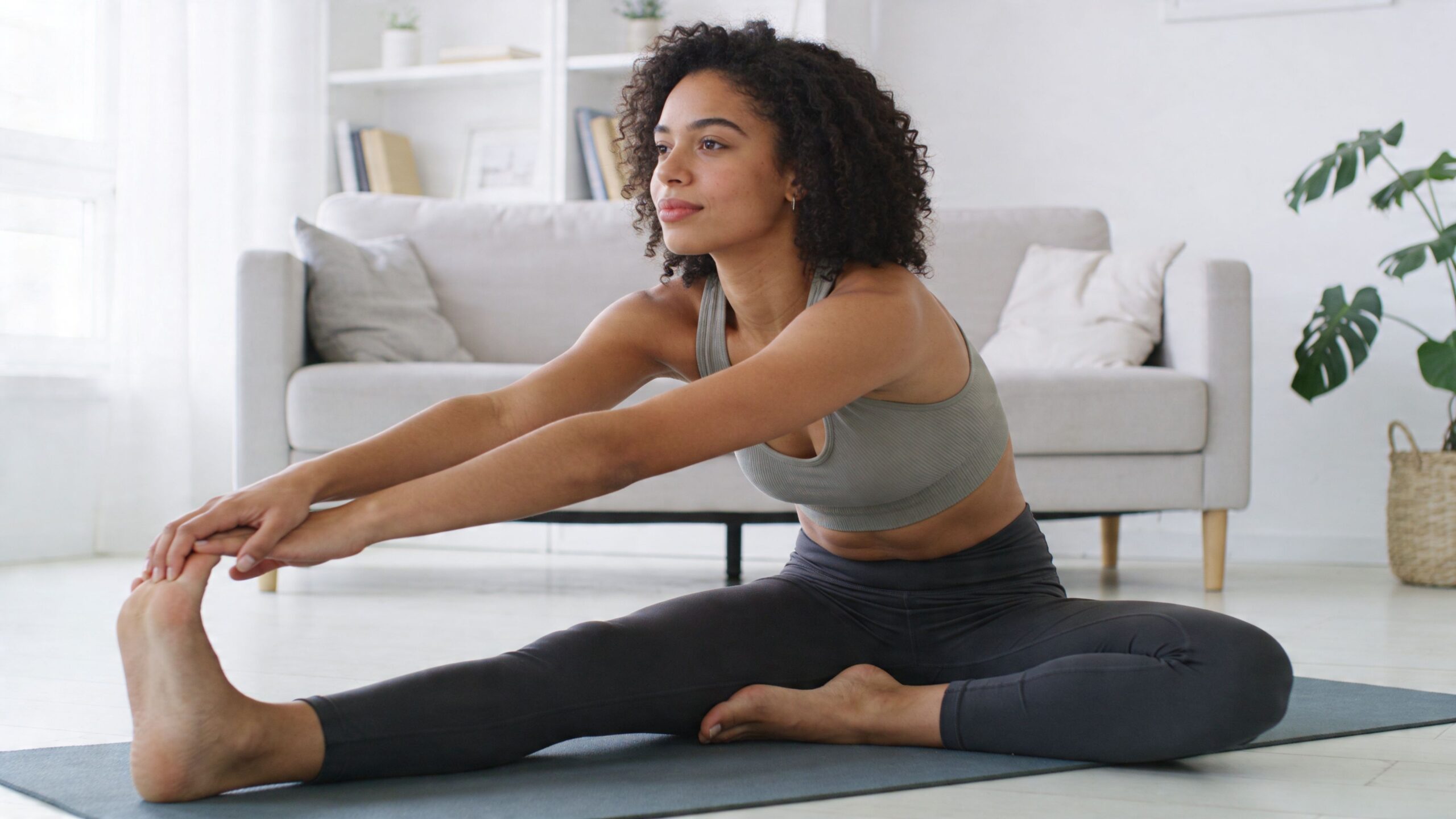
Start with the version that matches your symptoms and your balance. South Shore residents who are just trying to get through errands, dog walks, or a comfortable trip up the stairs usually do better with low-threat positions first. People getting ready for a local 5K or a return to golf can progress once the leg stops feeling reactive.
Seated options that feel safe and simple
These are the best entry point for beginners, older adults, and anyone who feels unsteady standing.
1. Seated hamstring stretch
Sit near the front edge of a chair. Straighten one leg with the heel on the floor and toes up. Keep your chest lifted and hinge forward from the hips until you feel a light pull in the back of the thigh.
Aim for mild tension that eases as you breathe.
- Make it easier: Bend the knee slightly.
- Make it stronger: Add a small ankle pump.
- Avoid: Collapsing through your low back to chase range.
2. Towel-assisted calf stretch
Sit with one leg straight and loop a towel or strap around the ball of the foot. Gently pull until you feel the stretch in the calf or lower back of the leg. Keep the knee softly straight, not jammed locked.
This works well for people whose balance is not steady enough for a wall stretch, or whose foot gets irritated in standing.
Keep the effort low enough that the leg can relax. If you have to brace, hold your breath, or push through a sharp pull, back off.
For older adults, I prefer simple supported movements over aggressive stretching. Hamstring and calf weakness can affect balance and walking tolerance, so the long-term answer is often a mix of light mobility and gradual strength work, not more force. If you want ideas for later stages, these essential golf fitness exercises for seniors line up well with that approach.
Standing stretches for people who want a little more
Use these if balance is solid and the leg is sore, not sharp.
3. Wall calf stretch
Stand facing a wall with both hands supported. Step one leg back and keep that heel down. Lean forward until you feel the stretch through the calf. A small bend in the back knee shifts the pull lower.
A stiff calf changes stride length and push-off. That often leaves the rest of the back of the leg doing extra work.
4. Gentle standing hamstring hinge
Place one heel on a low step, curb, or sturdy surface. Keep a soft knee and a long spine. Hinge forward a small amount from the hips until you feel the back of the thigh engage.
This stretch should feel controlled and local. If it sends symptoms below the knee or creates tingling, stop and choose a gentler option.
A simple home plan works better than doing every stretch you know:
- Choose one hamstring stretch and one calf stretch.
- Do them once or twice a day, especially after sitting or first thing in the morning.
- Hold each rep calmly for a comfortable stretch while breathing normally.
- Recheck your walking after. The leg should feel looser, not more protective.
If the relief fades fast, the tissue may need more support than stretching alone can provide. Pair these with core strengthening exercises that support the low back and posterior chain so the leg does not have to absorb all the load by itself.
A good home program starts gentle, then builds. If stretching keeps helping for only an hour or two, or the pain keeps returning after simple activity, that is usually the point where a PT visit in Quincy, Plymouth, or nearby is the safer call.
Building a Stronger Posterior Chain to Prevent Future Pain
Once the leg settles enough to tolerate light work, strengthening matters more than often believed. The hamstrings don’t work alone. They share the job with the glutes, calves, and trunk. If that whole system gets stronger, the back of the leg usually stops feeling like it has to do everything by itself.
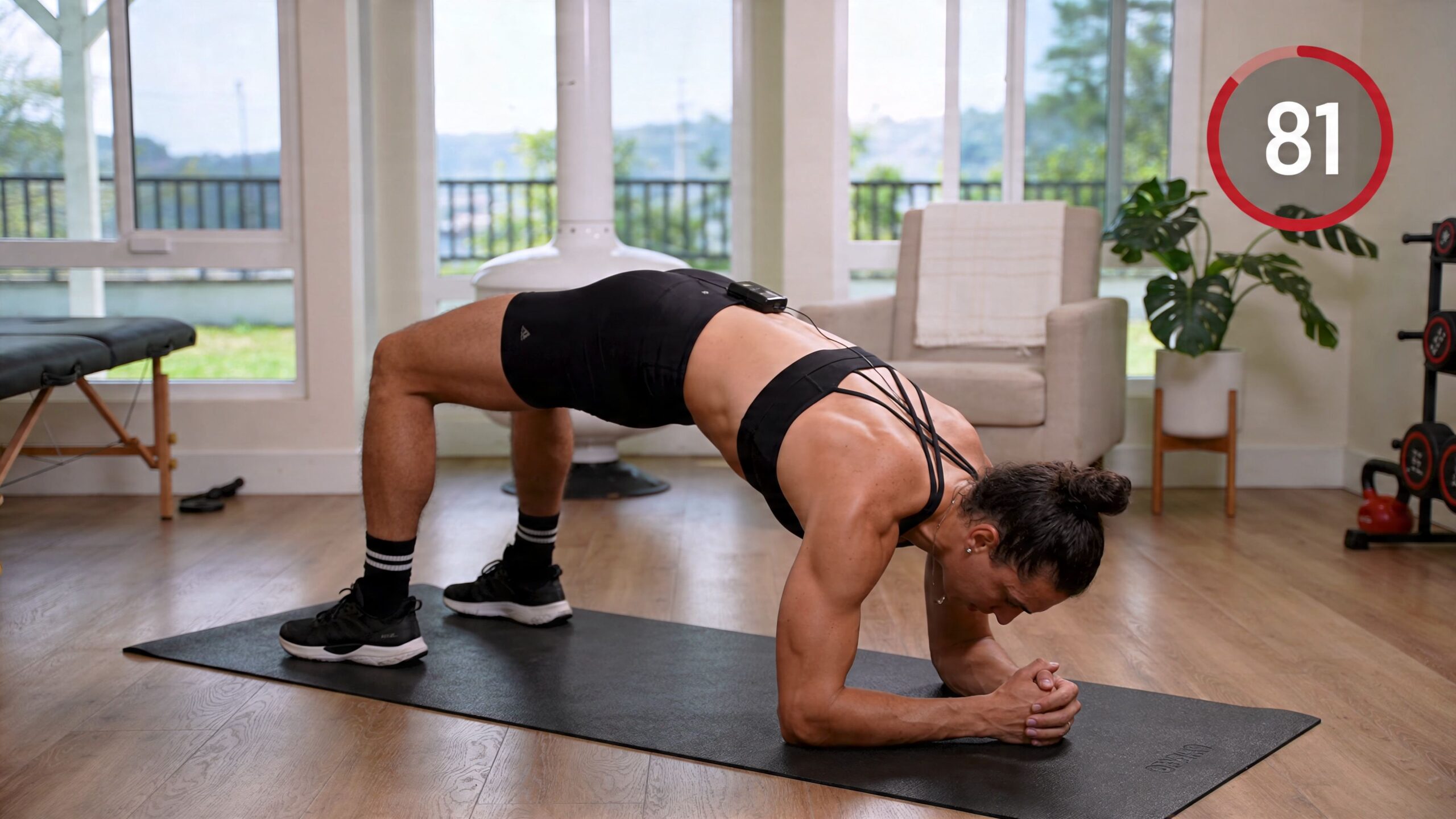
Start with control before you add load
Glute bridge
Lie on your back with knees bent and feet flat. Press through your heels and lift your hips until your trunk and thighs line up. Pause, then lower with control.
This is a strong starting point because it trains the backside without asking much from the low back.
- Beginner: Two legs, slow and steady.
- Progression: Hold at the top, then move to a single-leg variation if symptoms stay calm.
- Common mistake: Arching through the back instead of driving through the hips.
Bodyweight Romanian deadlift
Stand tall with soft knees. Place your hands on the fronts of your thighs and slide them downward as you hinge at the hips. Your chest tips forward while your spine stays neutral. Stop when you feel tension in the hamstrings, then stand back up.
This pattern teaches people how to load the back of the leg without folding through the spine.
Calf raise
Stand near a counter or wall. Rise onto your toes, pause, then lower slowly. It seems simple, but calf weakness changes gait and can keep the whole posterior chain underperforming.
A lot of golfers and active older adults benefit from pairing these basics with broader movement work. If that’s your lane, essential golf fitness exercises for seniors is a practical read for building more comfortable rotation, balance, and lower-body support.
How to progress without irritating your back
The best home strength program for this issue usually includes some form of RDL. For back-friendly hamstring training, Romanian deadlifts with a 3-4 second lowering phase and a neutral spine can safely load the posterior chain with 1.5-2x bodyweight, while reducing spinal compression by up to 60% compared to other lifts. That doesn’t mean everyone should start heavy. It means the movement has value when it’s taught and progressed well.
Try this progression:
- Stage one: Bodyweight hip hinge to learn the pattern.
- Stage two: Light dumbbells held close to the legs.
- Stage three: Single-leg or kickstand RDL for balance and side-to-side control.
If your back tends to join the party every time you train your legs, Peak Physical Therapy and Sports Performance offers local evaluation and guided progression, and for a deeper educational breakdown of trunk support, Highbar Health’s core strengthening exercises for back article is a helpful companion read.
A good strengthening session should leave the back of the leg feeling worked, not threatened.
For active people in Cohasset, Kingston, or Plymouth, this is the part that often changes things. Walking hills gets easier. Picking up beach chairs or garden bags feels less risky. Your body has more reserve, which is what pain prevention usually comes down to.
Your Sample Weekly Home Program for a Healthy Back of Leg
The best program is the one you’ll do. You don’t need an elaborate schedule. You need a plan that fits around work, family, and whatever else the week throws at you.
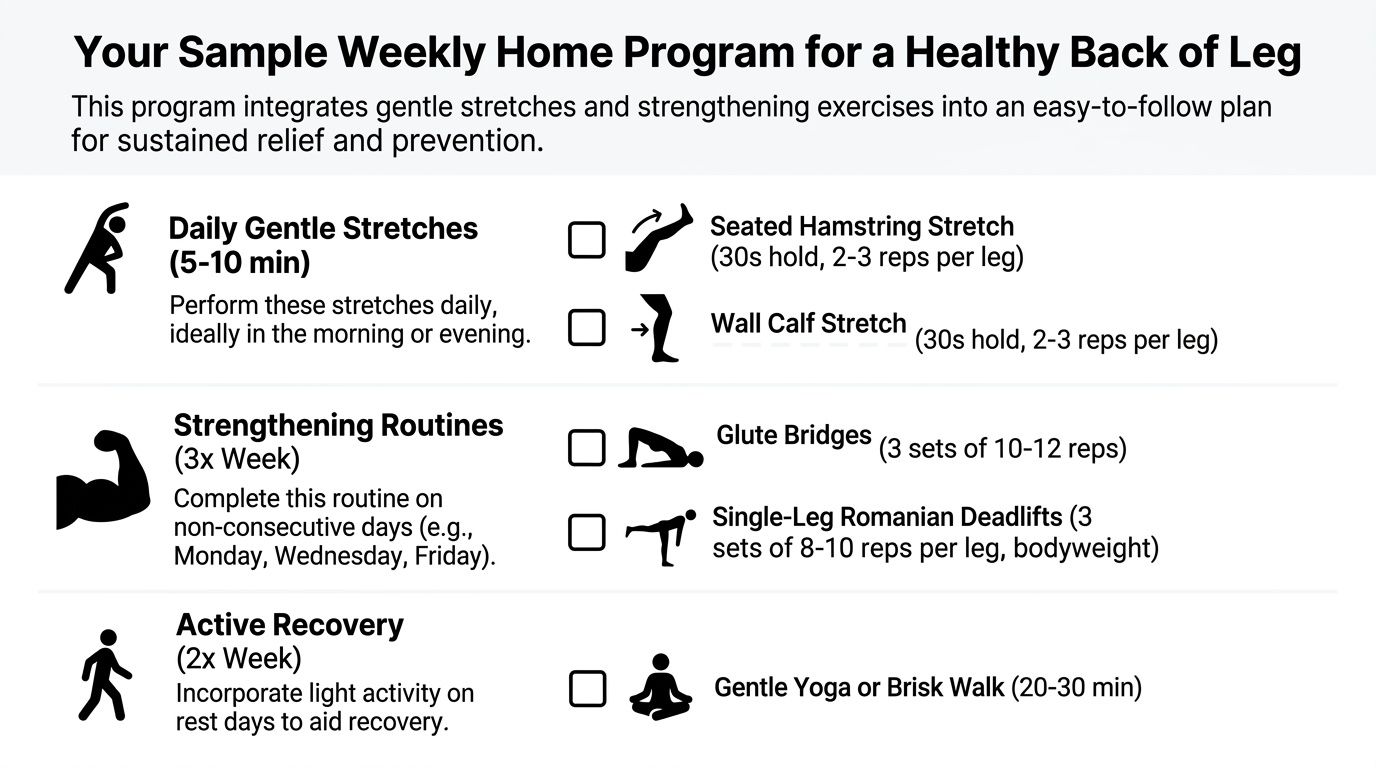
A simple plan you can actually stick with
Use this as a starting point. Adjust based on how your body responds the next day, not just during the workout.
For some households, the bigger challenge is fitting movement into a changing body and changing schedule. If you’re looking for a broader home movement framework during pregnancy, safe exercise routines for pregnant women can offer useful general ideas to discuss with your own medical team.
For athletes, a later-stage option is the Nordic curl. Research summarized in the provided source shows it may reduce hamstring injury risk by up to 65%, which is especially relevant for runners in Kingston and soccer players in Weymouth preparing for harder training blocks. That supporting reference appears here in the linked article on Nordic hamstring exercise benefits.
Sample Weekly Posterior Chain Program
| Track (Your Goal) | Stretching Routine (Daily) | Strengthening Routine (3x per week) |
|---|---|---|
| Beginner (walk comfortably, get through errands, feel less morning tightness) | Seated hamstring stretch, wall calf stretch | Glute bridges, bodyweight RDL, supported calf raises |
| Intermediate (return to longer walks, gym sessions, or weekend recreation) | Standing hamstring hinge, wall calf stretch | Glute bridges, light dumbbell RDL, calf raises |
| Athlete (prepare for a 5K, field sport, or higher training loads) | Brief hamstring and calf mobility before and after training | Single-leg bridge, loaded RDL, calf raises, later progression to Nordic work if appropriate |
A week might look like this:
- Monday: Daily stretches plus strengthening
- Tuesday: Easy walk or light mobility
- Wednesday: Daily stretches plus strengthening
- Thursday: Recovery walk, easy bike, or gentle yoga
- Friday: Daily stretches plus strengthening
- Saturday: Activity day, keep intensity sensible
- Sunday: Mobility only or full rest
Home care is realistic. You’re not trying to “fix” the leg in one session. You’re giving it consistent input so it stops reacting to normal life.
When DIY Isn't Enough When to See a Physical Therapist Near You
Home exercise is a strong place to start. It’s not always enough.
Some people improve within days when they match the right exercise for back of leg pain to the right stage of recovery. Others keep circling the same problem because the underlying issue isn’t obvious from home. That’s especially true when weakness, nerve symptoms, or side-to-side imbalance are involved.
Signs you should stop guessing
Consider getting checked if any of these are happening:
- You’re limping: A visible change in walking means your body is already compensating.
- You feel numbness or tingling: That can point toward nerve involvement, not just a tight muscle.
- You notice real weakness: Trouble pushing off, climbing stairs, or controlling the leg on the way down matters.
- Pain wakes you at night or keeps escalating: That deserves a closer look.
- You’ve tried a home plan and stalled: If you’re not seeing progress after a short trial, it’s time to reassess.
If your symptoms feel more like a true pull, grab, or strain than simple tightness, Peak’s guide to acute hamstring strain treatment options can help you understand the next step.
Why a local PT assessment can save time
Generic online exercise lists often miss asymmetry. That matters because up to 60% of ACL rehab failures are tied to a hamstring strength asymmetry greater than 15% between legs, based on the provided source summary linked here. You don’t need to have had ACL surgery for the lesson to matter. Side-to-side differences are common, and they’re hard to judge accurately on your own.
If one leg is doing the work and the other is just getting through the motion, the exercise may look fine but still miss the actual problem.
A PT can sort out whether your pain is more muscle, more back-related, more balance-related, or a blend of all three. They can also tell you what to stop doing, which is often just as valuable as adding the right exercises.
If you’re in Quincy, Weymouth, Braintree, Plymouth, Scituate, or anywhere nearby, don’t wait until the problem has been dragging on for months. A local assessment can make the next few weeks much more straightforward.
Get Back to Living Fully on the South Shore
You feel this section of life most when pain starts calling the shots. A walk on Duxbury Beach gets cut short. You think twice before signing up for the local 5K. Even getting through a commute or a full night of sleep can become harder than it should be.
Back-of-leg pain usually improves with the right amount of the right work. Start with gentle mobility if the area is irritable. Add strength as symptoms settle so the leg can handle hills, stairs, yard work, and longer walks again. That tiered approach works well for many South Shore residents because it gives beginners a safe place to start and gives active adults a clear path back to running, lifting, and sport.
Home care is often enough for mild, improving symptoms. It is not always the smart choice. If pain keeps spiking, if the leg feels weak or unstable, or if progress stalls after a fair try at the home program, an in-person assessment is the safer move.
If back-of-leg pain is limiting your walks, workouts, commute, or sleep, schedule an evaluation with Peak Physical Therapy and Sports Performance. With clinics across the South Shore, including Braintree, Quincy, Weymouth, Hanover, Kingston, Plymouth, and Scituate, our team can help identify what is driving the pain and build a practical plan to get you moving comfortably again.