
You wake up the morning after a long walk near the coast, and your knee still doesn't feel right. Or maybe it's your back that tightens up every time you drive north for work, unload groceries, or bend to pick something up around the house. A lot of people in Cohasset wait a little too long at that point. They hope the pain will settle, they cut back activity, and then they realize they're moving less, sleeping worse, and second-guessing every step.
That's usually when local care starts to matter. You don't want a generic answer. You want a place nearby that understands how South Shore residents live, commute, train, and recover.
Table of Contents
- Your Local Path to Recovery in Cohasset
- Conditions We Help Cohasset Residents Overcome
- A Personalized Treatment Plan Just for You
- Get to Know Your Cohasset PT Team
- The Peak PT Patient Experience in Cohasset
- Scheduling Your Appointment Is Easy
- Your Questions Answered
Your Local Path to Recovery in Cohasset
If you're searching for physical therapy in Cohasset, MA, you've probably already noticed there are options. That's true locally as well. According to Peak Physical Therapy's Cohasset clinic page, Healthgrades reports 266 specialists practicing physical therapy in Cohasset, MA, with an overall average rating of 4.6 out of 5 stars. That means patients have real choice, which is good, but it also means the right fit matters.

For many people, convenience is part of the decision. The Cohasset clinic is at 231 Chief Justice Cushing Hwy (Rt. 3A), Suite #203, in the Cohasset Medical Building, which places it right on a main corridor for residents of Cohasset and nearby South Shore communities. When your shoulder hurts, your ankle is swollen, or your back flares every morning, a clinic that's easy to reach often makes it easier to stay consistent.
Why local context matters
Cohasset patients don't all look the same. Some are getting back to tennis, running, or strength training. Some are trying to walk comfortably again after surgery. Others are older adults who've started to notice more unsteadiness on stairs, uneven ground, or busy sidewalks.
Those are different problems, and they need different plans.
Practical rule: Good rehab should fit your real life, not an imaginary patient on a handout.
That's the standard people should expect from local care. You should feel listened to, assessed thoroughly, and given a plan that makes sense for your body, your schedule, and your goals. If getting back to daily walks, youth sports sidelines, gardening, commuting, or beach-season activity matters to you, your therapy should reflect that from day one.
Conditions We Help Cohasset Residents Overcome
Some patients come in with a clear injury. Others just know something feels off and it isn't improving. Both are valid reasons to start.
What brings most people through the door
In a community like Cohasset, a lot of physical therapy starts with one of three patterns:
- Sports and activity injuries: knee pain after a pivot, ankle pain after a misstep, shoulder pain from overhead activity, or soreness that lingers longer than it should.
- Everyday overuse and mobility problems: back stiffness from long drives or desk work, neck tension that triggers headaches, or hip pain that makes walking less comfortable.
- Post-surgical recovery: stiffness, weakness, swelling, and movement fear after orthopedic procedures.
The common thread is that pain changes behavior fast. People shorten their stride, stop using one arm normally, avoid stairs, or give up exercise entirely. That compensation can keep symptoms going longer than the original problem.
Common Conditions Treated at Peak Physical Therapy Cohasset
| Condition Category | Examples |
|---|---|
| Spine and nerve-related issues | Back pain, neck pain, sciatica-like symptoms, stiffness with sitting or bending |
| Shoulder and arm problems | Rotator cuff irritation, shoulder stiffness, elbow pain, wrist and hand overuse |
| Hip, knee, foot, and ankle concerns | Knee pain, ankle sprains, Achilles irritation, foot pain, hip weakness or mobility loss |
| Balance and gait issues | Unsteadiness, fear of falling, dizziness-related movement problems, walking changes |
| Post-operative rehabilitation | Recovery after orthopedic surgery with focus on motion, strength, function, and confidence |
| Active lifestyle and sports rehab | Running-related pain, return-to-sport progression, strength and movement retraining |
If you want a broader overview of diagnoses and treatment categories, the conditions Peak treats across the South Shore page is a useful place to start. For deeper education on anatomy, recovery timelines, and condition-specific guidance, Highbar Health has more detailed resources at highbarhealth.com.
When symptoms are affecting daily life
Not every issue starts with a dramatic injury. Plenty of people in Cohasset come in because they've gradually stopped trusting a body part. They don't kneel, they don't reach overhead, they avoid hills, or they've become more cautious on uneven ground.
For older adults, balance work is often part of that picture. Exercise has to be specific enough to challenge coordination, reaction time, and confidence, not just static standing. Some people also like exploring movement practices outside the clinic. For example, this piece on BJJ for better balance in older adults highlights how controlled movement, body awareness, and stability training can support better balance in later years.
Pain matters, but function matters just as much. If symptoms are changing how you move through your day, it's time to address them directly.
A Personalized Treatment Plan Just for You
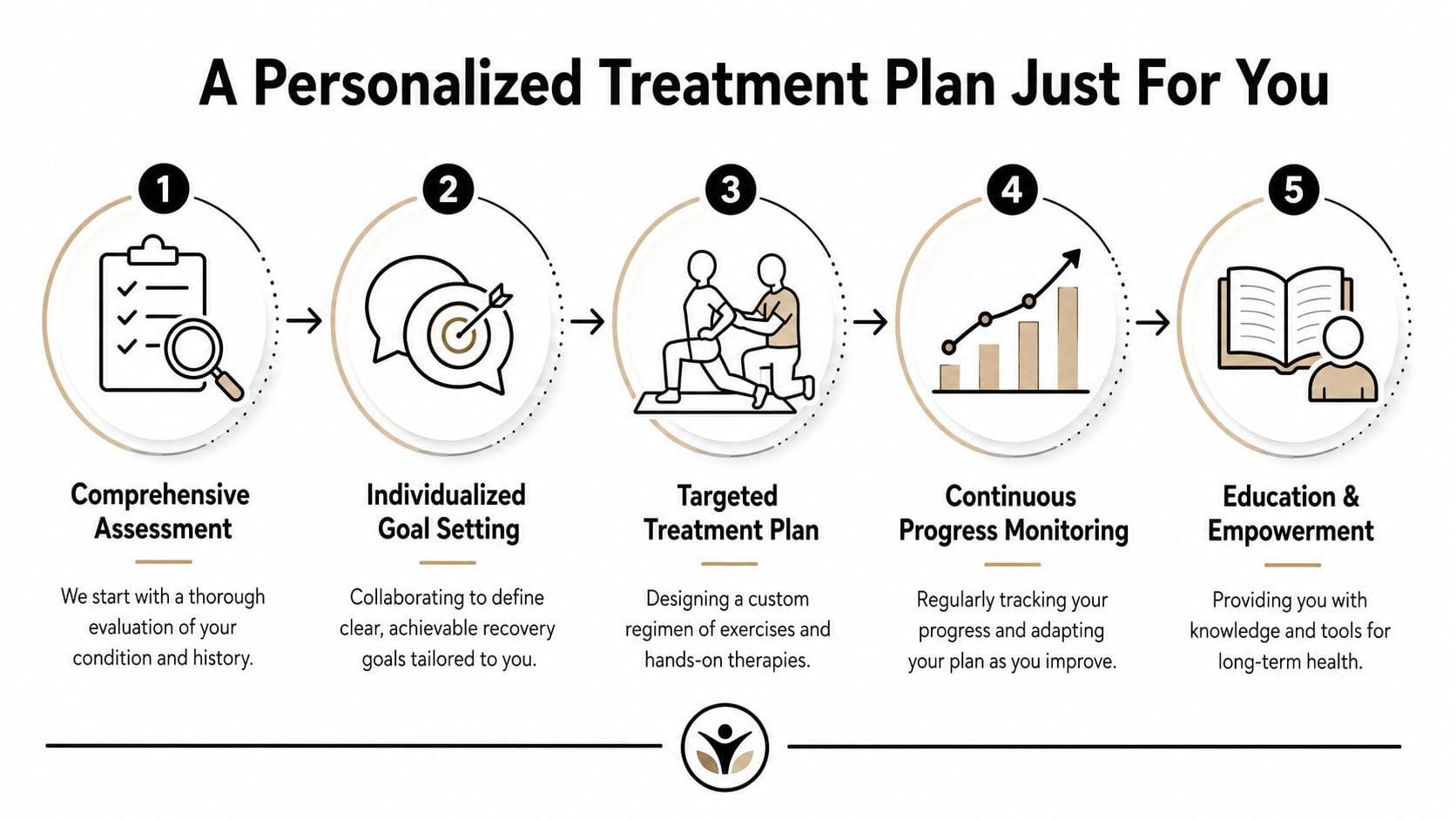
A good treatment plan should do more than calm things down for a day or two. It should move you toward stronger, more reliable function.
What effective physical therapy usually includes
The most useful benchmark in outpatient musculoskeletal rehab is dose-response. In plain English, that means people tend to do better when treatment includes the right amount of the right work, progressed at the right pace. As summarized in this evidence review on exercise-based rehabilitation, stronger PT programs use a mix of supervised exercise, manual therapy, and progressive loading rather than passive modalities alone, and outcomes are better when care is individualized and reassessed every 2 to 4 visits.
That has practical implications in the clinic. A good plan usually includes:
- Movement testing that guides care: range of motion, strength, balance, gait, and tolerance to key tasks.
- Hands-on treatment when it helps: manual therapy can reduce stiffness, improve comfort, and make it easier to move better afterward.
- Progressive exercise: not random exercise. The right challenge, adjusted as symptoms and capacity change.
- Reassessment: if the plan isn't moving you forward, it should be modified.
What does not work as well
A passive approach usually falls short. If your whole program is heat, stim, massage, and a printed sheet of generic exercises, you may feel temporary relief without building the capacity you need.
That's where many patients get stuck. They improve just enough to think they're done, return to normal activity too quickly, and then flare up again.
Clinical takeaway: Symptom relief is helpful. Lasting improvement usually comes from restoring load tolerance, mobility, coordination, and confidence.
For someone with back pain, that may mean gradually increasing bending, lifting, and walking tolerance. For a shoulder patient, it may mean restoring overhead strength and control instead of just waiting for irritation to settle. For a post-op knee, it often means earning motion, strength, and functional confidence step by step.
One option patients in this area consider is Peak Physical Therapy and Sports Performance, which provides individualized PT programs in the South Shore with a focus on measurable progress and patient-specific goals.
Get to Know Your Cohasset PT Team
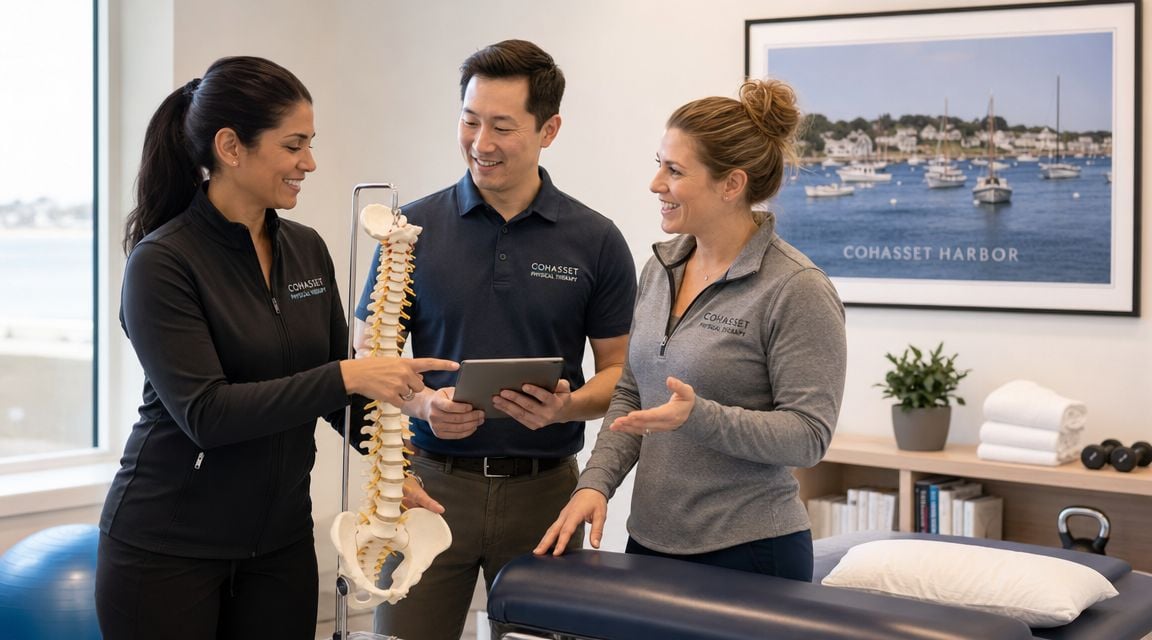
When people say they want a good PT, they usually mean something simple. They want someone who listens carefully, explains things clearly, and pays attention to the details that matter to them.
What your relationship with a PT should feel like
At a local clinic, the patient experience is personal. You're not just another low back, ankle, or shoulder case. You're the parent trying to get through a soccer season without limping. You're the retiree who wants to feel safer on stairs. You're the runner who wants to stop guessing whether it's okay to train.
A strong PT relationship usually includes three things:
- Clear communication: you should understand what's being treated and why.
- Real progression: visits should build on each other instead of repeating the same routine.
- Shared goals: your therapist should care about the activity you want to get back to, not just the pain score.
If you'd like to see the broader clinician network and learn more about provider backgrounds, the Peak team page is the best place to start.
Finding the right fit matters
Some patients do best with a therapist who has a strong sports rehab mindset. Others want someone especially comfortable with post-surgical recovery, balance retraining, dizziness, or persistent pain that's been lingering for months.
That match matters because treatment style matters. A younger athlete may need a therapist who can coach progressive loading and return-to-sport decision-making. An older adult with balance concerns may need a calmer pace, more repetition, and practical home strategies tied to everyday movement.
The right PT doesn't just treat the problem. They help you trust the process enough to stick with it.
If you're nervous about starting, that's normal. You'll likely feel much more comfortable once you've had the first conversation and understand what the plan will look like.
The Peak PT Patient Experience in Cohasset
For many people, the hardest part is not knowing what to expect. Once the process is clear, starting feels much easier.
Before your first visit
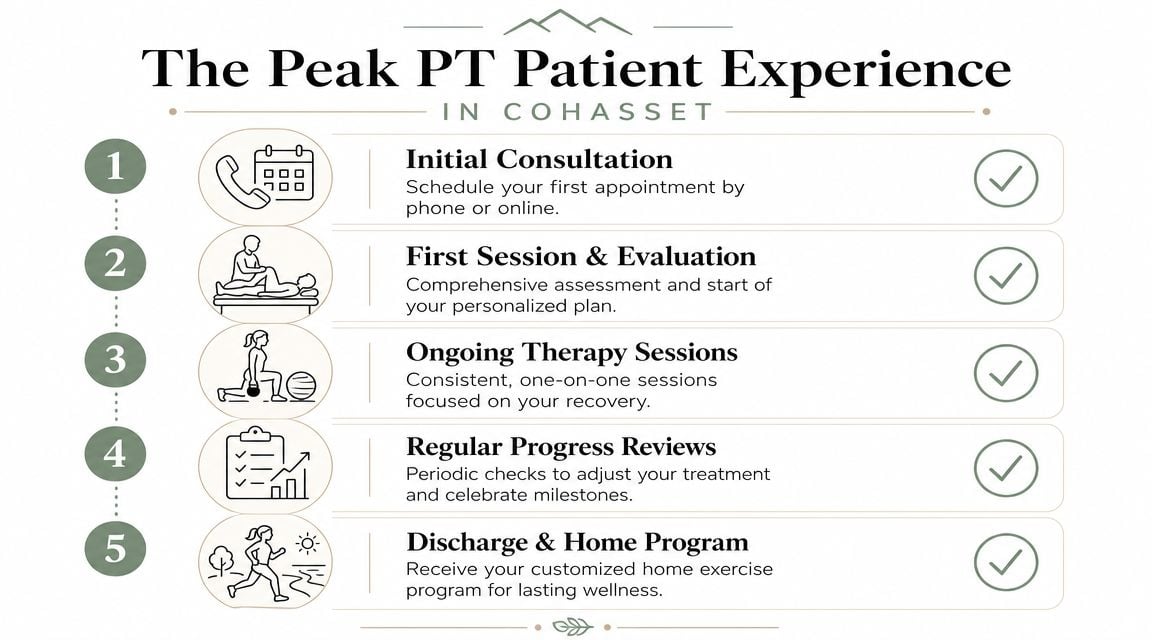
Booking is usually straightforward. You'll choose a time that works for your schedule, complete any intake paperwork, and gather practical items like your insurance card and any relevant medical information.
Scheduling flexibility matters more than people think. In the Cohasset market, clinics advertise extended hours and sports-performance equipment, and that affects care quality in real ways. As noted on this Cohasset clinic information page, extended scheduling windows can reduce missed visits, while access to balance, strength, and plyometric equipment supports stronger testing and training for athletes, post-op patients, and older adults.
What happens during the evaluation
The first visit is where the work begins. A thorough evaluation should include a conversation, movement testing, hands-on assessment, and a discussion of what success looks like for you.
Expect your therapist to ask questions such as:
- What movements aggravate symptoms most
- How long the issue has been affecting you
- What activities you want to return to
- Whether pain is changing sleep, work, exercise, or daily routines
Then comes the physical part of the evaluation. That may include checking mobility, strength, walking pattern, balance, joint movement, and tolerance to specific tasks like squatting, stairs, reaching, or getting up from a chair.
A strong first visit should leave you with more clarity than you had when you walked in.
How follow-up visits usually feel
Follow-up care should feel purposeful. Some sessions focus more on mobility and pain reduction. Others shift toward strength, balance, endurance, or return-to-activity work. The right mix depends on your condition and your stage of recovery.
In practical terms, many patients notice the biggest difference when visits are consistent and progression is obvious. You should know what you're working on, what's improving, and what the next milestone is.
Common parts of ongoing therapy include:
- Targeted exercise progression based on current tolerance.
- Manual treatment when stiffness or pain is limiting progress.
- Functional retraining for real-world tasks like stairs, lifting, or sport-specific movement.
- Home program updates so you're reinforcing gains between visits.
By the time discharge comes up, the goal isn't just that pain is lower. The goal is that you can do more, trust your body more, and know how to maintain your progress.
Scheduling Your Appointment Is Easy
It's not usually a lack of conviction that keeps individuals from addressing the problem. What's needed is for the path to feel simple.
You can often start without waiting
One reason people delay care is confusion about referrals. Many assume they have to book with a primary care physician or specialist first. In Massachusetts, that often isn't necessary. As explained in this overview of direct access to physical therapy, direct access is available in all 50 states, including Massachusetts, which means many patients can schedule an evaluation without waiting for a doctor's visit.
That matters when pain is fresh, mobility is dropping, or post-op timing is important. Starting earlier can make it easier to restore normal movement patterns before guarding and compensation take over.
What to have ready when you book
When you contact a clinic, it helps to have a few basics on hand:
- Your insurance information: this helps the team verify benefits and explain the practical side of care.
- A short summary of the problem: where it hurts, how long it's been going on, and what activities are limited.
- Any referral or surgical paperwork if you have it: not always required, but helpful when relevant.
If you're looking for physical therapy in Cohasset, MA, don't let uncertainty about paperwork be the reason you wait. Call, ask questions, and let the front desk help you sort out the next step. Insurance verification, scheduling options, and referral questions are all easier to handle when you talk to someone directly.
If pain is already changing how you move, waiting rarely makes the decision easier.
Your Questions Answered
Do I need a referral to start physical therapy in Cohasset
Often, no. Many patients can begin through direct access in Massachusetts. Coverage rules can vary by insurance plan, so it's smart to confirm benefits when you schedule.
What should I wear to my appointment
Wear comfortable clothes that let you move easily. If your knee, hip, or ankle is the issue, shorts are often helpful. If your shoulder or neck is the problem, choose a top that allows the area to be examined comfortably.
Where is the clinic located
The Cohasset clinic is in the Cohasset Medical Building on Chief Justice Cushing Highway, which makes it convenient for people coming from Cohasset and nearby South Shore towns. When you book, ask about the easiest way to access the suite and where to park so your first visit feels easy from the start.
How long will I need physical therapy
That depends on the problem, how long it's been going on, your goals, and how consistently you can attend and follow through with home exercises. A minor flare-up may move quickly. A post-surgical recovery or longer-standing issue usually takes more structured progression.
What if I am coming in after surgery
Post-op rehab is one of the clearest reasons to start promptly and stay consistent. Your therapist will usually work through mobility, swelling control, strength, walking mechanics, and safe return to everyday tasks in a staged way. The timeline is different for each procedure, but the general idea is the same. Protect healing tissue while steadily restoring function.
If you still have questions, ask them before the first appointment. Good clinics expect that. You shouldn't feel like you have to figure it all out on your own.
If you're ready to take the next step, Peak Physical Therapy and Sports Performance can help you book an appointment, verify insurance, and find the most convenient South Shore location for your care. If you want local support for pain, post-surgical recovery, balance problems, or sports rehab in Cohasset, reaching out now is the simplest way to get moving again.