You wake up with a dull ache near your jaw. Breakfast feels annoying instead of easy. A sandwich from your usual South Shore spot suddenly seems like work, not lunch. By the afternoon, your temple is tight, your neck feels loaded, and that little click near your ear keeps reminding you something isn't right.
That pattern is common, and it's frustrating because jaw pain rarely stays “just in the jaw.” It can show up as headaches, facial tension, soreness with chewing, or that tired feeling around the mouth after talking a lot. Temporomandibular disorders are common enough that some estimates suggest up to one-third of people may experience symptoms at any given time, according to a Boston-area overview of TMJ physical therapy and TMD prevalence.
For South Shore residents, that matters for one simple reason. You don't have to treat this like some rare, confusing issue that nobody sees. TMJ symptoms come through outpatient rehab clinics regularly, and good care is usually practical, hands-on, and focused on getting you back to normal daily life.
Table of Contents
- Tired of Jaw Pain, Clicking, and Headaches?
- What Is TMJ Disorder and Why Does It Happen
- Your First TMJ Evaluation at a Peak PT Clinic
- Evidence-Based TMJ Treatments We Offer
- Practical Home Exercises and Important Red Flags
- Your Recovery Journey What to Expect
- Find TMJ Physical Therapy Near You on the South Shore
- Frequently Asked Questions About TMJ Therapy
Tired of Jaw Pain, Clicking, and Headaches?
Some people notice it first when they yawn. Others feel it halfway through a bagel, during a stressful drive, or after a poor night of sleep. The symptoms can seem small at first, then slowly start shaping your day. You chew on one side. You avoid certain foods. You rub your temples without thinking.
Jaw pain also has a way of making people second-guess the cause. Is it stress? Teeth grinding? A dental issue? Neck tension? Sometimes it's a mix. If you're trying to sort out whether your pain is muscular, joint-related, or something that needs a different provider, a practical outside resource like Inspire Dental Group's jaw pain solutions can help you think through the overlap between tooth pain and jaw pain.
Why people often wait too long
A lot of South Shore patients tell us the same thing. They hoped it would settle down on its own.
Sometimes it does. Often it doesn't, especially when the irritation is being fed by daily habits like clenching, forward-head posture, or neck stiffness. Waiting too long can mean the jaw gets more protective, the surrounding muscles get tighter, and everyday tasks start to feel more guarded.
TMJ pain is rarely about toughness. If chewing, talking, or waking up feels harder than it should, that's a good reason to get it checked.
Relief should feel local and realistic
Those seeking TMJ physical therapy South Shore MA typically aren't looking for a lecture. They want someone nearby who understands what life looks like here. Commutes, desk work, youth sports, stress, inconsistent sleep, and weekends spent trying to stay active all affect symptoms.
That's why the right next step is usually simple. Get a thorough evaluation, figure out what's driving the problem, and start with conservative care that makes sense for your day-to-day life.
What Is TMJ Disorder and Why Does It Happen
The TMJ is the joint that helps your jaw open, close, glide, and handle the small adjustments needed for chewing and speaking. When it's working well, you don't think about it. When it's irritated, every meal and every long conversation can remind you it's there.
A joint that gets overloaded
A useful way to think about TMJ disorder is this. It's like a door hinge that still moves, but not smoothly. The issue may come from the joint itself, the muscles around it, the way the jaw tracks, or the stress placed on it over time.
Symptoms often include:
- Clicking or popping
- Pain with chewing
- Facial tightness or tenderness
- Headaches around the temples
- Jaw fatigue after talking
- A sense that the bite feels “off”
Not every click is a crisis. Not every sore jaw means the same thing. The main question is whether your symptoms are persistent, limiting, or getting in the way of normal life.
Common South Shore patterns we see
Many of the aggravating factors are ordinary. Long hours at a computer. Clenching during stress. Hunched posture during commutes. Sleeping in a position that loads the neck and jaw. Old contact-sport habits or previous neck injuries can matter too.
Some people also notice a pattern tied to poor sleep. If you wake with jaw soreness, headaches, or obvious overnight clenching, it can be helpful to understand the overlap between jaw tension and sleep quality. This overview of solutions for TMJ and sleep problems gives a patient-friendly look at that connection.
Good rule: If your jaw symptoms are worse in the morning, don't assume it's only a chewing problem.
Physical therapy can help when the main drivers are mechanical and muscular. For a deeper educational breakdown of TMJ anatomy, related symptoms, and rehab concepts, visit Highbar Health at highbarhealth.com.
Your First TMJ Evaluation at a Peak PT Clinic
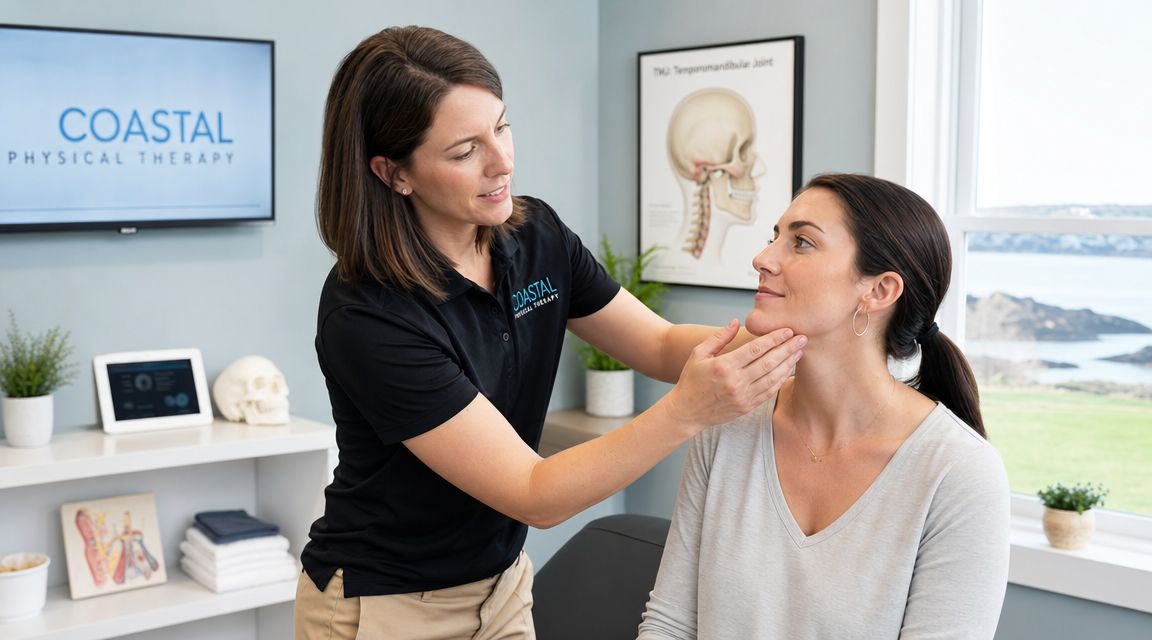
The first visit is usually less intimidating than patients expect. Patients often worry that the exam will be painful or awkward. It's neither. A good TMJ evaluation is careful, specific, and built around what you're feeling.
It starts with your story
The first part is a conversation. We want to know when the pain started, whether it's constant or intermittent, and what makes it worse. Chewing? Yawning? Stressful workdays? Morning stiffness? Headaches? Neck pain?
We also ask what you've already tried. Soft foods, heat, massage, a night guard, changing pillows, resting the jaw. That history matters because it tells us what has and hasn't changed the pattern.
If you want a non-technical overview before your visit, this patient resource on how to learn about TMJ disorder can help you arrive with better questions.
We check more than the jaw
A strong evaluation doesn't stop at the jaw joint. Jaw mechanics and cervical spine posture are biomechanically linked, and a substantial number of patients with TMD also report neck pain, which is why screening the neck matters in TMJ care, as described in this clinical overview of TMJ and the neck connection.
That means your assessment may include:
- Jaw opening and closing mechanics
- Side-to-side motion
- Painful muscle areas in the face, jaw, and neck
- Clicking or deviation during movement
- Neck mobility
- Posture and resting head position
A jaw that keeps getting irritated often has help from the neck, shoulders, or daily posture habits.
The visit should leave you with more clarity, not more confusion. If you're comparing providers, our guide on how to choose a physical therapist can help you know what to look for in an evaluation.
Evidence-Based TMJ Treatments We Offer
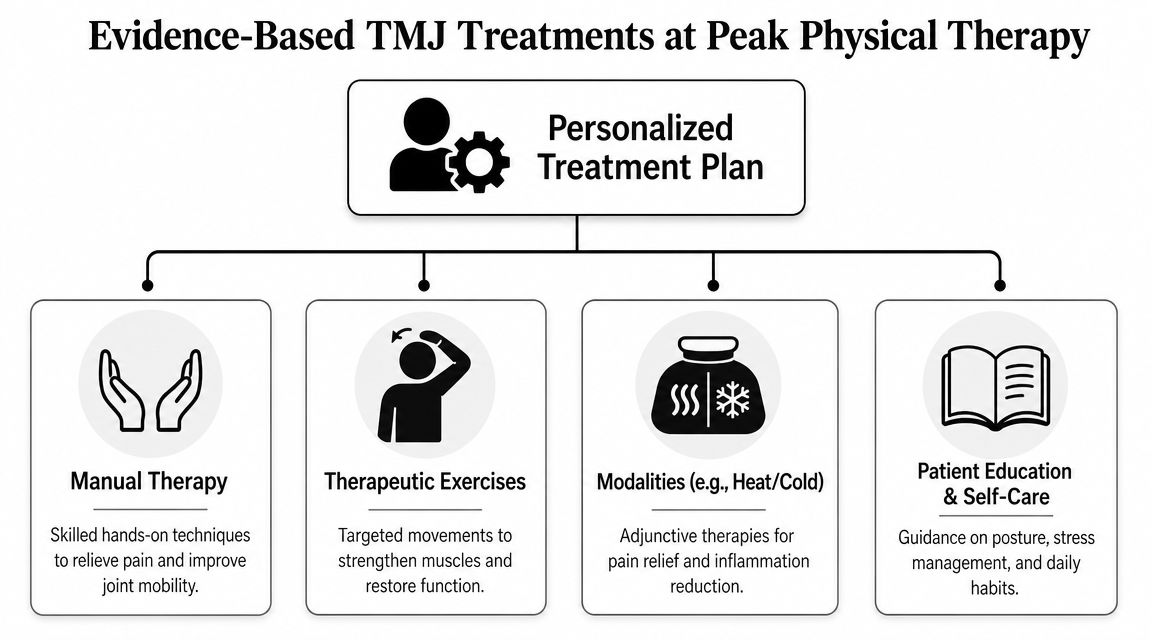
Once we know what's driving the symptoms, treatment becomes much more focused. Effective TMJ physical therapy is multimodal, combining targeted jaw exercises, hands-on manual therapy, posture correction, and muscle relaxation techniques, with practical goals like reduced pain, improved mouth opening, and better coordination, as outlined in this description of multimodal TMD joint therapy.
What usually helps
Some patients need the joint to move better. Others need overworked muscles to calm down. Many need both.
Here's what that often looks like in practice:
- Manual therapy: Skilled hands-on treatment can help reduce guarding, improve joint motion, and settle down irritated muscle tissue around the jaw, face, and neck.
- Targeted exercise: These aren't generic stretches. The right exercises help the jaw move with better control, especially if opening is crooked, stiff, or poorly coordinated.
- Posture and oral-motor retraining: If your jaw keeps getting pulled into the same overloaded pattern all day, the fix isn't just local. We often work on head and neck position, shoulder tension, and resting jaw habits.
- Self-management strategies: Heat, pacing, food modification for a short period, and reducing clenching triggers can make the treatment plan work better between visits.
- Dry needling when appropriate: In selected cases, this can help with stubborn muscular trigger points that keep feeding jaw and headache symptoms.
One option for local care is Peak Physical Therapy and Sports Performance, which offers outpatient physical therapy across the South Shore for musculoskeletal problems including TMJ-related pain and dysfunction.
If you'd like a broader look at hands-on treatment methods, this article on manual physical therapy gives more context.
What usually doesn't
The common mistake is trying to fix TMJ with one thing only.
A single exercise from a video often isn't enough. So is chewing gum less, unless gum chewing was the clear driver. Rest can help briefly, but too much guarding can make movement feel more threatening and stiff.
The best plan is usually not the most aggressive plan. It's the one that matches the reason your jaw is irritated.
Another trade-off to understand is speed versus durability. Quick symptom relief matters, but lasting progress usually comes from changing the movement pattern and the daily load on the system.
Practical Home Exercises and Important Red Flags
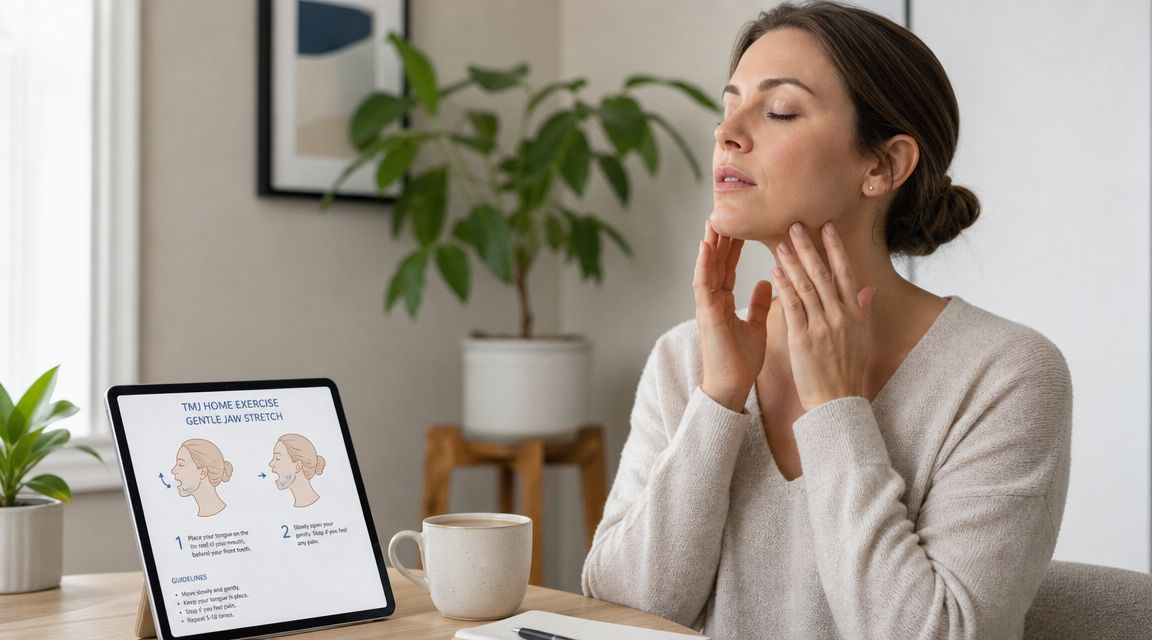
There are a few gentle things you can do at home that may help calm the area down. The key word is gentle. If an exercise ramps up pain, causes sharper clicking, or makes your jaw feel more irritated later in the day, stop and get guidance.
Simple home care that's often worth trying
Try these as a starting point:
Tongue-up relaxed opening
Place your tongue gently on the roof of your mouth. Open and close your mouth slowly without forcing range. This can help reduce gripping and improve control.Controlled nasal breathing with jaw relaxation
Sit upright, let the teeth stay slightly apart, and breathe slowly through your nose. The goal is to reduce the “always on” tension many people carry in the jaw.Chin nod and posture reset
Gently lengthen through the back of the neck and bring your head back over your shoulders. Hold briefly, then relax. This won't cure TMJ by itself, but it can reduce one common source of repeated strain.
If home care feels like work but not relief, that's usually a sign you need a more precise plan.
At-home TMJ care do's and don'ts
| Do | Don't |
|---|---|
| Choose softer foods for a short stretch when chewing is clearly flaring symptoms. | Push through painful chewing just to test whether it's “better yet.” |
| Use short bouts of heat if the muscles feel tight and achy. | Stretch aggressively or force the jaw open. |
| Notice clenching habits during work, driving, or stressful moments. | Chew gum frequently when the jaw is already irritated. |
| Keep posture in mind during desk work and phone use. | Rest the jaw completely for too long if normal motion starts to feel stiffer. |
| Track morning symptoms like headaches, soreness, or fatigue. | Assume every jaw symptom is purely muscular without considering other causes. |
When jaw pain needs more than PT
One of the most important parts of care is knowing when physical therapy is appropriate and when it isn't enough by itself. Persistent morning jaw pain, headaches, or clenching can sometimes be related to sleep-disordered breathing, which may call for coordinated care with dental or sleep specialists, as noted by the South Shore-based TMJ and sleep therapy center overview.
Other signs to seek medical or dental input include:
- Tooth-specific pain
- Swelling
- Fever or signs of infection
- A major bite change
- Locking that won't resolve
- Numbness, burning, or unusual nerve-like pain
- Jaw symptoms that don't match mechanical patterns
That isn't a failure of PT. It's good decision-making.
Your Recovery Journey What to Expect
Recovery usually isn't a straight line. Individuals typically have a mix of good days, flare days, and gradual improvements that become obvious over a few weeks when they look back.
Early wins and longer-term progress
Early changes often include less morning tightness, easier chewing, fewer headaches, or less guarding when talking and yawning. Clicking may reduce, but the bigger milestone is usually that the click becomes less painful and less disruptive.
Longer-term progress looks different. You should feel more confident eating normal meals, less aware of the joint during the day, and better able to stop a flare before it turns into a rough week.
A realistic plan often includes:
- Short-term focus: Calm pain, reduce muscle guarding, improve comfort with basic movement.
- Middle phase: Restore smoother motion and better control.
- Long-term focus: Build self-management so stress, posture, or poor sleep don't keep pulling you back into the same cycle.
A local recovery story
“I came in thinking my jaw was the whole problem. Once we worked on my neck, posture, and clenching habits too, I could eat normally again without worrying about every bite.”
That kind of story is common because jaw pain is often layered. The fastest way forward usually isn't chasing the loudest symptom. It's finding the pattern underneath it and treating the pieces that keep feeding it.
Find TMJ Physical Therapy Near You on the South Shore
Getting help for TMJ pain is easier locally than it used to be. The region's care network has expanded, and the South Shore's healthcare infrastructure for TMJ has grown with specialized programs becoming more common, which means residents don't have to travel far for condition-specific care that may include hands-on treatment, exercise, and options such as dry needling, as described in this announcement about the growth of local TMJ care infrastructure.

If you're searching for TMJ physical therapy near you, Peak has South Shore clinics in:
- Braintree
- Quincy
- Weymouth
- Cohasset
- Duxbury
- East Bridgewater
- Hanover
- Kingston
- Milton
- Norwell
- Pembroke
- Plymouth
- Scituate
If Quincy is most convenient for you, this local page on physical therapy in Quincy MA is a helpful place to start.
The next step should be simple. Book an appointment, verify your insurance, and get a clear answer about whether PT is the right fit for your jaw pain.
Frequently Asked Questions About TMJ Therapy
Do I need a doctor's referral to start physical therapy?
In many cases, patients can start physical therapy directly. Insurance rules can vary, so it's smart to confirm your specific plan before the first visit.
Is TMJ treatment painful?
It shouldn't feel harsh. Some techniques can be tender because the muscles are already sensitive, but treatment should stay controlled and tolerable. Good care doesn't rely on forcing motion.
How is physical therapy different from what my dentist offers?
They do different jobs. PT focuses on movement, muscle tension, joint mechanics, posture, and symptom behavior during daily activity. Dental care may be more relevant when bite issues, tooth problems, oral appliances, or structural dental concerns are part of the picture.
What if my pain is mostly in my head or neck?
That still fits the pattern for many people with jaw dysfunction. Jaw symptoms often overlap with headaches, facial tension, and neck pain, which is why a whole-region assessment matters.
If jaw pain is making meals, sleep, work, or workouts harder than they should be, it's worth getting a clear plan. Peak Physical Therapy and Sports Performance offers local care across the South Shore, with appointments available in Braintree, Quincy, Weymouth, Cohasset, Duxbury, East Bridgewater, Hanover, Kingston, Milton, Norwell, Pembroke, Plymouth, and Scituate. Book an appointment, verify your insurance, and take the next step toward easier chewing, less tension, and more comfortable days.