


A Massachusetts winter morning can look manageable right up until the moment your shoe touches the driveway.
The porch looks lightly dusted. The walkway seems clear enough. You tell yourself you’ll just move carefully. Then your foot hits a thin glaze of ice you did not see, your body stiffens, and every step suddenly feels high stakes.
That fear is reasonable. Ice changes how the ground responds under you, and it punishes habits that feel normal on dry pavement. Learning how to walk on ice is less about bravery and more about understanding balance, friction, and body position. The good news is that safer movement on ice is a skill. It can be practiced, improved, and adapted to your age, strength, footwear, and goals.
That First Icy Step A Massachusetts Winter Reality
Massachusetts residents know this moment well. You open the front door before work, before school drop-off, or before taking the dog out. The air is sharp, the steps look mostly clear, and the danger is often in the places that look harmless.
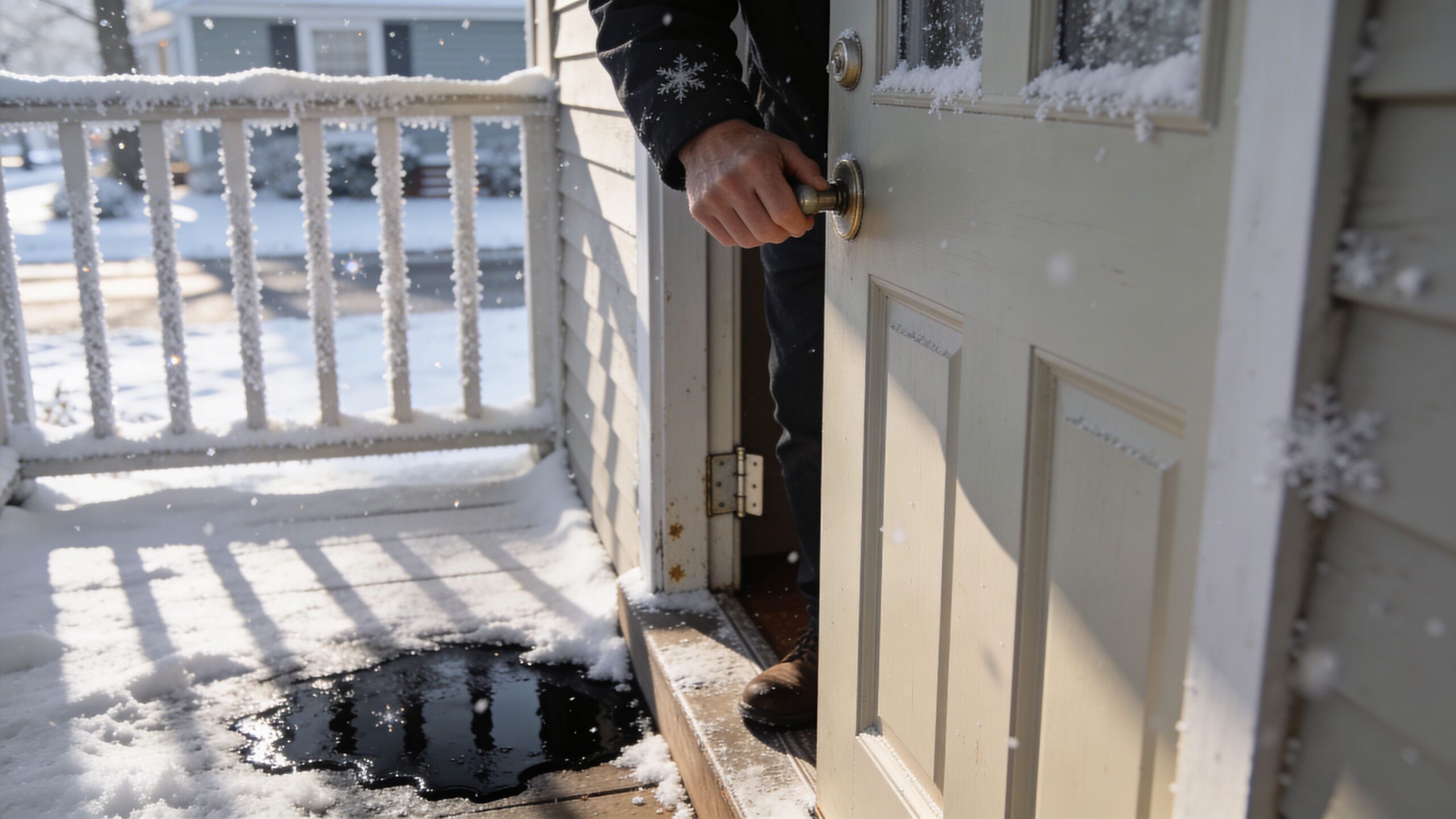
For many people, one bad winter slip changes behavior for the rest of the season. They stop walking outside unless they have to. They rush because they feel vulnerable. Or they tense up so much that their movement becomes less stable, not more.
Why this matters more than generally assumed
Winter slips are not minor inconveniences. In the U.S., many slip-and-fall injuries occur annually, with numbers peaking in colder seasons. The CDC also reports that one in five falls leads to serious injuries like broken bones, and for older adults, more than 95% of the 300,000 yearly hip fractures are caused by sideways falls, often on ice (winter slip and fall statistics and prevention strategies).
Those numbers matter in real life because they reflect what people worry about most. A broken wrist from reaching out to catch yourself. A hip injury after a sideways fall. Weeks or months of reduced confidence after one hard landing.
Fear is common, but panic makes movement worse
When people feel unsteady, they often do two things automatically:
- They rush the crossing because they want to “get it over with”
- They lock their joints instead of letting the body make small balance corrections
Both reactions work against you. Ice demands slower weight shifts, softer knees, and more deliberate foot placement.
A calm, slightly cautious walking pattern is safer than a stiff, hurried one.
What helps most
Safe winter walking starts before the first icy step. Strength, balance, footwear, and gait mechanics all play a role. If one of those pieces is off, the others have to work harder.
That is especially true for older adults, people recovering from surgery, anyone with ankle weakness, and people who already feel unsteady on uneven ground. The goal is not to become fearless. The goal is to become prepared enough that you can move with more control.
Building Your Foundation Before the First Frost
The safest winter walkers usually do their work before winter starts. They build enough strength and balance that a small slide does not immediately turn into a hard fall.
From a physical therapy standpoint, the goal is simple. Improve how well the body manages weight shifts, controls the trunk, and reacts when friction drops. Footwear matters, but shoes and traction aids work better when the ankles, hips, and core can still make quick corrections.

Balance starts at the ankle
Your ankles are the first line of correction when the ground is slick. If they are stiff, weak, or slow to react, the rest of the body has to compensate with larger movements, and larger movements are harder to control on ice.
Try this near a counter or sturdy chair:
- Stand on one leg with one or two fingertips available for support.
- Hold for a short interval with the standing knee slightly bent.
- Switch sides and repeat.
Watch for useful signs, such as toe gripping, excessive wobbling, or the arch collapsing inward. Those patterns often show where control breaks down.
If that becomes easy, add a small challenge. Turn your head side to side, or tap the floor lightly in front, to the side, and behind with the free foot.
Heel-to-toe walking trains controlled weight transfer
A lot of winter slips happen between steps, not just at foot strike. The body shifts weight, the center of mass drifts, and the foot cannot generate enough friction to keep up. Heel-to-toe walking helps train that transition with more precision.
Use a hallway or counter for support. Walk slowly with one foot placed directly in front of the other. Keep your eyes forward. Let the steps stay quiet and controlled.
This drill improves several things at once:
- Foot placement awareness
- Hip stability during single-leg loading
- Trunk control as the body moves over a narrow base
Core stability keeps the upper body from amplifying a slip
On ice, a stable trunk does not mean a rigid trunk. It means the torso can stay organized while the legs make fast adjustments underneath you.
A good starting drill is a wall-supported march:
- Stand tall near a wall or counter
- Brace the abdomen gently, like preparing for a cough
- Lift one knee slowly without leaning back or side to side
- Alternate sides
A basic bridge also helps. Press through both feet, lift the hips a small amount, and keep the pelvis level. The point is controlled alignment, not height.
That trade-off matters. People often try to feel safer by stiffening everything. In practice, mild muscular control works better than bracing so hard that balance reactions get delayed.
If an exercise makes you less steady, reduce the difficulty. Add hand support, shorten the hold, or have a physical therapist adjust the drill.
Hip strength helps keep the leg lined up
The hips help control where the knee and foot go when you load the leg. If the pelvis drops or the knee caves inward, balance gets harder to recover, especially on a surface with very little grip.
Side-lying leg lifts and standing side steps with a resistance band are both useful. Move slowly. Keep the pelvis level. Avoid swaying the trunk to cheat the motion.
| Exercise | Main benefit | Good cue |
|---|---|---|
| Single-leg stand | Ankle balance response | Keep the standing knee soft |
| Heel-to-toe walk | Controlled weight transfer | Eyes forward, slow pace |
| Wall-supported march | Core and hip control | Do not lean side to side |
| Side steps or side leg lifts | Hip stability | Move slowly, stay level |
Practice the pattern before you need it
Indoor practice helps because winter walking is partly a movement skill. Shorter steps, steadier weight shifts, and better alignment are easier to use outside when they already feel familiar inside.
If walking mechanics already feel off on normal ground, address that before snow and ice add another layer of difficulty. This guide on improving gait mechanics and stride control explains the movement issues that often show up first in winter.
The Penguin Walk The Right Way to Move on Ice
The safest common walking strategy on icy sidewalks is often called the penguin gait. The name is memorable, but its effectiveness comes from its mechanics.
This technique uses shorter, flatter, more deliberate steps so your body creates less of the forward-and-back force that makes feet slide out from under you.
Why normal walking fails on ice
On dry ground, a longer stride usually feels efficient. On ice, it often becomes the problem.
The penguin gait can cut workplace ice falls by up to 50%. It works by minimizing horizontal shear forces, and over-striding increases these forces by 40 to 50% and is responsible for 70% of slips (science-approved tips for walking across ice).
That is the key trade-off. On ice, what feels natural is not always what keeps you upright. A strong push-off and a long step help on dry pavement. They are risky on a low-friction surface.

How to do it
Think less about “walking carefully” and more about changing your mechanics.
Start with posture
Stand a little taller than you might expect, but do not stiffen. Your knees should stay slightly bent. Your torso should remain upright with a subtle forward inclination from the ankles, not a bend at the waist.
That position helps keep your center of mass closer to the foot that is supporting you.
Shorten the step
A useful cue is to take shorter, shuffling steps rather than your normal stride. Let each foot stay closer to the ground.
Do not reach forward with the heel. Reaching creates the kind of braking force that can send the foot sliding.
Keep the feet flatter
A flatter foot gives you more contact with the ground. On ice, that usually works better than a dramatic heel strike.
If you can, place the whole foot down in a controlled way instead of rolling quickly through the step.
Turn the toes slightly out
A mild toe-out position can widen your base a bit and make balance corrections easier. It should feel natural, not exaggerated.
Use the arms
Let your arms stay slightly out from your sides instead of buried in your coat pockets. They are part of your balance system.
Keep your hands free when possible. Carrying bags in both hands limits your ability to react if the surface shifts.
Three mistakes that cause problems
Many winter falls happen because people use dry-ground habits on icy ground.
Over-striding
This is the big one. The front foot lands too far ahead, and the body creates more horizontal force than the ice can handle.Looking straight down
People do this to search for ice, but it can make posture worse and reduce awareness of the bigger path ahead. Scan the surface ahead of you, not only the area near your toes.Rushing transitions
Getting in and out of the car, stepping off a curb, and moving from pavement to a parking lot are common trouble spots. Slow down before the risky section, not after.
Match the technique to the situation
The penguin walk is ideal for common Massachusetts winter tasks:
- Crossing a shady driveway
- Walking from the car to the office
- Taking the trash out after refreeze
- Getting across a salted but still slick sidewalk
It is not a cure-all. On steep slopes, heavily rutted ice, or trail conditions, technique alone may not be enough. That is where traction devices, route choice, and sometimes avoiding the surface entirely become the smarter call.
Practice before you need it
Rehearsing the movement indoors helps. Try short, deliberate steps in your kitchen or hallway so the pattern feels familiar.
If gait mechanics are already an issue, this guide on how to improve gait can help you understand why stride length, balance, and body alignment matter before winter weather adds another challenge.
Choosing Your Gear Footwear and Traction Aids Explained
“Wear good boots” is common advice. It is also incomplete.
Ice safety depends on friction, and friction is not just about whether a shoe looks rugged. It is about how the sole material behaves in the cold, how the tread meets the surface, how stable the shoe feels under your body, and whether the surface is packed snow, refrozen slush, or hard shiny ice.
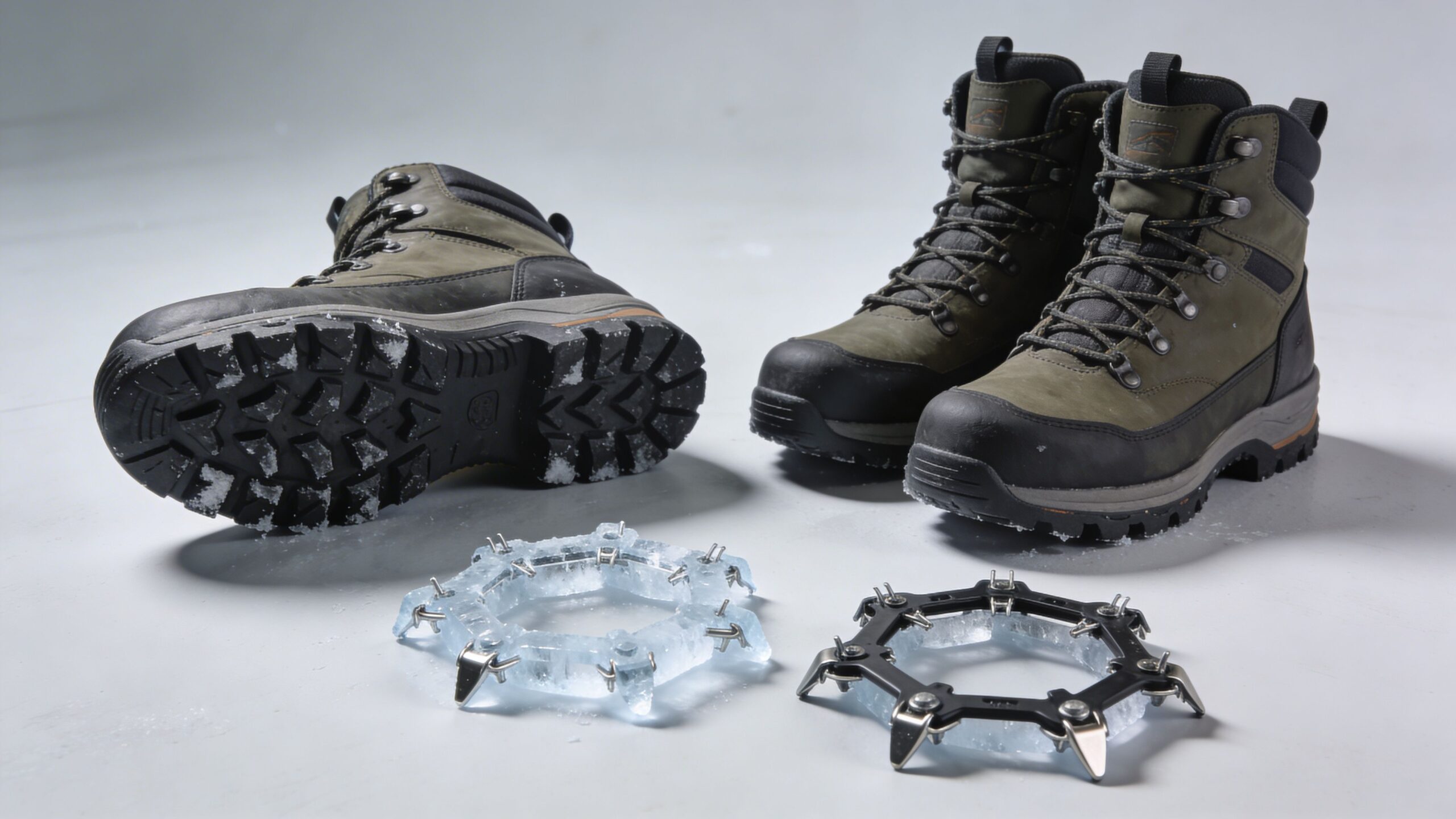
A major knowledge gap is the friction science-to-practice translation. People know ice is slippery, but many do not understand how slipperiness can change with temperature or how shoe materials and geometry interact with different icy conditions (discussion of the friction science-to-practice gap).
What to look for in a winter shoe or boot
A better winter shoe does a few things well.
It stays stable under your foot
A tall, heavy boot may feel protective, but if it is clunky and makes foot placement awkward, it can create a different problem. For everyday sidewalks and parking lots, a shoe or boot should feel predictable when you shift weight onto it.
Look for:
- A secure fit so the heel does not slide inside the shoe
- A broad, stable base rather than a narrow or unstable platform
- Enough flexibility that the foot can still sense the ground
The outsole matters
Smooth soles are poor choices for winter walking. Tread helps most on softer, uneven, or snowy surfaces where the pattern can interact with the surface. On hard glaze ice, tread alone often is not enough.
Deep lugs can help in slush and snow. Sharper edges may grip better than rounded, worn patterns. A completely worn outsole is a winter hazard even if the upper part of the shoe still looks fine.
When traction devices make sense
Traction aids are not all the same. The right choice depends on where you are going.
| Situation | What often helps | Caution |
|---|---|---|
| Mailbox, driveway, short sidewalk trip | Simple slip-on traction aid | Remove before walking on smooth indoor floors |
| Packed snow around town | Coil-style device may help | Less reliable on hard clear ice |
| Icy trails or uneven outdoor terrain | Spike-based device or microspikes | Not appropriate for indoor surfaces or polished entryways |
For a quick walk in Quincy after a thaw-and-refreeze cycle, a basic traction device may be enough. For a winter hike in the Blue Hills or a frozen trail near Plymouth, more aggressive traction may be the better match.
The trade-off is convenience versus bite. More aggressive devices grip better on ice, but they can feel awkward, and they should not be worn into stores, lobbies, or on hard finished floors.
Footwear and gait have to work together
The best boot in the world cannot fix poor mechanics. A good sole helps, but if you rush, over-stride, or keep your hands in your pockets, your risk still rises.
The reverse is also true. Good penguin-walk mechanics can only do so much if the shoe is unstable, slick, or worn out.
If ankle comfort or stability influences what shoes you can tolerate, this guide on best shoes for ankle pain offers useful considerations that carry over into winter footwear decisions.
Buy winter traction for the conditions you face most often, not the conditions you imagine. The best gear is the gear you will consistently use.
Beyond the Walk How to React to a Slip and Fall Safely
Even with good technique, some slips happen too fast to fully stop. In that moment, the goal changes. You are no longer trying to walk perfectly. You are trying to reduce injury.
During the slip
Your first instinct may be to tense everything and fight the motion. That reaction is understandable, but it can lead to harder twisting through the knee, hip, or back.
A better response is to avoid sudden reaching and try to keep the body more compact.
- Do not throw your hand straight back to catch yourself if you are already going down
- Try to bend, not lock, at the knees and hips
- Keep the chin tucked slightly to protect the head if you fall backward
- Let the body lower instead of trying to stay tall at all costs
If a fall is unavoidable
Few people can execute a perfect martial-arts-style fall on black ice. But a few principles help.
Protect the head first
If you go down, avoid whipping the head backward. Tucking the chin slightly can help.
Avoid landing on an outstretched hand
People often fracture wrists trying to save themselves. If possible, keep the arms from taking the full force in a locked position.
Try to spread the force
A side or back fall can still be serious, but a relaxed, slightly rolled landing is often better than a rigid crash onto one point.
A “soft” fall is still a fall, but reducing stiffness can lower the force concentrated through one joint.
What to do once you are on the ground
Pause before you jump up. Adrenaline can hide pain for a minute or two.
Ask yourself:
- Did I hit my head
- Can I move my arms and legs
- Do I feel sharp pain in the wrist, hip, ankle, or back
- Am I dizzy or confused
If something feels seriously wrong, stay where you are and call for help. If you think you can get up safely, roll toward your side, get to hands and knees if tolerated, crawl to a stable object like a car, railing, or bench, and use it to help you rise gradually.
After the fall
Sometimes the pain builds later. Swelling, bruising, reduced motion, and soreness with weight-bearing can take time to show up.
If the fall happened on a business property, apartment walkway, or public sidewalk and injuries followed, legal questions may come up too. This overview on Can you sue for injuries after slipping on snowy sidewalks gives general context on the issue.
Medical attention is appropriate if you hit your head, cannot bear weight, notice major swelling, or have pain that does not settle with rest.
When to See a Physical Therapist for Balance and Fall Prevention
A lot of winter falls start before the foot even touches ice. The underlying problem is often how the body manages load, balance, and quick corrections once traction drops. In clinic, I see this often in Massachusetts winters. One person does fine on dry pavement but loses control the moment a surface gets slick because the ankles are stiff, the hips cannot control side-to-side motion, or the balance system struggles when the head turns.
That matters because safe winter walking is not just about being careful. It is about matching the friction available under your shoe with a gait your body can control. If that match is off, even good boots and cautious steps may not be enough.
Signs you would benefit from an assessment
A physical therapy evaluation is a smart next step if any of these fit:
- You have already fallen, even if you got up and kept going
- You avoid going out in winter because you do not trust your balance
- You had recent surgery involving the hip, knee, ankle, or spine
- You feel unsteady on curbs, stairs, or uneven pavement
- You want to return to icy trails or winter hiking
For more technical winter terrain, equipment alone does not solve the problem. More advanced movement on snow and ice also depends on ankle and hip mobility and stability, as noted in these walking techniques on firn and ice.
What a fall-prevention plan can include
A good plan looks at the body the way winter walking works. It checks whether you can keep your center of mass over your base of support, shorten your step without getting rigid, and recover if one foot slides.
That often includes:
- Hip and leg strength for better control in single-leg stance
- Ankle mobility so the foot can meet the ground instead of slapping onto it
- Gait training to improve step width, cadence, and weight shift
- Reactive balance practice for turns, stops, and small slips
- Vestibular screening if dizziness or head movement throws you off
- Confidence building, because fear changes gait mechanics and often makes people stiffer and less stable
For older adults, Geriatric Physical Therapy can be especially useful because it focuses on mobility, safety, and independence with age-related balance changes in mind.
If you want a broader overview of risk factors, home safety, and strength work that supports steadier walking, this guide on how to prevent falls is a helpful resource.
Local care matters in winter
Winter in Massachusetts creates very specific movement demands. Parking lots refreeze. Sidewalks slope. Train platforms stay slick even after plowing. A useful rehab plan should prepare you for those exact situations, not just for walking down a clinic hallway.
If you live on the South Shore, care close to home can make follow-through much easier in the middle of winter. Consistent treatment, a program you will do, and practice geared to real outdoor conditions usually matter more than any single tip.
Frequently Asked Questions About Winter Safety
What is black ice and how do I spot it
Black ice is a thin, hard-to-see layer of ice that often looks like a dark glossy patch because the pavement shows through it. Be extra cautious in shaded areas, on bridges, at the edge of driveways, and anywhere melted snow may have refrozen overnight. If a patch looks shiny compared with the surface around it, treat it as slippery until proven otherwise.
Should I use a cane or walking poles on ice
They can help, but only if they improve stability instead of becoming one more thing to manage. A cane needs reliable placement to be useful, which is not always easy on glare ice. Walking poles can improve balance for some people by widening the support pattern, especially on snowy or uneven ground. If you use one, move it deliberately and make sure the tip is appropriate for winter conditions.
Is it safe to walk outside after knee or hip surgery in winter
Sometimes yes, sometimes not yet. It depends on your strength, reaction time, weight-bearing status, footwear, and confidence. Many post-surgical patients are safest with a very conservative plan at first, including cleared walkways, assistance when needed, and short trips only. If you are recovering from a replacement, ligament repair, fracture, or tendon procedure, ask your physical therapist for specific outdoor guidance before navigating icy conditions on your own.
If winter walking feels uncertain, or if one slip has made you hesitate to leave the house, Peak Physical Therapy and Sports Performance can help you build safer balance, stronger gait mechanics, and a plan that fits real Massachusetts winter life. With South Shore clinics including Braintree, Quincy, Weymouth, Cohasset, Duxbury, East Bridgewater, Hanover, Kingston, Milton, Norwell, Pembroke, Plymouth, and Scituate, Peak provides personalized physical therapy for fall prevention, post-surgical recovery, and confident everyday movement.