


Finding the right shoes when your ankle hurts is about more than just comfort. It’s about giving your ankle the support, stability, and cushioning it needs to heal and function properly. The perfect pair acts like an external support system, taking pressure off the joint whether you're walking, running, or just on your feet all day.
Your First Step Away From Ankle Pain
Facing another day with a throbbing ankle is incredibly frustrating. We see it all the time at our clinics. It turns simple things—like a walk through a Massachusetts park, navigating icy winter sidewalks, or even just getting through a work shift—into a painful ordeal. We understand how exhausting it is when every step hurts, and we want you to know relief is within reach.
Choosing the right footwear is one of the most powerful first steps you can take toward feeling better. Think of a good shoe not just as something you wear, but as a critical tool for managing and preventing ankle pain. This guide, written by the licensed physical therapists at Peak Physical Therapy, will help you make sense of shoe shopping and get you on the path to moving freely again.

Why Supportive Footwear Matters
Ankle and foot pain is a widespread issue. Studies show that its prevalence can be as high as 36% in the general population, and that number climbs with age and other health factors. A major contributor is often poor footwear; shoes that lack adequate support can increase pressure on the front of your foot by 12-18%, throwing your natural walking mechanics out of whack.
At our Peak Physical Therapy clinics serving South Shore communities like Norwell, Pembroke, and Milton, we see firsthand how the wrong shoes can sideline recovery. The right shoes, on the other hand, make all the difference. Taking proactive steps is key for long-term ankle health, and a great place to start is learning how to prevent sports injuries, as proper footwear is your first line of defense.
The right shoe provides the stable foundation your ankle needs to heal and function correctly. It’s not about finding a cure in a box, but about creating an environment where our licensed physical therapists can help your body move properly and without added stress.
This guide will give you the confidence to find shoes that truly support your recovery. Your choice of footwear directly impacts your body’s alignment and the way you move. For personalized guidance, scheduling an evaluation with a physical therapist is the best next step.
The Anatomy of an Ankle-Friendly Shoe
When we talk about a "good" shoe for ankle pain, our physical therapists are looking at specific design features that work together to protect your joint. It’s a bit like building a supportive house for your foot—every component has a job to do.
Understanding these features will empower you to look past marketing hype and focus on what really matters for your ankle health.
Here’s a quick breakdown of what to look for when you're shopping for your next pair of shoes.
| Key Feature | What It Is | Why It Helps Your Ankle |
|---|---|---|
| Firm Heel Counter | The rigid plastic insert that cups your heel. | Prevents your heel from rolling inward or outward, reducing strain on ankle ligaments. |
| Torsional Stability | How much the shoe resists twisting. | A stiff shoe prevents unnatural twisting motions, which is vital for unstable ankles. |
| Supportive Midsole | The layer between the insole and outsole. | Absorbs shock and provides a stable platform, cushioning the impact of each step. |
| Appropriate Cushioning | The amount of shock-absorbing material. | Reduces the force traveling up from the ground into your ankle, especially on hard surfaces. |
| Correct Heel-to-Toe Drop | The height difference between the heel and forefoot. | A lower drop can promote a more natural foot strike, but a moderate drop may offload a sore Achilles tendon. |
Each of these elements plays a role in creating a stable and comfortable environment for your ankle. The goal is to find a shoe that controls harmful motion while still allowing your foot to move naturally through your stride.
Why Your Ankle Hurts and How Shoes Can Help
To understand how your shoes can make or break your ankle health, we first have to look at the why behind your pain. Think of your ankle as the body’s primary shock absorber and launchpad. It’s an amazing joint that has to be flexible enough to handle uneven ground yet strong enough to propel you forward with every single step.
When that delicate balance is off, pain is usually the first sign something is wrong. At our Peak Physical Therapy clinics, our licensed physical therapists perform a comprehensive evaluation to determine the root cause of your ankle pain. It often traces back to a few common issues. A big one is lingering weakness from an old sprain. In fact, research shows the re-injury rate for ankle sprains can be as high as 80%, often because the joint never quite gets its stability back.
Common Causes of Persistent Ankle Pain
Besides old sprains, other frequent causes of that nagging ankle pain include:
- Tendonitis: This is an inflammation of the tendons around your ankle, usually from overuse. It can feel like a sharp pain on the inside or outside of the joint, especially when you’re active.
- Arthritis: This wear-and-tear on the joint’s cartilage typically leads to a deep, aching pain, stiffness, and swelling that feels worst first thing in the morning.
- Chronic Instability: This is that unnerving feeling of your ankle about to “give way,” even on a simple walk. It’s a classic side effect of repeated sprains that weren’t fully rehabilitated.
The common thread here is often a breakdown in your body’s mechanics—and your shoes play a much bigger role than you might realize. Wearing flimsy, unsupportive shoes is like building a house on a shaky foundation. It just won’t hold up.
We often see patients in our Quincy and Hanover clinics who are shocked to learn their favorite old shoes are a primary source of their morning stiffness and pain. The right shoe acts as an external support system, correcting alignment flaws and protecting the joint from excessive stress.
How Your Shoes Can Make Things Worse
Poor footwear actively works against your ankle, forcing it into unnatural and stressful positions. If a shoe has a soft, flimsy heel, your own heel will wobble with every step, putting constant strain on your ligaments. A sole that’s too worn down or overly flexible stops absorbing shock, sending jarring force right up into your ankle joint.
That mechanical stress doesn’t just stop at the ankle, either. It creates a chain reaction that can travel all the way up to your knees, hips, and even your lower back. For further insights into various supportive devices that might aid in ankle health, you can explore specialized resources for medical equipment insights.
On the flip side, the right shoe provides the exact stability and cushioning your ankle needs to heal and stay healthy. It helps control damaging motion, distributes pressure evenly, and softens the blow of walking on hard surfaces. This supportive environment is key for reducing pain now and preventing it from coming back. Of course, a huge part of avoiding future problems is knowing how to prevent falls, as an unstable ankle dramatically increases your risk.
What Makes a Shoe Good for Ankle Pain?
Choosing the right shoe when you have ankle pain can feel overwhelming, but it doesn’t have to be. Once you know what to look for, you can walk into any store and evaluate footwear like a pro. Let’s break down the key parts of a shoe so you can find one that truly supports your ankle health.
Think of a shoe as a support system for your foot and ankle. Every component has a job, and when they all work together correctly, they protect your joints from stress. This is especially important for navigating the varied terrain we have here in Massachusetts, from uneven brick sidewalks in Boston to the sandy paths on Cape Cod.
The Heel Counter: Your Heel’s Seatbelt
The heel counter is the firm insert built into the back of the shoe, right where it cups your heel. Its main job is to lock your heel in place and stop it from wobbling side-to-side, which is absolutely critical for ankle stability. A flimsy or soft heel counter allows for too much motion, putting extra strain on your ligaments and tendons.
You can easily check this yourself with a quick “squeeze test.” Pick up a shoe and squeeze the back of the heel. It should feel firm and resist collapsing. If you can flatten it with your fingers, it’s not going to give you the control you need—especially for an unstable ankle.
The Midsole: The Shock-Absorbing Engine
The midsole is the true workhorse of the shoe. It’s the layer between the soft insole your foot rests on and the rubber outsole that hits the ground. It’s responsible for two crucial functions: absorbing shock and providing stability. For anyone with arthritic or painful ankles, a good midsole that cushions the impact of each step can be a game-changer.
But watch out—a midsole that’s too soft and mushy can be just as bad as one with no cushioning at all. It needs enough structure to prevent the shoe from twisting too easily. Try this: hold the shoe at both ends and try to wring it out like a towel. A supportive shoe will resist the twist, while a flimsy one will fold up without a fight.
The infographic below shows how poor shoe choice is one of several factors that can lead to ankle pain.
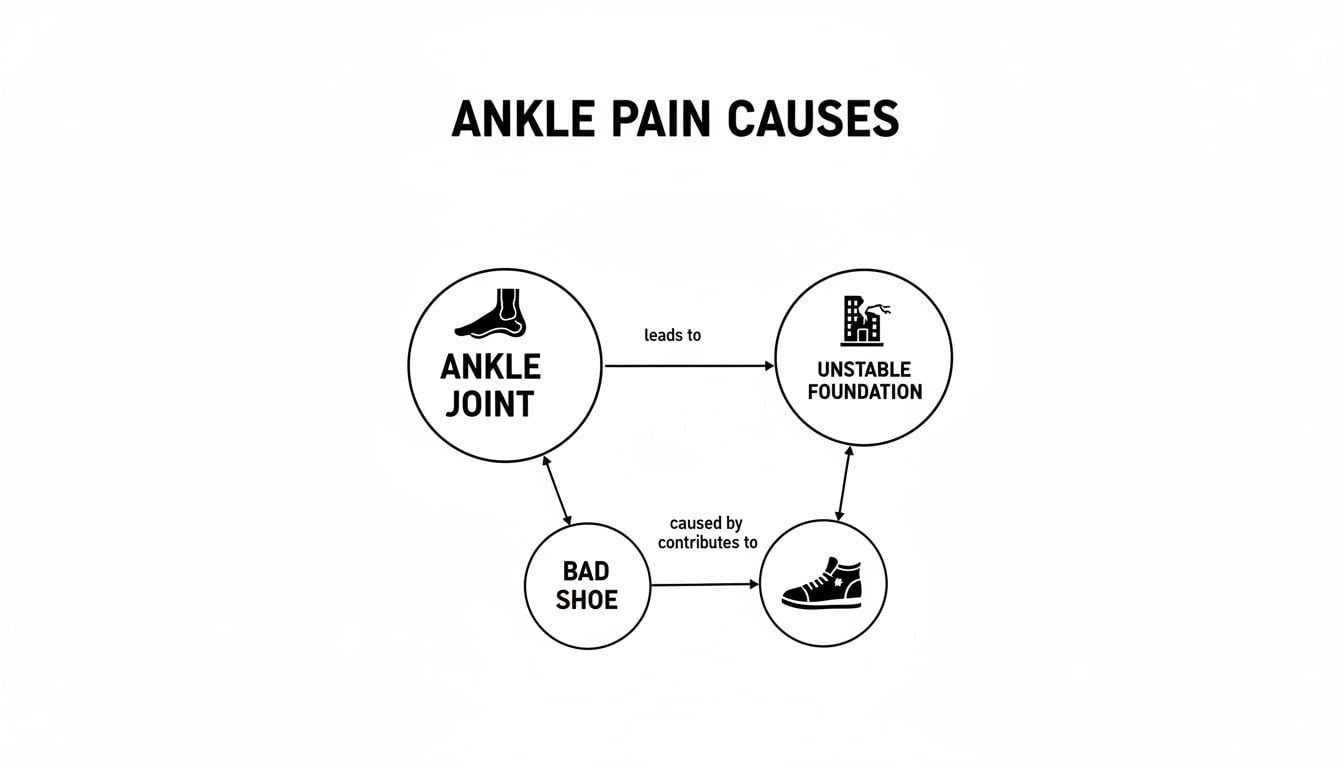
As you can see, while the ankle joint itself is a major factor, the stability of your foundation—which includes your footwear—plays an equally important role in preventing pain.
To make it even easier to spot a good shoe from a bad one, we’ve put together this quick checklist.
Shoe Feature Checklist for Ankle Pain
| Shoe Component | Look For This (Supportive) | Avoid This (Problematic) |
|---|---|---|
| Heel Counter | Firm and rigid; holds its shape when squeezed. | Soft and collapsible; easily flattened. |
| Midsole | Resists twisting; bends only at the ball of the foot. | Bends in the middle; twists easily like a wet towel. |
| Sole Width | A wide, stable base that makes full ground contact. | Narrow base; rounded or beveled edges. |
| Heel-to-Toe Drop | Varies by condition; a modest drop (8-12mm) can help Achilles issues. | Extreme drops (high heels) or a drop that causes you pain. |
| Cushioning | Firm but responsive; provides shock absorption without feeling mushy. | Excessively soft, “pillowy” foam that offers no stability. |
Use this table as your guide when you’re shopping. It helps you cut through the marketing noise and focus on what will actually help your ankles.
Outsole and Heel-to-Toe Drop
The outsole is the bottom of the shoe that meets the pavement. Its primary role is traction, which helps prevent the slips and falls that are especially dangerous for someone with a weak or painful ankle. Look for a wide, flat outsole that provides a solid, stable platform for your foot.
Finally, you’ll hear a lot about heel-to-toe drop. This is simply the height difference between the heel and the front of the shoe.
- Zero-drop or low-drop shoes keep your foot fairly flat, promoting a more natural gait for some people.
- A moderate drop (around 8-12mm) can be helpful for conditions like Achilles tendonitis because it slightly elevates the heel, reducing strain on the tendon.
The most important thing to remember is that there’s no single “best” feature for everyone. The right shoe depends entirely on your unique anatomy, the root cause of your pain, and what you do all day. A physical therapist evaluation is the best way to get a specific recommendation.
Armed with this knowledge, you can now look past flashy styles and brand names. You have the power to choose footwear based on the structural elements that will give you genuine relief and support, helping you get back to moving with confidence.
Matching the Right Shoe to Your Ankle Condition
Not all ankle pain is the same, and your footwear shouldn’t be a one-size-fits-all solution either. Simply grabbing a generic “supportive shoe” off the shelf often isn’t enough. The real goal is to match the shoe’s specific design to the unique cause of your pain.
It’s frustrating trying to guess what might help. At Peak Physical Therapy, our licensed physical therapists perform a comprehensive evaluation to determine the root cause of your ankle pain and develop a personalized treatment plan. We want to give you the confidence to choose footwear that actively helps your ankle heal, whether you’re dealing with a wobbly ankle after a sprain or the daily stiffness of arthritis.
Shoes for Chronic Ankle Instability
If you’ve ever felt that unsettling sensation of your ankle about to “give way,” you’re likely experiencing chronic ankle instability. This usually happens when old sprains don’t heal completely, leaving the ligaments that hold your ankle steady feeling weak and overstretched.
For this condition, your focus should be on lateral support and torsional rigidity. You need a shoe that essentially acts like an external brace, preventing your heel and ankle from rolling outward.
- Firm Heel Counter: This is non-negotiable. The shoe must grip your heel securely to prevent slipping.
- Stiff Midsole: The shoe should resist twisting. If you can easily wring it out like a dish towel, it won’t provide the stability you need.
- Wide Outsole: A broader base on the ground creates a more stable platform, significantly reducing the risk of an ankle roll.
Think of it this way: your ligaments are like loose guardrails on a bridge. The right shoe acts as a sturdy new support beam, holding everything steady and giving those ligaments a chance to recover.
Footwear for Ankle Arthritis
Ankle arthritis introduces a different set of problems—namely, pain, stiffness, and inflammation deep within the joint. Here, the priority shifts from just preventing rolls to actively reducing the load and impact the joint has to absorb with every single step.
This is where cushioning and sole shape become critical. Ankle pain is a major issue, with studies showing that 11.7% of adults over 50 experience it. All too often, improper footwear makes the problem worse by failing to cushion the joint and distribute weight, leading to more stress. We’ve seen countless patients at our clinics in Massachusetts communities like Braintree and Weymouth whose chronic ankle aches are directly linked to years in the wrong shoes.
For these individuals, a shoe with a rocker-bottom sole can be a true game-changer. This design can slash peak pressure on the ankle joint by up to 20% while walking. You can read the full research on ankle pain prevalence and footwear impact to learn more.
For an arthritic ankle, the right shoe helps the foot roll smoothly through a step rather than bending at the painful joint. It’s about minimizing motion where it hurts and maximizing shock absorption.
Easing Achilles and Peroneal Tendonitis
Does your pain show up at the back of your heel (Achilles) or along the outside of your ankle (peroneal)? If so, you’re probably dealing with tendonitis, which is an overuse injury caused by inflammation in the tendons.
With tendonitis, the strategy is to reduce strain on those specific tendons.
- A Moderate Heel-to-Toe Drop (8-12mm): Slightly elevating the heel takes a significant amount of pressure off a tight and sore Achilles tendon.
- A Cushioned, Secure Heel: A soft landing is key, but it must be paired with a firm heel counter to stop any side-to-side movement that would irritate the tendons.
- Flexible Forefoot: The shoe should bend easily where your foot naturally does—right at the ball of the foot. This allows for a smooth, natural toe-off without straining the back of your ankle.
Addressing Overpronation and Medial Ankle Pain
Do you feel pain on the inside of your ankle? Take a look at your old shoes—are the soles worn down along the inner edge? If so, you may be an overpronator. This means your arches tend to collapse inward when you walk, putting constant strain on the muscles and tendons on the inside of your ankle.
For this, you’ll want to look for a stability shoe. These shoes are built with specific features to control that inward roll.
- Medial Post: This is a section of firmer foam in the midsole, located directly under your arch. It acts like a buttress, preventing your arch from collapsing too far inward.
- Strong Arch Support: The insole itself should be contoured to match and support your arch, not just provide a flat cushion.
By controlling pronation, these shoes help realign your foot and ankle, taking the stress off those overworked medial structures. It’s the first step toward correcting the faulty mechanics that are causing your pain.
When to See a Physical Therapist for Ankle Pain
Finding the right shoes for your ankle pain is a fantastic step toward relief, but supportive footwear is often just one part of the solution. Shoes provide a stable foundation, but physical therapy addresses the root cause of your pain—building a strong, resilient ankle that can thrive.
You can get started at home with a few gentle movements. Simple exercises like ankle circles or pointing and flexing your foot can help improve flexibility and circulation. But it’s important to know when self-care isn’t enough and it’s time for professional guidance.
Signs It’s Time to Book an Appointment
We understand wanting to manage pain on your own. However, if you’re dealing with any of the following, it’s a clear sign that your ankle needs a professional evaluation from a licensed physical therapist.
- Your pain isn’t improving despite new shoes. If you’ve invested in supportive footwear and the pain persists or even gets worse, a deeper issue is likely at play.
- Swelling keeps coming back or won’t go down. Lingering swelling points to ongoing inflammation or an injury that isn’t healing correctly on its own.
- You feel unstable or worry about falling. If your ankle feels like it might “give out,” it suggests significant ligament weakness or mechanical problems that need targeted strengthening.
- Pain is limiting your daily activities. You shouldn’t have to give up walking the dog, playing with your kids, or hiking at World’s End in Hingham because of ankle pain.
This is a common struggle for professionals who are on their feet all day. For instance, the 12-month prevalence of ankle and foot pain among nurses can be as high as 51.8%, with 27.4% reporting persistent problems. This often comes from long shifts in shoes that don’t offer enough cushioning and stability. At our Peak Physical Therapy clinics from Cohasset to Scituate, we help nurses and other active professionals find lasting relief. You can explore the research on ankle-foot pain in nurses to learn more.
What to Expect at Your Physical Therapy Evaluation
Your first visit to a Peak Physical Therapy clinic isn’t about a quick fix. It’s about a careful investigation to understand exactly what’s causing your pain so we can build a personalized plan to resolve it.
A physical therapy evaluation is your roadmap to recovery. We don’t just look at your ankle; we look at how your entire body moves to find the true source of the problem and create a personalized plan to solve it.
During your first appointment, your licensed physical therapist will:
- Listen to Your Story: We want to hear about your pain, what makes it better or worse, and how it’s affecting your life.
- Perform a Movement Assessment: We’ll evaluate your ankle’s range of motion, strength, and balance to pinpoint specific weaknesses.
- Analyze Your Gait: We’ll watch the way you walk to identify any mechanical imbalances or compensations that could be straining your ankle.
From this comprehensive evaluation, we’ll develop a treatment plan tailored specifically to you. Your plan might include targeted exercises, balance training, and hands-on techniques designed to restore proper joint function. To get a better sense of these specialized techniques, you can learn more about manual physical therapy in our article.
Don’t let ankle pain keep you on the sidelines. If the right shoes aren’t enough to get you back on your feet, it’s time for the next step. Our dedicated team across the South Shore is ready to help you move freely and live fully again.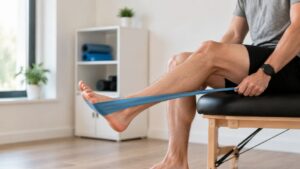
Your Questions About Ankle Pain and Footwear Answered
Trying to find the right shoes when your ankle is hurting can feel overwhelming. At our Peak Physical Therapy clinics, we hear these questions every day from patients who are just plain tired of the guesswork and want clear answers.
Here, our licensed physical therapists tackle the most common questions we get, sharing our expertise to help you make smarter, more confident choices for your ankle health.
How Often Should I Replace My Shoes?
This is easily one of the top questions we hear. The answer has less to do with how old your shoes are and everything to do with mileage and how they’re holding up. The cushioning in your shoe’s midsole—its main support system—breaks down long before the shoe actually looks “old.”
For running or walking shoes, a good rule of thumb is to replace them every 300-500 miles. If you walk about three miles a day, that means you’re due for a new pair every three to five months. For more casual, everyday shoes, it’s smart to check for signs of breakdown every six to twelve months.
Not sure if your shoes are past their prime? Here are a few simple tests you can do right at home:
- The Press Test: Put the shoe on a counter and press down on the heel. If you see a lot of compression lines in the foam, it means the cushioning is packed down and isn’t absorbing shock anymore.
- The Twist Test: Hold the shoe by the heel and toe and give it a twist. If it wrings out like a dishrag, the internal support structure is gone.
- Check the Tread: Flip the shoe over and look at the sole. Is the tread worn completely smooth in key spots, like the outer heel? If so, the shoe’s stability is compromised, and it can throw off your alignment.
Think of your shoes like the tires on your car. You don’t replace them based on age alone; you replace them when the tread is gone and they no longer provide safe support and traction.
Are Expensive Shoes Always Better for My Ankle Pain?
This is a common myth, and we’re always happy to bust it. A high price tag absolutely does not guarantee better support or pain relief. In fact, many expensive, high-fashion sneakers and designer shoes offer next to nothing when it comes to the structural features your ankle actually needs.
The most important thing is finding a shoe that has the right fit and function for your specific ankle issue, not the brand name or the cost. A well-constructed, affordable stability shoe that controls your foot motion is always a better choice than a pricey, trendy shoe that offers zero support. Focus on the features we’ve talked about—a firm heel, proper cushioning, and good stability—not the price.
Can I Wear Sandals or Flip-Flops with Ankle Pain?
For many of us here in Massachusetts, switching to sandals is a rite of passage when summer finally shows up. But for someone dealing with ankle pain, this can be a disaster waiting to happen. Traditional, flat flip-flops are one of the worst culprits for ankle issues. They offer zero heel support, no arch support, and make your toes grip with every step, which can mess with your gait and put a ton of strain on your ankle.
That doesn’t mean you’re doomed to wear sneakers all summer. We just advise caution. If you’re going to wear sandals, look for supportive brands that are built with:
- A contoured footbed to provide arch support.
- A deep heel cup to help stabilize your foot.
- Adjustable straps that secure the sandal to your foot so it isn’t sliding around.
Even with these features, they’re still not as protective as a closed shoe. We recommend them for casual, short-term wear, but you should avoid them for long walks or on uneven ground.
Why Is My Ankle Pain Worse in the Morning?
That sharp, immediate pain you feel on your first step out of bed is a classic symptom of a few specific conditions. It’s a complaint we hear from our patients all over the area, from Plymouth to Milton. Two main things are usually to blame.
The first is plantar fasciitis. While you feel the pain in your heel, it’s directly tied to your foot and ankle mechanics. Overnight, the plantar fascia ligament on the bottom of your foot tightens up. That first step in the morning suddenly yanks on it, causing that signature sharp pain.
The second is ankle arthritis. When you rest, inflammation can cause fluid to pool in the joint, leading to major stiffness. Moving the joint for the first time is painful until it “warms up” and circulation gets going again.
A simple—but incredibly effective—strategy is to use a supportive slipper or house shoe. Going barefoot on hard floors first thing in the morning is just about the worst thing you can do. By slipping into a supportive shoe before your feet even hit the floor, you give your ankle the cushioning and stability it needs from step one, which can dramatically reduce that morning pain.
If you’ve tried different shoes and your ankle pain is still holding you back, it’s a clear sign you need a more personalized plan. At Peak Physical Therapy and Sports Performance, our licensed physical therapists don’t just treat symptoms; we perform a comprehensive evaluation to determine the root cause of your pain. We invite you to schedule an evaluation at one of our convenient Massachusetts locations and take the most important step toward moving freely and living fully again. Find out how we can help at https://peaktherapy.com.