


You finally get the baby buckled in, lift the car seat, turn to step over a slushy Massachusetts curb, and feel that sharp catch in your hip again. Later, it flares when you lean into the crib, stand up from the couch after a feeding, or hurry across an icy parking lot with a diaper bag on one shoulder.
That kind of pain is easy to brush off as part of new motherhood. It’s also easy to worry that something is seriously wrong.
Both reactions are understandable.
Hips pain after pregnancy is common, but that doesn’t mean you should ignore it. Some soreness is expected after pregnancy and delivery. Persistent pain, limping, pain with walking, or a deep ache that keeps showing up during daily tasks deserves attention. There’s usually a clear reason for it, and there’s usually a structured way forward.
Why Your Hips Hurt After Having a Baby
A lot of new moms tell me the same thing. They expected to be tired. They expected their core to feel weak. They didn’t expect hip pain every time they got out of the car, climbed stairs, or carried the baby from room to room.
If that’s where you are, you’re not overreacting.
Research shows that over 50% of women experience pregnancy-related lumbopelvic or hip pain, and for 1 in 10 women with pelvic girdle pain during pregnancy, severe symptoms can persist for over a decade according to this postpartum pain research review. That matters because it tells us two things. First, you’re far from alone. Second, waiting and hoping isn’t always the best plan.
What I want new moms to hear is this. Pain after delivery is not a character test. It isn’t proof that you’re weak, out of shape, or doing motherhood wrong. It’s often the result of mechanical and hormonal changes that haven’t settled yet.
What I tell patients early: If your hip pain is affecting how you walk, sleep, lift, or care for your baby, it’s worth evaluating.
The good news is that recovery usually improves when the problem is identified clearly. The right treatment depends on whether the pain is coming from pelvic instability, a joint issue, irritated tissue around the hip, a nerve, or a movement pattern that keeps overloading the area.
If you want a broader overview of support options, Peak has a helpful page on pregnancy and postpartum physical therapy. For many women, that’s the point where things start to feel less confusing and more manageable.
Understanding the Common Causes of Postpartum Hip Pain
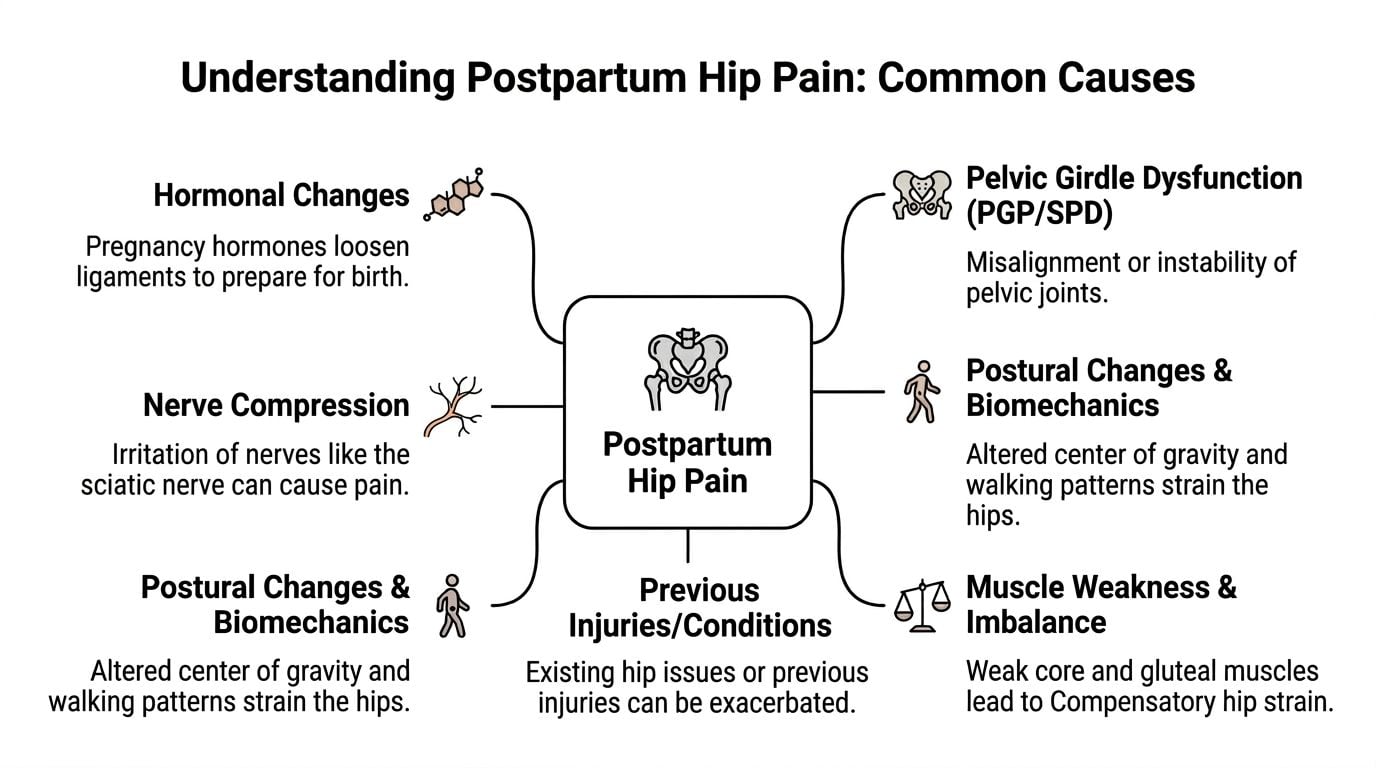
Postpartum hip pain rarely has just one simple cause. More often, your body went through a series of changes during pregnancy and delivery, and now everyday tasks keep stressing a system that hasn’t fully regained stability.
That’s why a pain that started as “just soreness” can linger when you’re carrying a car seat, standing through contact naps, or sitting twisted during feeds.
Hormonal changes can leave the hip less supported
During pregnancy, your body produces hormones that help the pelvis prepare for birth. A useful way to think about this is that your ligaments become more forgiving for a necessary reason. The problem is that “more forgiving” can also mean “less stable.”
The hip and pelvis depend on ligaments, muscles, and coordinated movement to share load well. When those ligaments stay a little lax after delivery, the joint can move with less control. Some women feel this as a deep ache. Others describe clicking, shifting, or pain when rolling in bed or getting out of the car.
If you’ve also noticed discomfort wrapping from the low back into the hip, this overview of back hip pain can help you understand how these regions often overlap.
Pregnancy and birth change how force moves through the pelvis
The pelvis doesn’t just “go back” overnight.
The physical strain of pregnancy and delivery can directly contribute to postpartum pain. During pregnancy, the pelvic bones can stretch significantly from the 30th week onward, and in 68% of cases with intra-articular soft tissue hip injury, symptoms were linked to a specific childbirth event or first noted in the postpartum period according to the clinical review from the American Hip Institute.
That helps explain why some moms feel fine for a few weeks, then start hurting more once they become more active.
Pelvic girdle pain and SI joint irritation are common drivers
A large share of postpartum hip pain is pain coming from the pelvic girdle, especially around the sacroiliac joints or pubic symphysis. This pain often feels sharp, achy, or unstable. It may sit near the back dimples, wrap into the outer hip, or shoot toward the groin.
Common clues include:
- Pain with single-leg tasks: Putting on pants, climbing stairs, or stepping out of a car hurts more than walking straight ahead.
- Pain with rolling in bed: Turning from side to side creates a brief but intense jab.
- Pain after asymmetrical loading: Carrying the baby on one hip or pushing a stroller one-handed makes symptoms build.
Massachusetts daily life involves specific challenges. Walking on uneven brick sidewalks, bracing on snowy driveways, carrying winter gear plus a baby, and commuting with repeated in-and-out car transfers all add asymmetrical load. When the pelvis is already irritated, those tasks can keep the cycle going.
Muscle weakness and compensation add stress quickly
Your core after pregnancy is not just your abs. It’s a coordinated system that includes the deep abdominals, pelvic floor, diaphragm, back muscles, and hips.
When that system isn’t working smoothly, the body borrows motion from somewhere else. Usually that means overusing the hip flexors, low back, outer hip muscles, or glutes in a way that feels like constant tightness but is really compensation.
A few patterns show up often:
| Pattern | What you feel | What’s often happening |
|—|—|
| Standing with one hip dropped | Outer hip ache | Pelvis is hanging on passive structures |
| Leaning back when lifting baby | Front hip or low back pain | Core isn’t sharing load well |
| Sitting slouched for feeds | Deep buttock or side hip pain | Hip muscles stay compressed and overworked |
Nerve irritation can mimic hip pain
Sometimes the pain isn’t purely joint or muscle based. Irritated nerves can create burning, zinging, tingling, or pain that travels into the thigh.
That may happen because posture changed during pregnancy, tissue around the pelvis is still sensitive, or certain positions like prolonged sitting are loading the area differently. Nerve symptoms usually need a careful exam because the right treatment is different from treatment for a tendon or joint issue.
Persistent pain doesn’t always mean severe damage. Often it means the body needs better load management, better support, and a more specific rehab plan.
How to Self-Assess Your Hip Pain Symptoms at Home
Before you try to stretch everything or push through a workout, slow down and look for patterns. A simple home check can help you describe what’s happening more clearly when you talk with your doctor or physical therapist.
It’s not a diagnosis. It is a smart starting point.
Start with location and behavior
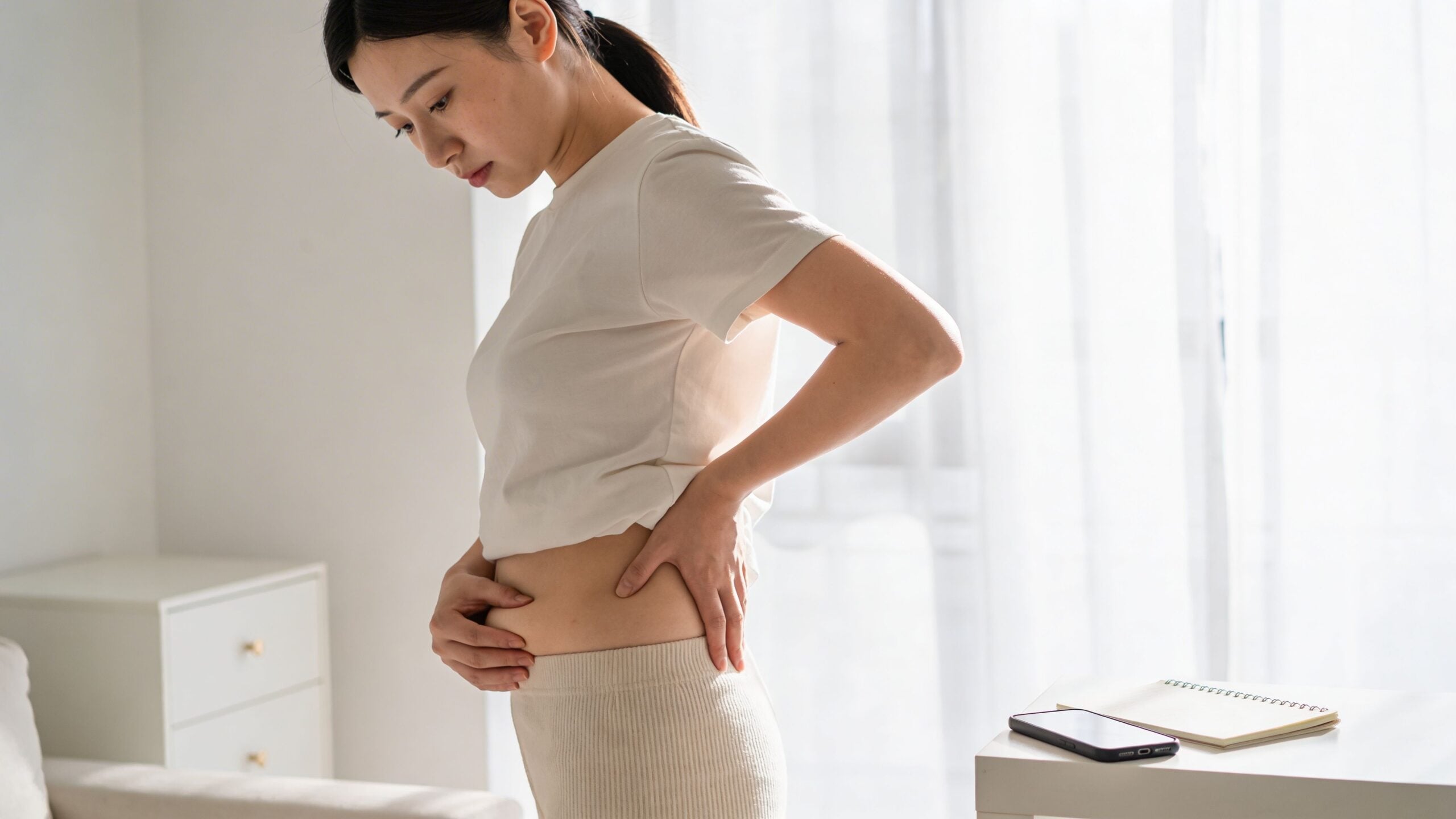
Ask yourself where the pain feels most obvious.
- Side of the hip: Often feels tender when lying on that side or after a lot of standing.
- Deep groin or front of the hip: More suspicious for the joint itself, especially if turning or lifting the leg hurts.
- Back of the hip or buttock: Can point toward the SI joint, deep hip muscles, or a nerve.
- Pain traveling down the leg: More suggestive of nerve involvement than a simple muscle strain.
Then notice what sets it off.
A useful checklist:
- Transfers: Does it hurt getting out of bed, up from a chair, or out of the car?
- Carrying: Is one-sided carrying worse than holding the baby centered against your chest?
- Walking: Does pain build with distance, hills, or uneven ground?
- Sleeping: Does side lying wake you up?
- Stairs: Is going up different from going down?
Notice the type of pain
The quality of pain matters.
| Pain description | Often suggests |
|---|---|
| Sharp catch | Joint irritation or pelvic instability |
| Deep ache | Overloaded muscles or irritated joint structures |
| Burning or tingling | Nerve irritation |
| Tender and sore to touch | Soft tissue irritation around the outer hip |
You should also pay attention to whether pain improves with movement, worsens the longer you’re active, or spikes after a specific task like lifting the stroller into the trunk.
Try these simple movement observations
You don’t need special equipment. Just watch what your body does.
- Single-leg load: Stand on one leg briefly near a counter for support. If one side immediately feels unstable or painful, that’s useful information.
- Sit-to-stand: Notice whether you shift weight heavily to one side when standing up.
- Step test: Step onto a low stair. Look for pain, wobbling, or a hip drop.
- Bed mobility: Pay attention to whether rolling feels worse than walking.
A good self-check doesn’t answer everything. It gives you a cleaner picture of your triggers, which leads to a better evaluation.
Know when to call your doctor right away
Some symptoms need medical attention sooner.
Seek prompt care if you have:
- Inability to bear weight
- Severe, unrelenting pain
- Fever, redness, or unusual warmth around the area
- Major swelling
- New loss of bladder or bowel control
- Rapidly worsening numbness or weakness
- Pain after a fall or other obvious injury
If you’re unsure, err on the side of caution. Postpartum bodies deserve the same seriousness as any other patient with joint pain.
Practical At-Home Strategies for Managing Hip Pain
You don’t need to do everything perfectly. You do need to stop feeding the pain cycle.
That usually means changing how you move before you add more exercise.
Change the tasks that keep irritating your hip
The biggest wins often come from tiny movement adjustments.
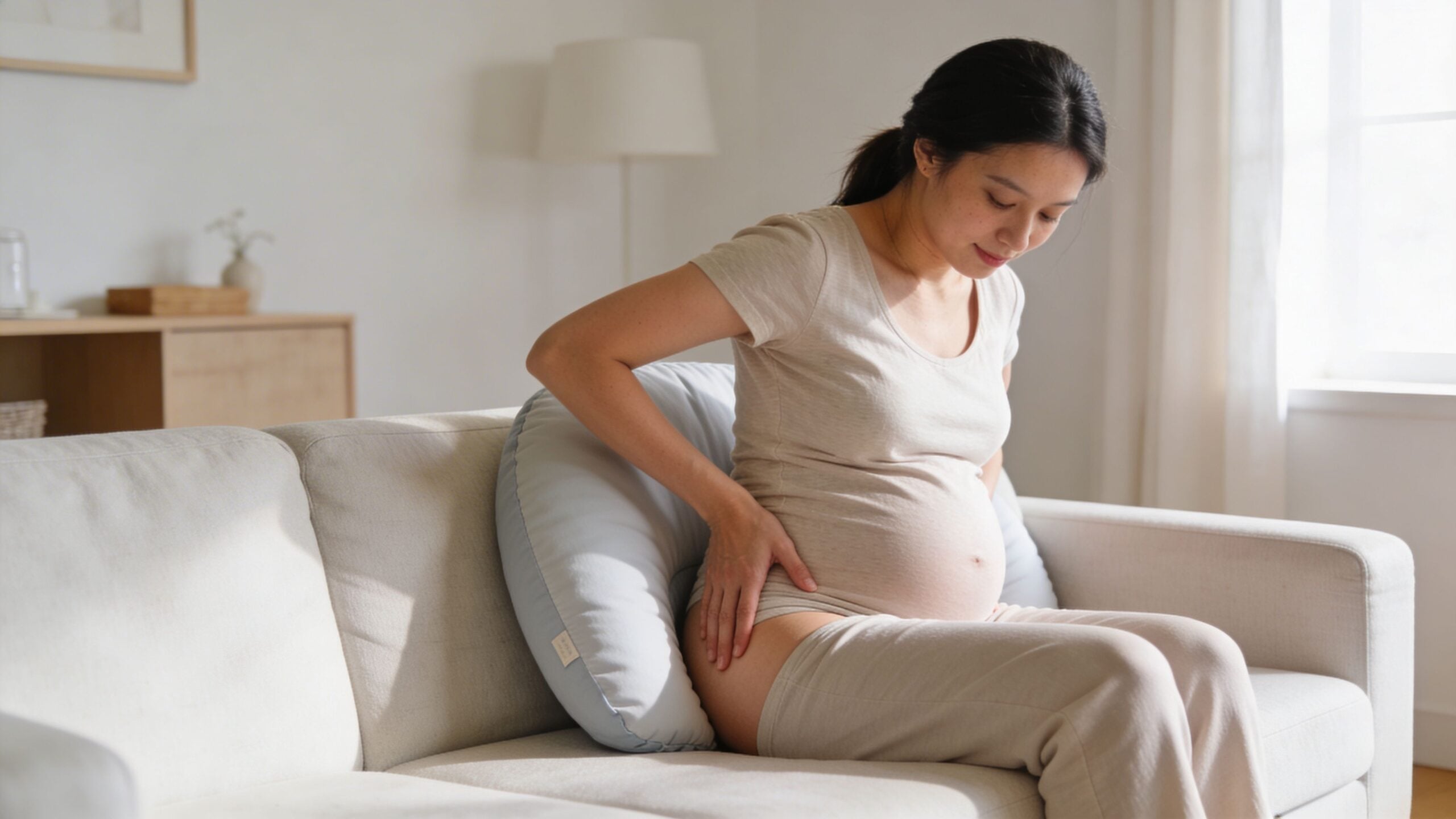
- Use a split stance at the crib: Put one foot slightly forward, hinge at the hips, and bring the baby close before lifting. Don’t reach with straight knees and a rounded back.
- Carry centered when possible: A front carrier or both arms at chest level usually loads the pelvis more evenly than parking the baby on one hip.
- Set up feeds better: Use pillows under your arms and behind your back so you’re not collapsing into one side.
- Get in and out of the car as one unit: Sit first, then pivot both legs together instead of twisting one leg out.
If you’re walking on icy sidewalks or through parking lots, shorten your stride and take your time. Slipping forces your hip and pelvic stabilizers to react fast, and that’s often when pain spikes.
Use gentle relief, not aggressive stretching
When the pelvis is irritated, more stretching is not always better.
Try:
- Short walks: Enough to keep you from getting stiff, not so much that you limp afterward.
- Position changes: Alternate sitting, standing, and lying down rather than staying in one posture too long.
- Gentle supported mobility: Think easy range of motion, not pushing to end range.
- Brief rest after flare-ups: Rest helps when pain is rising, but complete inactivity usually makes things harder.
A lot of moms search for exercises online. That can be helpful if the routine matches your problem. This guide to hip pain relief exercises is a reasonable starting point, but if exercises repeatedly worsen symptoms, that’s a sign to get assessed rather than keep guessing.
Don’t overlook nutrition and recovery
Pain isn’t only about mechanics.
Nutritional deficiencies can contribute to postpartum joint and nerve pain. Childbirth can lead to vitamin B12 deficiency, which affects peripheral nerve function, while low calcium and vitamin D can contribute to discomfort and reduced bone density, as described in this review from Vinmec.
That doesn’t mean every mom needs supplements. It does mean poor sleep, inconsistent meals, heavy physical demands, and ongoing fatigue can make recovery harder.
Consider these basics:
- Eat regularly: Recovery is harder when you’re running on coffee and skipped meals.
- Ask about labs if symptoms fit: Numbness, unusual fatigue, or diffuse aches may warrant a conversation with your medical provider.
- Respect load: Caring for a newborn is physical work. If you had a hard day of lifting, carrying, and poor sleep, your body may need a lighter movement day.
Evidence-Based Physical Therapy for Lasting Hip Pain Relief
When hip pain lasts, the answer usually isn’t one magic stretch. It’s a treatment plan that matches the underlying driver of your symptoms.
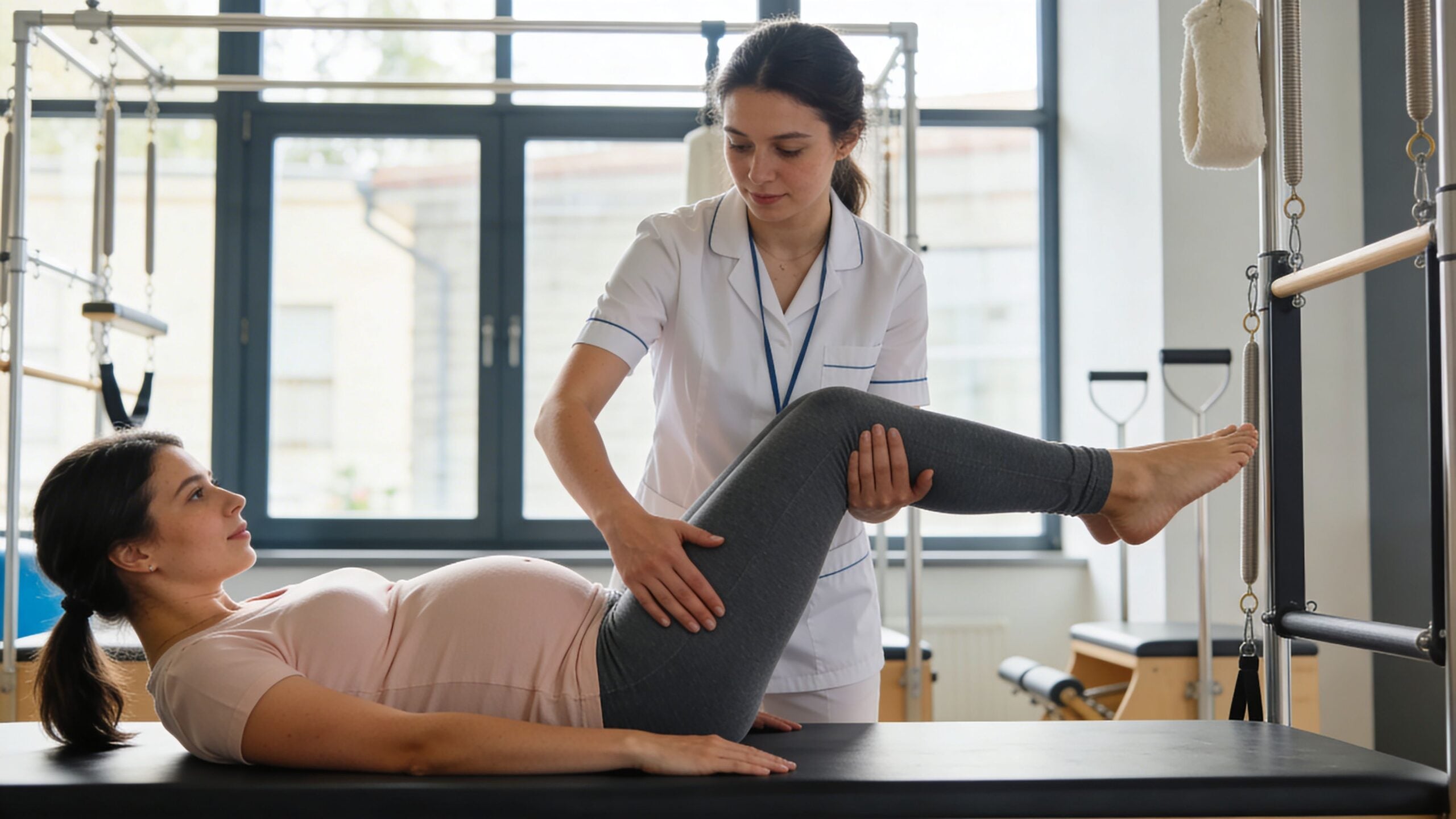
That’s where physical therapy becomes different from generic advice online. A good postpartum plan looks at the hip, pelvis, low back, abdominal wall, breathing strategy, pelvic floor, strength, walking pattern, and the actual tasks that hurt in daily life.
Treatment starts with reducing stress on the irritated area
If pelvic girdle pain is involved, the first goal is usually to calm things down enough that your body can relearn better control.
According to the protocol summary published by Fallbrook Medical Center, specialized PT protocols for pelvic girdle pain can yield an 85% improvement rate, often starting with an SI belt that can reduce shear forces by 40%, then progressing to specific motor control work such as 4-point kneeling alternate arm and leg lifts.
That’s clinically useful because it matches what we see in practice. If the pelvis is too irritated, jumping straight into strengthening often backfires. Better support first, then better control.
A therapist may use:
- An SI belt trial: Helpful when the pelvis feels unstable during walking, transfers, or single-leg tasks.
- Activity modification: Changing how you lift, carry, and transition.
- Symptom-calming positions: Especially for rolling in bed, sleeping, and getting up from the floor.
Strength matters, but the right strength matters more
Postpartum rehab should not feel like random fitness.
A strong program usually focuses on:
| Rehab target | Why it matters |
|---|---|
| Deep abdominal control | Helps manage pressure and reduce over-bracing |
| Glute strength | Improves pelvic control during walking and stairs |
| Hip rotator strength | Supports the femur and reduces joint overload |
| Pelvic floor coordination | Works with the core rather than against it |
This is one reason some women feel worse after returning to intense bootcamp classes, long runs, or high-rep ab workouts too soon. The issue isn’t that exercise is bad. The issue is that a postpartum system often needs sequencing before intensity.
Clinical rule: If an exercise leaves you limping, guarding, or more unstable later that day, it’s not the right dose yet.
Hands-on care can help when stiffness and guarding take over
Not every postpartum hip problem is purely a stability issue. Some moms also develop protective tension in the outer hip, deep glutes, low back, or front of the hip.
Manual treatment can help reduce that guarding so strengthening work lands better. This may include soft tissue work, joint mobilization, positional release, or guided movement retraining. If you want a sense of how that approach works, this overview of manual physical therapy explains the role of hands-on treatment in restoring mobility and reducing pain.
Pelvic floor and breathing are part of the plan
A common mistake is treating the hip in isolation.
The pelvic floor and deep core help manage pressure through the trunk and pelvis. If you’re breath-holding during lifts, constantly clenching, or unable to coordinate abdominal and pelvic floor activation, the hip often ends up absorbing force it shouldn’t.
That’s why a complete exam may include:
- Breathing assessment
- Pelvic floor coordination
- Abdominal wall function
- Walking and stair analysis
- Task-specific coaching for childcare duties
For women on the South Shore, that also means planning around real life. Getting a baby in and out of an SUV in a windy parking lot, climbing triple-decker stairs, carrying gear to daycare, and navigating winter surfaces all create very specific movement demands. Rehab works better when those demands are built into the plan.
One local option for this kind of postpartum and pelvic-focused care is Peak Physical Therapy and Sports Performance, which offers evaluation and treatment for pregnancy and postpartum concerns within its broader physical therapy services across the South Shore. The important point is not the name of the clinic. It’s finding a licensed physical therapist who understands postpartum mechanics and can individualize your program.
Your Recovery Journey with Peak Physical Therapy
Starting PT shouldn’t feel like one more thing on an already overloaded list. It should feel like someone is finally making sense of what your body is doing.
At Peak’s Massachusetts clinics, the first step is a thorough evaluation. That means your therapist looks beyond “your hip hurts” and asks better questions. Where is the pain exactly? What movements trigger it? Did it start during pregnancy, after delivery, or once activity picked up again? Is it worse with stairs, rolling in bed, carrying the infant seat, or walking on uneven ground?
What the first visit usually includes
Your therapist may assess:
- How you stand and walk
- Single-leg stability
- Hip strength and range of motion
- Pelvic control during transfers
- Core coordination and breathing
- Related areas like the low back and sacroiliac region
That matters because postpartum hip pain often has more than one contributor. A woman with groin pain may also have pelvic instability. A mom with side hip pain may also be overusing that area because her trunk and glutes aren’t sharing the work.
The plan should match your real goals
Good rehab is specific.
If your goal is to carry your baby without wincing, the plan should address carrying. If your goal is getting back to the gym, the plan should build a safe return to squatting, lunging, impact, and rotation. If your biggest problem is making it through a commute from the South Shore into Boston without tightening up, that needs to shape treatment too.
A strong plan usually includes a mix of:
- Hands-on treatment when needed
- Targeted strengthening
- Movement retraining
- Home strategies that fit life with a newborn
- Progressions based on your response, not a generic timeline
Recovery goes better when treatment fits the mother you are now, not the athlete, employee, or sleeper you were before the baby arrived.
Why local context matters
Massachusetts moms deal with physical stressors that don’t always show up in generic postpartum advice. Cold weather stiffens people up. Snow and slush change gait. Heavy winter layers, stroller loading, school drop-offs, commuter driving, and older homes with lots of stairs all add up.
That’s why local care can feel more practical. The recommendations can be built around your actual day, not an idealized one.
Peak’s values, including Care and Grow Forward, fit this stage of recovery well. Postpartum rehab works best when it’s personal, encouraging, and grounded in clear clinical reasoning.
Frequently Asked Questions About Postpartum Hip Pain
How long does postpartum hip pain last
It varies.
Some women improve as tissues recover and movement patterns normalize. Others need treatment because the pain keeps getting provoked by childcare tasks, poor sleep, and unresolved weakness or instability. If pain is still limiting walking, sleep, lifting, or exercise, it’s worth being evaluated rather than waiting indefinitely.
Is hips pain after pregnancy worse after a C-section
It can be, but not always for the reason people assume.
A C-section changes how the abdominal wall and trunk system recover. That can alter how you brace, lift, cough, stand up, and carry your baby. Some women then overload the hips because they’re protecting the abdomen or moving less efficiently. Vaginal delivery can also contribute to hip and pelvic pain, especially if labor or delivery placed a lot of stress through the pelvis.
Will this happen again in a future pregnancy
It can recur, especially if you had pelvic girdle pain before.
A 2019 study identified pain intensity and disability during pregnancy as the most significant predictors for pelvic girdle pain persisting at six months postpartum, and a history of PGP increases the risk of recurrence in future pregnancies, as summarized in this Healthline review of postpartum hip pain.
That doesn’t mean recurrence is inevitable. It means early management matters.
Should I use heat or ice
Either can help, depending on what your body responds to.
Heat often feels better for muscular guarding and stiffness. Ice may be useful after an obvious flare-up. If you’re currently pregnant and trying to sort out safe comfort strategies before delivery, this article on heating pads safe during pregnancy gives a practical overview of precautions.
When should I worry that it’s something more serious
Pay attention if pain is severe, rapidly worsening, associated with fever, major swelling, inability to bear weight, significant weakness, or concerning nerve symptoms. Those signs deserve medical review.
Less dramatic pain can still be important. If it’s changing how you move, forcing you to avoid daily tasks, or making you anxious about carrying your baby, that’s enough reason to seek help.
Can I exercise through it
Sometimes yes, but only if the exercise matches the problem.
Walking, light mobility, and well-chosen strengthening may help. High-impact workouts, aggressive stretching, and pushing through pain often do not. The line is simple. If a workout leaves you more stable and less painful later, that’s a good sign. If it leaves you limping, guarding, or struggling more with daily tasks, it’s too much or the wrong type.
If hips pain after pregnancy is making everyday life harder, support is available. Peak Physical Therapy and Sports Performance offers individualized physical therapy across Massachusetts’ South Shore, with care designed around the specific demands of parenting, work, recovery, and return to activity. A licensed therapist can evaluate what’s driving your pain and build a plan that helps you move with more confidence again.