


A week off can feel harmless until your leg already looks smaller, the stairs feel steeper, or your balance suddenly seems less reliable. That’s the moment many people on the South Shore start asking the same question. How long does it take to lose muscle?
It comes up after all kinds of setbacks. A runner in Weymouth tweaks a calf and stops training. A parent in Hanover rolls an ankle at a youth soccer game and ends up resting longer than planned. A retiree in Quincy gets sidelined after illness and notices standing from a chair feels harder than it did a few weeks ago. The injury or downtime is one problem. The fear of getting weaker is the other.
That concern is valid. Muscle loss doesn’t wait for long stretches of inactivity to begin. It can start earlier than anticipated, and the timeline changes based on your age, your usual activity level, and whether you’re dealing with true immobilization or just moving a lot less than normal.
Table of Contents
- Worried About Losing Muscle? You’re Not Alone
- The 'Use It or Lose It' Principle Explained
- Muscle Loss Timelines for Your South Shore Lifestyle
- Key Factors That Change Your Muscle Loss Timeline
- How Our South Shore PTs Help You Fight Muscle Loss
- Your Next Step to Rebuilding Strength on the South Shore
Worried About Losing Muscle? You’re Not Alone
A week off can feel longer than it looks. You miss a Duxbury beach volleyball game, sit out your usual walks in Scituate, or spend a stretch of time protecting a sore knee after work in Quincy. Then small things start to feel different. Groceries pull on your shoulder. Stairs feel less automatic. A walk along the Plymouth waterfront leaves one leg feeling less steady than the other.
That concern is valid.
In the clinic, I hear this from South Shore patients all the time. They are not always describing visible muscle loss. More often, they notice that their body feels less capable, less steady, or quicker to fatigue. Those early changes can show up before the mirror shows much at all.
A sudden break from normal activity tends to bring that worry to the surface. If you are used to lifting in Braintree, chasing kids around the yard, commuting, golfing, or staying active around the house, even a short period of forced rest can make you wonder how fast strength starts to slip. Seniors often ask about balance and independence. Athletes usually ask how much time off will set them back. Working adults want to know whether an injury will make the return to work harder.
The honest answer is that muscle can start to decline sooner than many expect, but the timeline is not the same for everyone. Age, injury status, training history, and how much you are still able to move all change the picture. A person in a boot has a different problem than someone who stopped training for two weeks but still walks every day. Someone recovering after surgery faces different trade-offs than someone who is less active because of pain.
That is one reason physical therapy helps so much. The goal is not only to rebuild strength later. It is to catch the loss early, keep more function while you heal, and give your body a clear plan instead of leaving it to decondition on its own.
For South Shore residents, the practical question is usually simple. What is my body losing right now, and what can I do today to slow that down?
The 'Use It or Lose It' Principle Explained
Muscle sticks around when your body has a reason to keep it. Give it regular work, and it keeps the tissue, strength, and coordination to meet that demand. Reduce that work for long enough, and the body starts trimming back what it no longer needs.
That is the heart of the "use it or lose it" principle.

In rehab, we see this all the time across the South Shore. A Duxbury athlete misses a stretch of beach volleyball after an ankle sprain. A Quincy senior slows down after an illness and starts feeling less steady on stairs. A Plymouth patient follows post-op restrictions and is surprised by how quickly a leg feels harder to control. Different situations, same basic biology. Less demand leads to less support from the body.
That process is called muscle atrophy. It does not mean the body is broken. It means the body is adapting to lower demand and trying to save energy.
Complete immobilization is different from just being less active
There is a big difference between taking a week off from workouts and having a body part immobilized. If a joint is braced, casted, or under strict movement restrictions after surgery, the signal to the body is much stronger. The muscle is not just training less. It is losing normal loading, normal motion, and often normal nerve input.
Studies on immobilization show that muscle loss can begin quickly when movement stops almost completely. Early changes are often metabolic and neurological before they become obvious in the mirror. That is why someone in a boot after an ankle injury in Hanover may say the leg already feels weaker, even if the calf does not look dramatically smaller yet.
Why weakness often shows up before visible shrinkage
Function usually gives you the first warning.
A leg can feel shaky before it looks different. A shoulder can tire out faster before the muscle looks smaller. Part of that comes from size, but part of it comes from how well the nervous system can recruit the muscle. If the signal is weaker or less efficient, the muscle does not perform the same way, even before there is major visible atrophy.
Patients describe this in plain language. "My quad won't fire." "My foot feels disconnected." "I don't trust that leg yet." Those are common signs that strength and control have dropped, even if the change is still subtle from the outside.
Practical rule: If movement has been limited, pay attention to early weakness, poor balance, or faster fatigue. Do not wait for obvious muscle shrinkage to take action.
What helps protect muscle during recovery
Rest is often part of healing. Total shutdown for longer than necessary usually creates more work later.
The goal in physical therapy is to protect the injured area while keeping the rest of the system active as safely as possible. That can include isometrics, loading nearby muscle groups, gait training, balance work, and a gradual return to normal movement. The right plan depends on the injury, your age, your baseline strength, and what daily life demands from you here on the South Shore.
Local guidance matters. The person trying to get back to work in Braintree needs a different progression than the older adult in Quincy who wants safer balance at home. Both need movement. They just need the right dose, at the right time, for the right reason.
Guessing tends to create two problems. Some people do too much and flare up the tissue that is trying to heal. Others avoid movement for so long that the weakness, stiffness, and loss of confidence become the bigger barrier. Physical therapy helps you stay in that middle ground where healing and strength can progress together.
Muscle Loss Timelines for Your South Shore Lifestyle
A Duxbury volleyball player can miss two weeks and feel a drop in jump timing. A Quincy older adult can have the same two-week slowdown and notice something more concerning, like trouble getting out of a chair or feeling unsteady on stairs. The timeline matters, but the way that muscle loss shows up in daily life matters just as much.
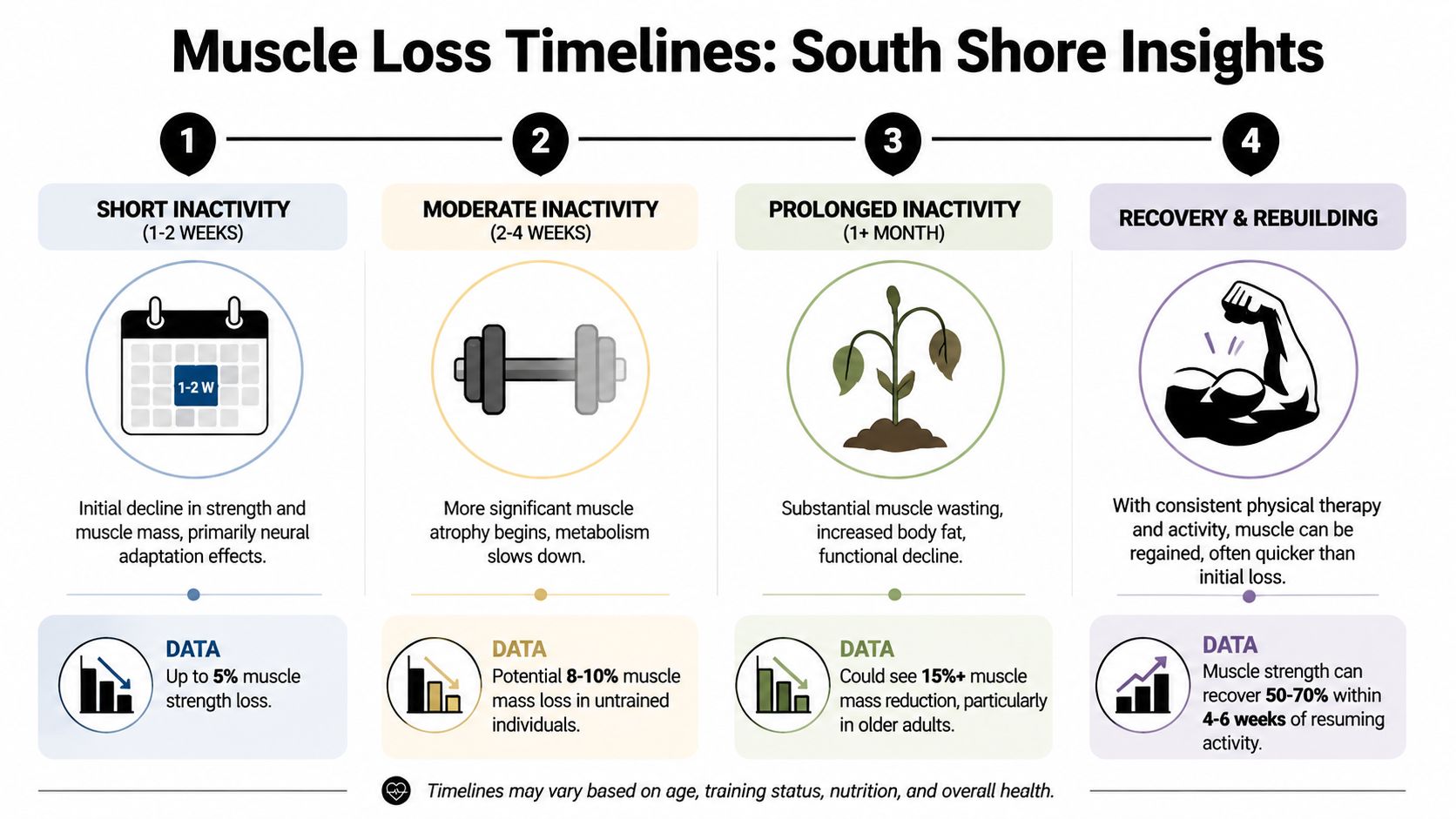
If you're completely immobilized after an injury
This is the group that tends to lose function fastest.
After surgery, a fracture, or a period of non-weightbearing, the problem is not just missed workouts. Normal muscle loading stops. The body responds to that change quickly, especially around the injured area.
Early signs usually show up in how the limb feels, not how it looks. The leg may feel heavy. The muscle may be harder to contract. Movements that used to be automatic can feel clumsy once restrictions are lifted.
That is common after knee surgery on the South Shore. Someone in Quincy may be told the procedure went well, then feel shocked that the whole leg seems weak a few weeks later. The repair may be healing on schedule, but strength, control, and confidence still need to be rebuilt through rehab.
If you're an active adult who suddenly stops training
This group often notices performance changes before obvious muscle loss.
The regular gym member in Weymouth, the runner in Norwell, or the pickleball player in Milton may not see much in the mirror at first. What they do notice is that workouts feel harder, stamina drops, and the first session back feels worse than expected. Some of that early "flat" feeling comes from changes in glycogen, hydration, and rhythm, not just muscle size.
A practical timeline looks like this:
| Situation | What you’re likely to notice first | What matters most |
|---|---|---|
| Short break from training | Lower energy, reduced sharpness, heavier legs | A brief layoff usually feels worse than it is |
| Several weeks with very little strength work | Strength starts slipping and soreness returns faster | Restarting too aggressively often causes setbacks |
| Ongoing low activity | Daily tasks feel harder and joints feel less supported | A guided plan helps you regain strength safely |
A few missed sessions rarely create a serious problem. Several weeks of low activity can.
That distinction matters for adults on weight-loss medications too. A drop in body weight can happen faster than the body adapts, which is one reason we often recommend a physical therapy approach to maintaining muscle while taking GLP-1 medications.
If you're a trained athlete taking time off
Athletes usually feel small losses early because their baseline is higher and their body awareness is better.
A beach volleyball player in Duxbury may notice slower reaction time and less pop before any visible change in muscle shows up. A college athlete back home in Braintree may still test fairly strong but feel off during cutting, landing, or repeat efforts. In clinic, that trade-off shows up all the time. Raw strength may hang on better than timing, coordination, and conditioning.
That is why passive rest is rarely the best answer for a competitive athlete. If the ankle cannot handle full-speed movement yet, there is often still room for trunk work, single-leg control, upper body strength, bike intervals, or pool work. The goal is to protect healing tissue without letting the whole system detrain.
Cardio can also be part of that plan when it is chosen well. If you have been told endurance work will automatically burn away muscle, this guide on settling the cardio muscle debate gives helpful context.
If you're older and worried about strength or balance
For older adults, the timeline feels different because the consequences are more immediate.
A short illness, a fall scare, or a couple of quiet weeks at home can lead to slower walking, harder transfers, and more reliance on railings or furniture. I hear this concern often from South Shore patients. They are not asking about biceps size. They want to know whether their legs will feel dependable again.
Research has shown that older adults can lose strength quickly during periods of inactivity, and they may feel the effects in balance and confidence before they notice visible muscle changes. That is one reason early physical therapy matters so much in this age group. The longer activity drops, the easier it is for weakness and fear of falling to feed each other.
Common signs include:
- Chair transfers getting harder
- Short walks feeling less steady
- More use of hands, counters, or rails
- Cutting back activity because movement feels less safe
That cycle is treatable. It just responds better to a specific plan than to waiting it out.
What recovery usually looks like
Muscle loss from inactivity is usually reversible, but recovery goes better when the plan matches the person.
The Duxbury athlete needs a return-to-sport progression. The Braintree worker may need enough leg strength and stamina to get through a full day on their feet. The older adult in Quincy may need better balance, stronger sit-to-stand mechanics, and more confidence walking outdoors. Those are different goals, and they should not all get the same exercise sheet.
In practice, people usually do best with steady loading, a manageable home plan, and progressions that match symptoms instead of ego. Small, repeatable sessions beat one hard comeback workout every time.
That is the South Shore version of this topic. Timelines matter, but the smarter question is, "What is changing in your body right now, and what should you do about it?" Physical therapy gives you that answer before a short break turns into a longer setback.
Key Factors That Change Your Muscle Loss Timeline
A two-week break does not hit everyone on the South Shore the same way. A Marshfield runner dealing with a calf strain may feel mostly deconditioned. A Quincy senior who has been sitting more because of knee pain may notice weaker legs, shakier balance, and less confidence getting around town.
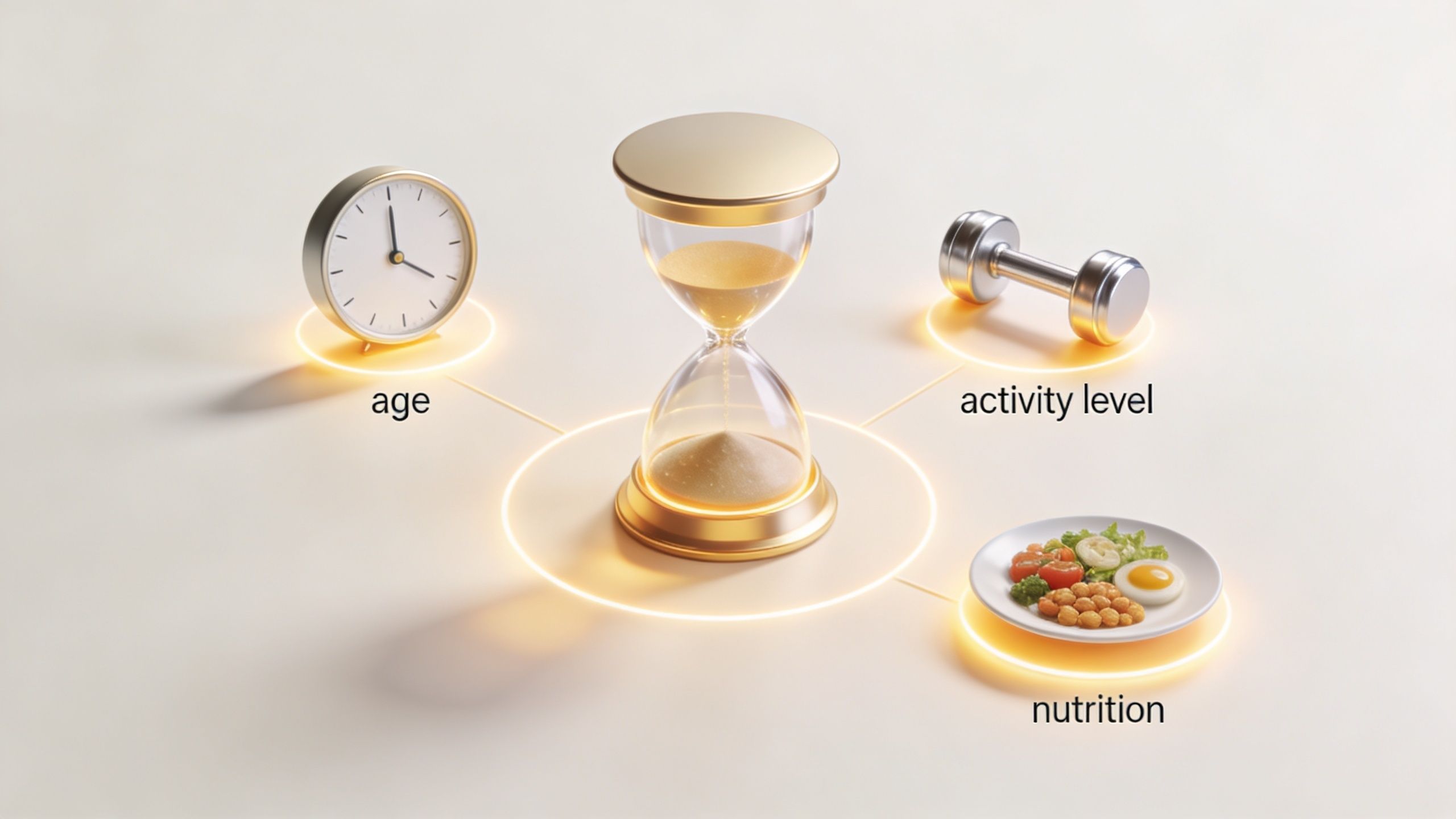
The timeline changes based on what your body was doing before the slowdown, how much your activity dropped, and what else is happening around the injury or illness.
Age changes how much margin you have
Older adults usually have less room for error. A short stretch of inactivity can lead to a more noticeable drop in strength, power, and balance, especially in the legs. In clinic, that often shows up as harder stairs, slower walking, or needing the hands more during sit-to-stand transfers.
That does not mean muscle loss is inevitable. It means the response should be earlier and more specific.
For South Shore residents in their 60s, 70s, and beyond, I am often less worried about visible muscle size than I am about function. If someone in Weymouth stops trusting one leg, activity drops fast, and strength can follow sooner than they expect. Physical therapy helps interrupt that cycle before a few cautious weeks turn into a larger setback.
Your starting point matters
A well-trained person usually has more reserve. They may keep more function during a short layoff and rebuild faster once they are cleared to load again.
The trade-off is that active adults often push too hard on the comeback. I see this with recreational athletes all the time, especially after an ankle, knee, or shoulder issue. They feel pretty good, test a hard workout, then flare the joint up and lose another week or two.
Someone who was already less active before the break often notices decline sooner in daily life. Carrying groceries, getting up from the couch, or walking the seawall can feel harder even if the layoff was not that long.
How inactive you are matters more than the calendar alone
There is a big difference between reducing training and stopping movement almost completely. If you are still walking, doing light strength work, or following a modified rehab plan, muscle usually holds on better than it does with bed rest, illness, or full shutdown.
That is one reason a guided plan matters. Resting an irritated tissue is sometimes appropriate. Resting your whole body for too long usually is not.
A good PT program protects the injured area while keeping the rest of you working.
Nutrition can either protect muscle or speed the slide
Muscle is easier to maintain when your body has enough fuel and enough protein to support repair. During an injury, appetite often drops. Routines get sloppy. Some people cut intake too hard because they are worried about gaining weight while they are less active.
That approach can backfire. If you are eating too little while moving less, your body has a harder time preserving strength.
This comes up often with adults managing weight loss, joint pain, or newer medications that affect appetite. If that sounds familiar, our guide on maintaining muscle while taking GLP-1 medications through a physical therapy approach explains how to protect strength while your routine is changing.
A few practical points help:
- Keep protein intake consistent: Recovery still requires building material.
- Do not let pain shrink your whole routine: Less movement plus under-eating is a rough combination.
- Use a repeatable plan: Simple meals and realistic exercise choices beat starting over every Monday.
Cardio loss and muscle loss are not the same thing
A lot of people say they feel weak when the first thing they are noticing is lost conditioning. They get winded faster on stairs or during a walk in Hingham, then assume all their muscle is gone too. Those are related problems, but they do not drop at the same rate.
That distinction matters because the fix changes. Some people need progressive strength work. Others need strength plus gradual aerobic rebuilding. If you have been wondering how endurance training fits into the picture, this article on settling the cardio muscle debate is a useful companion read.
Your muscle loss timeline is personal. Age, prior fitness, daily activity, nutrition, pain, and confidence all affect how quickly strength slips and how fast it comes back. That is exactly why local, hands-on physical therapy works so well. It gives South Shore residents a plan based on what their body needs now, not a generic timeline from the internet.
How Our South Shore PTs Help You Fight Muscle Loss
A lot of South Shore patients come in after a few low-activity weeks and say the same thing. They feel less steady getting out of a chair, stairs feel harder, and the leg or arm they were protecting no longer feels like it belongs to them. That worry is common, whether it is a Duxbury beach volleyball player trying to get back on the sand or an older adult in Quincy who has started second-guessing their balance.

We start by finding the weak links
When someone is worried about muscle loss, the first job is to figure out why movement has dropped off and what is holding recovery back.
Sometimes strength has declined. Sometimes the bigger problem is pain shutting a muscle down, joint stiffness changing mechanics, swelling, poor balance, altered walking, or fear after an injury. Those problems can look similar in daily life, but they need different treatment.
A useful evaluation checks:
- Which muscles are underperforming
- Whether the issue is local or affecting the whole body
- How pain is changing movement quality
- Which daily tasks need to improve first
That helps us build a plan that fits the person in front of us, not a generic exercise sheet. For one patient in Scituate, the priority may be steady footing outdoors. For a post-op adult in Milton, it may be getting strength back without irritating healing tissue.
We add the right amount of work at the right time
Waiting too long usually lets weakness and hesitation build. On the other hand, doing too much too soon can flare pain and set recovery back. Physical therapy works in the middle ground. We choose loading that is safe enough to tolerate and strong enough to matter.
That may mean isometrics early on. It may mean supported weight shifting, band work, gait drills, stair practice, core control, or strength work for the rest of the body while one area heals. Small, consistent amounts of movement often help more than occasional hard efforts.
I see this trade-off all the time. Patients want to know if they should rest more or push more. The better question is what kind of work their body can handle today.
The best rehab plan gives you enough work to improve and not so much that you end up back on the couch.
We train for the life you want back
Muscle matters because function matters.
People are not coming in because they want a stronger quad on paper. They want to carry groceries in Braintree, walk the beach in Cohasset, return to tennis in Hingham, or get downstairs in Quincy without grabbing the rail with both hands. That changes how we build the program.
A foot or ankle patient may need calf strength, balance retraining, and cleaner walking mechanics. A shoulder patient may need rotator cuff loading, reach training, and better control with lifting and carrying. If posture or spinal alignment is part of the picture, movement choices have to match that too. For readers who want a gentle companion resource, PosturaZen on safe yoga for scoliosis offers helpful general guidance.
For readers near Quincy, a local option for in-person support is physical therapy in Quincy, MA.
We make the plan realistic enough to follow at home
Clinic visits help, but the home plan is what keeps strength from sliding between sessions.
That plan has to fit your space, pain level, schedule, and confidence. If an exercise setup is too complicated, it usually gets skipped. If the program feels too aggressive, people brace, compensate, or stop. We would rather give you five repeatable movements you can do than fifteen that look good on paper.
What tends to stall progress:
- Doing very little all week, then overdoing one workout
- Picking random online exercises that do not match the injury
- Waiting until confidence is perfect before restarting movement
- Treating all soreness like a sign of harm
What helps is steady progression, clear milestones, and updates as your body changes. Some South Shore patients need hands-on care first so pain settles enough for strengthening to work. Others need coaching, accountability, and a plan that turns "I should exercise" into a routine they can keep.
Your Next Step to Rebuilding Strength on the South Shore
A lot of South Shore patients reach this point after a very normal stretch of life. A few missed workouts after a shoulder flare from a Duxbury volleyball game. A couple of quiet weeks after surgery. A senior in Quincy noticing the stairs feel less steady than they did last month. Muscle loss can start sooner than people expect, especially after injury, illness, or a sharp drop in activity.
Age can speed that process up. Hormonal changes, pain, and time away from regular movement can all make strength fade faster. The good news is that muscle is responsive tissue. With the right plan, people often regain strength, confidence, and control far more effectively than they expect.
That is why waiting usually costs more than starting. Small losses in leg strength can turn into slower walking, more fatigue carrying groceries, and less trust in your balance. Small losses in back or core strength can make it harder to get comfortable at work, sleep well, or return to the activities that make South Shore life feel like yours. If that sounds familiar, our guide to core strengthening exercises for back support is a useful place to start.
Some people also need gentler movement options while pain settles down or posture is part of the picture. For that, PosturaZen on safe yoga for scoliosis offers helpful general guidance.
The next step is simple. Get assessed, find out what strength you have lost, and start rebuilding with a plan that fits your body and your week.
If you are ready to stop guessing and start rebuilding strength with a clear plan, book an appointment with Peak Physical Therapy and Sports Performance. With South Shore clinics in Quincy, Weymouth, Braintree, Norwell, Hanover, Kingston, Plymouth, and nearby towns, our team helps athletes, active adults, and older residents protect muscle, move with less pain, and get back to daily life with more confidence.