


If you’ve ever dealt with a sudden injury—like a twisted ankle from a run along a Massachusetts beach or a back tweak after shoveling heavy snow—you know the immediate frustration and pain. Ice pack physical therapy, also known as cryotherapy, is often the first thing people reach for, and for good reason. It’s a simple, effective first line of defense to calm pain, reduce swelling, and manage that initial fire of inflammation.
When used correctly, it’s a critical tool in your recovery. However, we understand how frustrating it is when the pain lingers, keeping you from your daily life, work, or the activities you love. This guide, created by the licensed physical therapists at Peak Therapy, will walk you through how to use ice effectively and when it's time to seek professional help for a lasting solution.
How Ice Pack Physical Therapy Calms Pain and Swelling
When you suffer an acute injury, your body’s natural response is to kick off an inflammatory process. While this is a necessary part of healing, that initial rush can cause significant swelling and pain, limiting your movement and slowing down your recovery.
This is where strategically using an ice pack becomes so valuable. Think of it as a way to calm that intense initial reaction.
The cold temperature causes your blood vessels to constrict, a process our therapists call vasoconstriction. This narrowing of the vessels slows down the flow of blood and other fluids to the injured area. By limiting this fluid buildup, you can get a handle on the swelling before it gets out of control. Our physical therapists use this technique to manage this first, most painful phase of an injury. For more on this, check out our guide on how to reduce swelling.
Numbing Pain and Slowing Inflammation
Beyond just controlling swelling, the intense cold has a powerful numbing effect. It slows down the speed at which pain signals travel along your nerves to your brain. This provides temporary but significant relief, making the injury more bearable and creating a window for gentle, therapeutic movement that is crucial for healing.
This isn't just a folk remedy; it's a technique backed by decades of clinical use in sports medicine and post-surgical recovery. For example, a key study measuring ankle swelling after an injury found that cool packs achieved a 17% reduction in circumference around the ankle, midfoot, and forefoot in just 24 hours. These findings are why our licensed physical therapists at Peak Therapy continue to rely on ice as an essential tool for our patients across Massachusetts.
At its core, ice pack physical therapy isn’t just about feeling better in the moment. It’s a strategic intervention our physical therapists use to control the immediate aftermath of an injury, paving the way for a more active and successful rehabilitation process.
Knowing When to Choose Ice or Heat
One of the most common questions we hear from patients is, "Should I use ice or heat?" It's an excellent question, as the answer depends entirely on the type of injury and what stage of healing you're in. Making the wrong choice can sometimes make your symptoms worse, so it's important to get it right.
Here's a quick guide to help you decide.
Ice vs. Heat: When to Use Each
Use this quick guide to decide between using ice or heat for your specific type of pain or injury—a common point of confusion we address daily in our clinics.
| Condition or Symptom | Choose Ice (Cryotherapy) | Choose Heat (Thermotherapy) |
|---|---|---|
| New Injuries (first 48-72 hours) | Yes. Reduces swelling and numbs sharp pain from sprains, strains, or post-operative discomfort. | No. Heat can increase inflammation and swelling in new injuries, making the pain worse. |
| Swelling & Bruising | Yes. Constricts blood vessels to minimize fluid buildup and discoloration. | No. Can make swelling worse. |
| Chronic Muscle & Joint Pain | Sometimes. Can help numb pain during a sharp flare-up. | Yes. Relaxes muscles, increases blood flow, and soothes achy, stiff joints without swelling. |
| Stiffness & Soreness | No. Cold can increase stiffness in tight muscles that are not acutely inflamed. | Yes. Ideal for pre-activity warm-ups or relieving general muscle tension. |
| Arthritis | For acute flare-ups with swelling and sharp pain. | For chronic stiffness and aches when swelling is not a primary concern. |
Understanding this fundamental difference is key to effective at-home care. In addition to ice, other treatments like massage therapy can also be highly beneficial for managing pain and promoting healing. But when in doubt, especially after a new injury, ice is almost always the safer initial choice.
Applying Ice Packs Safely And Effectively
Using an ice pack might seem simple, but there's a big difference between just "putting ice on it" and using it with a physical therapist’s precision. At Peak Therapy, we teach a methodical approach to get the most benefit while ensuring your safety. Proper technique delivers the pain and swelling relief you’re after without risking skin damage or interfering with your body's natural healing process.
Let's walk through the best practices for applying ice. This is the same advice our licensed physical therapists give our patients, whether it's a high school athlete in Braintree with knee pain or a remote worker in Quincy dealing with wrist strain.
Choosing Your Tool For Cryotherapy
You don’t need fancy equipment. In fact, some of the most effective options are probably in your freezer right now. Each has pros and cons, but they all work well when used correctly.
- Reusable Gel Packs: These are convenient and flexible, helping them mold to tricky spots like an ankle or shoulder. Be careful; commercial gel packs can get much colder than freezing, so they pose a higher risk of skin damage if you don't use a proper barrier.
- Bag of Frozen Vegetables: A bag of frozen peas or corn is a surprisingly effective option. The small pieces conform perfectly around a joint, providing excellent surface contact for even cooling. We hear this tip from patients all the time!
- Classic Ice and Water Bag: For many physical therapists, this is the gold standard. Mixing crushed ice with a bit of water in a plastic bag creates what’s known as a phase change. As the ice melts, it holds a consistent and safe temperature of 32°F (0°C), delivering effective cold without getting dangerously cold.
The Art And Science Of Application
Once you have your ice pack, the next steps are crucial for making your at-home cryotherapy session both safe and effective.
The most important rule is to always use a protective barrier. Never put a commercial gel pack, ice bag, or frozen vegetables directly on your skin. A thin, slightly damp towel is a fantastic choice because moisture helps conduct the cold more efficiently. A dry pillowcase or t-shirt also works well.
Proper timing is also a major factor. For post-surgical rehab or acute injuries, our therapists typically recommend applying cold for 15-20 minutes at a time. This gives the skin enough time to drop to the target temperature of 50-60°F (10-15°C), which is what you need to achieve pain relief (analgesia) and constrict blood vessels. Following expert post-surgical guidelines for ice pack physical therapy helps prioritize both safety and effectiveness.
This process triggers a helpful physiological chain reaction that works to bring down pain and swelling.
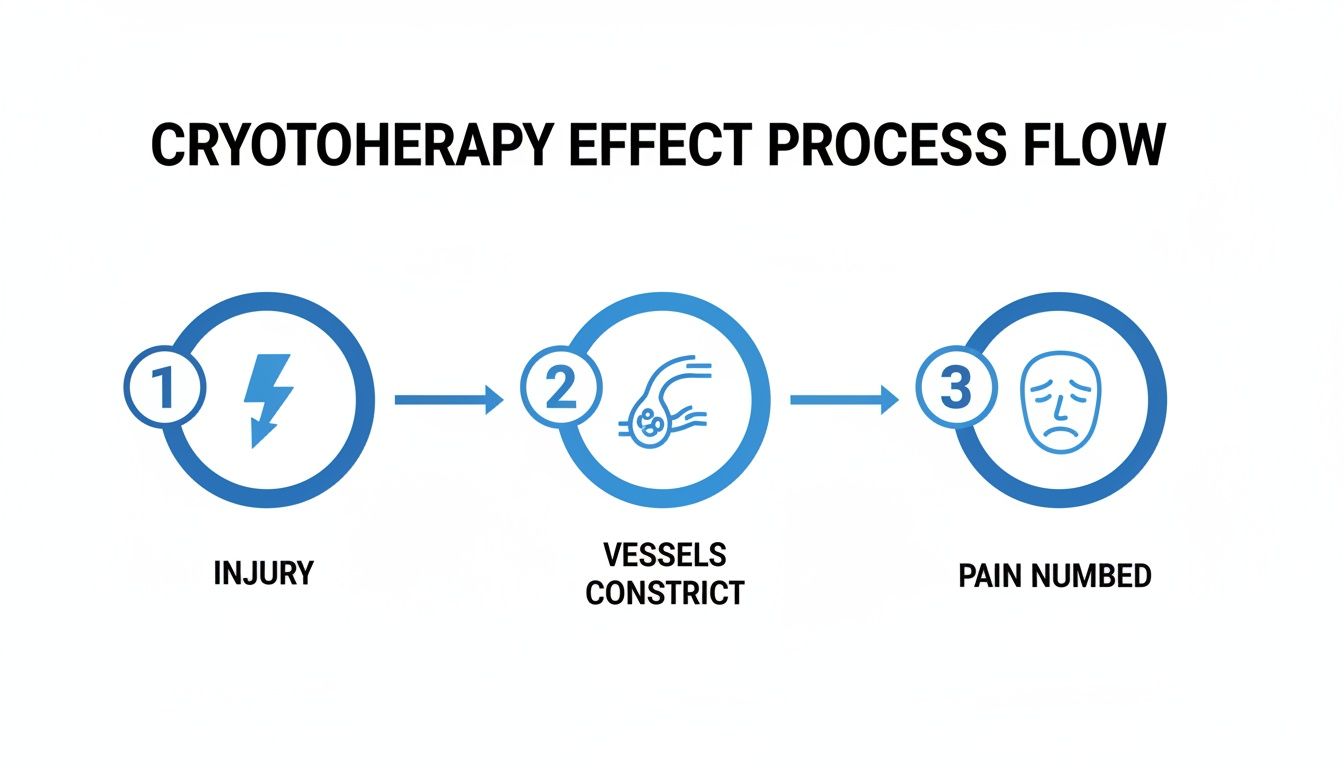
As the diagram shows, applying cold after an injury causes blood vessels to constrict, which limits swelling. It also numbs local nerve endings to provide that welcome pain relief.
Timing And Frequency For Optimal Results
So, how often should you be icing? For a new, acute injury, the goal is to manage that initial, aggressive inflammation. Our standard protocol is to apply an ice pack for 15-20 minutes every 2 to 3 hours during the first 24-48 hours.
The "off" time is just as important as the "on" time. This rest period lets your skin and underlying tissues return to their normal temperature, which prevents any negative effects from prolonged cold exposure. Remember, ice pack physical therapy is about controlling initial symptoms, not stopping the healing process entirely. If you're ever on the fence about whether to use ice or heat, you can check out our guide on when to use ice vs heat.
Critical Safety Warning: Never fall asleep with an ice pack on. The risk of frostbite and nerve damage is very real, and you won't be awake to feel the warning signs. Always set a timer on your phone to ensure you don't exceed the recommended 20-minute window.
By following these simple but critical steps, you can use cryotherapy at home with the same confidence and safety as you would in one of our Massachusetts clinics. This methodical approach ensures you're helping your body heal, not accidentally causing more harm.
Common Mistakes With At-Home Cryotherapy
When you're dealing with a fresh injury, it’s easy to think that if a little ice is good, a lot must be better. Here at Peak Therapy, we often see patients who believe that leaving an ice pack on for hours will supercharge their healing. But when it comes to icing at home, more isn't always the answer—in fact, it can slow your recovery or even cause harm.
Let's walk through the most common pitfalls we see every day. Understanding these mistakes is the first step to making sure your self-care efforts are actually helping, not hurting.
Mistake 1: Leaving The Ice Pack On Too Long
By far, the most frequent mistake is icing for too long. It’s a common belief that the longer the cold is on, the more pain and swelling will disappear. In reality, icing for more than the recommended 15-20 minutes per session provides diminishing returns and opens the door to real risks, like frostbite and nerve damage.
This is especially dangerous over areas where nerves are close to the skin's surface, like the outside of your knee (the peroneal nerve) or the inside of your elbow (the ulnar nerve, or "funny bone"). Too much cold here can lead to a condition called nerve palsy, causing weakness and numbness that can linger for weeks.
Remember, the goal of icing is to create a short-term numbing effect and manage the initial rush of swelling. It is a strategic tool, not a cure. The "off" time is just as important as the "on" time for allowing your tissues to recover.
Mistake 2: Sticking to the Outdated RICE Protocol
For decades, "RICE"—Rest, Ice, Compression, and Elevation—was the gold standard for treating acute injuries. While it’s a simple acronym, our understanding in physical therapy has evolved. We now know that too much rest and prolonged icing might not be the fastest track to healing.
Some research even challenges the old RICE method. A 2014 study on athletes, for example, found that icing after intense exercise actually delayed recovery by interfering with the natural inflammatory signals needed for muscle repair. You can dig into the full study on icing efficacy and recovery to see how the science is evolving.
This doesn’t mean ice is useless; it just means we have to be smarter about how we use it. At Peak Therapy, our licensed physical therapists often recommend an approach that combines short-term icing with a quick return to gentle, pain-free movement. This encourages active healing, whereas total immobilization can sometimes do the opposite.
Mistake 3: Ignoring Your Body’s Warning Signs
Your body gives you clear feedback during an icing session—you just have to listen. Pushing through real discomfort or ignoring red flags can turn a helpful therapy into a harmful one. Always pay attention to what you're feeling and seeing.
Here are the key warning signs that mean it's time to take the ice pack off immediately:
- Intense Burning or Stinging: A "pins-and-needles" feeling is normal as the area gets cold, but a sharp, persistent burning sensation is a definite stop signal.
- Concerning Skin Color Changes: Your skin will naturally turn pink or light red. But if it becomes bright cherry red, waxy, pale white, or grayish, you are risking frostbite. Remove the ice immediately.
- Going Completely Numb: The goal is to dull the pain, not to lose all sensation. If you can’t feel anything at all, you've overdone it and risk tissue damage.
These signals tell you the tissue is getting dangerously cold. Ignoring them can lead to skin damage or nerve issues. By paying close attention, you ensure your at-home icing sessions are both safe and productive, setting you up for a much smoother recovery.
Using Ice For Post-Surgical And Sports Injury Recovery
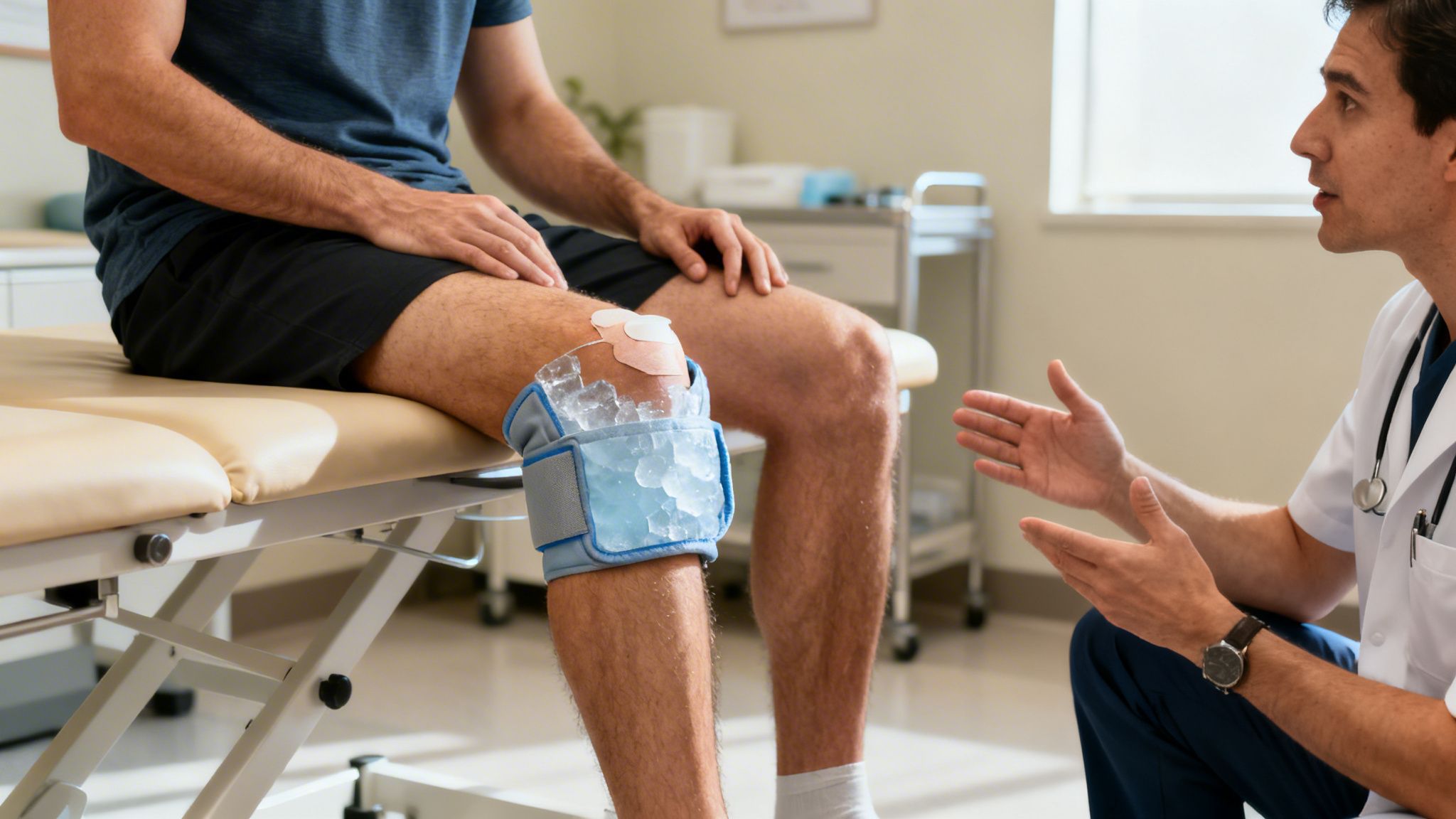
While ice is a fantastic tool for almost any new injury, it becomes absolutely essential for two groups we see every day at Peak Therapy: patients recovering from surgery and injured athletes. For them, we understand that icing isn't just about feeling better—it's a critical piece of a structured rehabilitation plan designed to get you back to 100% safely and efficiently.
In these situations, our use of ice pack physical therapy is all about managing the body's reaction to major trauma. Whether it’s the planned trauma from a surgeon's scalpel or the sudden impact of a sports injury, the body responds with a powerful inflammatory rush. Our job as licensed physical therapists is to help you get that response under control so true healing can begin.
Post-Surgical Icing For Faster Rehabilitation
If you’ve had orthopedic surgery—like a knee replacement at a hospital near our Plymouth clinic or rotator cuff surgery closer to our Hanover location—you’re all too familiar with post-operative swelling. It’s often the biggest hurdle right after the procedure. We know this isn't just a cosmetic issue; that swelling is painful, severely limits your range of motion, and can even shut down the muscles you need to start strengthening.
This is exactly why following your physical therapist's guidance on icing is so important. We use cryotherapy as part of a comprehensive plan for a few very specific reasons:
- Aggressive Swelling Management: Our first priority is to help you get that edema (swelling) down. Consistent, properly timed icing constricts blood vessels, which helps put the brakes on fluid buildup around the surgery site.
- Pain Control: Post-surgical pain is a given, but smart icing can make a huge difference and often reduce the need for opioid medications. The numbing effect provides real relief, making you more comfortable and able to rest and heal.
- Restoring Range of Motion: A swollen joint simply won't move. By keeping that swelling in check, we create a window to start gentle motion exercises much sooner, which is key to preventing long-term stiffness and regaining function.
At Peak Therapy, our post-surgical rehabilitation is more than just the exercises we do in the clinic. We partner with you to build a complete home care plan where icing plays a starring role. You can learn more about our approach in our guide to managing post-operative swelling through effective rehabilitation.
Icing For The Injured Athlete
For athletes across Massachusetts, an injury can be devastating. It doesn't matter if you're a high school soccer player in Scituate who rolled an ankle or a weekend runner who pulled a hamstring along the Neponset River Trail near our Milton clinic—we know your goal is always the same: get back to your sport safely and as quickly as possible.
Icing is step one. When an athlete gets hurt, applying ice immediately helps manage the initial inflammatory chaos. This rapid response means swelling is less severe, which allows a physical therapist or athletic trainer to get a much quicker and more accurate diagnosis.
Athletes also need to ensure faster recovery from workouts as part of their training, and cold therapy is often a key method for managing soreness and preparing for the next session.
When it comes to a new sports injury, icing does a few key jobs:
- Limiting Initial Damage: Applying cold right away helps minimize internal bleeding and fluid leaking into the tissue—the cause of large bruises and massive swelling.
- Providing Immediate Analgesia: The numbing effect is a lifesaver, helping an athlete cope with the first few painful hours after an injury.
- Facilitating Diagnosis: By keeping severe swelling down, we can more effectively examine the underlying ligaments and structures to determine the extent of the injury.
From there, a physical therapist will build icing into a comprehensive sports rehab program. We use it as a recovery tool after tough sessions to calm irritated tissues and get the body ready for the next day's work, allowing the athlete to push through the progressive challenges of getting back in the game.
When To See A Physical Therapist For Your Injury

Using an ice pack at home is an excellent first-aid strategy for a fresh injury. It helps manage the initial pain and swelling, giving your body a chance to kickstart the healing process. But we understand how frustrating it is when you’ve been icing consistently, resting the area, and the pain just isn’t getting better.
There’s a point where at-home care isn’t enough. If you’re relying on an ice pack for more than a few days, it can become a temporary fix that masks a deeper problem needing a more targeted solution. It's important to recognize when your body is telling you it’s time for professional help from a licensed physical therapist.
Clear Signs You Need Professional Help
Deciding to see a professional isn't a setback; it's a smart move toward a full and lasting recovery. If at-home ice pack physical therapy isn’t giving you the relief you need, it’s a clear signal that there's an underlying issue that needs to be properly diagnosed and treated.
Here are some signs that it’s time to book an appointment with a physical therapist:
- Pain lingers or worsens after 72 hours. If the pain and swelling haven’t started to improve after a few days of consistent rest and icing, your injury likely needs more than just cold therapy.
- You can't put weight on the limb. An inability to bear weight on your leg, ankle, or foot is a major red flag that could point to a more serious injury like a fracture or a severe ligament tear.
- There is severe swelling or discoloration. While some swelling and bruising are normal, excessive fluid or dark, widespread bruising suggests significant tissue damage that requires a professional evaluation.
- The joint feels unstable. If your knee feels like it might “give out” or your ankle feels wobbly and unreliable, a physical therapist needs to assess your ligament stability.
On top of these, any numbness, tingling, or weakness that persists even after you’ve taken the ice pack off is a sign that a nerve could be affected. These symptoms should always be evaluated by a professional.
You shouldn't have to live with pain. Seeking expert care early can prevent a simple, acute injury from becoming a chronic problem that disrupts your life for months or even years.
What A Physical Therapist Can Do For You
When you come into one of our Peak Therapy clinics—whether in Quincy, Pembroke, or any of our Massachusetts locations—you get something an ice pack can't provide: a comprehensive evaluation from a licensed physical therapist to find the root cause of your pain. We don't just treat the symptoms; we dig deeper.
Our licensed physical therapists perform a detailed assessment, which includes:
- Listening empathetically to your story and how the injury happened.
- Analyzing your movement patterns and joint mechanics.
- Testing your strength, flexibility, and range of motion.
From there, we create a personalized recovery plan that’s built around your specific injury and goals. Your plan will likely combine hands-on manual therapy, targeted therapeutic exercises, and education to help you manage your condition at home.
Our goal is to get you out of the cycle of pain and temporary fixes. We work with you to rebuild strength, restore full function, and give you the tools you need to keep the injury from coming back. We’ll help you move freely and get back to the activities you love, without pain holding you back.
Answering Your Questions About Icing
Even when you know the basics, it’s natural to have questions when you’re treating an injury at home. At Peak Physical Therapy, our physical therapists hear many of the same questions every day from patients all across Massachusetts. Let's clear up some common points of confusion so you can use ice with total confidence.
Can I Use an Ice Pack for My Chronic Back Pain?
We get this question all the time, especially from people living with nagging back pain from a long commute or years of physical work. While ice can offer temporary relief for a sudden, sharp flare-up by numbing the area, it won’t address the root cause of a chronic problem.
For ongoing conditions without new swelling, heat is often a better choice because it helps relax tight, achy muscles. The most effective solution, however, is a personalized plan. A licensed physical therapist can perform a comprehensive evaluation to determine the true source of your pain and design a program with the right exercises, hands-on therapy, and a smart combination of heat or ice to give you lasting relief—not just a quick fix.
How Do I Know If I'm Getting Frostbite From an Ice Pack?
This is an incredibly important safety question. The first warning sign of frostbite is often a "pins-and-needles" sensation that fades into complete numbness. You might also notice the skin looks waxy, unusually pale, or even a bit grayish.
To prevent this, always use a protective barrier like a thin towel between the ice pack and your skin. It’s also critical to limit icing sessions to no more than 15-20 minutes at a time. If you notice any of these symptoms, take the ice off immediately and gently rewarm the area. If the feeling doesn't return quickly, seek medical attention.
Is It Okay to Ice an Injury Before Playing a Sport?
Absolutely not. We strongly advise against icing an injury right before you get active. The numbing effect of ice masks the important pain signals your body sends to protect itself from further damage. Without that feedback, you could easily push too hard and turn a minor strain into a much more serious injury.
Furthermore, icing temporarily reduces muscle strength, flexibility, and coordination. This can hurt your performance and actually increase your risk of getting hurt again. A proper dynamic warm-up that gets your blood flowing is a much safer and more effective way to prepare for activity. Save the ice pack for after the game is over.
What’s Better: A Gel Pack or a Bag of Ice?
Both are great tools for ice pack physical therapy, but they have different pros and cons. Reusable gel packs are convenient and mold nicely to tricky body parts like a shoulder or a knee. The downside is they can get much colder than freezing, which increases the risk of skin damage if you aren't careful about using a barrier.
A simple plastic bag filled with crushed ice and a little water is a fantastic and effective alternative. As the ice melts, it holds a safe and consistent temperature of 32°F (0°C). The melting water also helps the bag make excellent contact with your skin (through the towel, of course), making it incredibly efficient at cooling the tissue.
If your pain isn't getting better with home care, it's a sign you need a professional evaluation. We understand how frustrating it is to be held back by an injury. The experienced team at Peak Physical Therapy is here to find the true cause of your pain and create a personalized plan to get you moving freely and living fully again. Contact us today to schedule your appointment at one of our convenient Massachusetts locations.