


You finish a lift at the gym, rack the bar, and tell yourself the tight shoulder or sharp twinge in your low back will settle down by tomorrow. Then tomorrow comes, and your squat depth is off, your press feels unstable, or your run on the treadmill turns into a limp. That’s a familiar pattern for active South Shore residents, especially for people balancing work, family, and training between towns like Carver, Norwell, and Plymouth.
When pain starts changing how you move, waiting usually isn’t a strategy. The right plan is figuring out whether you’re dealing with ordinary post-workout soreness or a problem that needs skilled hands, clear guidance, and convenient follow-up. If you’re searching for physical therapy Norwell MA, this guide is built for the gym-goer who wants a practical next step, not vague advice.
Table of Contents
- From Deadlifts to Discomfort Common Gym Injuries on the South Shore
- Is It Just Soreness or a Sign You Need a Norwell PT
- How to Choose the Right Physical Therapy Near Carver
- Why USA Fitness Members Choose Peak Physical Therapy in Norwell
- Your First Visit What to Expect at Our Norwell Clinic
- A Partner in Performance Beyond Just Injury Recovery
- Frequently Asked Questions About PT in Norwell
From Deadlifts to Discomfort Common Gym Injuries on the South Shore
You finish a solid session at the gym, rack the bar, and head home feeling fine. The next morning, your shoulder catches when you reach overhead, your low back tightens tying your shoes, or your knee starts talking back on the stairs. That is a familiar pattern for active adults training in Norwell, Carver, Plymouth, and across the South Shore.
For USA Fitness members and other regular gym-goers, these problems usually come from ordinary training decisions, not dramatic accidents. A little more volume than usual. A rushed warm-up before deadlifts. Treadmill miles added too quickly. Extra pressing on top of a week that already loaded the same joints and tissues.
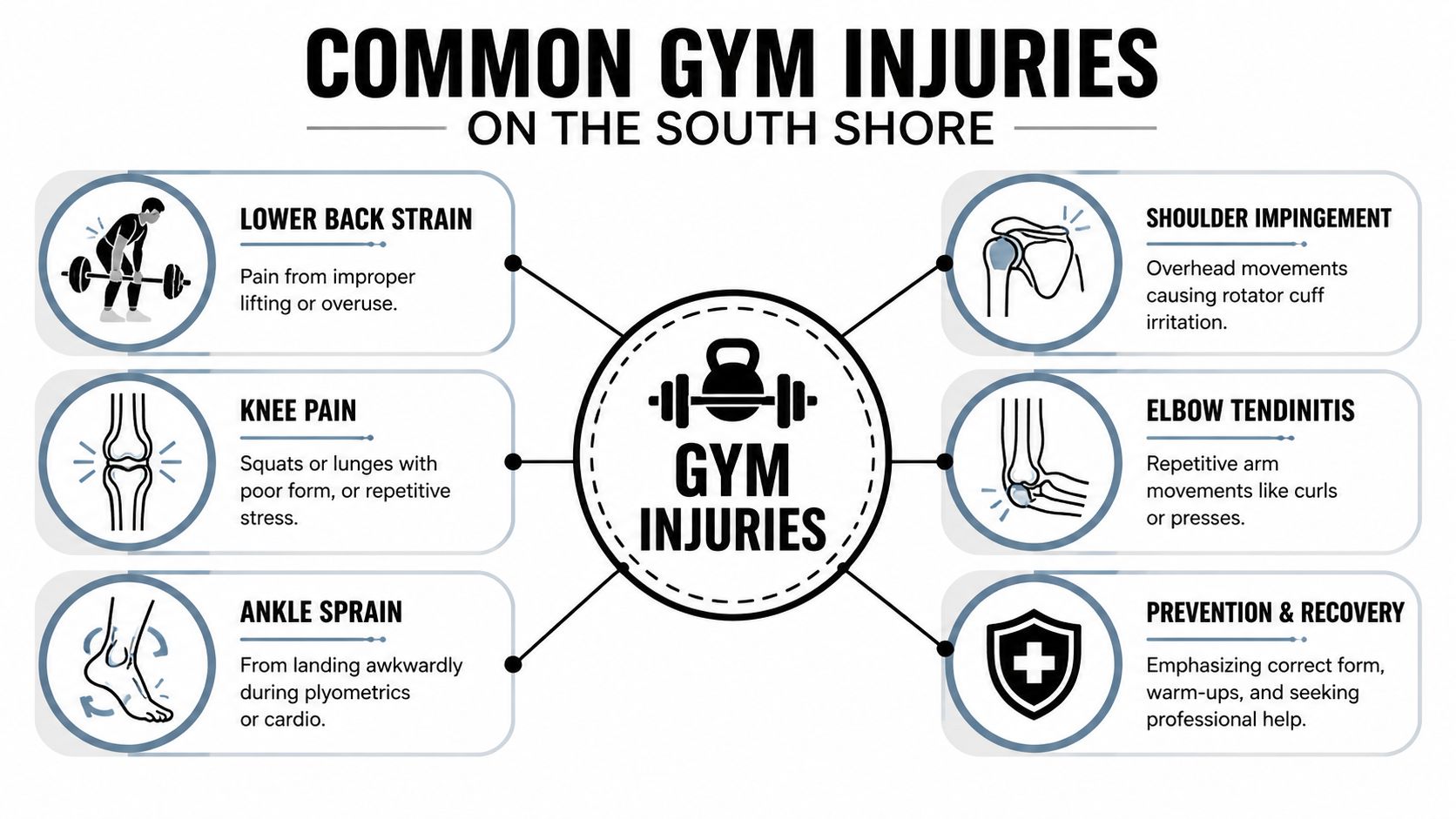
The injuries we see most often
- Lower back strain: This often builds over time. Fatigue, stiff hips, poor bracing, and loading too aggressively can all push the low back to do more than it should.
- Shoulder irritation: Overhead press, incline bench, pull-ups, and high-volume chest work can irritate the rotator cuff and surrounding tissues, especially if shoulder blade control is off.
- Knee pain: Pain around or below the kneecap often shows up with squats, lunges, treadmill running, and step-ups. In many cases, the knee is taking stress that the hips or ankles are not handling well.
- Ankle trouble: A missed landing, old sprain, or limited ankle motion can subtly alter squat depth, running form, and balance work.
- Elbow pain: Curls, gripping, pressing, and pull work can irritate the elbow quickly when recovery does not keep pace with training volume.
Here is the pattern I want active lifters to notice. Pain rarely stays isolated to one exercise for long. It starts with one lift feeling off, then your form changes, then other movements begin to irritate the same area.
Practical rule: If you are changing your workout to work around pain, performance is already being affected.
The right response is usually modification, not shutdown. Some athletes need to reduce load. Others need to change range of motion, improve warm-up choices, or address mobility and control at the joints above and below the painful area. That trade-off matters. Rest alone may calm symptoms for a few days, but it does not prepare you to return to squats, presses, running, or deadlifts with better mechanics.
If symptoms started during treadmill training, the machine itself can be part of the problem, especially for home gym owners dealing with worn belts or uneven foot strike feel. Find quality USA treadmill parts if you are trying to rule out equipment wear before getting back to regular mileage.
Prevention also matters once the initial flare-up settles. Our sports injury prevention tips for active adults break down the habits that help South Shore gym members train more consistently with fewer repeat setbacks.
Is It Just Soreness or a Sign You Need a Norwell PT
Normal soreness has a pattern. It usually feels broad, achy, and tied to a hard session or a new movement. It tends to improve as you warm up and fades over the next few days.
Injury pain behaves differently. It gets your attention quickly, changes your form, and keeps showing up with the same movement.
Quick self-check
- It’s probably soreness if the discomfort feels general, shows up after training, and doesn’t stop you from moving normally.
- It may be an injury if the pain is sharp, easy to pinpoint, or makes you avoid part of a lift.
- Pay attention if symptoms get worse during activity instead of settling as you warm up.
- Take it seriously if you notice swelling, bruising, or a clear loss of motion.
- Don’t ignore it if you can’t trust the joint, feel unstable, or your strength drops suddenly.
Soreness is annoying. Injury pain changes how you move.
A simple test helps. Back off the aggravating movement, train around it for a short stretch, and see what happens. If the pain stays the same, keeps returning, or spreads into daily activities like stairs, sleep, or getting in and out of the car, it’s time to get it assessed.
Toughing it out rarely impresses the injured tissue. It just teaches your body a worse movement pattern.
How to Choose the Right Physical Therapy Near Carver
You tweak a shoulder at USA Fitness, tell yourself it will settle down, then realize a week later you are still changing how you press, sleep, and reach overhead. At that point, the right clinic is the one you can get to consistently and trust to give you a clear plan.

For active adults in Carver, Norwell, and Plymouth, convenience matters because rehab only works if you show up often enough to build momentum. A clinic near Route 3 usually makes that easier. The trade-off is simple. A closer location helps with consistency, but location alone does not tell you whether the therapist understands barbell training, exercise modification, or how to return you to full workouts without guessing.
Start by looking for a clinic that treats training problems, not just pain. If your knee hurts during squats or your back tightens after deadlifts, the evaluation should include movement patterns, lifting history, weekly volume, and the point in the workout where symptoms show up. That gives active South Shore residents a much better chance of getting a plan they can use in the gym instead of a generic handout.
A practical checklist
| What to evaluate | Why it matters |
|---|---|
| Location | Shorter drive times make it easier to stay consistent with follow-up visits |
| Experience with active adults | Gym injuries usually need load management, movement review, and a step-by-step return to training |
| Communication style | You should leave with a clear explanation, specific activity changes, and a treatment plan |
| Insurance guidance | Clear benefit and cost information helps you start care without surprises |
| Visit flow | One-on-one attention and a structured plan usually lead to more useful sessions |
Insurance questions can slow people down. Ask more than whether the clinic takes your plan. Ask whether the staff will verify benefits, explain likely out-of-pocket costs, and tell you what happens at the first appointment. Clear answers save time and remove one of the biggest reasons people delay care.
It also helps to review the clinic’s Norwell physical therapy location and appointment details before you book. For USA Fitness members and other South Shore lifters, that extra minute can tell you whether the setup fits your schedule, commute, and training goals.
A good choice feels practical from the start. The schedule works. The answers are direct. The plan makes sense for how you train.
Why USA Fitness Members Choose Peak Physical Therapy in Norwell
You finish a lift at USA Fitness, rack the bar, and tell yourself the shoulder or back irritation will settle down by tomorrow. A week later, you are still changing your workouts around it. At that point, convenience matters, but so does getting care from someone who understands training.
Peak Physical Therapy and Sports Performance has a Norwell clinic at 99 Longwater Circle, Suite #201 with online clinic details here. For people driving in from Carver, Norwell, Plymouth, and nearby South Shore towns, that location works well off Route 3 and makes follow-up visits easier to keep. Consistency is a big part of recovery, especially for active adults balancing work, family, and gym time.
Why this clinic tends to fit active adults
USA Fitness members usually are not looking for generic advice. They want to know why a squat started shifting, why pressing now bothers the shoulder, or why a nagging hip issue keeps showing up on lower-body days. Good PT for this crowd starts with movement quality, load tolerance, and a realistic return-to-training plan.
That matters on the South Shore. Many active adults want to keep doing something while they recover, even if they need to modify volume, range, or exercise selection for a few weeks. The right plan does not treat rest as the only option. It gives you a way to keep momentum without feeding the problem.
What people usually value here
- A movement-based evaluation: The goal is to identify the pattern behind the pain, not just mark the painful spot.
- Advice that fits the gym: Active patients need specific guidance on what to change, what to pause, and what can stay in the program.
- A practical location: Shorter, simpler drives from towns like Carver and Plymouth make it easier to stick with visits.
- Clear communication: People do better when they understand the problem and know what progress should look like.
For active South Shore residents, that combination is often the difference between drifting through workouts and getting back to full training. The process should feel straightforward. You come in with a problem tied to lifting, running, or classes, and you leave with a plan you can use the same week.
Your First Visit What to Expect at Our Norwell Clinic
You tweak your shoulder on pressing day at USA Fitness, try to train around it for two weeks, and then notice it hurts reaching into the back seat or taking a jacket off. That is a common first-visit story in our Norwell clinic. The goal of the appointment is to sort out what is driving the problem and give you a plan you can use right away.

What happens in the evaluation
The first part is a conversation. We go over how the issue started, what makes it worse, what eases it, what training you have kept in, and what you have backed off. For active adults from Norwell, Carver, Plymouth, and nearby South Shore towns, that usually means talking through specific lifts, classes, runs, or weekend sports instead of speaking in general terms.
Then we assess how you move. That can include range of motion, strength, balance, joint mobility, and patterns like squatting, hinging, stepping, reaching, or loading one leg. If a certain gym movement brings on symptoms, we want to know whether the problem is mobility, control, strength, load tolerance, or a mix of a few things.
That distinction matters. A sore knee during squats and lunges does not always mean the knee is the starting point.
What the visit should give you
By the end of the evaluation, you should understand three things. What is likely contributing to the pain, which activities are safe to continue with changes, and what the first phase of treatment will look like.
For gym-goers, that often means practical guidance, not broad restrictions. You may need to shorten range, lower load, change exercise selection, or pull back on weekly volume for a short stretch. You should also know what signs mean you are progressing and what signs mean we need to adjust the plan.
Physical therapy here serves a wide range of people, but the process still works well for active patients because it is built around function. If your goal is getting back to deadlifts, long runs, pickleball, or group classes without guessing, the visit should point you there in a clear way.
Before your appointment, it helps to review the patient information for appointments, insurance, and visit prep.
Bring the shoes you train in, a short list of the movements that bother you, and any questions you have been putting off. That usually makes the first visit more useful.
A Partner in Performance Beyond Just Injury Recovery
The most useful physical therapy doesn’t end when the pain drops. It changes how you train so the same problem doesn’t keep circling back every few months.
That might mean cleaning up a hinge pattern that overloads your back, improving shoulder control before pressing volume climbs again, or finding out your ankle stiffness has been forcing your knees to do extra work. Small movement problems don’t stay small when you train hard around them.
What long-term support can look like
- Movement review: Spotting weak links before they become a full setback
- Exercise progressions: Building back toward strength and power instead of guessing
- Load management: Knowing when to push, when to hold steady, and when to modify
- Form feedback: Making technique changes that fit your body
For active South Shore residents, that’s often the difference between repeated interruptions and steady training. Rehab should help you return to your routine. Good rehab also helps you keep it.
Frequently Asked Questions About PT in Norwell
A lot of active adults from Norwell, Carver, and Plymouth ask the same practical question first. Can I start now, or do I need to wait on paperwork?
Do I need a doctor’s referral to start
Many patients can contact a clinic directly and schedule an evaluation without a referral. Insurance rules can still affect coverage, so it makes sense to confirm the details before the first visit. A good front desk team should help you sort that out early, especially if you want to keep training at USA Fitness without losing time.
What should I wear
Wear clothes you can move in comfortably. Shorts are helpful for knee, hip, and ankle problems. For shoulder or neck issues, choose a shirt that allows easy movement and lets the therapist assess the area without a struggle.
Simple is best.
How long does a session usually last
Visit length depends on the clinic and on what your body needs that day. The first appointment usually takes longer because it includes the evaluation, a movement review, and the start of your treatment plan. Follow-up visits are often more focused, especially once your goals are clear and you know which exercises or lifting changes matter most.
Can I keep working out while I’m in PT
Often, yes. The better question is what you can do without irritating the problem.
For example, a shoulder issue may mean pressing volume needs to drop for a few weeks while rows, carries, and lower-body work stay in the program. An irritated knee may tolerate sled work or controlled split squats before it is ready for running or jumping again. Good PT does not just tell active people to rest. It gives you a way to train with purpose while the tissue calms down and strength builds back up.
I play court sports too. Are landing mechanics part of rehab
Yes. If you play basketball, volleyball, pickleball, or any sport that involves cutting and jumping, landing mechanics should be part of the plan when they relate to your pain or injury history. That can include deceleration control, single-leg stability, and how you absorb force through the foot, ankle, knee, and hip. For a sport-specific perspective, Vanta Sports covers footwork and landing technique considerations that fit well with injury prevention work.
If you are ready for clear answers and a plan that fits your training, book an appointment with Peak Physical Therapy and Sports Performance. Whether you are coming from Norwell, Carver, Plymouth, or another South Shore town, the next step is a thorough evaluation, practical guidance, and a recovery plan that helps you return to the gym with confidence.