
That tight band in your shoulder has been there for weeks. You feel it driving through Quincy Center, lifting groceries, sleeping on one side, or trying to get through a workout without your neck grabbing. Maybe it eases for a day, then comes right back.
That's usually when people start searching for dry needling Quincy MA. They're not looking for a long lecture. They want to know one thing. Will this help, and what's it like when you come in?
At our Quincy clinic, that's the conversation we have every day. Dry needling can be a very useful option when pain is coming from irritated, overactive muscle and connective tissue, especially when that problem is limiting motion and keeping rehab stuck.
Table of Contents
- Tired of Nagging Pain in Quincy
- What Is Dry Needling and How It Works
- Who Can Benefit from Dry Needling
- Your First Dry Needling Session at Peak
- Aftercare and Results
- Why Choose Peak Physical Therapy in Quincy
- Your Questions Answered and Next Steps
Tired of Nagging Pain in Quincy
You get through the workday, drive home, and notice the same spot tightening again. Maybe it is your neck after the commute, your hip after a walk, or your calf after trying to get back to running. It is not severe enough to send you to urgent care, but it keeps showing up and keeps changing what you do.
That pattern matters.
In our Quincy clinic, many people come in after weeks or months of trying to manage it on their own. They stretch, rest, swap shoes, adjust their desk, or avoid the movement that sets things off. Sometimes that helps for a few days. Then the stiffness, pulling, or deep ache comes right back.
When pain starts changing your routine
Around Quincy, that often shows up in ordinary parts of the week:
- Commuting stiffness: Your neck and upper back tighten after time in the car or on the train.
- Desk-job soreness: You end the day with a headache, a locked-up shoulder blade, or a low back that does not want to straighten out.
- Weekend activity pain: The gym, yard work, pickleball, long walks, or time near the water flare up the same area every time.
The frustrating part is not only the pain. It is the repeatability. You start to feel better, then the same muscle grabs again, your motion drops off, and you are back to working around it.
If a muscle keeps tightening back up and movement still feels limited, rest alone usually is not enough.
Dry needling can help in that situation. At Peak, we use it as part of a physical therapy plan when an exam shows that irritated muscle tissue or trigger points are contributing to the problem. Some patients are good candidates. Some are not. The value is in getting a clear assessment first, then using the right tool for the right reason.
If you are still deciding whether PT makes sense, our guide to physical therapy in Quincy MA explains what local care typically looks like and when it is worth booking an evaluation.
Why people look for it locally
People searching for dry needling in Quincy usually want three things. Relief, a straightforward explanation, and an appointment close to home.
They do not want vague advice or another round of guessing. They want to know why the area keeps flaring up, whether dry needling is appropriate, what the session will feel like, and what else needs to happen so the problem does not keep returning. That is how we approach it in clinic. Dry needling is one treatment option inside a broader rehab plan built around movement, strength, and getting back to normal activity with more confidence.
What Is Dry Needling and How It Works
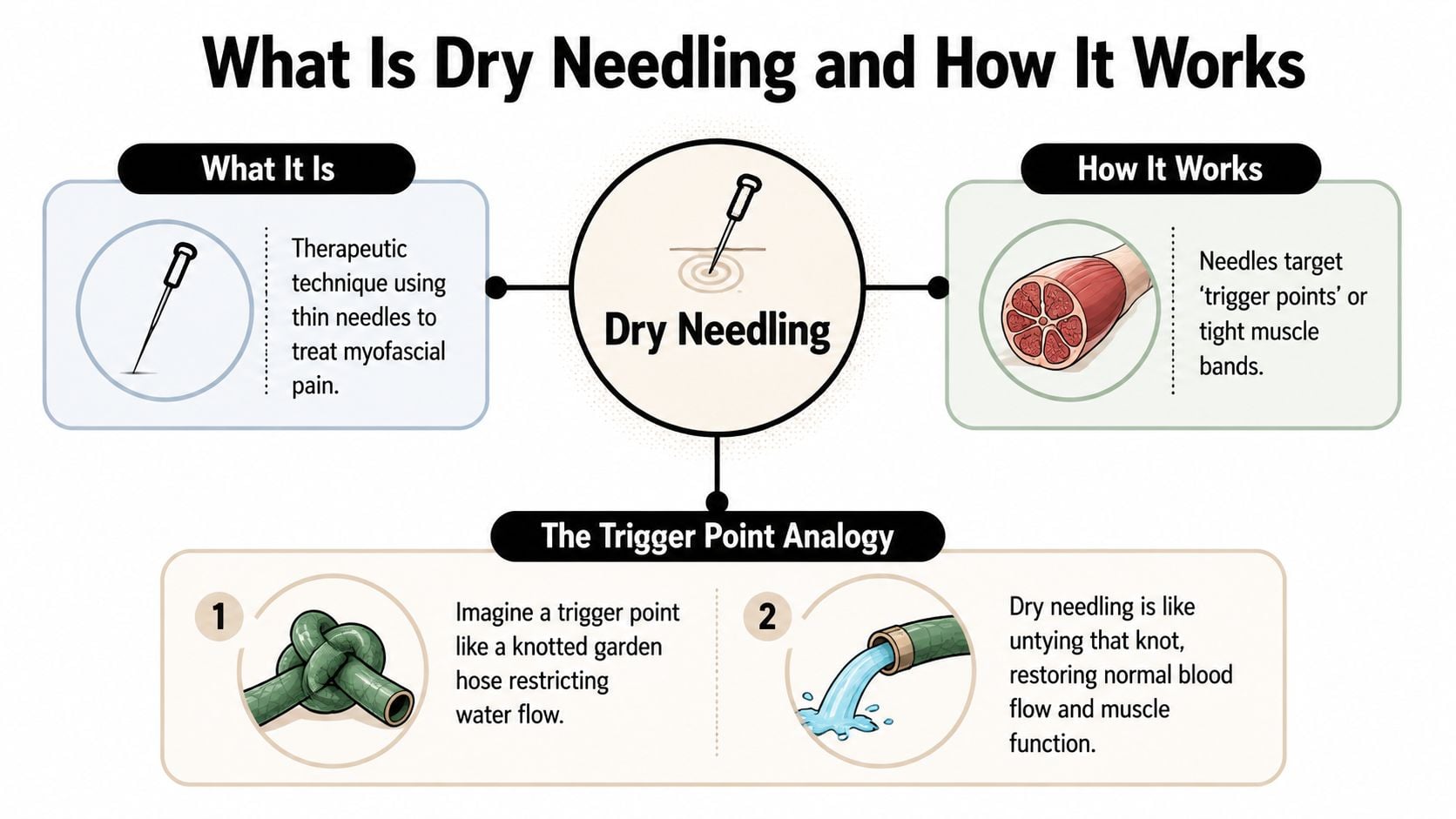
Dry needling is a treatment physical therapists use to address painful, overactive spots in muscle and connective tissue. At our Quincy clinic, we use it when the exam points to a specific tissue problem that is limiting motion, increasing pain, or keeping a muscle stuck in a protective pattern.
The easiest way to picture a trigger point
A trigger point often feels like a tight, irritated band within the muscle. When I press on it during an exam, patients will often say, "Yes, that is the spot," even if their symptoms usually spread a little beyond it. That response helps confirm we are treating a meaningful source of the problem, not guessing.
The garden hose comparison works well here. If the hose has a knot in it, flow through the line changes. A trigger point can create a similar problem in muscle tissue. The muscle does not contract and relax normally, and movement starts to feel stiff, sore, or restricted.
What the needle is doing
The needle is very thin, and the goal is precision. We place it into the irritated tissue to get a local response from the muscle, then we reassess how the area feels and moves.
In the right situation, that can reduce guarding, calm sensitivity, and make stretching or strengthening more productive right after treatment. That difference matters because dry needling is rarely the whole plan. It works best as part of physical therapy, with the needle addressing the tissue issue and exercise helping the body hold onto the change.
Some patients feel a brief twitch, cramp, or ache during treatment. Others feel very little. Both responses can be normal.
Is it the same as acupuncture
No. The needles may look similar, but the purpose and reasoning are different.
Dry needling is based on a neuromusculoskeletal exam. The treatment targets a specific movement problem, pain pattern, and physical finding in the tissue. At Peak, we choose it because your evaluation supports it, not because it is a one-size-fits-all technique.
If you want a fuller explanation of conditions and treatment goals, read our guide on what dry needling is used for.
Who Can Benefit from Dry Needling
Dry needling helps a specific type of patient. The best fit is someone whose pain has a clear muscular pattern on exam, not someone chasing a generic fix for every ache.
In Quincy, that often means the person who sits at a desk near Quincy Center and cannot turn their head comfortably by the end of the day, the runner whose calf keeps tightening up along the same route, or the parent whose hip and glute pain flare after carrying kids, yard work, and weekends that are anything but restful.

Common problems people ask about
At our Quincy clinic, the questions are usually pretty practical. Can this help with neck tension? What about headaches that seem to start in the shoulders? Why does the same spot in my back, hip, calf, or forearm keep tightening back up?
Dry needling is commonly used for muscle-driven pain and movement problems such as neck and back pain, tension headaches, sciatica-type glute symptoms, hip and knee pain, muscle spasm, elbow pain, plantar heel pain, and stubborn tightness after an injury. It can also help when a muscle stays guarded long after the original strain should have calmed down.
That range matters because many Quincy residents are dealing with ordinary, repeatable aggravating factors. Long commutes, desk work, lifting at home, and weekend activity can all keep the same irritated tissue cycling.
Good fit versus poor fit
A good candidate usually has a pattern we can reproduce and treat. On exam, the painful area is specific, the muscle feels irritable, and symptoms change with pressure, movement, or position.
Dry needling tends to be a better fit when:
- The pain is localized or follows a familiar muscle referral pattern.
- Motion feels blocked by tight, guarded tissue.
- The same muscle keeps flaring despite stretching or massage.
- You are willing to pair treatment with exercise and movement changes.
There are trade-offs.
If pain is being driven more by joint irritation, a highly sensitive nerve, or training errors, dry needling may only help a little or may not belong in the plan at all. If someone wants passive care only and does not want to work on strength, mobility, or load management, results usually do not last as well.
Real-life Quincy examples
A desk worker may come in with upper trap tightness and evening headaches. A high school athlete may keep fighting calf or hip symptoms during practice. An active adult in Merrymount may notice low back and glute pain every time home projects pile up.
Those are the cases where dry needling can be useful because the irritated muscle keeps pulling movement off course. Once that tissue settles, it is often easier to restore normal motion and build strength around it. If deep glute pain or sitting-related hip symptoms sound familiar, our article on dry needling for piriformis-related pain gives a closer look at that pattern.
The best candidates are not the people whose sole attribute is tolerating needles well. They are the people whose symptoms match the treatment.
Your First Dry Needling Session at Peak
A lot of Quincy patients walk in expecting the needle to be the hard part. Usually, the bigger surprise is how much of the visit happens before any treatment starts.
The first session is a clinical exam, not a routine add-on. We talk through what you feel, what sets it off, what you have already tried, and what you need to get back to doing. Then we test movement, check strength where it matters, and feel for the muscle and tissue patterns that match your symptoms.
What happens before the needle goes in
This part matters.
If your pain pattern does not match a treatable muscle target, dry needling should not be the plan that day. Good treatment is specific. At our Quincy clinic, that means we only needle when the exam supports it and when it fits the bigger rehab plan.
You can expect:
- A focused conversation about your symptoms and which daily tasks, workouts, or work positions bring them on.
- Hands-on testing to identify the involved muscle, nearby joints, and any movement loss around it.
- A clear explanation of the plan so you know what we are treating, what the goal is, and what the session may feel like.
What it feels like during treatment
The needles are sterile and very thin. Some patients feel almost nothing going in. Others notice a quick pinch, a crampy feeling, or a brief deep ache when the needle reaches an irritated spot.
A local twitch response can happen. That is a short muscle contraction. It can feel odd for a second, but it often confirms that we reached the tissue we intended to treat.
The response is not identical for everyone. A tight upper trap, a stubborn calf, and a guarded glute can all feel different during treatment. That is normal, and we talk you through it as we go so there are no surprises.
What happens right after
Once the needling is done, we recheck the movement that brought you in. That may be turning your neck, reaching overhead, squatting, stepping up, or walking. The point is to see whether the muscle is less guarded and whether movement feels easier right away.
Then we build on that change. If the tissue settles down but the body still moves the same old way, symptoms often return. That is why the rest of the session usually includes corrective exercise, mobility work, or a change in how you load the area.
Some patients also ask what helps them settle down later in the day, especially if stress keeps their muscles wound up. General self-care ideas like magnesium for stress reduction can be part of the conversation, but they do not replace the movement work that makes treatment last.
If dry needling gives you a window of relief, the next step is using that window well.
Aftercare and Results
After your session, the usual question is practical. How will this feel later today, and what should tomorrow look like?
The most common response is mild soreness in the treated muscle. It often feels like post-workout soreness or like a spot that has been worked on extensively. That reaction is expected. Some people feel looser right away and then get a little sore that evening. Others barely feel the treatment until the next morning.
At Peak in Quincy, we usually tell patients to judge the next day by function, not just by soreness. If your neck turns more easily, your shoulder reaches with less pinch, or your calf feels less guarded when you walk to the T or climb stairs, that is a useful response even if the area still feels tender.
What to do the rest of the day
A few simple choices tend to help the area settle:
- Keep moving at an easy level: A walk, normal errands, or light activity is usually better than spending the day completely still.
- Skip aggressive stretching: Gentle motion is fine. Forcing the muscle usually just irritates it.
- Drink water and eat normally: Recovery is better when the rest of the day stays steady and routine.
- Use heat if you feel tight: Warmth can help the muscle relax later on.
If stress keeps your muscles revved up, some patients also pair treatment with basic relaxation habits at home. One example is this resource on magnesium for stress reduction, which covers general self-care ideas. It is not a substitute for your rehab plan, but it can fit alongside it.
What results tend to look like
Results are rarely dramatic in only one direction. Sometimes pain drops quickly. Sometimes the bigger change is better movement, less stiffness, or less of that protective muscle gripping that has been limiting you for weeks.
That matters because dry needling works best as part of a larger plan. If we calm an irritated muscle but do not change strength, joint motion, or loading habits, the same problem often comes back. In Quincy, that might mean pain returns after a long commute, repeated stair climbing, gym workouts, or long hours at a desk.
A few things tend to set people back after treatment:
- Jumping into a hard workout the same day
- Repeatedly testing the painful movement to see if it is gone
- Expecting one session to fix a long-running issue
A good early response often looks like steadier progress across the next few visits, not a perfect day-one result. That is the standard we use in clinic. Better motion, less guarding, and more tolerance for daily activity.
Why Choose Peak Physical Therapy in Quincy
Choosing a clinic for dry needling comes down to a few practical things. You want a physical therapist who knows when dry needling fits, when it does not, and how to build it into a treatment plan that effectively helps you get through your week in Quincy with less pain and better movement.
What matters more than the needle itself
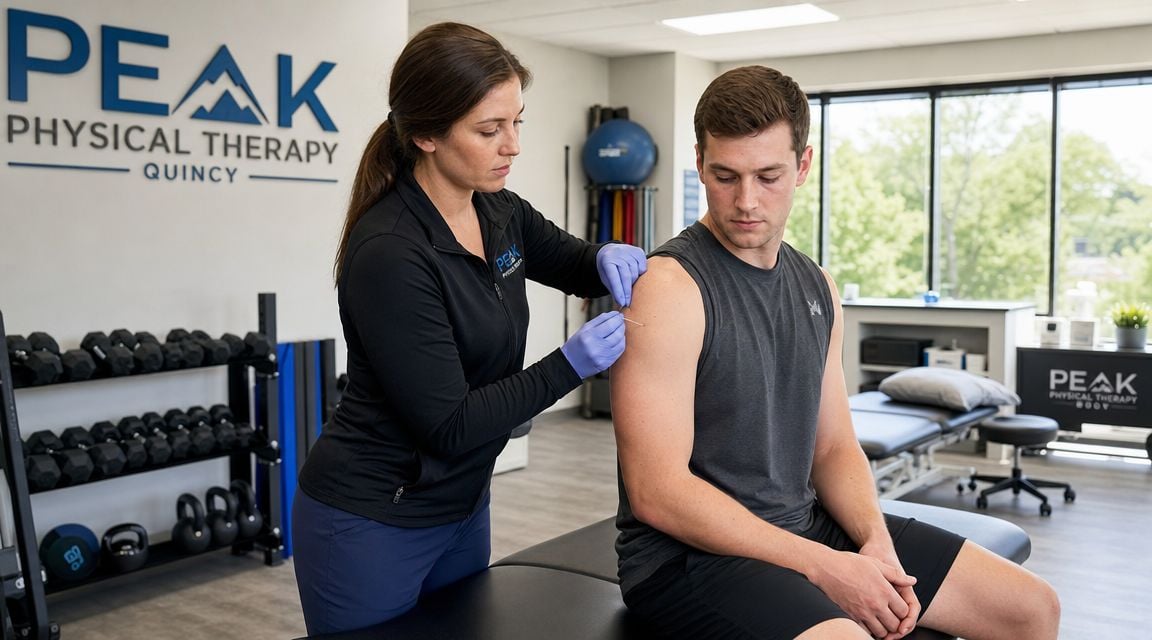
Dry needling uses sterile, thin filiform needles, but the tool is only one part of the visit. The primary value is the clinical reasoning behind it. A good session starts with an exam, a clear explanation, and a specific goal. It might be reducing protective muscle tension, improving shoulder motion, or making it easier to tolerate walking, lifting, training, or sitting through a long commute.
At Peak Physical Therapy in Quincy, we keep the standard simple. Dry needling should match what we find in the evaluation, and it should support the rest of your rehab plan.
| What to look for | Why it matters |
|---|---|
| A thorough evaluation | The painful spot is not always the main driver of the problem |
| Clear communication | You should know why dry needling is being used and how the area may feel later that day |
| A full rehab plan | Mobility work, strength, and load management help the results last |
That last point matters a lot. If a muscle calms down after treatment but the shoulder, neck, back, or hip still is not moving or loading well, symptoms often return.
Why the local setting matters
A Quincy clinic should understand the routines that keep flaring people up. We see pain tied to commuter traffic, desk-heavy workdays, stair use, gym training, youth sports schedules, and weekends that are more active than the body is ready for.
That local context changes treatment decisions. Someone trying to get through shifts on their feet needs a different plan than someone hoping to get back to overhead lifting or pain-free pickleball. Dry needling can help in both cases, but the visit should be built around your schedule, your goals, and what your body can handle right now.
Patients usually feel more comfortable when care is close to home and easy to return to. That makes follow-up simpler, and follow-up is often where the biggest gains happen.
Your Questions Answered and Next Steps
Questions at this stage are usually practical ones. Patients in Quincy often ask about cost, timing, and whether dry needling will fit into a normal workweek without leaving them feeling beat up.
Does insurance cover dry needling
Sometimes yes, sometimes no. Coverage depends on your plan and on how your visit is billed. The cleanest way to get a real answer is to call the clinic before your first appointment so the team can review your benefits and explain what you may owe.
How much does it cost
There is no single flat answer that applies to everyone. Insurance status, deductibles, copays, and the structure of your physical therapy visit all affect the final number.
A short phone call usually clears this up fast.
How many sessions will I need
That depends on what is driving the pain, how long it has been going on, and how your body responds after the first one or two visits. Some patients use dry needling for a short stretch to calm down an irritated area. Others do better with a few sessions while they work through strength, mobility, and movement changes in physical therapy.
The goal is not to keep needling forever. The goal is to use it when it helps, then keep your progress with the rest of your rehab plan.
Is dry needling painful
Most patients describe it as brief and manageable. You may feel a quick pinch going in, then a twitch, ache, or cramp in the muscle. That response is normal. We explain what we are doing as we go, and we can stop or adjust if you are too uncomfortable.
When should you book an evaluation
Book the visit when pain keeps showing up in the same places and starts changing your day. That might mean neck tightness during the drive through Quincy, back pain after long desk hours, shoulder pain at the gym, or hip tension that keeps returning on stairs or walks.
You do not need to decide on your own whether dry needling is the right fit. Our job is to examine the area, identify what is contributing to the problem, and tell you plainly whether dry needling belongs in the plan.
If nagging muscle pain is starting to shape your workday, workouts, or sleep, it is worth getting it looked at. Peak Physical Therapy and Sports Performance can help you schedule a Quincy appointment, review your symptoms, and determine whether dry needling fits your plan of care.