


When you’re dealing with a stiff, aching neck, simple movements like gentle neck tilts and chin tucks can be your first line of defense. These neck pain relief stretches, which you can do right at your desk in Quincy or in your living room in Pembroke, are a safe and effective way to start releasing tension and easing that constant discomfort.
The Reality of Neck Pain and How Gentle Stretches Can Help
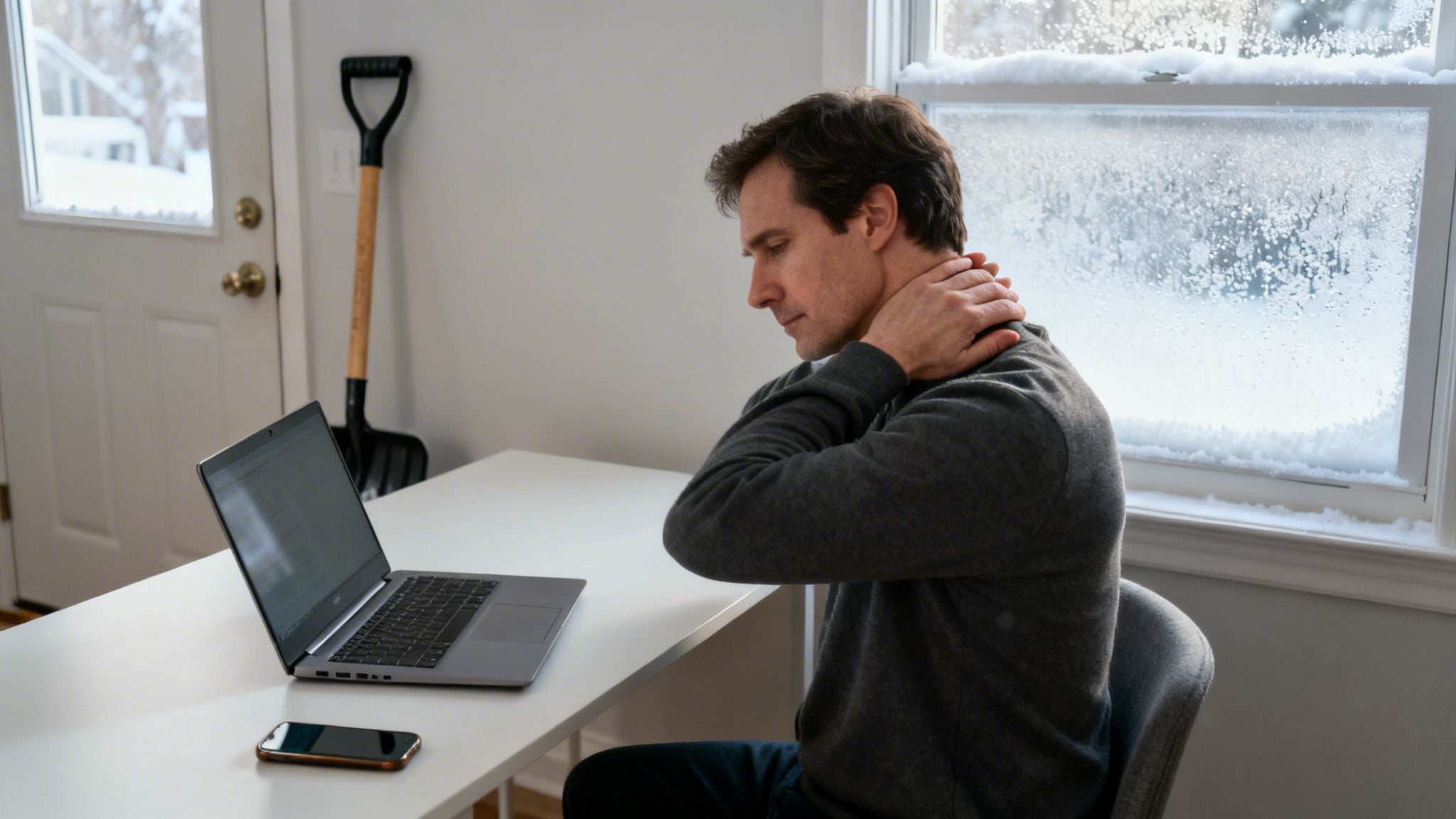
Let's be honest—living with neck pain is exhausting. That persistent ache can sabotage your focus at work, ruin a good night's sleep, and turn simple movements into a painful ordeal. We understand how frustrating it can be. At our Peak Therapy clinics, we see it every day: pain that ranges from a dull, nagging throb to a sharp, limiting sensation that stops you from enjoying your life.
Here in Massachusetts, the triggers are all too familiar. It might be "tech neck" from scrolling on your phone during a long commute on the T, stiffness from a less-than-ideal home office setup, or that dreaded ache after a weekend spent shoveling heavy New England snow. You are definitely not alone in this.
A Powerful First Step Toward Relief
The good news is that you don't just have to put up with it. Taking a proactive approach can make a huge difference, and incorporating gentle stretches into your routine is an accessible and powerful place to start. It’s a way for you to regain some control and begin the healing process on your own terms.
Think of these stretches less as a workout and more as a conversation with your muscles. You're not forcing anything; you're gently encouraging those tight, overworked areas to finally relax and lengthen. This simple act can:
- Increase flexibility in the small but mighty muscles that support your head.
- Reduce muscle tension that builds from daily stress, poor posture, or overuse.
- Improve blood flow to the area, which helps deliver oxygen and promote healing.
It’s easy to dismiss neck pain, but its impact is massive. It's a global issue, ranking as the 4th leading cause of disability worldwide in terms of years lived with the condition. Cases are projected to rise significantly by 2050, which really underscores the need for accessible solutions like stretching. You can explore the full research on neck pain's global impact to learn more.
A Quick Guide to Foundational Neck Stretches
To help you get started safely, we've put together a quick guide to a few foundational stretches. These are the core movements our licensed physical therapists often teach patients who are just beginning their journey toward a pain-free neck.
Think of this table as your starting point. And remember the golden rule our therapists always emphasize: listen to your body and never push into sharp pain.
| Stretch Name | Primary Benefit | Recommended Frequency |
|---|---|---|
| Upper Trapezius Stretch | Relieves tension along the side of the neck and top of the shoulder. | Hold for 20-30 seconds per side, 2-3 times daily. |
| Gentle Chin Tucks | Strengthens deep neck muscles to improve posture and reduce strain. | Hold for 5 seconds, repeat 10 times, 1-2 times daily. |
| Levator Scapulae Stretch | Targets the muscle that runs from your neck to your shoulder blade. | Hold for 20-30 seconds per side, 2-3 times daily. |
| Doorway Stretch | Opens up the chest and front of the shoulders to counteract slouching. | Hold for 30 seconds, repeat 2-3 times daily. |
These four stretches offer a balanced routine to address the most common areas of neck and shoulder tightness. In the next section, we’ll walk you through exactly how to perform each one correctly.
Figuring Out the “Why” Behind Your Neck Pain
To find real, lasting relief, our physical therapists first work to understand the "why" behind your neck pain. It rarely just shows up out of nowhere; it’s usually your body’s way of signaling that something is off balance. When our therapists perform a comprehensive evaluation to determine the root cause, the stretches they recommend become targeted solutions for your specific problem.
Your neck is an incredible structure, but it’s under constant demand. Think of major muscles like the trapezius, that large muscle running from your skull down to your shoulders, or the levator scapulae, which connects your neck to your shoulder blade. When they’re working properly, you don’t even notice them. But when they get overworked from daily activities, they become tight, strained, and painful.
Common Culprits Behind Muscle Strain
So, what’s pushing these muscles past their breaking point? For most of us here in Massachusetts, the causes are woven right into our daily routines.
- "Tech Neck" and Desk Posture: That all-too-familiar forward-head slump you fall into while looking at a computer or phone puts a huge amount of strain on the back of your neck. For every inch your head juts forward, it adds about 10 extra pounds of weight for your neck muscles to support.
- Sleeping Position: Waking up with a stiff, achy neck is a classic sign of poor sleep ergonomics. If your pillow is old and flat or you sleep on your stomach, your neck can be forced into an awkward, twisted position for hours at a time, leading to pain that disrupts your day.
- Stress and Tension: Ever notice your shoulders creeping up toward your ears during a stressful meeting or while stuck in traffic on the Braintree Split? That’s your trapezius and levator scapulae muscles tightening up. When this happens day after day, it leads to muscle fatigue, knots, and chronic pain.
These habits create a frustrating cycle. Your muscles tighten up, which can pull the small joints in your neck slightly out of their ideal position, leading to even more stiffness and discomfort. We understand how feeling stuck in this loop can be, but you absolutely can break it.
The source of neck pain isn't always obvious. While poor posture is a major factor, don't underestimate the impact of sleep. When you don't get enough quality rest, your body has less time to repair muscle tissue, and your perception of pain can actually increase. Learning how to improve sleep quality naturally can be a surprisingly effective part of your pain management strategy.
How Stretching Gets to the Root of the Problem
Now, think about the stretches we’re about to show you. A gentle Upper Trapezius Stretch directly targets that muscle you clench when you’re stressed. Simple Chin Tucks are designed specifically to counteract that forward-head posture from hours spent at your desk.
Each movement is designed to accomplish a few key things:
- Lengthen Tight Muscles: Stretching gently encourages those tense, shortened muscle fibers to relax and return to their normal length. This is what provides that immediate feeling of relief.
- Boost Local Blood Flow: A good stretch helps bring fresh blood to the area, delivering the oxygen and nutrients your muscle tissues need to repair themselves.
- Restore Proper Movement: By easing stiffness, you allow the joints in your neck to move more freely, helping you get your natural range of motion back.
The goal here isn't to force your body into a painful position. It's about methodically and gently releasing the tension that has built up from your everyday life. When you realize you're directly undoing the strain from a stressful day at work or a long commute, the movements become more powerful and, ultimately, much more effective.
Safe and Effective Neck Pain Relief Stretches
Alright, let's get to the good stuff—the gentle, targeted movements that can bring you some real relief. Think of this as having a Peak Therapy physical therapist right there with you, walking you through each stretch. Our focus is always on proper form and mindful movement to get the best results safely.
Before you jump in, it’s a great idea to warm up those neck muscles. A warm shower or applying a moist heat pack for about 5-10 minutes can make a huge difference. If you're ever unsure about whether to use heat or cold for your specific pain, our guide on when to use ice vs. heat can clear things up.
Upper Trapezius Stretch
This is our go-to for that nagging tension you feel along the side of your neck and the top of your shoulders. It's an area that seems to collect stress throughout the day.
Start by sitting tall in a chair with your feet flat on the floor and your shoulders down and back. From there, gently tilt your right ear toward your right shoulder, feeling for a comfortable pull on the left side of your neck.
If you want a deeper stretch, you can place your right hand on your head and add just a little bit of pressure. To keep your left shoulder from hiking up, try anchoring it by holding onto the side of your chair. Breathe deeply and hold for 20-30 seconds. Slowly come back to the middle and repeat on the other side. Aim for 2-3 repetitions for each side.
Gentle Chin Tucks
This one isn't your typical stretch—it's more of a posture-correcting exercise. It’s absolutely crucial for strengthening the deep muscles in your neck that fight against that "tech neck" slouch we all fall into.
Whether sitting or standing, keep your back straight and look forward. Without tilting your head, gently draw your chin and head straight back, like you’re trying to give yourself a double chin. You should feel a gentle stretch at the base of your skull and the muscles in the front of your neck working.
Hold that position for 5 seconds, then relax. It’s a tiny movement. A common mistake is to tuck the chin down toward the chest; instead, think of pulling it straight back. To check your form, you can put a finger on your chin—it should move backward, away from your finger. Try to do 10 repetitions.
The prevalence of neck pain is staggering. Studies show that 30-50% of people experience it in any given year, and for office workers, that number can climb to 54%. The good news? Consistent stretching makes a real impact. Research indicates that performing an upper trapezius stretch for 30 seconds, 5 times a day, can slash pain scores by 25-40% in just four weeks.
Levator Scapulae Stretch
Ever have that one specific, nagging knot at the top of your shoulder blade that you just can't seem to get to? This stretch targets the levator scapulae muscle, which is often the culprit.
Sit up tall in a chair. To stretch your right side, turn your head about 45 degrees to the left. Now, gently bring your chin down toward your left collarbone, almost as if you were sniffing your armpit. You should feel this stretch along the back-right side of your neck.
For a little extra intensity, you can use your left hand to apply gentle pressure to the back of your head. Hold for 20-30 seconds, release slowly, and then switch sides.
This diagram clearly shows how our daily habits—from poor posture to how we sleep—can lead directly to muscle strain and chronic pain.
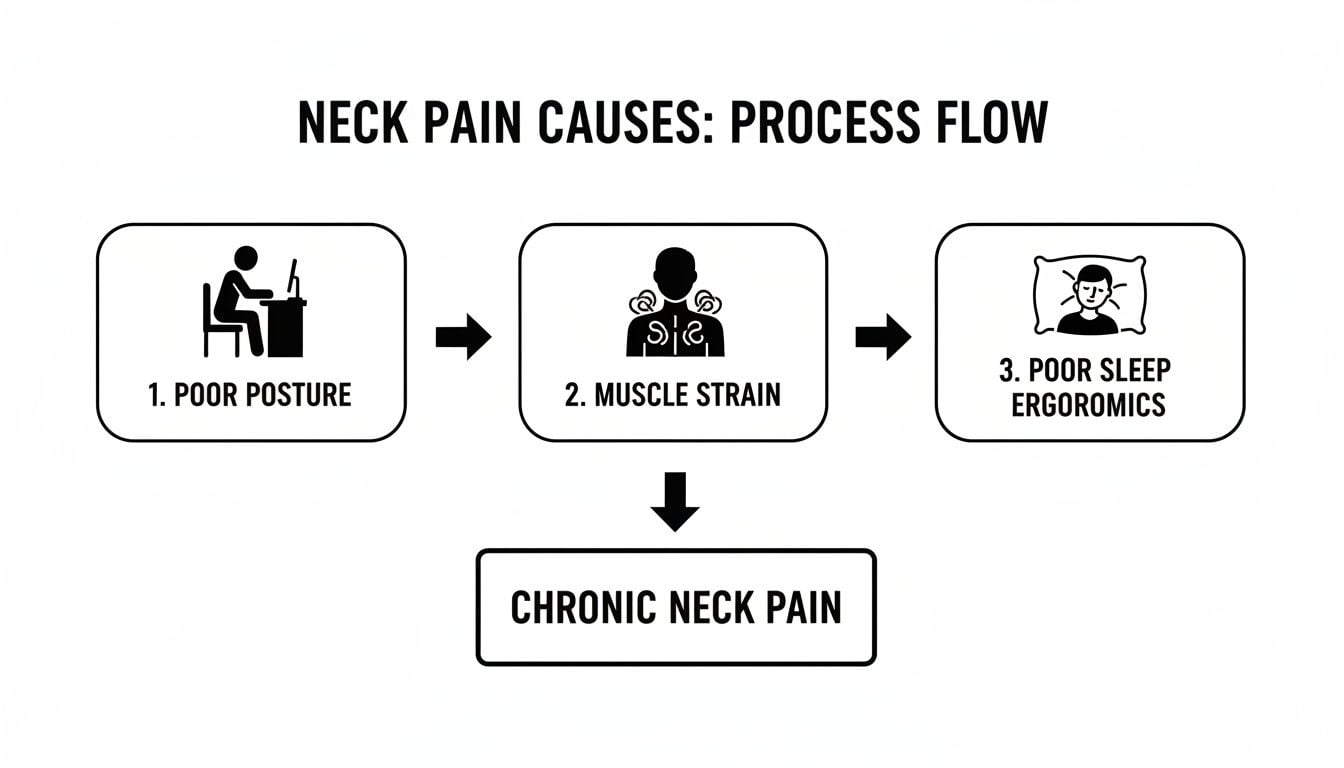
Seeing it laid out like this really reinforces why these corrective stretches are so vital for breaking the cycle.
Doorway Pectoral Stretch
I know what you're thinking—this is a chest stretch! But it's absolutely essential for neck pain relief. Tight chest muscles pull your shoulders forward and round your upper back, forcing your neck muscles to work overtime to hold your head up.
Find an open doorway and stand in the middle. Place your forearms on the doorframe with your elbows bent at about a 90-degree angle, just a bit below shoulder height.
Step forward with one foot until you feel a good stretch across your chest and the front of your shoulders. Make sure to keep your back straight and your head in line with your spine. Hold for 30 seconds while taking deep breaths. Aim for 2-3 repetitions.
Seated Neck Rotations
This last one is a simple mobility exercise. It’s perfect for gently increasing your neck’s range of motion and easing that stiff, stuck feeling.
Sit upright with relaxed shoulders. Slowly and smoothly turn your head to the right, looking over your shoulder as far as you can without pain. Pause for just 2-3 seconds at the end.
Return to the center, then repeat on the left side. The key here is to avoid any quick, jerky movements. This should be a slow, controlled rotation. Do 5-10 repetitions to each side. When pain stems from overuse, combining stretching with other recovery strategies, like exploring muscle recovery supplements, can help your body repair more effectively.
Weaving Neck Stretches into Your Massachusetts Life

Learning the proper form for these stretches is a great first step, but the real magic happens when they become part of your daily rhythm. It’s all too easy to do them once and then let life get in the way. But lasting relief isn't built in a single session—it's the result of consistency, turning these small movements into effortless habits.
The key is finding those little pockets of time that already exist in your day. You don’t need to block out an hour. A few minutes here and there can make a massive difference in how you feel, and we’ll show you how to fit them into your busy Massachusetts life.
Finding Those Stretching Moments
Believe it or not, your day is already full of opportunities for a quick, gentle stretch. It’s just a matter of spotting them. Whether you’re a commuter, a remote worker, or a busy parent, those moments are there for the taking.
Stuck in traffic on the Southeast Expressway or Route 3? While you're safely stopped, of course, that's a perfect time for a few Gentle Chin Tucks. It's a subtle and simple way to undo the "text neck" posture that creeps in while driving.
If you spend your days at a desk in a Boston high-rise or a home office in Norwell, try setting a quiet alarm on your phone. When it chimes, take 90 seconds for an Upper Trapezius Stretch on each side. It’s a tiny break that can melt away hours of accumulated tension.
The secret to making new habits stick is to "anchor" them to something you already do. Try this: promise yourself you'll do a quick neck rotation and a levator scapulae stretch every single time you get up for coffee or water. This technique makes the new behavior much easier to remember and sustain.
Real-World Scenarios for Massachusetts Residents
Let’s get even more specific. Your daily life is the perfect backdrop for these movements. The goal is to make these stretches feel as natural as grabbing your morning coffee.
- Waiting for Your Coffee: Whether you’re at Marylou's in Quincy or in your own kitchen, that downtime is gold. While your coffee brews, stand tall and do a set of 5-10 Seated Neck Rotations (you can do them standing, too!).
- After Yard Work: Just finished raking leaves in your Duxbury yard or shoveling snow after a Nor'easter? Before you go inside, find a doorway for a Doorway Pectoral Stretch. Holding it for 30 seconds will open up your chest after hours of hunching over.
- During a Bruins Commercial Break: Instead of scrolling on your phone, use those two-minute breaks to your advantage. Get on the floor for a few Chin Tucks or an Upper Trapezius Stretch.
Remember, consistency trumps intensity every time. A few minutes of gentle stretching done daily will deliver far more benefit than one long, aggressive session once a week.
Creating a Routine You Can Actually Stick With
To build a routine that lasts, start small and be honest with yourself. Don't try to cram all five stretches into day one. Pick one or two that feel the best and just focus on doing them consistently.
Here’s a simple starter plan to try:
- Morning Posture-Set: Before you even get out of bed, do 10 Gentle Chin Tucks. This helps activate your postural muscles for the day ahead.
- Midday Reset: Set a lunchtime alarm. When it goes off, do an Upper Trapezius Stretch, holding for 30 seconds on each side.
- Evening Wind-Down: Before you settle in for the night, use a doorway to do a Pectoral Stretch. This helps release the tension you've carried all day.
By weaving these simple movements into your Massachusetts lifestyle, you’re not just chasing pain away—you’re actively building a more resilient body. You're taking back control, one gentle stretch at a time.
When to See a Physical Therapist for Your Neck Pain
While gentle, consistent stretching is a fantastic tool for managing everyday neck soreness, it isn’t a cure-all. It's important to know when to listen to your body if it's signaling that a simple muscle strain isn't the whole story.
At-home stretches are an excellent first line of defense, but they do have their limits. If you've been living with neck pain that won't go away, or if it's getting worse despite your best efforts, that’s a clear sign that a professional evaluation can help determine the root cause.
Red Flags That Signal You Need an Expert
We call certain symptoms "red flags" because they tell you it’s time to move beyond self-care and get a proper evaluation from a licensed physical therapist. These are not signs to ignore or try to "stretch through."
If you experience any of the following, it’s time to book an appointment:
- Pain Radiating Down Your Arm: This is pain, numbness, tingling, or a "pins and needles" feeling that travels from your neck into your shoulder, arm, or hand. It often suggests nerve irritation that requires a skilled diagnosis.
- Persistent Headaches: While neck tension is a frequent cause of headaches, if they become more frequent, severe, or are accompanied by dizziness, you should have them evaluated.
- Loss of Strength: This might feel like noticeable weakness in your hand, arm, or shoulder. Maybe you have trouble gripping your coffee mug or lifting your arm above your head.
- Dizziness or Balance Issues: Feeling unsteady on your feet or having dizzy spells that seem connected to your neck pain or certain head movements is a reason for a professional look.
- Pain That Gets Worse, Not Better: Despite your best efforts with gentle stretching, the pain continues to escalate over several days.
Neck pain is a massive global health issue. Data shows that neck pain affected 203 million people worldwide in 2020, with that number projected to climb to 269 million by 2050. At our Peak Physical Therapy clinics across Massachusetts, we see these statistics firsthand. Guided professional care can make a significant difference when self-management falls short. Discover more about these global neck pain trends.
What to Expect at Your First PT Appointment
Walking into a physical therapy clinic for the first time might feel a little intimidating, but we want to make the process calm and reassuring. The first visit isn't about jumping into aggressive exercises; it’s about discovery. We want to understand what you're experiencing so we can find the root cause of your pain.
Our licensed physical therapists perform a comprehensive evaluation to determine the root cause of your neck pain and develop a personalized treatment plan. This starts with a detailed conversation about your symptoms, daily activities, and what makes your pain better or worse. We’ll then guide you through simple movements to assess your neck’s range of motion and strength before using a hands-on approach to gently feel the muscles and joints in your neck and upper back, identifying specific areas of tightness or restriction.
Your Personalized Path to Lasting Relief
Based on that comprehensive evaluation, we build a personalized treatment plan just for you. This is the key difference between what you can do at home and what a physical therapist provides—a plan tailored to address the root cause of your pain, not just mask the symptoms.
Your individualized care may include a combination of advanced techniques to get you feeling better.
- Manual Therapy: This involves hands-on techniques where our therapists use skilled, gentle movements to mobilize joints and soft tissues. It's incredibly effective for improving mobility and reducing pain. To understand this approach better, you can learn about manual physical therapy in our detailed guide.
- Targeted Therapeutic Exercises: We’ll guide you through specific stretches and strengthening exercises that are right for your condition, making sure you perform them with perfect form for maximum benefit.
- Postural Education: So much of today's neck pain comes from our habits. We’ll help you identify and correct postural patterns at your desk, in the car, and at home that contribute to your pain.
You shouldn’t have to stop doing what you love because of neck pain. If your pain isn’t getting better with home care, let our team help you find the targeted, lasting relief you deserve.
Answering Your Questions About Neck Pain and Stretching
It's natural to have a few questions when you start a new stretching routine, especially when you're already in pain. At our Peak Therapy clinics across Massachusetts, we hear these concerns every day. We’ve put together answers to the questions we get asked the most, giving you clear, practical advice rooted in our physical therapy-first approach to safety.
Our goal is to help you feel confident in your home routine while understanding when professional guidance is the best next step for your health.
How Often Should I Be Doing These Stretches?
When it comes to stretching for neck pain, consistency is far more important than intensity. For most gentle stretches, like the ones we’ve shown for the Upper Trapezius or Levator Scapulae, aiming for 1-2 times per day is an excellent place to start.
This isn’t a marathon session. Just a few minutes in the morning to get your day started and a few in the evening can make a world of difference. Think of it as a way to gently undo the tension that builds up from commuting, sitting at a desk, or just from daily stress. Little and often is the key.
Is It Normal to Feel Some Discomfort When I Start?
This is a fantastic and important question. You should absolutely feel a mild, gentle pull or tension in the muscle you’re targeting—that’s how you know you’re in the right spot and the stretch is working.
However, you should never feel sharp, shooting, or stabbing pain. Pain is your body’s alarm system, telling you you’ve pushed too far or that something else is going on.
If a stretch causes pain, ease off immediately or stop. A good stretch should feel like a release, not an injury waiting to happen. If the pain sticks around even with gentler movements, that’s a clear sign you should consult a physical therapist.
What Is the Real Difference Between At-Home Stretches and Physical Therapy?
Stretching at home is a fantastic tool for managing general stiffness and minor aches—it’s excellent maintenance for your body. Physical therapy, on the other hand, offers a much deeper, diagnostic approach to figure out what’s really going on.
Here are the main differences:
- A Professional Diagnosis: We don’t just hand out stretches. Our licensed physical therapists perform a thorough evaluation to find the root cause of your pain. Is it a simple muscle strain, a joint issue, or nerve irritation? Your diagnosis is what guides the entire treatment.
- Personalized Treatment Plans: Your plan is built specifically for you. It might include hands-on manual therapy to get your joints moving, targeted strengthening for weak muscles, and other specialized techniques you simply can’t do on your own.
- Expert Guidance and Advanced Tools: We make sure you’re doing every movement with perfect form to maximize the benefit and prevent injury. We can also use advanced modalities like dry needling, which can be highly effective for stubborn knots. You can read about how dry needling for neck pain works to see how it can complement a stretching routine.
Why Do My Shoulders and Upper Back Hurt When My Neck Is the Problem?
It's a common misconception, but your neck doesn't work in isolation. It’s part of a complex network of muscles, bones, and nerves called the kinetic chain. Muscles you might not think about, like the trapezius and rhomboids, connect your neck to your shoulder blades and upper back.
When your posture is off—think of that classic forward-head position from looking at a screen—it throws the whole system out of balance. The muscles in your upper back become overstretched and weak, while your chest muscles get tight. This imbalance forces your neck muscles to work overtime, leading to pain that can radiate across the entire region. It’s why any effective neck pain plan has to include stretches for the chest and strengthening exercises for the upper back.
If you've tried these neck pain relief stretches and are still struggling, or if you’re experiencing any of the red flags we’ve discussed, it’s time to get a professional evaluation. At Peak Physical Therapy and Sports Performance, our licensed therapists will uncover the root cause of your pain and create a personalized plan to help you feel better, move freely, and get back to your life.
Don't let neck pain hold you back any longer. Schedule your appointment today and take the first step toward lasting relief at one of our convenient Massachusetts clinics.