

Pain has a way of shrinking your world. A short walk near the waterfront turns into a search for the next bench. Lifting groceries out of the trunk feels sharper than it should. A shoulder issue keeps you from sleeping well, and a knee problem changes how you move without you even realizing it.
That's usually when people start searching for physical therapy plymouth ma. They're not looking for a lecture. They want a clear answer to a simple question: where can I go in Plymouth to feel better, move better, and trust the people guiding me?
At our Plymouth clinic, we meet people in exactly that moment. Some are dealing with back or neck pain that has dragged on too long. Some are trying to get back after surgery. Some are active adults who want to return to running, lifting, golf, pickleball, or weekends with the family without worrying about the next flare-up. And some just want to know whether they need massage, physical therapy, or both. If that's you, this Stillwaters Healing & Massage expert guide is a helpful way to think through the difference.
If you want to see where we're located and how care starts locally, our Plymouth physical therapy clinic page gives you the practical details. What matters most, though, is the experience once you walk in the door. That's what this guide is here to show you.
Table of Contents
- Your Guide to Physical Therapy in Plymouth
- Why Choose Peak for Your Plymouth PT Care
- Conditions We Treat and Specialized Services
- Your Recovery Journey from Day One to Done
- Meet the Experts Guiding Your Plymouth Recovery
- Your Questions Answered and How to Get Started
Your Guide to Physical Therapy in Plymouth
Plymouth residents don't need generic care. Life on the South Shore is active in ways that don't always look dramatic from the outside. It's carrying beach gear, climbing stairs at work, coaching youth sports, getting through a long commute, and trying to stay active even when your body starts pushing back.
That's why physical therapy works best when it starts with your actual day, not just your diagnosis. A sore back can come from one lifting injury, but more often we see a mix of stiffness, weak areas, overloaded tissues, and habits that developed gradually over time. The same is true for shoulder, hip, and knee pain. If a plan doesn't address how you move in real life, it usually doesn't last.
What local patients usually want
Patients coming in aren't asking for perfect form or a complicated plan. They want to know:
- Why it still hurts: Not in abstract terms, but what's driving the pain now
- What to do next: The right exercises, the right pace, and what to stop doing for now
- How long recovery may take: With honest guidance, not vague reassurance
- Whether they can get back to normal activity: Work, workouts, family life, and sleep
The best first visit leaves you less confused than when you arrived.
In Plymouth, care should also be practical. Scheduling matters. Location matters. So does whether your therapist can explain things clearly and adjust the plan when your body gives new information. Good physical therapy isn't just hands-on treatment or a sheet of exercises. It's a structured process that fits local life and helps you build momentum early.
Why Choose Peak for Your Plymouth PT Care
Choosing a physical therapy clinic in Plymouth is rarely just about finding the closest address. It usually happens when something in daily life stops working the way it should. The shoulder that complains every time you lift a bag into the trunk. The knee that flares up halfway through a walk on the waterfront. The back that stiffens after a commute or a shift on your feet. Plymouth has plenty of rehab options, which is good news for local residents. It also means the details of the clinic experience matter.

Our Plymouth clinic is located at 45 Resnik Road, near Route 3 and Route 44. That helps for a simple reason. If getting to PT feels manageable, patients are more likely to stay consistent through the full plan of care. On the South Shore, where schedules fill up fast with work, school pickup, youth sports, and long drives, convenience supports recovery.
What patients notice once they get here matters even more.
What a better PT experience feels like
At Peak, our team focuses on the parts of care that change the experience:
| What patients need | What we focus on |
|---|---|
| A clear starting point | An evaluation that connects symptoms, movement limits, daily habits, and goals |
| Treatment that fits the person | One-on-one guidance, exercise progressions, and adjustments based on response |
| Help that lasts beyond the painful phase | Strength, mobility, balance, and movement retraining tied to real activities |
| A plan people can follow | Scheduling, pacing, and clear instructions that make home practice realistic |
That structure sounds simple, but it is where a lot of PT either helps or stalls. If exercises are too generic, people often push too hard and flare up, or they get hesitant and stop loading the area enough to improve. Good care threads that middle path. We want patients doing the right amount, at the right time, for the right reason.
We also keep the process personal. A runner trying to get back to training, a parent carrying a toddler, and a retiree who wants steadier balance may all have knee pain. They do not need the same plan.
Why local patients often stay with us
Patients in Plymouth usually tell us they want three things. They want answers they can understand, a plan that feels realistic, and a therapist who pays attention when symptoms change. Our team builds care around that. We explain what we are seeing, what we are working on first, and what progress should look like over the next few visits.
There are real trade-offs in rehab. Sometimes we calm symptoms first, then build strength. Sometimes we load an area early because avoiding movement is part of the problem. Sometimes hands-on treatment helps reduce guarding, but exercise is still the part that carries recovery forward. We make those calls based on the person in front of us, not a preset routine.
Practical rule: Choose a PT clinic that can explain what is bothering the tissue, what you should do this week, and how the plan changes as you improve.
That is the difference many patients feel at Peak. The clinic is easy to reach, but the bigger reason people choose us is that care feels clear, specific, and grounded in real life here in Plymouth.
Conditions We Treat and Specialized Services
A lot of Plymouth patients call us with the same basic question. "Do you treat this?" Sometimes "this" means back pain after a long commute. Sometimes it means a shoulder that has not felt right since spring yard work, knee pain on the stairs, dizziness with quick turns, or leaking that started after pregnancy and never fully settled. Our team treats a wide range of problems, but the goal is always the same. Figure out what is limiting your life on the South Shore, then match care to that problem with a plan that makes sense.
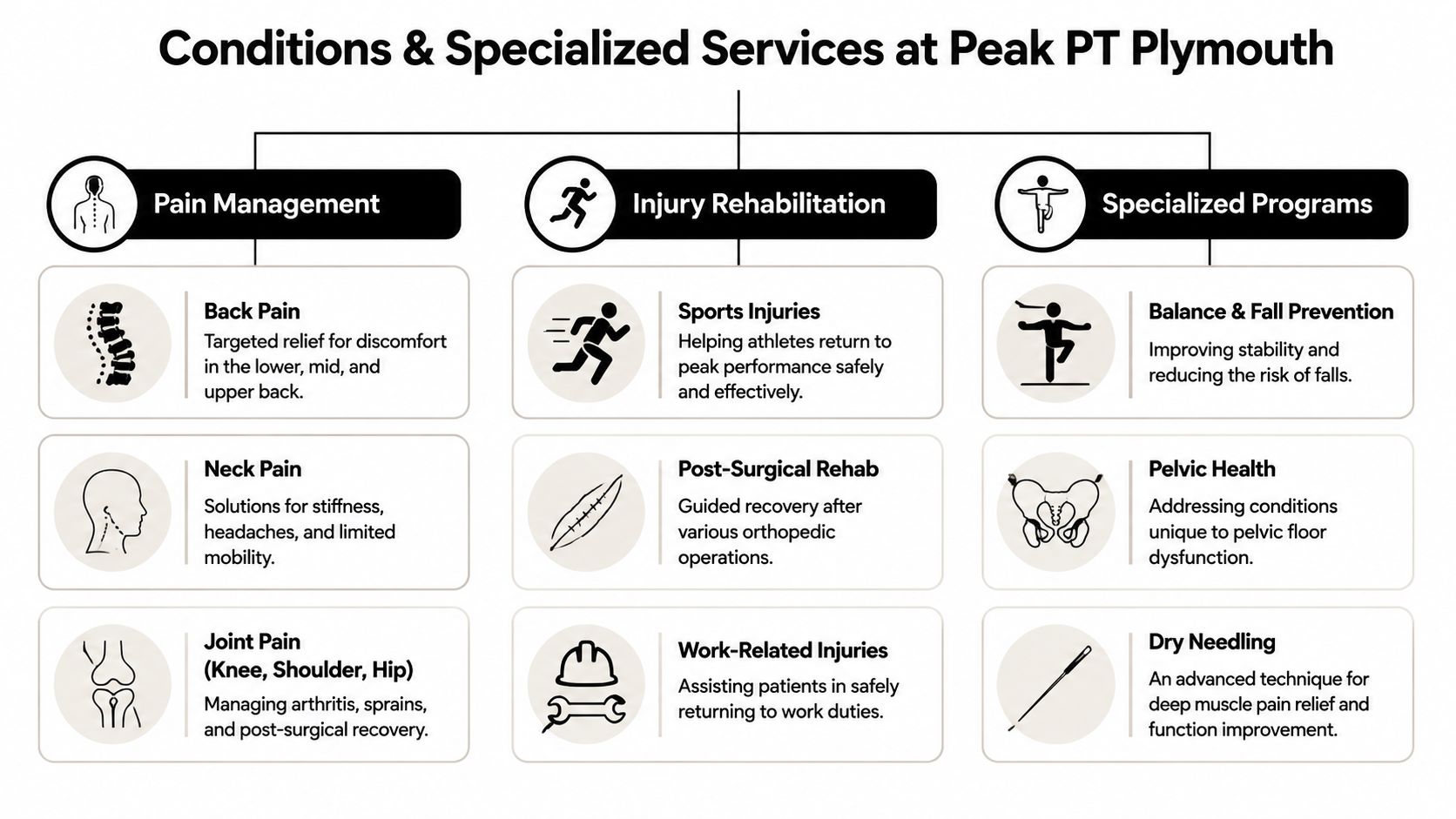
Common reasons Plymouth patients come in
We regularly help patients dealing with:
- Back pain and sciatica: Pain with sitting, lifting, bending, commuting, or getting through a full workday
- Neck pain and headaches: Stiffness, postural strain, jaw and upper neck tension, and recurring headaches
- Shoulder pain: Trouble reaching overhead, lifting, throwing, dressing, or sleeping on one side
- Hip, knee, foot, and ankle issues: Pain with walking, stairs, workouts, pickleball, running, or return to sport
- Post-surgical recovery: Structured rehab after orthopedic procedures, with clear progressions as healing allows
- Sports injuries: Care for student athletes, active adults, and weekend competitors who want to return with confidence
- Balance and gait concerns: Training for steadier walking, fall prevention, and better confidence on uneven ground
- Work-related injuries: Building strength and movement tolerance so job tasks feel manageable again
We also treat the overlap cases that are easy to miss. Someone may come in for knee pain, but the bigger issue is balance and leg control. A runner may report calf tightness, but the primary limiter is ankle stiffness and poor loading. A new parent may need abdominal, pelvic floor, and return-to-exercise guidance at the same time. Those mixed presentations are common, and they deserve one coordinated plan.
How we match treatment to the problem
The same diagnosis can need very different care depending on irritability, healing stage, and daily demands. An acute low back flare after shoveling snow is different from long-running back pain tied to deconditioning and fear of movement. A shoulder that is highly reactive may need symptom control and movement tolerance first. A shoulder that has calmed down usually needs progressive loading, not endless rest.
That is why treatment may include manual therapy, exercise, movement retraining, balance work, mobility work, and home strategies that fit your week. For patients with stubborn muscle tension or pain that is keeping them from moving normally, we may also use dry needling treatment at Peak. We use it selectively. It can help reduce guarding and improve tolerance for movement, but it works best as part of a larger rehab plan, not as a stand-alone fix.
Good PT means choosing the right tool for the person in front of us, then checking whether it is helping you move and function better.
Specialized care that often gets overlooked
Pelvic health deserves more attention than it usually gets. Many postpartum women deal with pelvic floor symptoms and never get referred for specialized physical therapy. We regularly talk with patients who assumed leakage, pelvic pressure, pain, abdominal weakness, or difficulty returning to exercise was just something they had to live with. It is not.
For Plymouth families, that care can make a real difference in daily life. Picking up a child, getting back to running, returning to strength training, or making it through the day more comfortably all place different demands on the body. Our team looks at those demands directly and builds treatment around them.
Specialized care also matters for people whose symptoms do not fit into a single box. A teen athlete with repeat ankle sprains may need strength, landing mechanics, and sport-specific progression. An older adult with dizziness may also need neck treatment and balance training. A person recovering from surgery may need pain reduction first, then mobility, then strength, then confidence using the joint in real life. That range is part of the Peak Physical Therapy experience in Plymouth. You are not picking from a generic service list. You are meeting a team that can sort out what is actually going on and treat it with the right level of specificity.
Your Recovery Journey from Day One to Done
You tweak your back lifting mulch on a Saturday, or your knee starts barking halfway through a walk on the waterfront. By Monday, you are wondering whether this will settle down on its own or keep getting in the way of work, sleep, exercise, and the routines that make life on the South Shore feel normal. That is usually the moment people call us.
The first visit
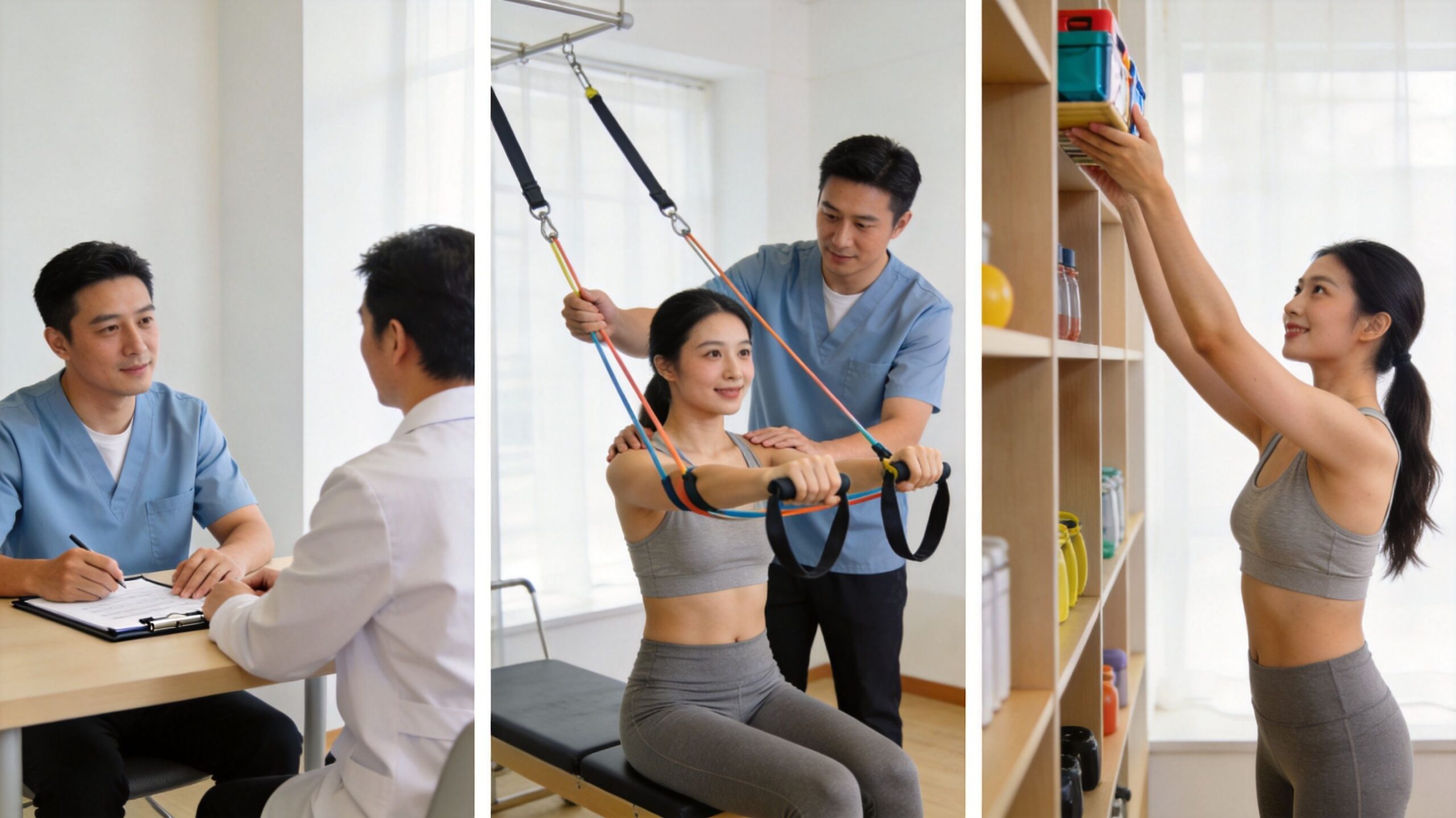
Your evaluation sets the direction for everything that follows. We start with your story, what hurts, what you have stopped doing, what you have tried already, and what you need to get back to. Then we look at how you move, how much force you can tolerate, what motions are limited, and which patterns are feeding the problem.
Pain location does not always tell the full story. Shoulder pain can be tied to stiff upper back movement or poor control when you reach overhead. Knee pain may involve the hip, ankle, balance, or the way you load the leg getting up from a chair or going down stairs.
We also talk about timeline and expectations early. Some problems calm down quickly. Others need a slower build because the tissue is irritated, you have been dealing with it for months, or your goal is demanding, like getting back to running, lifting, or a full work shift.
The treatment phase
Once we know what is driving the issue, we map out a plan that fits your body and your week. That may include hands-on treatment, strength work, mobility work, balance training, or movement retraining. The order matters.
If we load too much too soon, symptoms can spike. If we stay too gentle for too long, you may feel better in the clinic but still struggle when you return to normal life. Good rehab lives in the middle. Calm things down enough to move well, then build the capacity to handle real activity again.
The goal is steady, usable progress. For many patients, a well-built plan leads to meaningful symptom improvement over the first several visits, along with better confidence in everyday movement. We look for signs that matter in real life, getting out of bed with less stiffness, climbing stairs with more control, walking farther, or finishing a workday without paying for it later.
Recovery should feel clear and purposeful.
What helps rehab go well
A few habits make a big difference:
Attend visits consistently
Bodies change through repetition. A good plan works best when we can build from one session to the next instead of restarting every time.Follow the home program at the right dose
More exercise is not always better. The sweet spot is enough challenge to create change without stirring symptoms up all week.Tell us what changed
If an exercise feels wrong, if pain shifts, or if something suddenly gets easier, we want to know. That helps our team adjust the plan while progress is still building.Match the program to real life A parent carrying a toddler, a commuter sitting too long, and a contractor climbing ladders need different progressions. We shape rehab around what your days require of you.
The two patterns that slow people down are common. Waiting for pain to be completely gone before moving again often leads to stiffness and lost strength. Jumping back into everything after one good day tends to create setbacks. We coach people through both.
If you are ready to begin, you can schedule your physical therapy appointment in Plymouth. From the first visit to the day you are ready to wrap up care, our job is to make the process feel personal, practical, and clear.
Meet the Experts Guiding Your Plymouth Recovery
People don't build trust with a logo. They build trust with clinicians who listen well, explain things clearly, and know when to push and when to hold back. That's what patients usually remember most about a PT experience.

What good clinicians do differently
Strong therapists don't just identify impairments. They translate them. They can tell a busy parent why a certain exercise matters in plain language. They can adjust a plan for the contractor who needs to lift at work, the student athlete trying to get back in season, or the older adult who wants to feel steady on stairs again.
Our team aims to make care feel both skilled and approachable. That combination matters because rehab only works if patients understand what they're doing and believe the plan fits their real life.
The kind of environment patients respond to
A good clinic should feel focused, but not tense. Supportive, but not vague. Professional, but still human. In practice, that means:
- We pay attention to the person in front of us: Goals, fears, schedule, and daily demands all matter
- We communicate directly: If an exercise isn't right, we change it. If progress is slower than expected, we say so and adjust
- We keep momentum visible: Patients do better when they can feel and see what's improving
- We respect daily life: The plan has to fit around work, parenting, commuting, and South Shore routines
Patients rarely need a perfect program. They need a realistic one they can follow.
This is also where flexibility matters. Busy schedules can derail care when visits feel impossible to fit in. A clinic that understands that reality and works to keep treatment practical usually earns better follow-through from patients, and follow-through is what carries people from pain relief to lasting function.
Your Questions Answered and How to Get Started
A lot of people wait to book PT because they're unsure about the logistics, not because they doubt they need help. Getting those questions answered early makes the first step much easier.
Common questions we hear
Do I need a referral?
Sometimes yes, sometimes no. It depends on your insurance plan and situation. If you're unsure, call before your first visit and our team can help you sort out what's needed.
What should I bring to the first appointment?
Bring your insurance information, any relevant paperwork, and wear clothes you can move in comfortably. If you've had imaging, surgery, or a recent provider visit, that information can also be helpful.
Will treatment be hands-on, exercise-based, or both?
Usually both, depending on what your body needs. Some patients need more symptom calming first. Others are ready to build strength and movement capacity quickly.
How do I book?
The simplest option is to use Peak's online appointment scheduling page. If you'd rather talk it through first, calling the clinic is often the best move, especially if you're not sure which service fits your issue.
For readers who want deeper educational material before or after booking, Highbar Health has more detailed condition and recovery content at highbarhealth.com.
If pain is limiting your work, workouts, sleep, or day-to-day routine, don't wait for it to sort itself out. A clear evaluation and a focused plan can change the trajectory quickly.
If you're ready to get moving again, book with Peak Physical Therapy and Sports Performance. Our Plymouth team helps South Shore residents recover from pain, rebuild strength, and return to daily life with a plan that feels clear from the first visit.