

Some people find out they have lymphedema after a big life event. A breast cancer surgery. A lymph node procedure. A stubborn recovery after an injury. Others just notice that one arm, one leg, or one side of the body doesn’t look or feel the way it used to. Your watch fits differently. A sleeve feels tight. A walk along the waterfront in Plymouth or an afternoon out in Duxbury suddenly leaves you with heaviness, swelling, or aching that doesn’t quite go away.
That uncertainty can be unsettling. Many individuals want the same answer at first: what is lymphedema treatment, and can anything help?
Yes. Treatment can help, and for many people, it starts much closer to home than they expect. You don’t always need to head into Boston to get knowledgeable, hands-on care. On the South Shore, local lymphedema treatment can be practical, evidence-based, and built around real life, whether that means getting back to beach walks, errands without fatigue, or wearing normal clothes more comfortably again.
Table of Contents
- Living with Lymphedema on the South Shore
- What Exactly is Lymphedema and How Does it Affect Me
- Why Seeking Early Lymphedema Treatment Near You is Critical
- The Gold Standard Complete Decongestive Therapy CDT
- Advanced Tools for Lymphedema Management and Surgical Options
- Your Lymphedema Care Journey at Peak Physical Therapy
- FAQs About Lymphedema Treatment on the South Shore
Living with Lymphedema on the South Shore
A lot of South Shore patients describe the same first moment. They don’t always call it lymphedema right away. They say their arm feels “full,” or their leg feels “heavy,” or one shoe suddenly seems tighter by the end of the day. Maybe it’s a Quincy resident who wants to keep walking the shoreline but notices her arm swelling after cancer treatment. Maybe it’s a Hanover parent who can’t keep up with the kids at the field because one leg feels tired and tight.
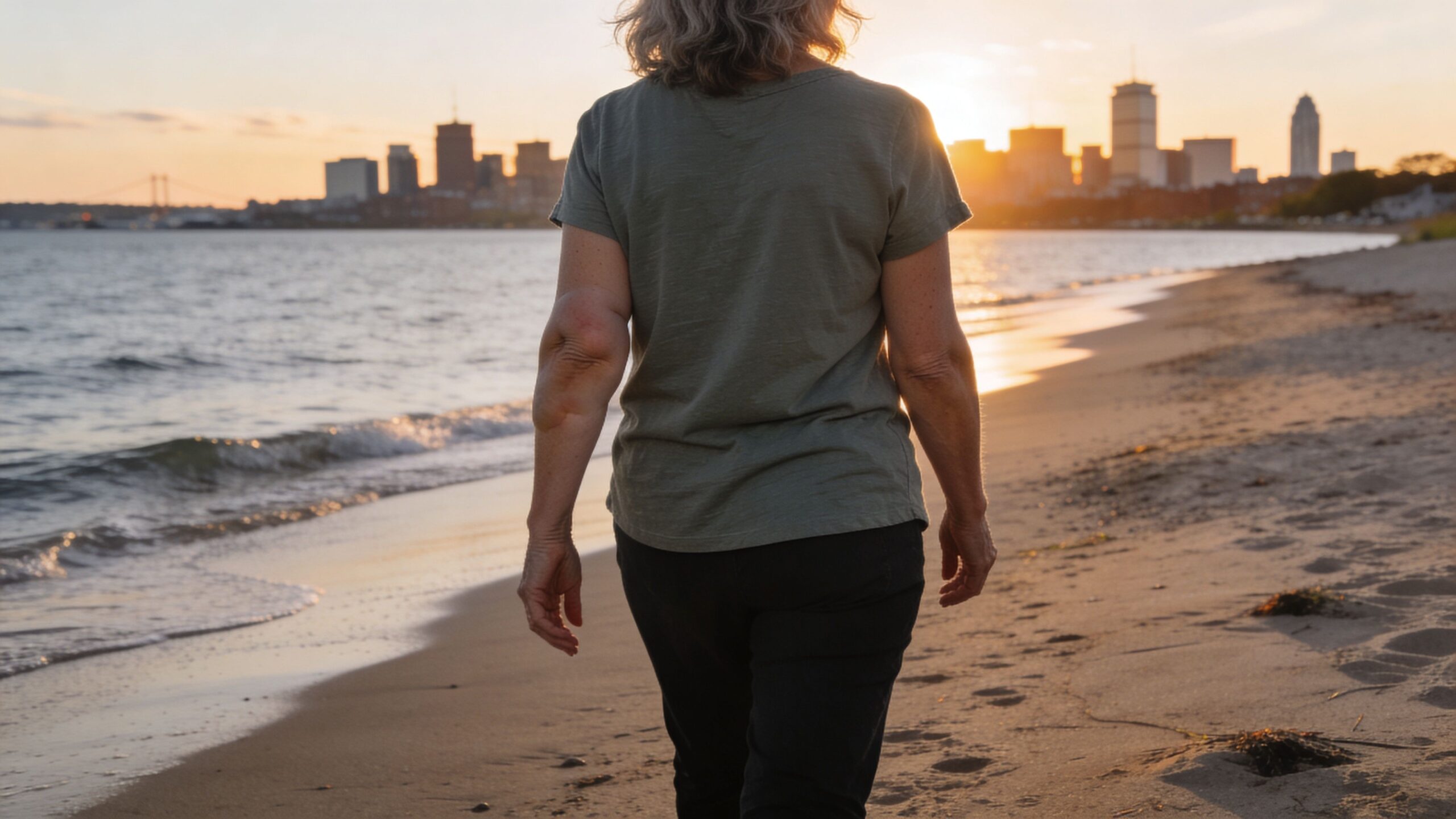
The frustrating part is that it often doesn’t feel dramatic at first. It can feel gradual, confusing, and easy to second-guess. People wonder if they’re just retaining fluid, overusing the limb, or recovering more slowly than expected. By the time they ask for help, many are already changing how they dress, exercise, work, or sleep.
Care that doesn’t require leaving your community
That’s where local treatment matters. If you live on the South Shore, getting lymphedema care shouldn’t have to become another exhausting commute layered onto an already stressful season. For many people, staying consistent with therapy is easier when care is available nearby, like at a Plymouth physical therapy clinic that’s part of everyday life instead of a once-in-a-while trip.
A practical truth: The best lymphedema plan is the one you can actually stick with.
Lymphedema treatment is not one single appointment or one single device. It’s a guided process that reduces swelling, improves comfort and movement, protects your skin, and gives you tools to manage the condition over time. Good treatment also respects the life you’re trying to get back to. On the South Shore, that might mean gardening, golf, youth sports sidelines, beach walks, or carrying groceries without that dragging, heavy sensation.
What people usually want to know first
When someone asks what is lymphedema treatment, they’re usually asking a few questions all at once:
- Can the swelling go down
- Will this keep getting worse
- Do I need compression
- Will I need surgery
- Can I manage this near home
Those are the right questions. The answer depends on how early it’s caught, how advanced it is, and what caused it. But in most cases, there is a clear treatment path, and it starts with understanding what lymphedema is.
What Exactly is Lymphedema and How Does it Affect Me
Lymphedema happens when the body cannot move lymph fluid out of an area effectively, so fluid, proteins, and waste start to collect in the tissues. The result is ongoing swelling that can affect comfort, movement, skin health, and day-to-day function.
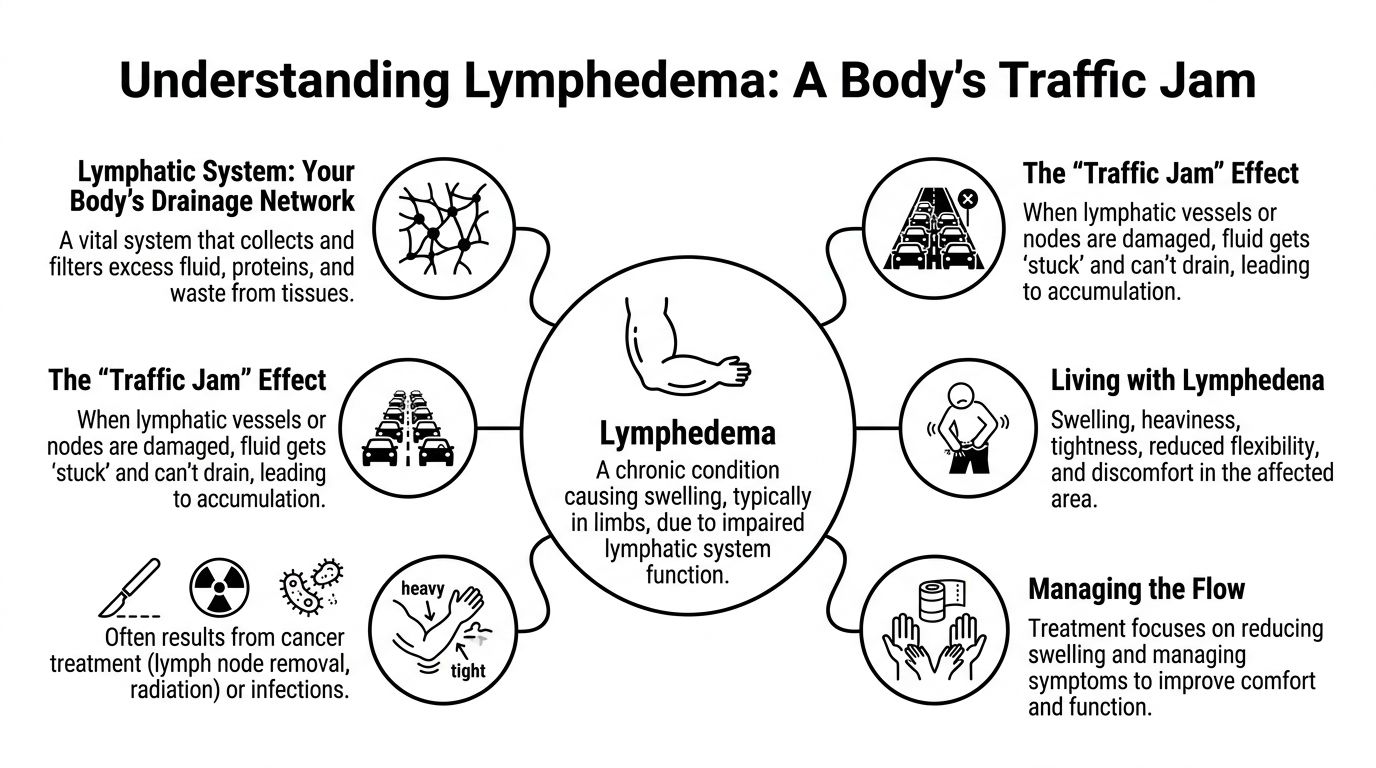
In clinic, I often explain it as a drainage problem. The lymphatic system is supposed to collect extra fluid and return it to circulation. If that system is missing parts, damaged, or overloaded, the fluid stays behind. Over time, the area can feel heavier, tighter, and harder to use normally.
The swelling often shows up in an arm or leg, but it can also affect the chest, trunk, breast, hand, foot, head, neck, or genital region. Some people notice visible swelling right away. Others first notice that a ring feels snug, a sleeve leaves a mark, a shoe fits differently by evening, or the skin feels stretched.
Primary and secondary lymphedema
There are two main types.
Primary lymphedema develops because the lymphatic system did not form typically. It can appear in childhood, adolescence, or adulthood.
Secondary lymphedema develops after something disrupts lymph flow. Common causes include surgery, radiation, cancer treatment, infection, trauma, or significant scarring. On the South Shore, that often means someone is recovering from breast cancer treatment, another procedure involving lymph node removal, or an injury that changed how fluid moves through the limb. For people looking for more context on lymphedema awareness during breast surgery recovery, that connection is often easier to understand once you know how much the lymphatic system depends on intact pathways.
How it can affect daily life
Lymphedema changes more than appearance. It changes how the limb performs.
You may notice:
- Heaviness during ordinary tasks like carrying groceries, walking the beach, or standing through a child’s game
- Tightness in rings, watches, bras, pants, socks, or shoes
- Reduced motion when reaching, gripping, kneeling, or climbing stairs
- A dull ache or unusual fatigue in the affected area
- Skin irritation or skin thickening that makes good skin care more important
Some symptoms are subtle in the beginning. A person may assume they are just deconditioned, retaining fluid, or healing slowly after treatment. That is one reason lymphedema sometimes gets missed early.
Why the diagnosis matters
A lymphedema diagnosis usually brings two reactions at once. Relief that there is an explanation, and worry about what comes next.
The practical answer is that lymphedema is manageable, but it does need attention. Early swelling is often softer and more responsive to treatment. If fluid sits in the tissues for too long, the area can become firmer and more difficult to reduce. Skin can also become more vulnerable, which raises the importance of preventing irritation and infection.
That is why a proper evaluation matters. A Certified Lymphedema Therapist looks at swelling patterns, tissue texture, skin condition, symptom history, and how the problem is affecting real life. The goal is not just to label the condition. The goal is to figure out what is driving it and what will help you function better close to home, whether that means getting your arm more comfortable for work, your leg more reliable for walking around Plymouth or Duxbury, or your swelling under better control so daily life feels manageable again.
Why Seeking Early Lymphedema Treatment Near You is Critical
Lymphedema is one of those conditions where waiting often makes things harder. Early swelling can be subtle. It may come and go. A person might wake up feeling better and decide to “just watch it.” The problem is that untreated swelling doesn’t stay unchanged. Over time, prolonged edema can contribute to tissue damage, including fibrosis or fatty tissue changes, and that can make later treatment more difficult.
The stages in plain language
Clinicians often talk about lymphedema in stages. The labels matter less than the pattern.
- Stage 0 means the system has been affected, but swelling isn’t obvious yet.
- Stage 1 is early visible swelling that may still improve with elevation and tends to feel softer.
- Stage 2 is more persistent swelling that doesn’t bounce back as easily and may start to feel firmer.
- Stage 3 is advanced lymphedema with more pronounced tissue and skin changes.
What matters for patients is this: the earlier the condition is identified, the more room there is to limit progression and protect tissue quality.
Early action changes the trajectory
Routine monitoring plus early at-home intervention can make a major difference. A lymphedema prevention fact sheet reports that routine monitoring combined with early at-home interventions achieved a 95% reduction in progression to a chronic state at one year, and that finding was replicated in studies involving over 17,500 patients across long-term research settings, as described in this lymphedema prevention fact sheet.
That matters because many people assume treatment starts only after obvious, established swelling. In reality, the most effective time to intervene is often earlier than patients expect.
The most common regret I hear in lymphedema care is, “I wish I’d known to address this sooner.”
After breast surgery, awareness matters
If your swelling concerns started after breast cancer treatment or lymph node procedures, good education can help you spot changes earlier and ask for the right kind of support. This resource on lymphedema awareness during breast surgery recovery is useful for understanding why patients need to stay alert to symptoms even when the surgical recovery itself seems to be going well.
Why local access helps people act sooner
“Near you” matters for more than convenience. It affects follow-through. When care is available in communities like Plymouth, Milton, or Weymouth, people are more likely to come in before swelling becomes a larger problem. That gives the therapist more options and gives the patient a better chance to build sustainable habits early.
A quick evaluation is often worthwhile if you notice:
- New swelling after surgery or radiation
- Heaviness or tightness that keeps returning
- A limb that feels larger, fuller, or harder than usual
- Changes in skin comfort or flexibility
- Repeated trouble with clothing, sleeves, shoes, or jewelry fit
The main point is simple. Early treatment is not overreacting. It’s protection.
The Gold Standard Complete Decongestive Therapy CDT
When people ask what is lymphedema treatment, the most important answer is Complete Decongestive Therapy, usually called CDT. This is the standard conservative treatment used across lymphedema care. It’s not one technique. It’s a coordinated plan built from four parts that work together.
A key reason CDT is widely used is that it addresses both the swelling you have now and the self-management you’ll need later. According to a clinical overview of advanced lymphedema therapy techniques, CDT is the gold-standard treatment, and its compression bandaging phase can achieve limb volume reductions of 50 to 70% in the upper extremity within 2 to 4 weeks of daily therapy in appropriate cases, as described in this overview of advanced lymphedema treatment methods.
The four parts at a glance
| Component | What It Is | Primary Goal |
|---|---|---|
| Manual lymphatic drainage | Gentle hands-on treatment that helps redirect lymph flow | Move fluid away from congested areas |
| Compression therapy | Bandaging and later garments that support fluid control | Reduce and maintain swelling reduction |
| Decongestive exercises | Targeted movement performed with compression support | Improve muscle pump action and circulation |
| Skin and nail care | Daily protection and monitoring of skin integrity | Lower irritation and infection risk |
Manual lymphatic drainage
Manual lymphatic drainage, or MLD, is a gentle hands-on technique performed by a trained therapist. It is not deep tissue massage. In fact, pressing too hard is the wrong approach. The therapist uses light, specific movements to encourage lymph fluid to move toward areas with better drainage capacity.
Patients are often surprised by how subtle it feels. That’s normal. Lymphatic work is about direction and precision, not force.
A good MLD session is also educational. Patients start to understand where fluid is collecting, why certain pathways are used, and what home techniques may help between visits.
Compression therapy
Compression is the part many people resist at first, but it’s often the piece that turns short-term improvement into lasting control. If MLD helps move fluid, compression helps keep it from rushing right back.
Compression may include several phases:
- Short-stretch bandaging during active reduction
- A fitted sleeve, stocking, glove, bra, or other garment for maintenance
- Wear schedules adjusted to symptoms, activity, and tolerance
The details matter. Compression that fits poorly can frustrate patients and discourage use. Compression that fits well often helps people feel more supported, more stable, and less heavy throughout the day.
For patients who are also trying to understand swelling more broadly, this guide on how to reduce swelling can help frame where lymphedema care fits within the bigger picture.
What works: Compression that is fitted, taught, and adjusted to real life.
What doesn’t: Buying random compression online and hoping it solves the problem.
Decongestive exercises
Exercise in lymphedema care is not about pushing through fatigue or “sweating it out.” The point is to use muscle contraction to assist lymph flow, especially while compression is in place.
These exercises are usually simple and intentional. They may involve breathing, posture, shoulder movement, ankle pumps, walking, or controlled limb motions based on the body area involved. The right dosage matters. Too little movement can leave the system sluggish. Too much too fast can flare symptoms.
This is one reason individualized guidance matters. A person returning to tennis in Scituate doesn’t need the exact same plan as someone trying to tolerate a workday at a desk in Braintree.
Skin and nail care
Skin care sounds basic, but in lymphedema treatment it’s foundational. Swollen tissue is more vulnerable. Dry, cracked, irritated, or injured skin creates extra problems and can complicate progress.
Daily skin and nail care usually includes:
- Moisturizing consistently to protect skin integrity
- Watching for cuts, irritation, or signs of infection
- Using care with shaving, nail care, and pet scratches
- Protecting the limb during gardening, cleaning, or outdoor work
For many patients, this is the part that changes how they think about lymphedema. It stops being only about swelling and starts becoming a full management strategy.
Why CDT works better as a system
Some people try to pull out just one piece of CDT. They want only massage, or only a sleeve, or only exercises. In practice, that usually produces uneven results. The four parts are meant to reinforce each other.
- MLD helps redirect fluid.
- Compression supports the new fluid pattern.
- Exercise improves the body’s pumping action.
- Skin care protects vulnerable tissue while treatment is underway.
When patients understand that system, treatment tends to feel less random and more manageable. It also becomes easier to see why consistency matters.
Advanced Tools for Lymphedema Management and Surgical Options
CDT is the core of treatment, but it’s not the only tool in the lymphedema toolbox. Some patients need added support at home. Others, especially those with persistent symptoms or more advanced disease, may discuss surgical options as part of a broader plan.
When home tools make sense
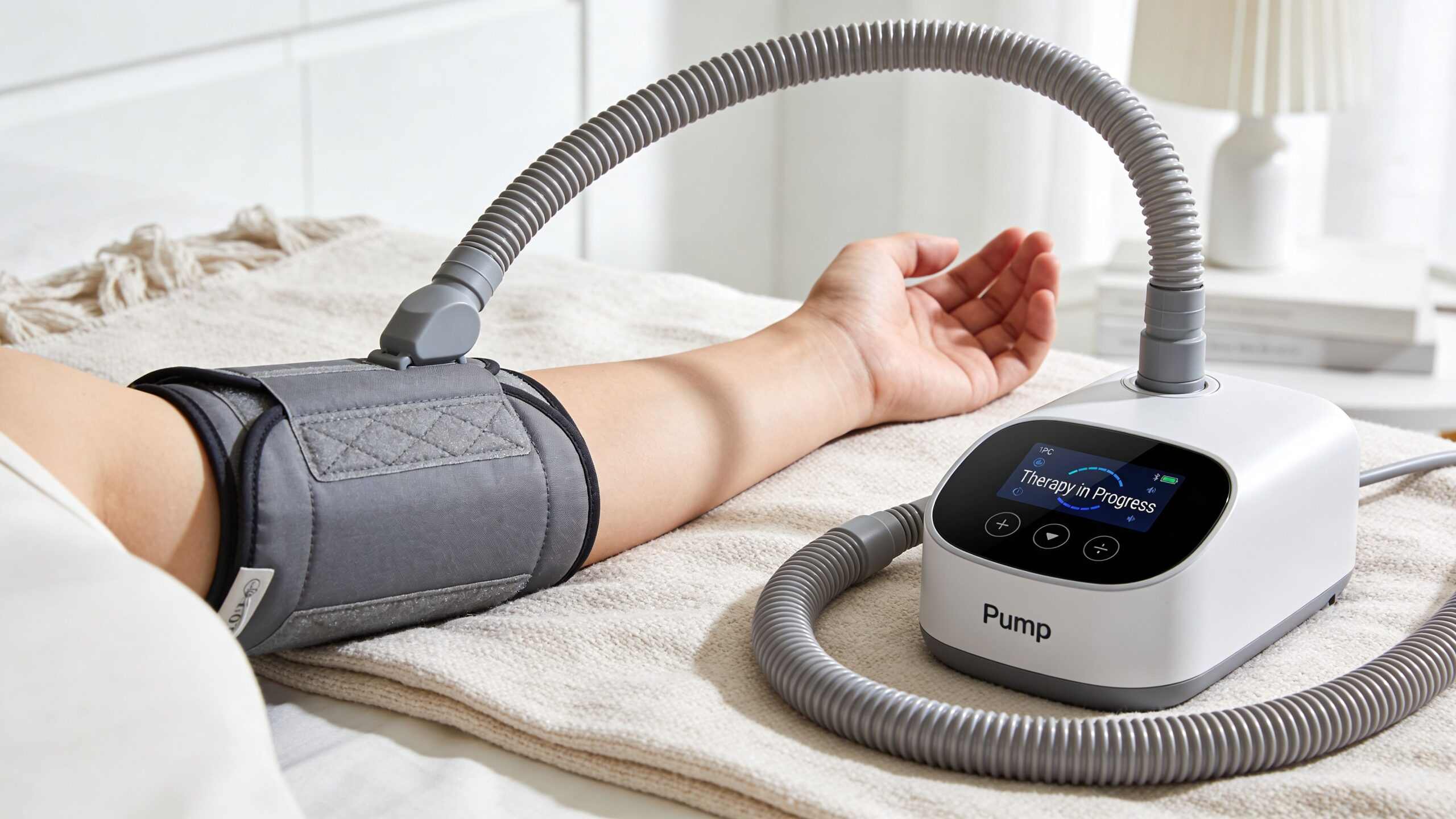
One common add-on is an intermittent pneumatic compression pump. This is a home device with a sleeve or garment that inflates and deflates in cycles. It can support fluid movement and may help some patients manage symptoms between clinic visits.
The key is using it appropriately. A pump is usually a supplement, not a replacement for skilled evaluation, compression planning, exercise guidance, and skin monitoring. It can be useful, but it’s not a stand-alone answer for every person with swelling.
Some patients are also candidates for structured therapy through providers that offer lymphedema care, including manual lymph drainage, compression, exercise, and CDT. In that context, Peak Physical Therapy and Sports Performance is one local option on the South Shore for conservative management.
When surgery enters the conversation
For patients whose swelling remains significant despite conservative treatment, or for those who meet specific surgical criteria, microsurgical procedures may be considered. Two options that come up most often are lymphaticovenous anastomosis (LVA) and vascularized lymph node transfer (VLNT).
These procedures are not for everyone. They depend on disease stage, tissue quality, imaging, overall health, and whether useful lymphatic channels remain. Surgery also does not erase the need for ongoing management. Most patients still need some combination of compression, exercise, monitoring, and therapy before and after the procedure.
A 2023 meta-analysis of surgical lymphedema treatment reported an average limb volume reduction of 38.0% for upper extremity lymphedema and 49.5% for lower extremity cases, along with significant quality-of-life improvement, as detailed in this meta-analysis of surgical treatments for lymphedema.
Realistic trade-offs
Surgical conversations go better when expectations are clear.
- What surgery may help with includes symptom burden, limb volume, and quality of life.
- What surgery usually doesn’t mean is “done forever with all maintenance.”
- What still matters after surgery is rehabilitation, compression strategy, and monitoring.
Surgery can be an important option, but the patients who do best usually treat it as part of a plan, not a shortcut around the plan.
For South Shore patients, local therapy still plays a major role even when surgery happens elsewhere. Pre-operative preparation, post-operative swelling management, scar mobility work, garment planning, and gradual return to activity are all practical pieces that can often be handled closer to home.
Your Lymphedema Care Journey at Peak Physical Therapy
Starting care is usually easier once you know what the process looks like. Most patients don’t need a dramatic first step. They need a clear first appointment, a therapist who listens, and a plan that makes sense.
What the first visit usually looks like
At the initial evaluation, a Certified Lymphedema Therapist listens to the timeline. When did the swelling start. What treatment or surgery came before it. What makes it worse. What helps. How is it affecting daily life.
The physical exam usually looks at the involved area, skin condition, movement, comfort, functional limits, and how the swelling behaves. The therapist also talks through what kind of lymphedema pattern you may be dealing with and whether treatment should focus first on reduction, maintenance, education, or coordination with another provider.
Good care also depends on good communication. Patients do better when they understand the plan, know what to watch for, and feel comfortable asking questions. That’s one reason broader principles around effective communication in healthcare matter so much in rehab settings too.
If you’d like to know who may be involved in this kind of care locally, you can learn more about Jamie Sheaffer OTR/L CLT PCES.
Goals that fit South Shore life
A strong lymphedema plan is personal. One patient wants to get through a workday without arm heaviness. Another wants to walk Wompatuck trails more comfortably. Another wants to return to golf in Pembroke, paddleboarding season, or lifting a grandchild without that pulling, swollen feeling.
That’s why treatment goals should sound like real life, not just measurements.
Common goals include:
- Reducing day-to-day heaviness and tightness
- Improving comfort in clothing and compression
- Restoring confidence with exercise and errands
- Protecting the skin and lowering complication risk
- Building a home plan that feels realistic
Some patients need a short, intensive phase followed by self-management. Others need a longer runway because the swelling has been there for a while or because cancer recovery is still unfolding. Both are normal.
What helps people stay with treatment
Consistency usually comes down to whether the plan fits your week. If the routine is too complicated, too uncomfortable, or too disconnected from your goals, it won’t last. A good therapist adjusts the plan so it’s medically sound and realistically doable.
That may include refining garment use, simplifying exercises, teaching self-massage strategies, pacing a return to activity, or coordinating around work and family demands. The point isn’t perfection. The point is momentum.
FAQs About Lymphedema Treatment on the South Shore
Do I need a referral for lymphedema treatment in Massachusetts
Sometimes yes, sometimes no.
Massachusetts allows direct access to physical therapy in many cases, but your insurance plan may still require a referral or prior authorization. The fastest way to avoid delays is to call the clinic before your first visit and confirm what your plan needs. If paperwork is required, the clinic team can usually tell you exactly what to ask your doctor for.
Will insurance cover lymphedema therapy
Often, at least in part. The details vary.
Therapy visits, compression garments, bandaging supplies, and specialty items are not always handled the same way by insurance. I tell patients to expect a few practical questions at the start. How many visits are covered. Whether authorization is needed. Whether garments are a separate benefit. Getting those answers early helps you plan treatment without surprises.
How long does treatment usually last
Treatment length depends on what the swelling looks like today, not just on the diagnosis name.
A person with mild, early swelling may need an evaluation, a short stretch of visits, and a clear home program. Someone with long-standing swelling, skin changes, or trouble tolerating compression usually needs a longer course. Cancer recovery, mobility limits, and other medical conditions can slow the process too.
A few factors matter most:
- How long the swelling has been present
- Whether the tissue feels soft or has become more firm
- How well compression is tolerated
- How consistently the home plan is carried out
- Whether other health issues are affecting recovery
Do I have to wear compression forever
Many people need some form of compression for long-term control, but the plan often changes over time.
That may mean a daytime sleeve, a stocking for higher-activity days, a garment for travel, or a different option during a flare. The right plan should support your life on the South Shore, whether that means getting through a workday in Quincy, walking in Duxbury, or spending more time on your feet around Plymouth without feeling heavier as the day goes on.
The goal is steady control with the least burdensome routine that keeps swelling from building back up.
What if I had surgery or cancer treatment months ago
You can still benefit from an evaluation.
Lymphedema does not always show up right away. Some people notice changes soon after treatment. Others first feel heaviness, fullness, tightness, or jewelry and clothing fitting differently months later. A later start does not rule out progress. It means the treatment plan needs to match your current symptoms, tissue changes, and daily demands.
If you have been putting it off because work, family, or recovery took priority, that is common. It is still worth getting checked.
If you’re dealing with swelling, heaviness, or tightness and want answers close to home, Peak Physical Therapy and Sports Performance offers lymphedema care across Massachusetts’ South Shore. You can book an appointment online, call to talk through your symptoms and insurance questions, or choose the location that’s most convenient for you in Braintree, Quincy, Weymouth, Cohasset, Duxbury, East Bridgewater, Hanover, Kingston, Milton, Norwell, Pembroke, Plymouth, or Scituate. The sooner you get clear guidance, the sooner you can start moving more comfortably again.