

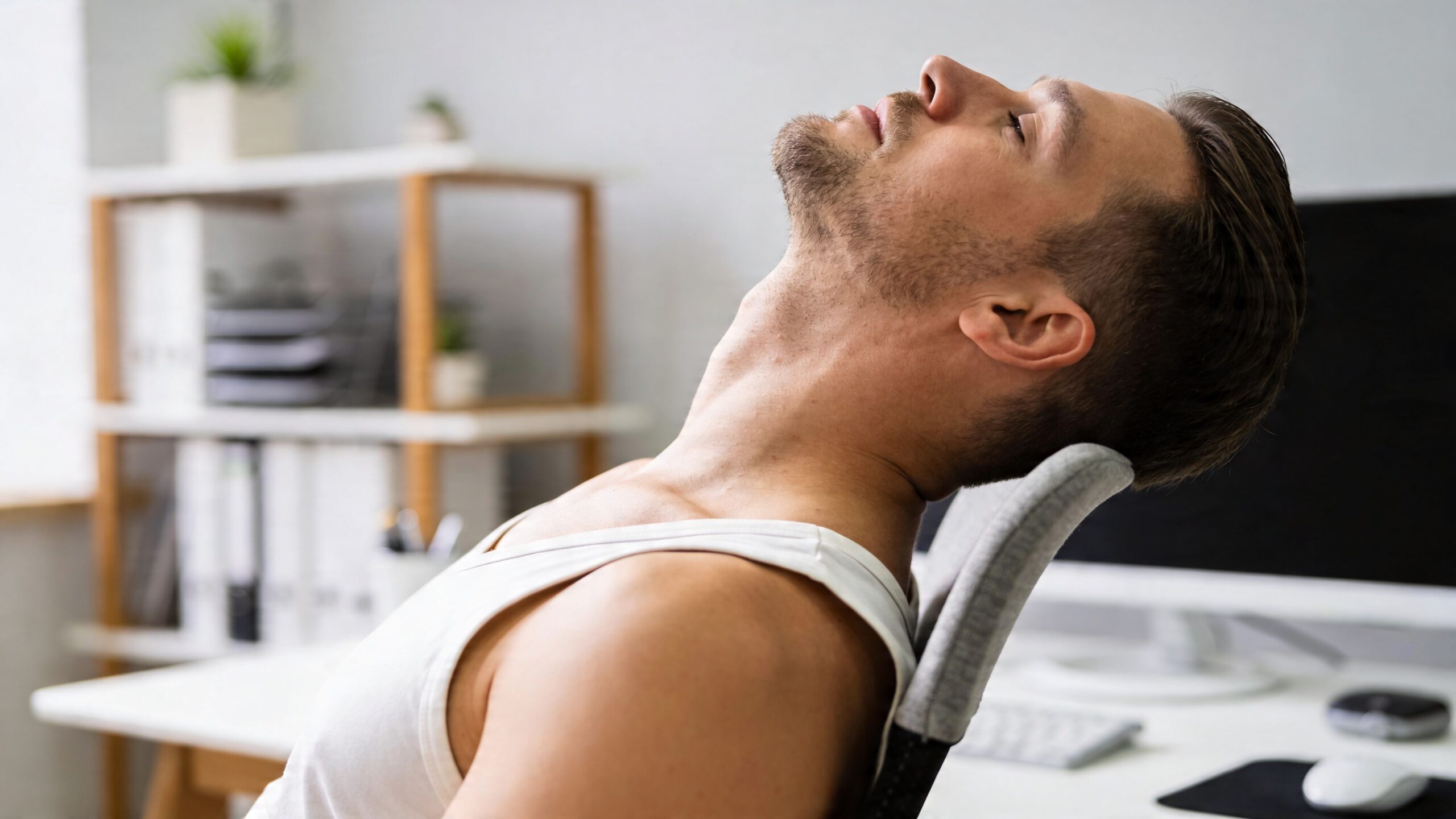
You finish a workday, stand up from the computer, and feel it right away. Your neck is stiff, your upper back feels guarded, and turning to check the blind spot in the car is suddenly uncomfortable. I see this pattern often in Massachusetts, especially in commuters, desk workers, parents, active adults, and people who ask a lot of their bodies on weekends without much preparation during the week.
It’s common to try to ignore it for a few days. Many people stretch the spot that feels tight, hope it settles down, and keep pushing through work, driving, lifting, or exercise. That can help with simple stiffness. It can also miss the underlying problem, because the area that hurts is not always the area that needs attention.
That is the clinical difference. Stretches for sore back and neck should match the movement limitation, symptom pattern, and stage of irritation. A neck that feels tight after laptop use needs a different approach than pain that shoots into the shoulder, stiffness that is worst first thing in the morning, or back pain that flares every time you bend backward.
At Peak Physical Therapy, we use stretching as part of a larger treatment plan. The right movement can reduce guarding, improve mobility, and make daily activity feel easier. The wrong stretch, or the right stretch done too forcefully, can aggravate sensitive joints, irritated nerves, or inflamed tissues.
The goal here is not to hand you a random list. It is to help you move more safely by explaining why each stretch is used, how to do it well, how much to do, and when to stop. If your symptoms are mostly neck-related from desk posture or screen time, our guide to exercises for neck pain relief may also be useful.
Use the stretches below as a starting point, not a diagnosis. If pain keeps returning, spreads down an arm or leg, causes numbness, weakness, headaches, dizziness, or sleep disruption, a professional evaluation matters. Lasting relief usually comes from identifying the true driver of the pain, then matching treatment to it.
1. Neck Flexion Stretch (Chin-to-Chest)
This is one of the simplest ways to unload the muscles along the back of the neck. It’s especially useful after computer work, reading in bed, or long stretches of looking slightly upward at a second monitor.
If you tend to get a band of tension from the base of the skull into the upper shoulders, this stretch usually finds it quickly.
How to do it well
Sit tall or stand with your shoulders relaxed. Slowly bring your chin toward your chest until you feel a mild stretch in the back of the neck. Hold that position for 20 to 30 seconds, then return to neutral. Repeat 2 to 3 times.
For a slightly deeper version, rest your hands lightly behind your head. Let the weight of your arms add a little pressure, but don’t pull.
A few people benefit more from frequent light stretching than one long session. Office workers often do better with brief resets during the day than with a single evening routine. If you’re looking for more guidance on that pattern, Peak has a helpful page on exercises for neck pain relief.
What it helps and when to stop
This stretch often works well for:
- Desk-related stiffness: Hours of forward head posture can leave the back of the neck overworked.
- Tension headache patterns: Many people feel relief when the upper neck muscles finally let go.
- Early mobility work: In mild flare-ups, gentle neck motion can feel better than complete rest.
Practical rule: You should feel tension, not threat. If the stretch creates sharp pain, dizziness, tingling, or pain shooting into the arm, stop.
This isn’t the right choice for everyone. If your pain worsens when your neck bends forward, or if you’ve had a recent injury, don’t force this movement. In clinic, I’m especially cautious with people recovering from whiplash, because the timing and dosage matter more than the stretch itself.
2. Levator Scapulae Stretch
A lot of “neck pain” is really that stubborn corner between the neck and shoulder blade. The levator scapulae lives there, and when it’s irritated, people usually point to the top inner border of the shoulder blade and say, “It’s right here.”
I see this often in dental professionals, stylists, swimmers, and anyone who works with their arms raised or their head slightly turned for long periods.
Set it up correctly
Turn your head about 45 degrees away from the side you want to stretch. Then gently nod your nose downward toward the opposite armpit. You should feel the stretch along the back and side of the neck rather than straight down the middle.
Hold for 20 to 30 seconds. Repeat 2 to 3 times per side. You can use your hand for very gentle overpressure, but don’t crank on it.
Form matters more than depth. If you turn too far or pull too hard, the stretch often shifts into the wrong tissue and just becomes irritating.
Why this stretch often works
The levator scapulae helps lift and downwardly rotate the shoulder blade. When your posture gets stuck in a shrugged, rounded, or guarded position, this muscle tends to stay “on” longer than it should.
That’s why the stretch can help in scenarios like these:
- Dental and hygiene work: Head-down postures create prolonged neck loading.
- Swim and overhead sports: Repeated shoulder use can feed tension into the neck.
- Stress posture: People often carry tension by subtly elevating the shoulders all day.
If this area stays sore, it’s worth considering whether the shoulder blade itself is part of the problem. Peak’s article on shoulder blade pain causes explains that connection well.
Most people don’t need a harder stretch here. They need a better shoulder blade position and less gripping through the upper traps.
If this stretch gives only temporary relief, that usually tells me the muscle is reacting to another issue, often posture, thoracic stiffness, or shoulder mechanics.
3. Thoracic Rotation Stretch (Quadruped or Seated)
When the upper back stops rotating well, the neck and lower back usually pick up the slack. That compensation is a common reason people feel “tight everywhere” even when the main restriction is through the thoracic spine.
For golfers, baseball players, and desk workers with a rounded posture, this one is often more useful than another direct neck stretch.
Two ways to do it
In quadruped, start on hands and knees. Put one hand behind your head. Rotate that elbow down toward the opposite wrist, then open it toward the ceiling. Let the movement come from the upper back, not from rocking the hips.
In a seated version, sit tall in a chair with your arms crossed over your chest. Rotate gently to one side, pause, then return to center and switch sides.
Try 10 to 15 repetitions per side. Move slowly. A brief pause in the open position can help.
Why it matters for neck and back pain
The upper back is built for rotation. When it gets stiff, your body still finds a way to turn. It just borrows motion from places that don’t tolerate it as well.
That’s why this stretch fits so many real-life situations:
- Golf swings and throwing sports: Rotation demands are high.
- Desk work: Rounded posture can lock up the mid-back.
- Chronic back pain: People often protect the lumbar spine by moving less, then compensate elsewhere.
This also deserves a caution. The research gap around generic stretch lists is real. The Hospital for Special Surgery overview of back and neck stretches notes common movements, but the broader concern is that phase-specific guidance is often missing, especially after orthopedic procedures and spinal surgery. If you’re post-op, don’t assume a rotation stretch is automatically appropriate just because it feels gentle. Use your surgeon’s and therapist’s timeline first, then layer in mobility work appropriately through a guided program from HSS’s back and neck stretches overview.
4. Upper Trapezius Stretch
By late afternoon, this is the stretch many people reach for without even thinking. The shoulder creeps up, the neck feels crowded, and tilting the head to the side gives a quick sense of relief.
That relief can be real. It can also be temporary if the upper trapezius is doing extra work because your deep neck muscles, shoulder blade stabilizers, or thoracic spine are not contributing well. In the clinic, I treat this stretch as a symptom-calming tool, not the whole plan.
How to do it well
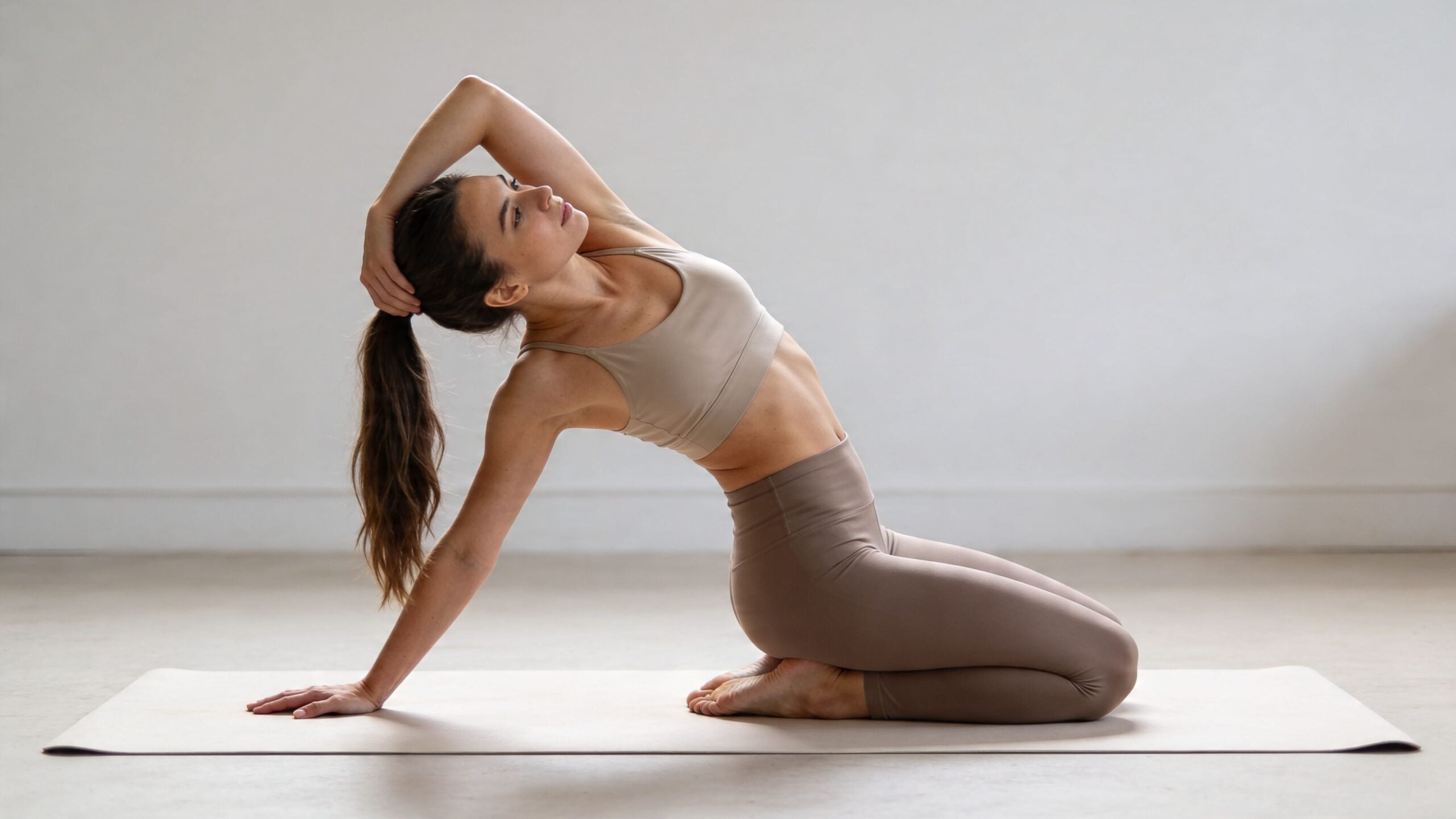
Sit tall or stand with your ribs stacked over your pelvis. Let the arm on the side being stretched hang heavy, or hold the edge of a chair gently with that hand. Then tilt your head away from that side so your ear moves toward the opposite shoulder.
You should feel a mild to moderate pull along the side of the neck and the top of the shoulder. Keep your nose pointed forward and your chest relaxed. If the chin rotates up or down, you start biasing different tissues and the stretch becomes less specific.
Hold for 20 to 30 seconds. Repeat 2 to 3 rounds per side.
If you want to increase the stretch, place your opposite hand lightly on top of your head. Use almost no pressure. Pulling hard usually makes people guard, and that defeats the purpose.
Who usually benefits
This stretch often helps people with end-of-day neck and shoulder tension, especially after driving, laptop work, or long periods of stress-related bracing. It can also be useful before upper body exercise if you tend to shrug during rows, presses, or carries.
I also use it for people who describe a familiar band of tightness from the side of the neck into the shoulder, as long as the symptoms stay local and do not travel down the arm.
When to modify or stop
Skip the strong version if this causes tingling, burning, dizziness, headache worsening, or pain that shoots below the shoulder. Those signs suggest this is not just a simple muscle length issue.
A small adjustment often helps. Try less range, support the stretching arm on an armrest, or perform shorter holds with relaxed breathing instead of pushing to the end range. If even a gentle version feels sharp or strange, stop and get it checked.
One more trade-off matters here. If this stretch helps for a few minutes but the tightness returns every time you sit back at your desk, the driver is often poor endurance, workstation setup, breathing mechanics, or shoulder blade control. That is where a physical therapy evaluation changes the picture. At Peak Therapy, we look at why the muscle keeps overworking so the relief lasts longer than one stretch break.
5. Prone Press-Up or Sphinx Pose
You stand up after an hour at the computer, and your low back feels locked in a bent position. For that pattern, a gentle backbend sometimes settles symptoms well. For other people, the same motion creates more pressure. The response matters more than the name of the stretch.
How to try it safely
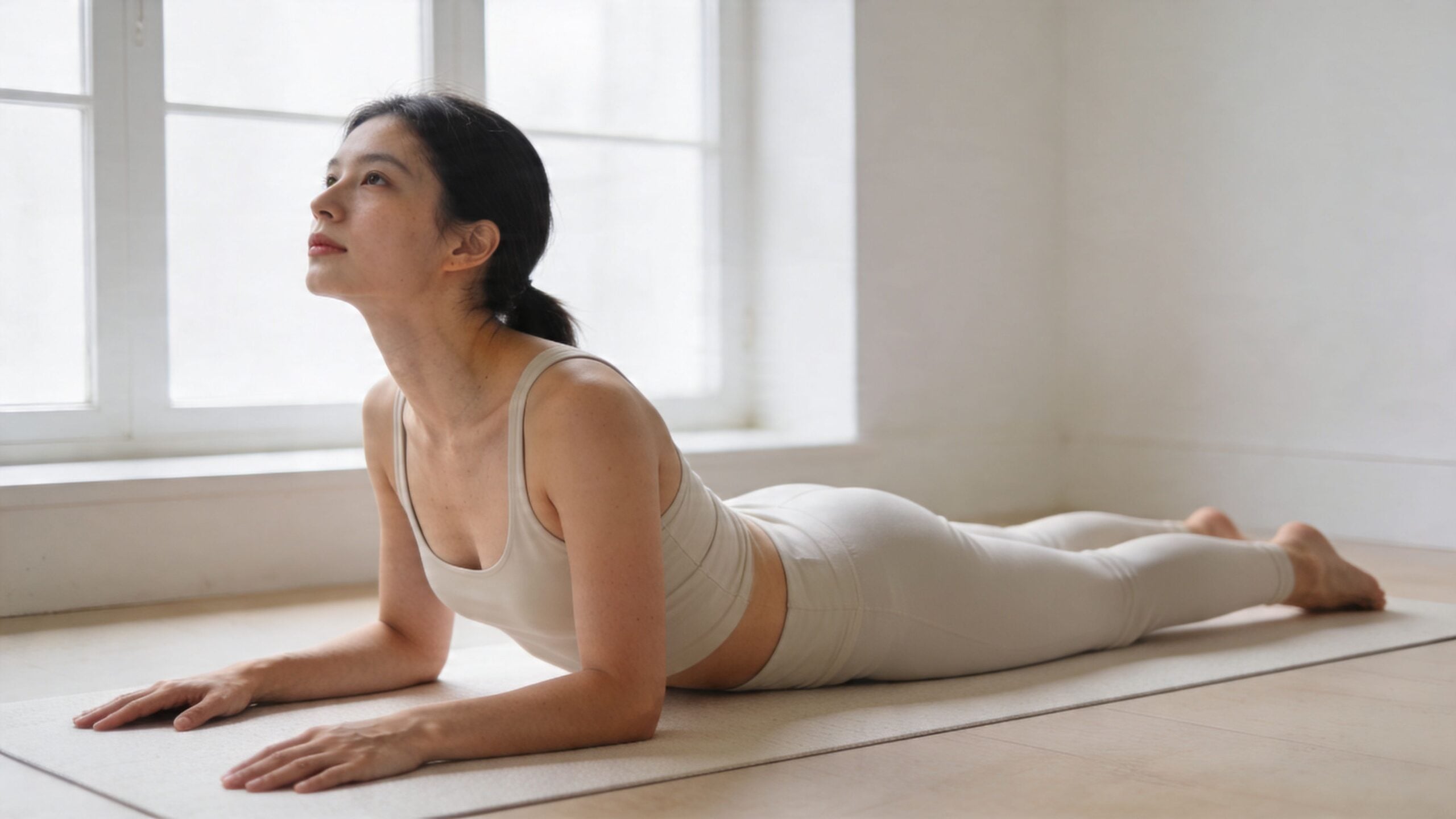
Start with Sphinx. Lie on your stomach and rest on your forearms, with elbows under your shoulders. Let your chest rise while your hips and pelvis stay relaxed on the floor. Hold 15 to 30 seconds and take 3 to 5 slow breaths.
If that feels comfortable during the stretch and in the next few minutes after, progress to a prone press-up. Place your hands under your shoulders and press your upper body up only as far as you can without pinching, holding your hips down. Perform 5 to 8 repetitions, pausing briefly at the top.
The goal is not a big arch. The goal is to see whether extension reduces stiffness, eases pain out of the leg, or helps you stand more upright with less effort.
Why this can help
This movement is often useful for people who spend a lot of time sitting, bending, lifting from the floor, or working in a rounded posture. Those positions keep the spine in repeated flexion. A controlled press-up moves in the opposite direction and can give some patients short-term relief.
That short-term relief has a trade-off. If extension feels good for ten minutes but your back tightens again every afternoon, stretching alone usually is not enough. The missing piece is often endurance and control through the trunk and hips. Pairing mobility with core strengthening exercises for back support often gives the result a better chance of lasting.
Who should be cautious
A press-up is more likely to fit if symptoms stay in the center of the low back or improve after standing and walking. It is less likely to fit if backbending causes a sharp catch, increases pain into the buttock or leg, or creates a compressed feeling in the lower spine.
Stop and get evaluated if this movement causes:
- Pain spreading below the knee
- Numbness, tingling, or weakness
- Loss of balance or symptoms in both legs
- Bowel or bladder changes
- Night pain that does not ease with position changes
In the clinic, I use this stretch as a test as much as a treatment. A helpful response tells us something about your movement pattern. An aggravating response tells us just as much. That is why a physical therapy evaluation matters for persistent back or neck pain. The right direction helps. The wrong one can keep an irritated spine irritated.
6. Quadruped Cat-Cow Stretch (Marjaryasana-Bitilasana)
If your whole spine feels stiff and guarded, Cat-Cow is often the best place to begin. It’s less about a deep stretch and more about restoring motion without provoking symptoms.
I like this one for morning stiffness, movement breaks during the workday, and as a reset before more targeted exercise.
How to make it smooth
Start on hands and knees with shoulders over hands and hips over knees. As you inhale, let the belly drop gently, lift the chest, and allow the tailbone to tip upward. As you exhale, round through the spine, tuck the chin, and bring the tailbone under.
Match the motion to your breathing. That usually keeps people from rushing.
Perform 10 to 15 repetitions. Move slowly enough that you can feel each segment of the spine joining in.
If your wrists are sensitive, drop to your forearms or place your hands on a raised surface.
Why this works well as a reset
This movement doesn’t force one direction. That matters. On irritated days, alternating flexion and extension is often more tolerable than hanging out in one position too long.
It’s especially helpful for:
- Athletes before training: It wakes up the trunk without heavy loading.
- Desk workers on a break: It counters stiffness from prolonged sitting.
- PT warm-ups: It prepares the body for more specific work afterward.
For many people, mobility only sticks when it’s paired with stability. If your back gets tight repeatedly, adding trunk control is often part of the answer. Peak’s guide to core strengthening exercises for back is a useful next step.
A spine that moves better usually needs muscles that support that motion better, too. Stretching and strengthening work best together.
7. Cervical Lateral Flexion with Isometric Hold
This drill fits the stage where the neck is no longer sharply irritated, but still feels guarded, stiff, or weak at end range. It pairs a gentle side-bend stretch with a low-level muscle contraction. That combination can help the neck tolerate motion better than stretching alone in people who have stopped improving with simpler mobility work.
In the clinic, I use it as a progression, not a starting point.
How to do it safely
Sit tall or stand with your shoulders relaxed. Tilt your head toward one shoulder until you feel a light stretch along the opposite side of the neck. Place your hand against the side of your head, then press your head into your hand just enough to create tension without visible movement.
Hold that effort for 5 to 10 seconds. Relax, then allow the head to move a little farther into side bending if it feels comfortable. Hold the stretch 20 to 30 seconds. Perform 2 to 3 rounds per side, about 2 to 3 times per week.
Keep the effort around 20 to 30 percent of your maximum. More force is not better here. If the jaw clenches, the shoulder lifts, or the pain spreads into the arm, back off right away.
Why this version can work better than a passive stretch
A passive stretch asks the tissue to lengthen. The isometric hold adds control. That matters for people whose neck feels tight partly because the muscles are protecting an irritated area or reacting to poor postural endurance.
The goal is not to force more range. The goal is to improve comfort and control in that range.
This drill tends to fit people with lingering stiffness after a flare, athletes who need neck stability with motion, and patients who feel temporary relief from stretching but tighten up again quickly. If forward head posture, upper back stiffness, work setup, or shoulder mechanics keep feeding the problem, this exercise can help, but it will not fix the full pattern on its own.
Modifications and red flags
If side bending is limited, start in a smaller range and skip the deeper stretch after the hold. If using your hand is uncomfortable, press lightly into a folded towel against a wall for gentler resistance.
Skip this exercise during an acute flare, after recent cervical surgery, or if resisted neck work brings on headache, dizziness, numbness, tingling, or pain traveling below the shoulder. Those signs call for a proper evaluation. At Peak Therapy, this is often the point where we stop guessing and test what is driving the pain so the exercise plan matches the problem.
8. Sleeper Stretch (Shoulder and Pectoral)
This one surprises people. It’s a shoulder stretch, but it can help the neck because shoulder position and neck tension are closely linked.
When the shoulder loses internal rotation and the chest stays tight, the upper trap and neck muscles often work harder to manage arm movement and posture.
The setup matters a lot
Lie on your side with the bottom shoulder and elbow both at about 90 degrees. Bend your knees for balance. Use the top hand to gently guide the forearm of the bottom arm toward the floor.
You should feel the stretch in the back of the shoulder, not pain in the front of it. Hold 20 to 30 seconds and repeat 2 to 3 times per side.
If the shoulder feels pinchy, place a pillow under the head and another under the stretched shoulder or back off the range.
Why it can help neck discomfort
This movement is useful for people whose neck pain is driven partly by shoulder mechanics. Common examples include throwing athletes, volleyball players, lifters, and office workers with rounded shoulders.
It tends to fit when you notice:
- Neck tightness during or after overhead activity
- Rounded shoulder posture
- A stiff shoulder on the same side as your neck pain
This isn’t a universal stretch. Some shoulders hate it, especially if the joint is already irritated. In those cases, I’ll usually choose a chest-opening stretch or thoracic mobility drill first.
For readers looking for stretches for sore back and neck, this is a good reminder that pain location and problem location aren’t always the same. The shoulder may be feeding the neck, just like the thoracic spine may be feeding the low back.
8-Point Comparison: Back & Neck Stretches
| Exercise | Implementation complexity | Resource requirements | Expected outcomes | Ideal use cases | Key advantages |
|---|---|---|---|---|---|
| Neck Flexion Stretch (Chin-to-Chest) | Very low, simple, low-risk technique | None; can be seated or standing | Improved cervical flexion ROM; relief for tension headaches and postural neck pain | Office breaks, early-stage rehab, tension headaches | Extremely accessible; immediate relief; widely recommended by PTs |
| Levator Scapulae Stretch | Low–moderate, requires correct head rotation/form | None; optional opposite-arm overpressure | Reduced unilateral neck/shoulder tension; improved scapular-neck mobility | One-sided neck pain, overhead athletes, ergonomic strain (dentists) | Highly specific targeting for levator scapulae; effective for lateral stiffness |
| Thoracic Rotation Stretch (Quadruped or Seated) | Moderate, needs core stability and pelvic control | Mat or chair; no special equipment | Better thoracic rotation and extension; less compensatory neck/lumbar strain | Kyphotic posture, golfers/baseball, post-surgical thoracic rehab | Restores spinal rotation; improves shoulder and postural mechanics |
| Upper Trapezius Stretch | Very low, simple unilateral tilt with gentle pressure | None; seated or standing | Immediate reduction in upper trapezius tightness; headache prevention | Stress-related neck pain, corporate wellness, whiplash recovery | Quick, effective, suitable for all ages; widely used in PT protocols |
| Prone Press-Up or Sphinx Pose | Moderate, progressive, with contraindications for some | Floor/mat; supervision advised if spinal pathology | Thoracic/cervical extension, spinal decompression, improved posture | Desk workers, extension-intolerant back pain, progressive rehab | Decompresses spine and reverses forward posture; scalable progression |
| Quadruped Cat-Cow Stretch (Marjaryasana-Bitilasana) | Low, dynamic multi-planar movement, easy to modify | Mat; wrist/shoulder tolerance required | Improved segmental spinal mobility, joint circulation, proprioception | Warm-ups, gentle rehab, office mobility breaks, yoga routines | Gentle and safe for many conditions; excellent for warm-up and mobility |
| Cervical Lateral Flexion with Isometric Hold | High, PNF-based, technique-dependent | Hand resistance or therapist guidance | Greater, longer-lasting flexibility; improved neuromuscular control and strength | Advanced PT, chronic neck tightness, post-whiplash rehab | Combines strength and flexibility; effective for persistent tightness |
| Sleeper Stretch (Shoulder and Pectoral) | Low–moderate, requires proper side-lying positioning | Floor/bed and optional pillow | Increased shoulder internal rotation; reduced pectoral tightness and postural strain | Overhead athletes, post-rotator cuff rehab, forward-shoulder posture | Addresses shoulder contributors to neck pain; daily, progressive use |
When Stretches Aren't Enough: Your Path to Real Relief
These stretches can absolutely help. They reduce day-to-day stiffness, improve mobility, and give many people a safer way to move when pain has made them cautious. For mild postural strain or temporary muscle tension, that may be enough to settle things down.
But stretching has limits.
Muscles tighten for a reason. Sometimes they’re reacting to poor posture. Sometimes they’re protecting an irritated joint. Sometimes they’re compensating for weakness, nerve sensitivity, or a movement pattern that keeps loading the same tissues over and over. If you only stretch the tight spot, you may calm the symptom without changing the cause.
That’s where a physical therapy evaluation matters. A licensed PT doesn’t just ask where it hurts. We look at how you move, what positions increase or reduce symptoms, whether a joint is stiff or unstable, whether a nerve is involved, and whether strength, endurance, or posture are contributing. From there, treatment becomes specific.
If your pain is persistent, severe, radiates into an arm or leg, causes numbness or tingling, or keeps returning despite doing all the “right” stretches, don’t keep guessing. If you’re recovering from surgery, that’s even more important. Generic advice online rarely accounts for surgical precautions, tissue healing timelines, or when a movement is safe to start.
Sleep setup can matter too. For some people, pillow height and neck position are part of the problem, especially if symptoms are worst in the morning. If that sounds familiar, this overview of a neck pain pillow may help you think through positioning, though it still shouldn’t replace an individualized clinical assessment.
At Peak Physical Therapy and Sports Performance, our licensed physical therapists perform detailed evaluations and build personalized treatment plans based on what your body needs. That may include hands-on care, stretching, strength work, postural training, dry needling when appropriate, and clear guidance on what to do at home and what to avoid. For patients across the South Shore, including Braintree, Quincy, Weymouth, Plymouth, and surrounding communities, that kind of individualized plan is often what turns temporary relief into lasting progress.
You shouldn’t have to organize your life around neck or back pain. The right stretches can be a good start. The right diagnosis is what moves recovery forward.
If your neck or back pain keeps coming back, Peak Physical Therapy and Sports Performance can help you move past trial and error. With South Shore clinics across Massachusetts, our team provides personalized evaluations and evidence-based treatment to identify what’s driving your symptoms and build a plan that fits your body, your routine, and your goals.