


You get home after surgery, settle into the recliner, and realize the hard part is not over. The drive back to Quincy, Braintree, Weymouth, Hingham, or Plymouth is done, but now you have to manage swelling, medications, stairs, sleep, and a long list of instructions while your body is still catching up.
That first stretch at home is where many South Shore patients feel unsure. Hospital care is structured. Home recovery is not. You have to figure out what soreness is expected, how much movement is helpful, when to rest, and when to call for help.
That is the gap this guide is built to close.
For patients looking for post surgical rehab South Shore MA, the primary challenge is often the handoff between discharge and outpatient physical therapy. Generic recovery advice rarely accounts for local routines and goals. Around here, recovery is not just about healing on paper. It is about getting back to driving local roads comfortably, managing work and family responsibilities, and returning to walks on the shoreline, gym workouts, golf, pickleball, boating, or youth sports without setting yourself back.
At Peak Physical Therapy, we help patients turn surgeon instructions into a day-by-day outpatient plan that makes sense. That includes knowing when to protect healing tissue, when to start moving more, and how to build toward the activities that are important in daily life on the South Shore.
If you want broader reading on healing habits that support recovery, this roundup of expert advice on surgical recovery is a useful companion to the plan your surgeon and PT give you.
Table of Contents
- Your Guide to Recovery After Surgery on the South Shore
- The First 48 Hours Managing Pain and Swelling at Home
- Your Post-Surgical Recovery Timeline A South Shore Roadmap
- The Role of Physical Therapy at Your Peak Clinic
- Navigating Daily Life Restrictions and Timelines
- Returning to Your South Shore Lifestyle Sports and Recreation
- Red Flags When to Call Your Surgeon or Peak PT
- Your Post-Surgical Rehab FAQs
Your Guide to Recovery After Surgery on the South Shore
You get home from surgery, settle into your own chair or bed, and the questions start quickly. How much should you move today. What amount of swelling is expected. Are you resting enough, or too much. That stretch between hospital discharge and your first few outpatient visits is where many South Shore patients feel least certain.
That gap is real here. Patients are often trying to recover while managing stairs in an older home, getting help from family on a changing work schedule, or figuring out how to return to driving, commuting, and daily routines in towns across the South Shore. The hospital handles the procedure. Your surgeon protects the repair. Outpatient rehab is where the plan becomes practical.
Early recovery usually goes better when patients focus on two goals at the same time. Protect the surgical area. Keep the rest of the body and the overall routine from shutting down more than necessary. Too much activity can irritate healing tissue. Too little activity can lead to stiffness, weakness, poor sleep, and a longer return to normal life.
What patients usually need most after discharge
Patients do best with clear, usable guidance, not vague reassurance. Day to day, recovery can feel uneven. A good morning can be followed by more soreness at night. Swelling often rises after a busy afternoon. Shoulder patients often notice sleep disruption. Knee, foot, and ankle patients often notice how quickly fatigue changes their walking pattern.
A useful home plan usually includes:
- Specific pain and swelling instructions: how to use medication as prescribed, how to position the area, and how to pace the day so symptoms do not spiral
- A week-by-week frame of reference: what tends to feel normal early on, what should gradually improve, and what usually takes more time
- Practical help with daily tasks: dressing, showering, sleep setup, stairs, work decisions, and safe movement around the house
- A way to ask questions early: small problems are easier to correct before they become bigger setbacks
Patients also need context. Restrictions make more sense when you understand what the surgeon is protecting and what movement is safe. That is one reason outpatient PT matters so much after discharge.
At Peak Physical Therapy, we often help patients sort out the difference between expected post-op symptoms and a routine that is making recovery harder than it needs to be. For example, swelling is common after many procedures, but there is a big difference between normal post-op fullness and swelling that keeps climbing because the day is poorly paced. Our guide on how to reduce swelling after surgery can help patients get more out of the basics at home.
Patients often read broad online advice that does not match what recovery looks like in this area. South Shore rehab is usually less about abstract milestones and more about real-life goals. Getting in and out of a car comfortably. Managing a multi-level home. Returning to work in Quincy, Weymouth, Braintree, or Hingham. Walking the beach again without limping. Carrying groceries. Sleeping through the night.
Good home recovery also depends on habits outside the exercise program. Things like sleep setup, hydration, short walks, incision protection, and pacing matter. Patients looking for more general expert advice on surgical recovery can benefit from those broader principles, then apply them through a South Shore outpatient plan that fits their procedure and daily routine.
That is the role of this guide. It connects the discharge instructions you received with the next phase of rehab, so you know what to expect at home and how to build toward a safe return to normal South Shore life.
The First 48 Hours Managing Pain and Swelling at Home
The first two days are usually the least comfortable. That doesn’t mean something is wrong. It means your body has just been through surgery, and now your job is to calm the area down without doing too much or too little.

Focus on comfort first
Use the medication schedule exactly as prescribed by your surgical team. Don’t wait until pain spikes badly if your surgeon has told you to stay ahead of it during the first day or two. It’s much easier to manage discomfort early than to chase it once it builds.
Positioning also matters more than most patients expect. A knee often feels better supported and raised. A shoulder usually needs the sling positioned correctly and pillows arranged so you’re not rolling onto the surgical side in sleep. An ankle or foot tends to respond well to keeping the limb above heart level, not just propped on a low ottoman.
Use rest, ice, compression, and elevation correctly
R.I.C.E. still matters after many orthopedic procedures, but patients often apply it too casually to get the full benefit.
- Rest with purpose: short, protected rest is useful. Staying completely inactive all day usually isn’t.
- Ice consistently: use a barrier between skin and ice pack, and follow your surgeon’s instructions for timing and frequency.
- Compression carefully: if you were given a wrap or compression garment, make sure it feels supportive, not tight enough to create numbness or discoloration.
- Elevation high enough: Many patients miss the mark on this point. Elevation should help fluid move out of the area.
If swelling is becoming the main problem, this guide on how to reduce swelling after injury or surgery can help you think through the basics between visits.
Practical rule: if the area is more painful, hotter, and more swollen after every small activity, you may be ahead of your tissue’s tolerance.
Keep incision care simple
Most patients do best when they don’t over-handle the surgical site. Keep the dressing clean and dry. Follow the exact bathing instructions from your surgeon. Don’t apply creams, lotions, or home remedies unless your medical team specifically told you to.
Call your surgeon’s office if anything about the wound instructions is unclear. Guessing about incision care is one of the quickest ways to create avoidable problems.
Your Post-Surgical Recovery Timeline A South Shore Roadmap
Most patients feel better once recovery has a shape to it. Not a promise of exact dates, because every surgery and every body is different, but a roadmap that tells you what phase you’re in and what the work should look like right now.
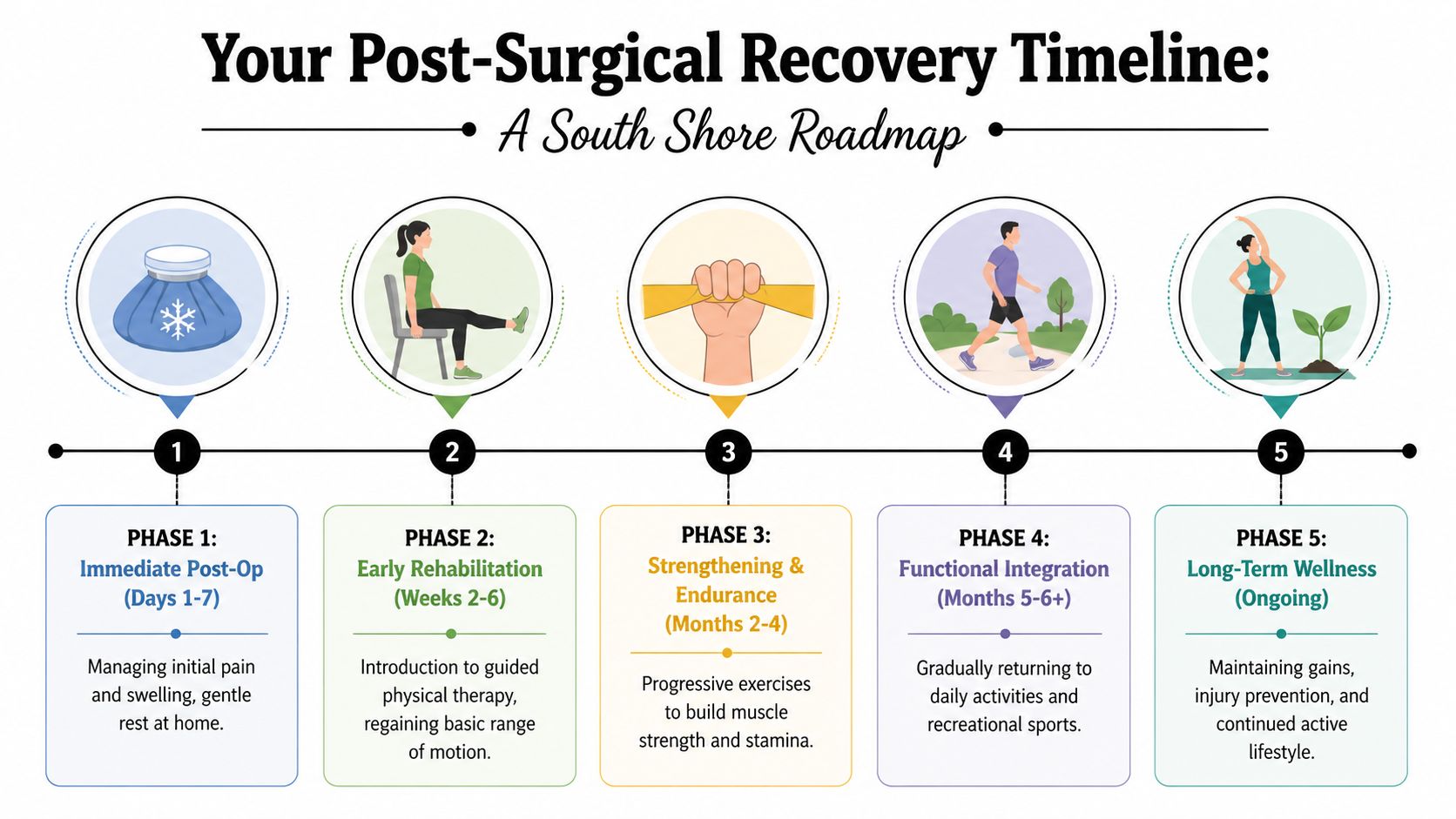
What each phase usually feels like
The earliest stage is protective. You’re managing pain, swelling, sleep, dressing changes, and basic mobility around the house. Progress during this phase can feel small. That’s normal. Getting in and out of bed more easily, walking a little better, or tolerating the sling or brace more comfortably all count.
The next stretch is where mobility starts to matter more. Stiffness often becomes the main complaint, especially after shoulder and knee surgery. This is also where some patients make a common mistake. They either push aggressively because they’re tired of restrictions, or they avoid movement because they’re afraid of damaging the repair. Neither approach works well.
Then comes strengthening. This phase is often more satisfying because people can feel themselves doing more. The exercises become more active, endurance starts to build, and the connection between rehab work and real-life function becomes more obvious.
By the later phase, the question shifts from “Can I move this joint?” to “Can I trust it again?” That matters if you want to carry groceries in Quincy, walk uneven ground in Scituate, get back to golf in Hanover, or return to lifting, running, or coaching youth sports.
Most recoveries improve in layers. Pain settles first. Motion returns next. Strength and confidence usually take longer.
Post-Surgical Recovery Phases at a Glance
| Phase / Timeline | Key Goals | Common Restrictions | Peak PT Focus |
|---|---|---|---|
| Immediate post-op, days 1 to 7 | Control pain and swelling, protect the repair, move safely at home | Limited lifting, weight-bearing or motion restrictions depending on surgery, brace or sling use | Education, safe transfers, positioning, early home exercises when appropriate |
| Early rehab, weeks 2 to 6 | Restore basic mobility, reduce guarding, normalize simple movement patterns | Ongoing surgical precautions, limited reaching, squatting, stairs, or gripping depending on procedure | Gentle mobility work, supervised exercise progressions, gait and movement training |
| Strengthening phase, months 2 to 4 | Build muscle support, improve endurance, increase confidence with daily tasks | Higher-load activity may still be restricted, impact and sport usually delayed | Progressive strengthening, balance work, functional task training |
| Functional integration, months 5 to 6 and beyond | Return to work demands, recreation, and more complex activity | Sport or work-specific restrictions may still apply until cleared | Task-specific drills, higher-level stability, return-to-activity testing |
| Long-term wellness, ongoing | Maintain gains, avoid overload, prevent recurrence | Fewer formal restrictions, but pacing still matters with new demands | Independent programming, movement quality, long-term planning |
What tends to slow patients down
A few patterns show up often in outpatient rehab after surgery:
- Doing too much on a “good day” and paying for it with swelling the next day
- Skipping the home program because progress seemed fine for a week
- Treating pain as the only measure instead of also watching motion, strength, and control
- Returning to normal chores too fast because they don’t feel like “exercise”
A recovery timeline should reduce guesswork. It shouldn’t trap you into comparing your week three to someone else’s week three. The useful question is whether you’re moving forward in the right direction for your procedure, your surgeon’s protocol, and your actual daily demands.
The Role of Physical Therapy at Your Peak Clinic
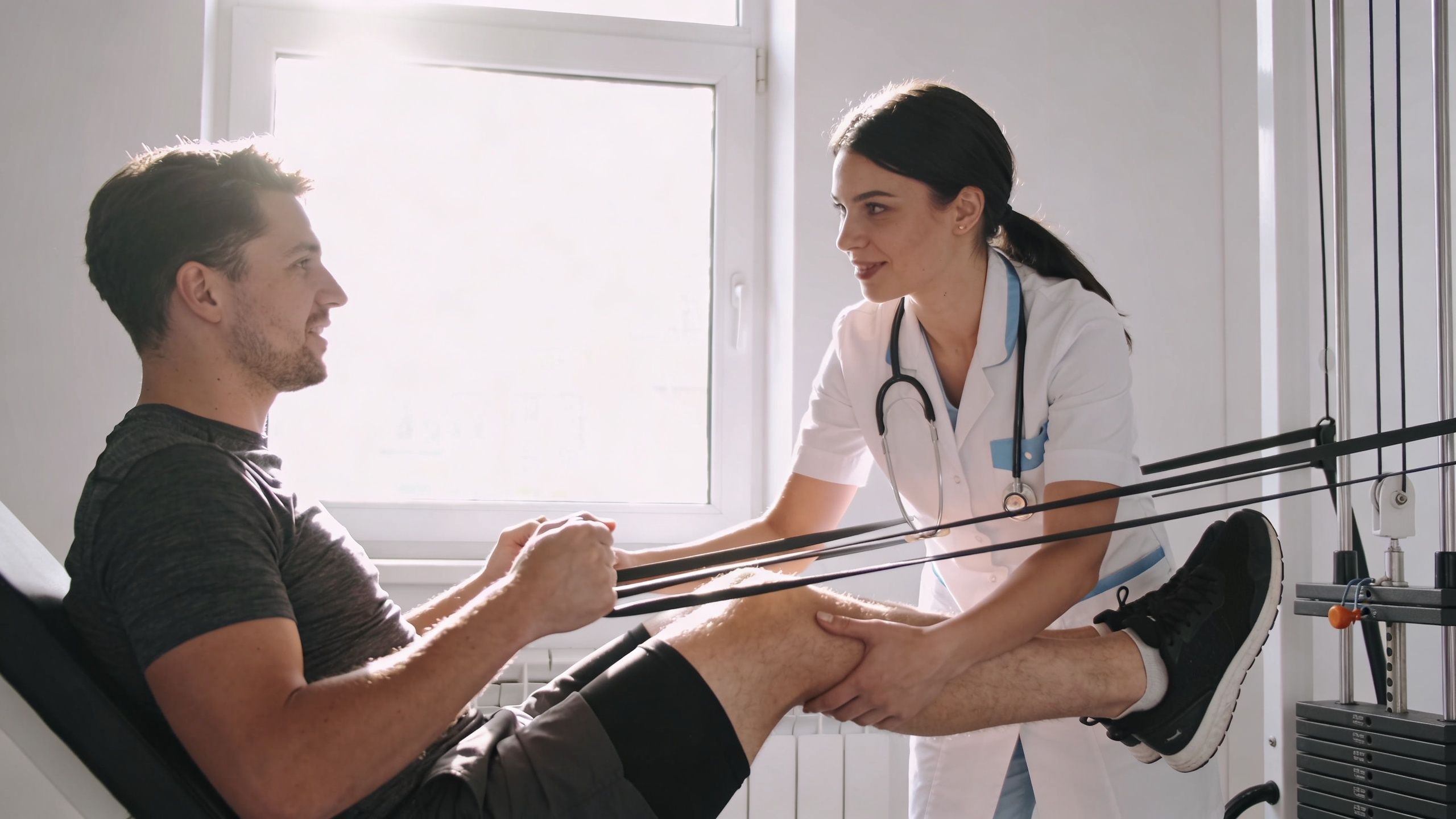
Outpatient rehab works best when treatment matches healing, not impatience. The body doesn’t rebuild all at once after surgery. It moves through phases, and therapy should respect that instead of forcing progress on a calendar.
Treatment should match tissue healing
A strong post-op plan follows the natural stages of tissue recovery. Effective post-surgical rehab aligns with the body's natural healing process, using manual therapy and controlled exercises to manage the inflammatory phase (0-6 weeks), guide collagen organization in the proliferative phase (6-12 weeks), and restore functional strength in the remodeling phase (12+ weeks).
That idea matters in real life. Early on, the work is usually quieter than patients expect. It may involve pain-limited motion, swelling control, gentle muscle activation, and learning how to move without irritating the surgical site. This stage often feels slow, but it sets up everything that follows.
In the middle phase, the tissue can usually tolerate more load, but only if it’s the right kind of load. At this stage, hands-on care, targeted mobility work, and well-chosen exercises can help organize movement instead of just “working harder.” Many patients need specific cues to stop compensating with the neck, low back, or non-surgical side.
What tends to work better in outpatient rehab
The most effective plans are usually the least dramatic. Consistency wins. Good exercise selection wins. Communication with the surgeon and the patient wins.
What usually helps:
- Procedure-specific progressions: a shoulder repair, knee procedure, and hand surgery should not all be trained the same way
- Manual therapy when appropriate: to improve motion, reduce guarding, and help patients tolerate movement
- Simple home exercises done well: often more useful than a long list that never gets completed
- Ongoing modification: based on swelling, pain response, motion quality, and real daily demands
What often doesn’t help:
- Aggressive stretching too early
- Generic strengthening that ignores surgical precautions
- Waiting for perfect pain relief before moving
- Treating the home plan as optional
A few examples make this clearer. After knee surgery, an early session may include gentle range-of-motion drills like heel slides, quad activation, and gait work. After shoulder surgery, the first wins are often posture setup, pendulum-style motion when allowed, scapular control, and safe use of the sling. Later on, both patients need strength, but not the same kind and not on the same timeline.
One option for local outpatient care is Peak Physical Therapy and Sports Performance, where post-surgical plans can include hands-on treatment, progressive strengthening, mobility work, and procedure-specific exercise progression at South Shore clinics. Patients who are trying to understand what individualized recovery support can look like may also find these customer reviews for pain-free back useful as a reminder that rehab progress is often built through steady, guided follow-through rather than one breakthrough session.
The right exercise at the wrong time can be as unhelpful as the wrong exercise altogether.
By the remodeling stage, therapy becomes more functional. Strength has to transfer into stairs, carrying, reaching, squatting, balance, and work or recreation demands. That’s where patients often feel recovery becoming real again.
Navigating Daily Life Restrictions and Timelines
You get home from surgery, settle into your chair, and then the critical questions start. Can you get upstairs tonight? Are you safe to shower? How long before you can drive to Hingham, get back to work in Quincy, or carry a bag in from the car without setting yourself back?
Hospital discharge instructions usually cover precautions. They rarely explain how those rules play out in a real South Shore home with stairs, school pickups, winter sidewalks, errands, and a work commute. That gap is where outpatient rehab matters. At Peak Physical Therapy, we help patients turn general restrictions into a day-by-day plan that fits the surgery, the home setup, and the life waiting outside the clinic.
Questions patients ask most often
Driving is usually a safety decision before it is a comfort decision. Patients need to be off medication that slows reaction time, able to get in and out of the car safely, and able to brake, steer, and check mirrors without hesitation. Right leg surgery often delays driving more than left leg surgery. Shoulder and arm procedures can also limit control, even if pain feels manageable.
Work depends on the actual job. A person with a desk job may return sooner if they can change positions, avoid long walks from parking lots, and follow lifting restrictions. A contractor, nurse, gardener, childcare provider, or warehouse worker usually needs more recovery time because the job demands strength, balance, carrying, kneeling, climbing, or repeated reaching.
Lifting and carrying cause trouble earlier than many patients expect. The issue is not just the number on the bag. It is the twisting, one-handed loading, stairs, awkward grip, and fatigue that show up around normal household tasks.
A safer home setup usually includes a few simple adjustments:
- Break larger chores into short rounds. Put away a few dishes, sit down, then reassess.
- Keep daily items between waist and shoulder height. That cuts down on bending, squatting, and overhead strain.
- Use help for high-risk tasks. Laundry baskets, trash bags, pet care, and lifting a child are common problems.
- Plan errands around your current limits. One stop may be reasonable. Three stores in a row may be too much early on.
If you have to brace, hold your breath, limp, or shift sharply to finish a task, the task is ahead of your current capacity.
Stairs are another common concern on the South Shore because many homes have them at the entry, inside the house, or both. Patients are often technically allowed to do stairs early, but that does not mean repeated trips all day are a good idea. We usually recommend setting up one main living space for the first phase so recovery does not depend on constant up-and-down movement.
The timeline also changes based on the procedure. Knee, hip, ankle, shoulder, and spine surgeries each come with different restrictions, and two patients with the same surgery may still progress at different speeds based on swelling, pain control, sleep, and baseline strength. That is why generic online timelines often create more confusion than clarity.
For active patients, the transition back to normal chores overlaps with injury prevention. A rushed return to lifting, yard work, gym routines, or rec sports can create a second problem while the first one is still healing. Our team often pairs recovery planning with practical sports injury prevention strategies for active adults and athletes so patients rebuild safely instead of repeating the cycle.
The goal is steady progress you can use at home, at work, and around town. Recovery should fit your real life on the South Shore, not just the discharge sheet you brought home from the hospital.
Returning to Your South Shore Lifestyle Sports and Recreation
You get home from surgery, put in the early rehab work, and then a different question starts to matter. When can you get back to the parts of South Shore life that make the recovery feel worth it? For some patients, that means a steady walk along the water in Scituate. For others, it is nine holes, a return to the gym, pickleball, coaching from the sideline, or keeping up with kids on a Saturday.

Hospital discharge instructions rarely cover that part well. They tell you how to protect the repair. Outpatient rehab should also show you how to return to the places, surfaces, and activities you deal with on the South Shore every week.
Getting back to the activities you actually care about
A safe return depends on what the activity asks of your body. A flat indoor walk is different from an uneven coastal path. Hitting a few golf balls is different from walking a full round on tired legs. Jogging in a straight line is different from cutting, pivoting, and reacting in a field sport.
At Peak Physical Therapy, we build toward those real demands. We look at strength, balance, swelling response, endurance, confidence, and movement quality under load. We also look at what happens later that day and the next morning. If the joint gets angry after the activity, the body is telling us the dosage was too high.
The progression should match the goal.
- Walking programs: Patients heading back to beach paths, town sidewalks, or longer neighborhood walks usually start with flatter, predictable routes before adding distance, hills, and uneven ground.
- Running: Return starts with walking tolerance and impact control. Then we add short run intervals once mechanics stay clean and swelling remains manageable.
- Golf: Patients need enough hip and trunk rotation, single-leg control, and walking tolerance before a bucket of balls or a full round makes sense.
- Tennis, pickleball, and basketball: These sports require more than basic conditioning. Push-off power, braking, lateral movement, and quick direction changes need to be retrained.
- Adult league and youth sports: Coaching, demonstrating drills, and joining practice can stress a healing shoulder, knee, or ankle more than patients expect.
This is often the missing link after surgery. Patients are cleared medically, but they still need a plan for returning to real activity outside the clinic. Generic exercises help build a base. They do not fully prepare you for a sloped driveway in Hingham, a long day on your feet in Plymouth, or a weekend game that involves quick stops and awkward reaches.
That gap is where good outpatient rehab matters. We can scale drills to your sport, your schedule, and your recovery stage instead of guessing and hoping the body keeps up.
If avoiding a second setback is part of your plan, our guide to sports injury prevention for active adults and athletes gives useful next-step advice.
Being cleared to try an activity is different from being ready to handle it well.
The best return is gradual and specific. Start with less than you think you can do. Check the swelling, soreness, and confidence afterward. Then build from there.
Red Flags When to Call Your Surgeon or Peak PT
The drive home from surgery is often the start of significant questions. By that night or the next morning, many South Shore patients are trying to sort out what is expected, what is frustrating but normal, and what needs a phone call.
Some soreness, swelling, bruising, and stiffness are part of early recovery. A symptom deserves attention when it changes quickly, feels out of proportion, or clearly moves you backward. That is the gap we help patients handle at Peak Physical Therapy. Hospital discharge instructions cover the basics, but day-to-day recovery at home raises more specific questions.
Call your surgeon promptly for these issues
- Incision changes: redness that is spreading, unusual drainage, an opening along the incision, or a clear worsening in how the area looks
- Fever or feeling sick: especially if it shows up with increasing incision pain, drainage, or redness
- One-sided calf pain or swelling: marked warmth, swelling, or pain in one calf that feels different from normal post-op soreness
- Sudden increase in pain after an event: a twist, slip, fall, or awkward movement followed by a sharp change in pain
- Sudden loss of function: you could do the movement yesterday, and now you cannot
Contact Peak PT for these concerns
- Repeated sharp pain with the same exercise: not general soreness, but a pattern that keeps showing up with one movement
- Swelling or motion that stalls without a clear reason: progress is rarely perfectly linear, but a recovery pattern that stops or reverses should be checked
- New compensation: more limping, more shoulder hiking, more reliance on the other leg or arm, or bracing that is getting worse instead of easing
- Unclear restrictions: you are not sure whether stairs, driving, work tasks, or house chores are safe yet
- Pain that does not settle as expected after home activity: especially if a simple errand, shower, or walk leaves you noticeably worse hours later
Here is the practical rule I give patients. If you are asking yourself whether you should call, call. We can usually tell pretty quickly whether a symptom sounds like normal post-op irritation, a rehab problem that needs an adjustment, or something your surgeon should hear about right away.
Waiting rarely helps. Early communication often prevents a small problem at home from becoming a bigger setback a few days later.
Your Post-Surgical Rehab FAQs
The questions patients ask at this stage are usually practical. What do I wear, what should I bring, how often will I need to come in, and how do I know whether recovery is on track once I am home on the South Shore and no longer seeing the hospital team every day?
That handoff matters. Hospital discharge instructions tell you how to protect the surgical site. Outpatient PT helps you turn those instructions into real daily progress, whether that means getting up the stairs in a Weymouth split-level, handling a short drive in Quincy, or figuring out when a walk around the neighborhood is actually helping instead of setting you back.
What to bring and what to expect
What should I wear to my first PT appointment?
Wear loose, comfortable clothing that lets us see and access the surgical area. For a knee, shorts usually work best. For a shoulder, a tank top or loose T-shirt helps. Wear supportive shoes unless your surgeon told you otherwise.
What should I bring?
Bring your referral if one was provided, your insurance card, your medication list if you use one, and any brace, sling, walker, compression gear, or printed post-op instructions you were sent home with. If your surgeon gave you a protocol, bring that too. Small details in that paperwork often affect how aggressively we can work in the first few visits.
What happens at the first visit?
Your therapist reviews the surgery, your precautions, your current pain and swelling pattern, and what daily tasks are giving you trouble. We also look at movement within your restrictions and build a home plan that fits your stage of healing. Patients should leave that first visit knowing what is safe, what needs to wait, and what a normal week of progress should look like.
Common logistics questions
How often will I come to PT?
It depends on the surgery, the surgeon’s protocol, and how much help you need between visits. Early on, some patients do better with closer supervision because pain, swelling, or fear of movement can slow everything down. Later, visits are often spaced out more if strength, motion, and home exercise follow-through are going well.
How does communication with my surgeon work?
At Peak PT, rehab stays tied to your surgical precautions and follow-up timeline. If progress is steady, that communication is routine. If motion stalls, swelling stays high, or function drops after an incident at home, we flag it quickly so the plan stays aligned.
Will I get exercises to do at home?
Yes. Home exercise is part of post-surgical rehab. The right program should be clear, short enough to stick with, and specific to your procedure. A good plan challenges the area without irritating it for the rest of the day.
How do I check insurance coverage?
Call your insurance company or ask the clinic team to help you sort out the basics, including referrals, visit limits, and copays. It is better to clear that up before the first few visits than to find out later that something needed prior approval.
Where can I read more about recovery details for my surgery?
Ask your surgeon and PT for guidance that matches your exact procedure and restrictions. General online education can be useful, but your timeline still depends on the operation you had, the tissue involved, and how your recovery is responding week to week.
If you’re looking for local help with post surgical rehab South Shore MA, Peak Physical Therapy and Sports Performance offers outpatient physical therapy across the South Shore, including Braintree, Quincy, Weymouth, Cohasset, Duxbury, East Bridgewater, Hanover, Kingston, Milton, Norwell, Pembroke, Plymouth, and Scituate. Book an appointment to get a recovery plan that fits your surgery, your schedule, and the activities you want to return to.