
A lot of people start looking for physical therapy in Kingston after they've already spent weeks trying to push through it. It might be back pain that showed up after yard work, a knee that never settled down after a run, or a shoulder that now complains every time you reach into the back seat. Around the South Shore, that pattern is common. People stay active, keep busy, and often wait longer than they should before getting help.
The good news is that getting started doesn't have to feel complicated. The right care should feel local, practical, and built around your life, not around a generic protocol. If you're searching for physical therapy in Kingston MA, it helps to know what the full journey looks like, from the first conversation to the point where you feel steady, strong, and confident again.
Table of Contents
- Finding the Right Physical Therapy in Kingston MA
- A Personalized Plan for Your Pain or Injury
- Your First Physical Therapy Appointment in Kingston
- Evidence-Based Care for Lasting Results
- Meet Your Local Kingston Physical Therapy Team
- Directions Insurance and Scheduling Your Visit
- Your Kingston Physical Therapy Questions Answered
- Do I need a doctor's referral to start physical therapy in Massachusetts
- What should I wear to physical therapy
- How long does a physical therapy appointment take
- What kinds of problems are treated at a Kingston clinic
- Do you only treat Kingston residents
- What if I'm nervous about starting
- When should I book instead of waiting longer
Finding the Right Physical Therapy in Kingston MA
It often starts with something small. You walk Gray's Beach, play a weekend round of golf, help your kid with sports gear, or spend a long day driving between Kingston, Plymouth, and Duxbury. Then the pain that used to come and go starts hanging around. By the time you search for care, you're not just looking for treatment. You're looking for somewhere convenient, clear, and trustworthy.

Kingston is a practical place to get rehab care because it sits inside a broader South Shore network. Healthgrades lists over 130 physical therapy specialists in the area, and notes Kingston as a local access point near Beth Israel Deaconess Hospital Plymouth. That matters because people here rarely live their lives in just one town. They commute, shuttle kids, and need appointments that fit real schedules.
What usually matters most to patients
A good clinic choice usually comes down to a few trade-offs:
- Convenience matters: If getting to appointments is a headache, people are less likely to stay consistent.
- Clear communication matters just as much: Patients need to understand what's causing the problem, what the plan is, and what progress should look like.
- Active treatment beats vague reassurance: Patients achieve better outcomes when they leave with a plan they can follow.
The right clinic should make the first step feel easier, not more confusing.
Peak's Kingston location is at 187 Summer Street, which makes it accessible from Route 3 and nearby South Shore communities. If you're trying to sort through your options, this guide on how to choose a physical therapist is a helpful place to start.
What doesn't work
What usually frustrates patients is care that feels impersonal. A rushed evaluation, a generic exercise sheet, or a plan that never changes when symptoms change. Pain isn't always complicated, but it does need context. Your work, activity level, surgery history, and goals all matter.
That's why the first real decision isn't just where to go. It's whether the clinic will treat you like a diagnosis or like a person.
A Personalized Plan for Your Pain or Injury
Individuals don't need a lecture on anatomy. They need to know whether their specific problem can improve and what treatment will involve. The best physical therapy plans are built around the person in front of us, not just the body part that hurts.
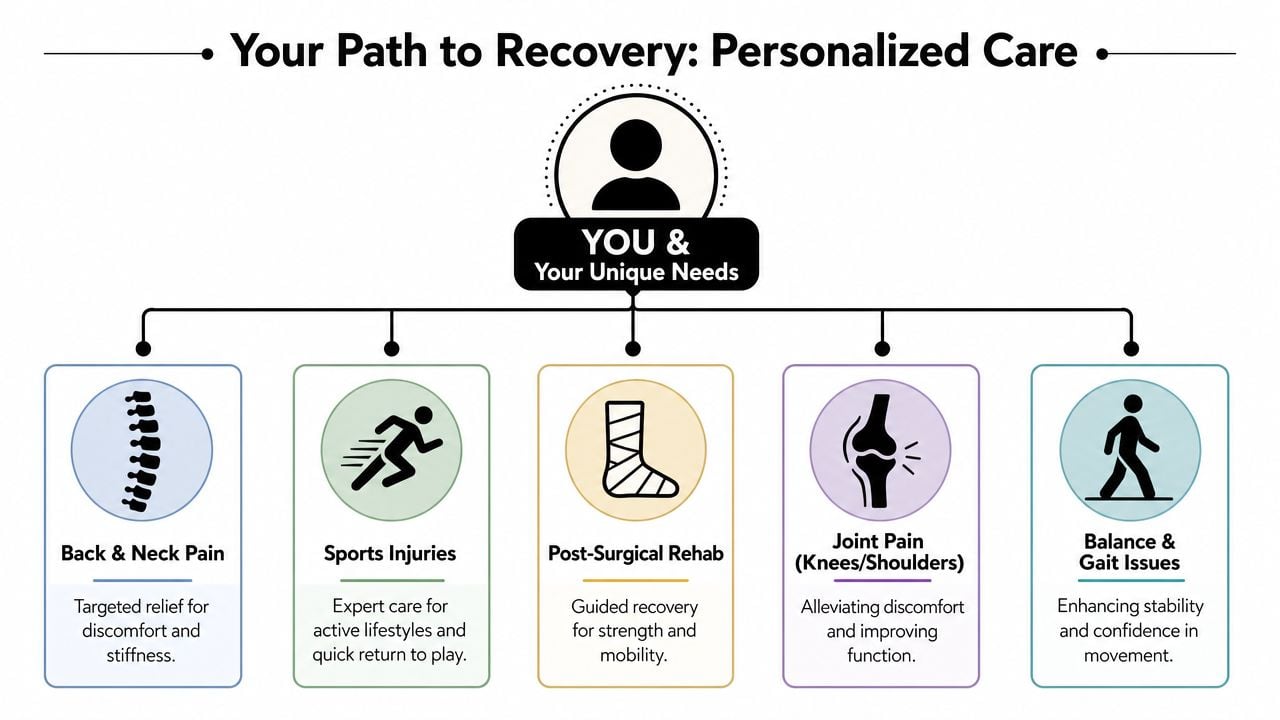
One reason this matters in Kingston is the type of issues that show up most often. Cross River Therapy reports that 46% of patients seek physical therapy for back-related pain. That lines up with what outpatient clinics on the South Shore see every day. Back pain, sciatica, spinal stenosis, and degenerative disc disease are common concerns, especially for adults balancing work, commuting, and staying active.
If your pain started with everyday life
Sometimes the injury wasn't dramatic. It built up.
You may be dealing with:
- Back or neck pain: Common after long hours sitting, lifting, yard work, or repetitive strain.
- Radiating symptoms: Pain, numbness, or tingling that travels into the leg or arm can change how treatment is structured.
- Joint irritation: Knee, hip, shoulder, foot, and ankle pain often show up when load starts exceeding what the tissue can currently tolerate.
These cases usually respond best when the plan is specific. Not every sore back needs the same exercises. Not every stiff shoulder needs rest. The details matter.
If you're active and want to get back to sport
This group includes runners, gym-goers, golfers, youth athletes, and adults trying to return to the activities they enjoy without second-guessing every movement.
A useful plan often includes:
- Calming down the irritated area so basic movement feels manageable again.
- Restoring strength and control in the muscles that support the joint.
- Building back to real activity demands like cutting, landing, carrying, or longer-distance walking and running.
Getting out of pain is only part of rehab. The bigger goal is trusting your body again.
If you're recovering after surgery
Post-surgical rehab needs structure. Patients often feel better when they know what each phase is meant to accomplish. Early work may focus on swelling, motion, and gait. Later work tends to shift toward strength, endurance, and confidence with daily tasks or sports-specific demands.
If balance feels less reliable than it used to
For older adults, or for anyone who feels unsteady, treatment often centers on balance, gait, lower-body strength, and confidence in movement. That can be just as important as pain relief. People want to walk safely, use stairs comfortably, and stay independent.
If you want more in-depth educational content on conditions, recovery timelines, and treatment concepts, Highbar Health has condition guides and clinical resources at highbarhealth.com. That's the right place for the deeper educational side, while local care starts with a plan suited to your day-to-day life here on the South Shore.
Your First Physical Therapy Appointment in Kingston
The first visit is usually easier than people expect. Most patients come in wondering two things: what should I bring, and is this going to hurt? The answer to the first is simple. Bring your insurance information, any referral or surgical paperwork if you have it, and wear clothing you can move in comfortably.
The answer to the second is more personal. A good first appointment shouldn't feel like you're being thrown into a workout. It should feel like a conversation, an evaluation, and the start of a plan.
What the first visit usually looks like
You'll start by talking through your story. Not just where it hurts, but when it started, what aggravates it, what eases it, what you've already tried, and what you need to get back to. For one person that may be walking the beach without limping. For another, it's getting through a workday or returning to the gym.
Then your physical therapist looks at how you move. That may include posture, walking, range of motion, strength, balance, and specific tests based on your symptoms. The point isn't to label every structure. The point is to identify what's limiting you and what we can change.
What to expect before you leave
Most first visits include a few parts:
- A working explanation: You should leave with a clear sense of what seems to be driving the problem.
- A treatment plan: This includes the general path forward, not just a vague “come back and we'll see.”
- A small starting program: Early exercises are usually meant to build momentum, not overwhelm you.
Bring your real goal to the appointment. “Less pain” is fine, but “I want to carry groceries, sleep comfortably, or get back to tennis” gives your rehab direction.
It's also normal if the plan changes as your body responds. Good rehab is collaborative. We listen, test, adjust, and keep the work matched to what your body can handle.
Evidence-Based Care for Lasting Results
Short-term relief has its place. If you're flared up, calming symptoms matters. But symptom relief by itself isn't the same as recovery. Lasting progress usually comes from an active plan that improves strength, movement quality, load tolerance, and confidence.
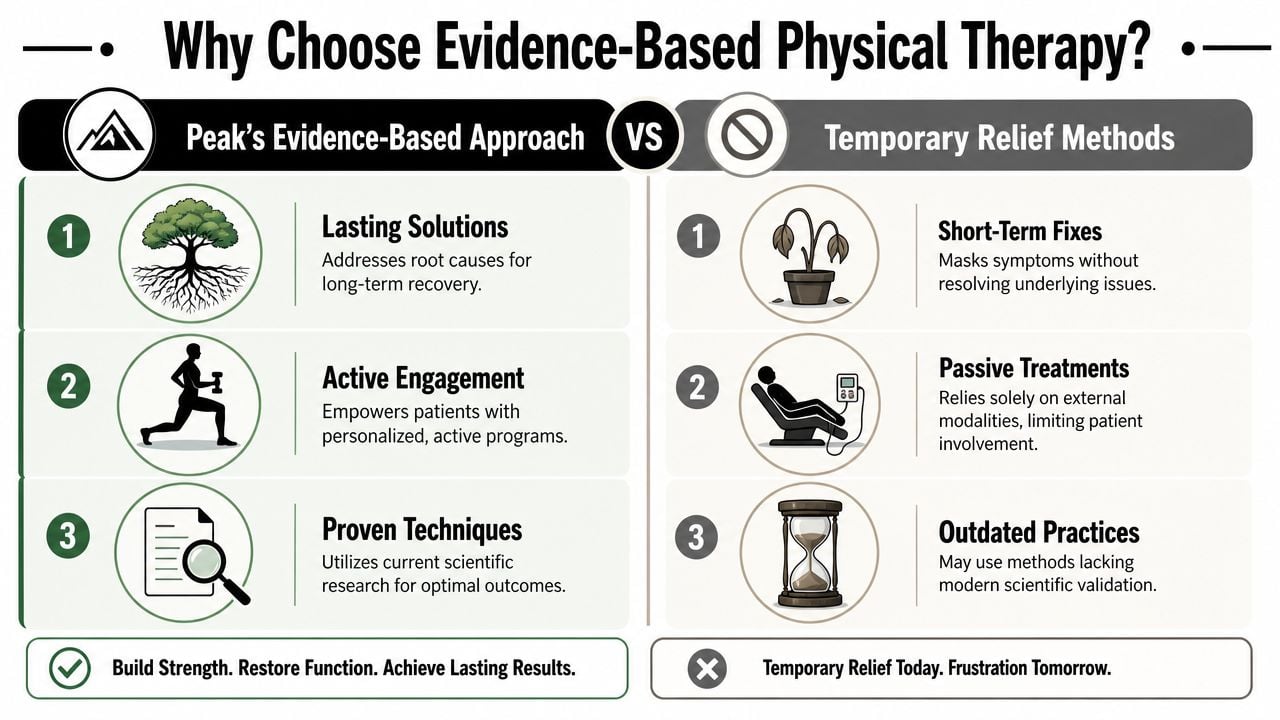
That distinction is especially important for two groups we see often in outpatient care: adults with ongoing joint pain and patients coming back from orthopedic surgery. The Peak Kingston clinic page notes that for conditions like knee osteoarthritis, the American College of Rheumatology strongly recommends exercise therapy, and that post-surgical rehab is safer and more effective when progression is based on objective criteria such as strength and movement quality rather than a rigid timeline.
What tends to work better
Exercise therapy works because it gives the body a reason to adapt. Muscles get stronger. Balance improves. Joints often tolerate more when loading is progressed gradually and purposefully. That doesn't mean every session needs to be intense. It means treatment should be moving toward function.
For example, someone with knee pain often does better with a progressive strengthening and balance program than with passive treatments alone. Someone after surgery usually needs milestones tied to performance, not just the calendar.
| Approach | What it looks like in practice |
|---|---|
| Active recovery | Strengthening, movement retraining, balance work, walking or stair progression, home exercise follow-through |
| Passive-only care | Relief-focused treatment without enough progression into real-life movement demands |
What doesn't hold up over time
Patients often get frustrated when treatment stays stuck at the “feel better today” phase. Hands-on care can be useful. Symptom relief tools can be useful too. But if the plan never transitions into strength, control, and real-world movement, progress can stall.
That's why manual care should support the bigger plan, not replace it. If you want a better sense of where hands-on techniques fit, this overview of manual physical therapy explains how it's used within a broader treatment strategy.
What criterion-based progression means
For post-surgical patients and active adults, progression should answer a simple question: is your body ready for the next step?
That can include looking at:
- Pain and swelling response: Are you tolerating the current level of loading?
- Range of motion and strength: Is the joint moving well, and are the supporting muscles catching up?
- Movement quality: Can you squat, step, land, or change direction with control?
Don't judge recovery only by time passed. Judge it by what your body can do well.
Peak Physical Therapy and Sports Performance offers one-on-one outpatient rehab in Kingston for people working through these kinds of problems, including orthopedic recovery, back pain, balance concerns, and return-to-activity goals. The important part isn't the label on the building. It's whether the plan uses measurable progress and keeps moving toward the life you want to get back to.
Meet Your Local Kingston Physical Therapy Team
People usually feel more comfortable once they realize a clinic isn't just a place. It's a group of therapists who listen well, explain things clearly, and know how to meet patients where they are. That matters in Kingston, where care often feels most effective when it feels personal.
Local care feels different
A South Shore therapist understands the rhythm of local life. Many patients aren't trying to train for something extreme. They want to coach a team, get through a commute, walk the neighborhood, keep up with family, or stay active through the seasons. Those goals deserve the same respect as any sports performance target.
The best therapy teams also know that two people with the same diagnosis may need very different plans. One patient wants to return to tennis. Another just wants to sleep through the night without shoulder pain. Both goals are valid.
What patients usually notice first
The strongest rehab relationships tend to be built on a few simple things:
- Attention: You can tell when a therapist is tracking your progress from visit to visit.
- Clarity: Good clinicians explain why you're doing an exercise, not just how.
- Adaptability: If something isn't working, the plan should change.
Good rehab feels like a partnership. You should never feel like you're guessing what the plan is.
A welcoming team also makes it easier to stick with care when recovery has ups and downs. Most patients won't move in a perfect straight line, and they shouldn't feel discouraged when symptoms fluctuate. The right clinicians keep the plan steady, realistic, and grounded in function.
Directions Insurance and Scheduling Your Visit
When someone is ready to start, the last thing they need is a complicated booking process. The practical details should be simple. The Kingston clinic is located at 187 Summer Street, which makes it easy to reach for patients coming from Kingston and nearby South Shore communities.
Getting to the clinic
If you're coming from the Route 3 corridor, Summer Street is a familiar and convenient route. Many patients choose appointment times around work, school drop-offs, or errands in the area, so easy access matters.
A few practical tips help:
- Leave a little extra time for your first visit: That keeps the check-in process relaxed.
- Wear comfortable clothing: Shorts, athletic pants, or a top that allows easy movement usually works well.
- Bring any helpful records: Surgical instructions, imaging reports, or referral paperwork can be useful if you have them.
Insurance and direct access
Insurance is one of the first questions people ask, and understandably so. Most clinics can help you review benefits and understand what your plan requires before you begin. That's the best way to avoid surprises.
Massachusetts also allows direct access, which means many patients can start physical therapy without first getting a physician referral. If you're not sure what applies to your situation, call and ask. A quick verification can save time.
How to book
The easiest next step is to schedule directly through the clinic. You can request a visit online at Peak's appointment scheduling page.
If you'd rather speak with someone first, that's worth doing too. A short conversation can help you figure out whether your issue belongs in outpatient physical therapy, what to bring, and how soon you can get started.
Your Kingston Physical Therapy Questions Answered
Do I need a doctor's referral to start physical therapy in Massachusetts
Not always. Many patients can begin through direct access. If your insurance plan or medical situation requires anything additional, the clinic can help clarify that before your first appointment.
What should I wear to physical therapy
Wear comfortable clothes that let you move easily and allow the therapist to see the area being treated. For knee, hip, or ankle issues, shorts are often helpful. For shoulder or neck concerns, a loose top usually works well.
How long does a physical therapy appointment take
Visit length can vary based on the evaluation or treatment plan. The first appointment is typically longer because it includes the full history, movement assessment, and plan creation. Follow-up visits focus on treatment progression and reassessment.
What kinds of problems are treated at a Kingston clinic
Outpatient physical therapy commonly helps with back pain, neck pain, joint pain, post-surgical recovery, sports injuries, balance concerns, and gait issues. If you're unsure whether your problem fits, call and ask. That's a normal question.
Do you only treat Kingston residents
No. A Kingston location often serves people from surrounding South Shore towns as well. Many patients choose care based on convenience to home, work, school, or commuting routes.
What if I'm nervous about starting
That's common. Most new patients aren't worried about exercise itself. They're worried that therapy will hurt, feel awkward, or be too complicated. A good first visit should lower that stress. You should leave understanding your problem better than when you walked in.
When should I book instead of waiting longer
Book when pain is limiting your routine, you're avoiding normal movement, or recovery after surgery or injury feels stalled. Waiting sometimes helps minor flare-ups settle. It doesn't help when the problem keeps returning or starts changing how you move.
If you're ready to take the next step, Peak Physical Therapy and Sports Performance can help you get started with local care that's built around your goals, your schedule, and your life on the South Shore. Book an appointment, ask your questions, and start moving toward recovery with a clear plan.