
You hurt yourself at work, told yourself it would calm down in a day or two, and now simple things feel off. Turning the wheel hurts. Climbing into the truck hurts. Reaching overhead in the stockroom hurts. If you're on the South Shore and trying to figure out what happens next, you're not alone. Individuals in this situation aren't just worried about pain. They're worried about paychecks, paperwork, and whether getting help will turn into a fight with workers' comp.
That uncertainty is why work injury physical therapy in South Shore MA needs to be practical, not vague. You need to know who to call, what to bring, when to start, and what physical therapy is meant to do for a real job, not just for a sore shoulder on an exam table.
Table of Contents
- What Work Injury PT Means for South Shore Workers
- The First Step Navigating Workers Comp for PT
- Your Initial Evaluation at a Peak South Shore Clinic
- Common Treatments to Get You Back on the Job
- Recovery Timelines and Returning to Work Safely
- Work Injury PT FAQs for South Shore Patients
- Can I start PT if my workers' comp claim is still pending
- What if therapy isn't helping enough
- Do I have to go where the insurer tells me to go
- Will my physical therapist talk to my doctor
- Will my employer get all my medical details
- What if my injury isn't a simple strain
- What should I wear to PT
- How often will I go
- What can I do between visits
- When should I worry that something else is going on
- Start Your Recovery at a Peak Clinic Near You
What Work Injury PT Means for South Shore Workers
A work injury looks different depending on your job. It might happen lifting a patient in Braintree, carrying material on a site in Quincy, unloading gear near Plymouth, or slipping during a long shift anywhere on the South Shore. What those situations share is this: you don't just need the pain to settle down. You need your body to handle your actual work again.
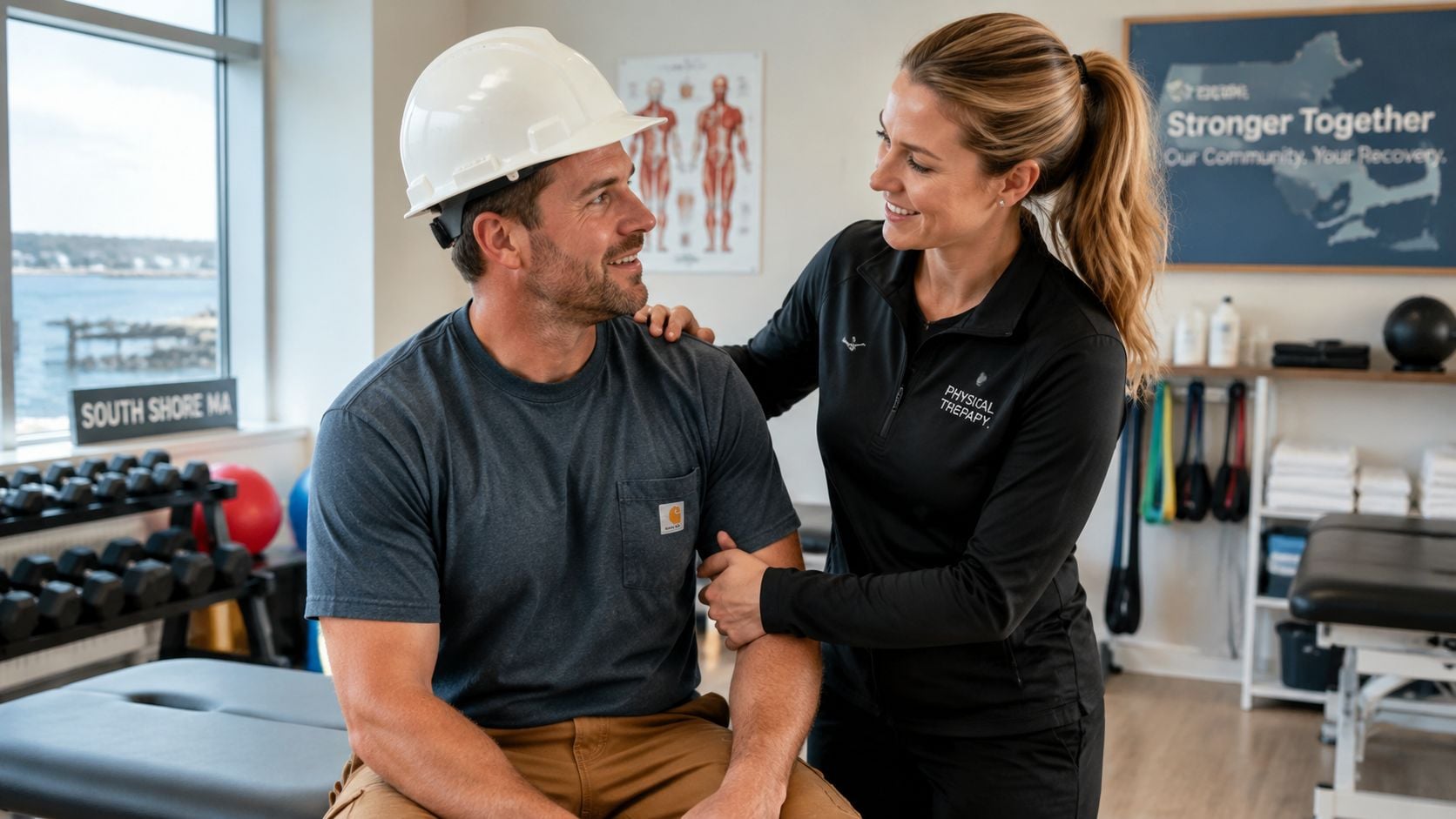
Work injury physical therapy is different from general PT because the target isn't only symptom relief. The target is function. Can you squat, carry, push, pull, reach, climb, twist, stand, or tolerate a full shift without breaking down again? That's the question that guides treatment.
South Shore providers have long helped residents recover from injuries, and local rehab care reflects a broad model rather than a single-diagnosis approach. South Shore Health describes physical therapy as helping residents recover from injuries or illnesses for decades and lists conditions that include orthopedic injuries, back pain, neck pain, concussion or head injury, chronic pain, vertigo or dizziness, mobility issues, and lymphedema on its physical therapy services page.
What makes work injury rehab different
In this setting, the job matters as much as the body part. A warehouse worker with back pain and an office worker with back pain may both have trouble bending, but their plans shouldn't look the same. One may need loaded lifting tolerance. The other may need postural endurance, movement breaks, and workstation changes.
That means good care asks questions like:
- What does your shift involve. Lifting, repetitive reaching, stairs, transfers, driving, kneeling, walking on uneven ground, or long periods at a desk.
- What can you do now without a flare-up. Not just what hurts, but what tasks trigger the problem.
- What has to improve before work feels safe again. Strength, balance, stamina, neck motion, grip, reaction time, or confidence.
Work injury rehab works best when therapy is built around the demands waiting for you at work, not just the diagnosis written on the referral.
Some injured workers also aren't dealing with one clear event. They have repetitive strain, gradually worsening back pain, or shoulder and hand symptoms that built up over months. If that sounds familiar, it can help to read more about occupational musculoskeletal injury claims so the legal and documentation side makes more sense alongside your rehab.
What tends to work and what usually doesn't
What works is early clarity, honest communication, and a plan tied to tasks that matter. What doesn't work is waiting for pain to disappear on its own while avoiding all movement, then trying to jump straight back into full duty.
People usually do better when they treat rehab as a bridge back to normal work, not as a separate medical chore. The point isn't to prove toughness. The point is to recover in a way that lasts.
The First Step Navigating Workers Comp for PT
The most confusing part for many South Shore workers isn't the exercise plan. It's the insurance path. They know they need help, but they don't know if they need a referral, whether treatment can start right away, or what happens if the claim is still moving through the system.
That confusion matters because delays can change the whole course of recovery. A local review of this problem points out that workers' compensation often affects access to PT and emphasizes that delayed rehabilitation is linked to longer disability, which is why early, function-based care matters on the Mobility Plus physical therapy page.
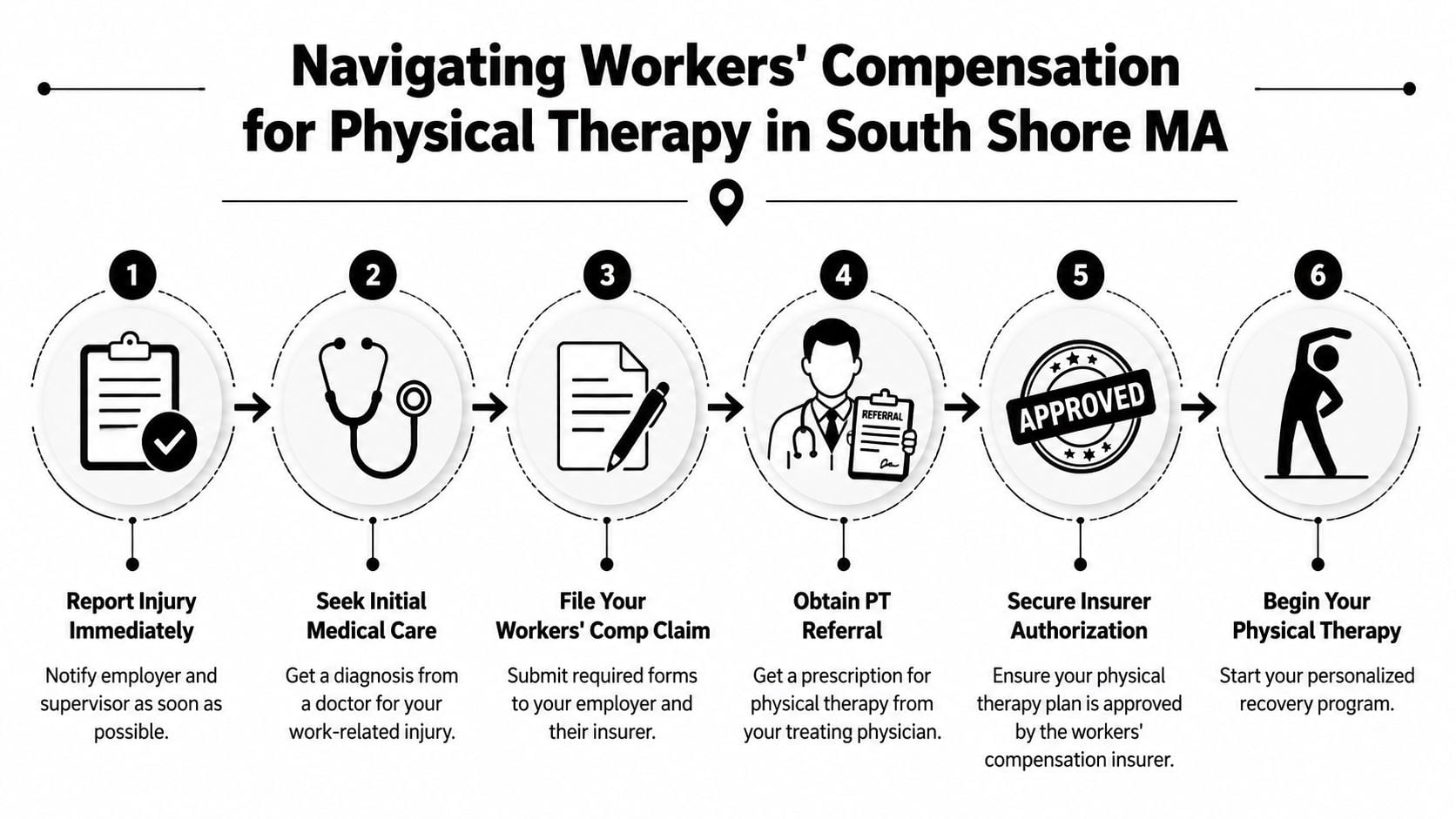
The basic sequence to follow
If you were injured at work in Massachusetts, this is the practical order to think about.
Report the injury right away
Tell your supervisor or employer as soon as possible. Be specific about what happened, when it happened, and what body part was affected. If symptoms built up over time, explain the work tasks that seem connected.Get medical care and an initial diagnosis
Many patients first see an urgent care provider, occupational medicine physician, primary care doctor, or specialist. That visit helps document the injury and identify whether PT fits the problem.Ask directly about the PT referral
A lot of treatment delays happen because everyone assumes someone else handled the referral. Before you leave the medical visit, ask whether physical therapy is being prescribed and where that order is being sent.Confirm claim and authorization details
Workers' comp cases often involve claim numbers, adjusters, employer information, and authorization questions. Have those details ready when scheduling.Choose a clinic that can work through the paperwork with you
The care itself matters, but so does the front-desk process. If the scheduling team can't tell you what information is needed, delays pile up fast.
The questions people usually ask first
Do I need a referral?
In many work injury cases, a referral or prescription is part of the process. The safest move is to assume you should get one unless your treating provider and the clinic confirm otherwise.
What if the insurer is slow to approve visits?
Stay in contact with both the clinic and the adjuster. A surprising number of delays come down to missing paperwork, unclear diagnosis wording, or an unsigned order. Fast follow-up helps.
Can I choose my own physical therapist?
That question comes up all the time, especially when a worker is told where to go without much explanation. The answer can depend on claim details and plan requirements, so it's smart to ask directly before your first appointment is scheduled.
Practical rule: Keep a simple record with the injury date, the claim number if you have one, your adjuster's name, your doctor's name, and copies of any referral paperwork.
When the claim feels messy
Not every case is clean. Some are denied at first. Some are pending. Some involve disputes about whether the injury is work-related or whether ongoing care is necessary. When that happens, patients often want a plain-English explanation of legal costs before they decide whether to get advice. A consumer-friendly guide to workers' comp lawyer expenses can help you understand that piece without adding more confusion.
For the clinic side of things, it's also helpful to review Peak's insurance information before you book. That gives you a clearer sense of what details to have ready.
What helps most in real life
Workers' comp cases move better when you stay organized and communicate early. The people who get stuck are often the ones who assume the paperwork is handling itself in the background.
A short checklist can keep things moving:
- Save every document you receive from the doctor, employer, and insurer.
- Write down names and dates after phone calls so you don't have to guess later.
- Ask what is still missing instead of asking generally whether you're approved.
- Push for early scheduling once the referral is in place, because waiting usually doesn't help a musculoskeletal injury.
Your Initial Evaluation at a Peak South Shore Clinic
Most injured workers walk into the first PT visit with the same concern. They don't want a lecture. They want someone to listen, figure out what's limiting them, and give them a plan they can use.
Your first appointment should feel like a working session, not a test you can fail. If you're coming into a South Shore clinic from Hanover, Weymouth, Scituate, or another nearby town, bring your referral if you have one, your workers' comp information, a photo ID, and clothes you can move in comfortably. If you use a brace or support at work, bring that too.
What the visit usually includes
A strong work-injury evaluation starts with your story. How did it happen. What movements bring on symptoms. What part of the day is worst. What your job asks from you. What you've already tried.
Then the therapist measures what matters. Southcoast Health describes a thorough PT evaluation as including strength, range of motion, posture, balance, and functional capacity on its physical therapy overview. Those pieces matter because work injuries often involve more than pain alone. People also lose control, endurance, coordination, and confidence.
What that looks like in the room
For a back injury, you may be asked to bend, squat, lift lightly, walk, or change positions several times. For a shoulder injury, the therapist may check overhead reach, grip, carrying tolerance, and how your shoulder blade moves. If balance or dizziness is part of the picture, the exam may include positional and walking tasks.
You should also expect questions that connect directly to work, such as:
- How much are you lifting on a normal day
- Do you have to climb, carry, or work overhead
- Are you on light duty now, or fully out
- What task are you most worried about returning to
A good first visit doesn't rush to treatment before the therapist understands the demands of your job.
If you're still sorting out where to go, this guide on how to choose a physical therapist can help you think through fit, communication style, and practical logistics.
What you should leave with
By the end of the evaluation, you should have a working diagnosis from the referring provider in mind, a clearer picture of your current limitations, and a treatment plan that makes sense. You should know what you're trying to improve first, what to avoid for now, and what progress will look like over the next phase of care.
That clarity matters. When patients understand the plan, they usually follow through better and feel less anxious about every ache during recovery.
Common Treatments to Get You Back on the Job
Work injury rehab shouldn't feel random. The exercises, hands-on treatment, and job-specific drills should match the way you got hurt and the way you earn a living. That's what makes the difference between feeling a little better and being ready for a full shift.
One of the most useful models in this setting combines job-specific capacity assessment with ergonomic modification. Spaulding Rehab explains on its work injury rehabilitation page that this approach helps patients understand their work capacities relative to job requirements and gives them tools for work and daily tasks while managing symptoms.
The treatments that usually matter most
Some people need pain relief first so they can move normally again. Others are past that stage and need load tolerance, stamina, and work simulation. Most need both at different times.
Common pieces of treatment may include:
- Hands-on care for painful or stiff areas. This can help reduce guarding and make movement training easier.
- Targeted mobility work. Helpful when an injury leaves you unable to bend, rotate, reach, or squat well.
- Strength training with a job purpose. Not generic gym work. Carrying, lifting, pushing, pulling, step-ups, overhead control, or grip work tied to your tasks.
- Work conditioning drills. Repeated movements that build tolerance for the physical demands of a shift.
- Ergonomic coaching. Small changes in setup, body mechanics, pacing, or tool position that reduce repeated irritation.
Work Injury PT on the South Shore
| Industry / Job Role | Common Injury | PT Goal |
|---|---|---|
| Construction and trades | Back strain, shoulder pain, knee irritation | Restore lifting, carrying, climbing, kneeling, and overhead tolerance |
| Healthcare workers | Neck pain, low back pain, shoulder strain | Improve transfer mechanics, endurance, and safe patient-handling capacity |
| Warehouse and delivery | Back pain, ankle injury, repetitive shoulder symptoms | Build repeated lift tolerance, balance, and load management |
| Office and administrative work | Neck pain, upper back pain, wrist or shoulder irritation | Improve posture tolerance, workstation habits, and movement variability |
| Hospitality and service work | Foot, ankle, knee, and back pain | Support standing tolerance, walking tolerance, and bending without flare-ups |
| Marine and outdoor labor | Shoulder, back, and balance-related issues | Improve uneven-surface control, carrying capacity, and whole-body endurance |
What tends to fail
A few things routinely slow people down.
- Passive care only. If treatment never progresses beyond heat, massage, or brief table work, return to work often stalls.
- Exercises with no job connection. Patients lose confidence when they can't tell how the plan translates to real tasks.
- Going back too hard, too fast. A good week in the clinic doesn't always equal readiness for a full shift.
- Ignoring the setup that contributed to the problem. If the injury came from repeated mechanics, the same pattern can bring it right back.
One option for local care is Peak Physical Therapy and Sports Performance, which provides outpatient physical therapy across South Shore communities and can be part of a work-injury rehab plan when PT is appropriate and authorized.
The best treatment plan is the one that bridges the gap between what you can do today and what your job will ask you to do next week.
Recovery Timelines and Returning to Work Safely
A common question by the second visit is simple. How long is this going to take? The honest answer is that recovery timelines vary. A mild strain, a more involved shoulder injury, persistent dizziness after a fall, and post-surgical rehab all move differently.
What helps is thinking in phases instead of chasing one finish line. Returning to work safely is usually a progression, not a single day where everything suddenly feels normal again.
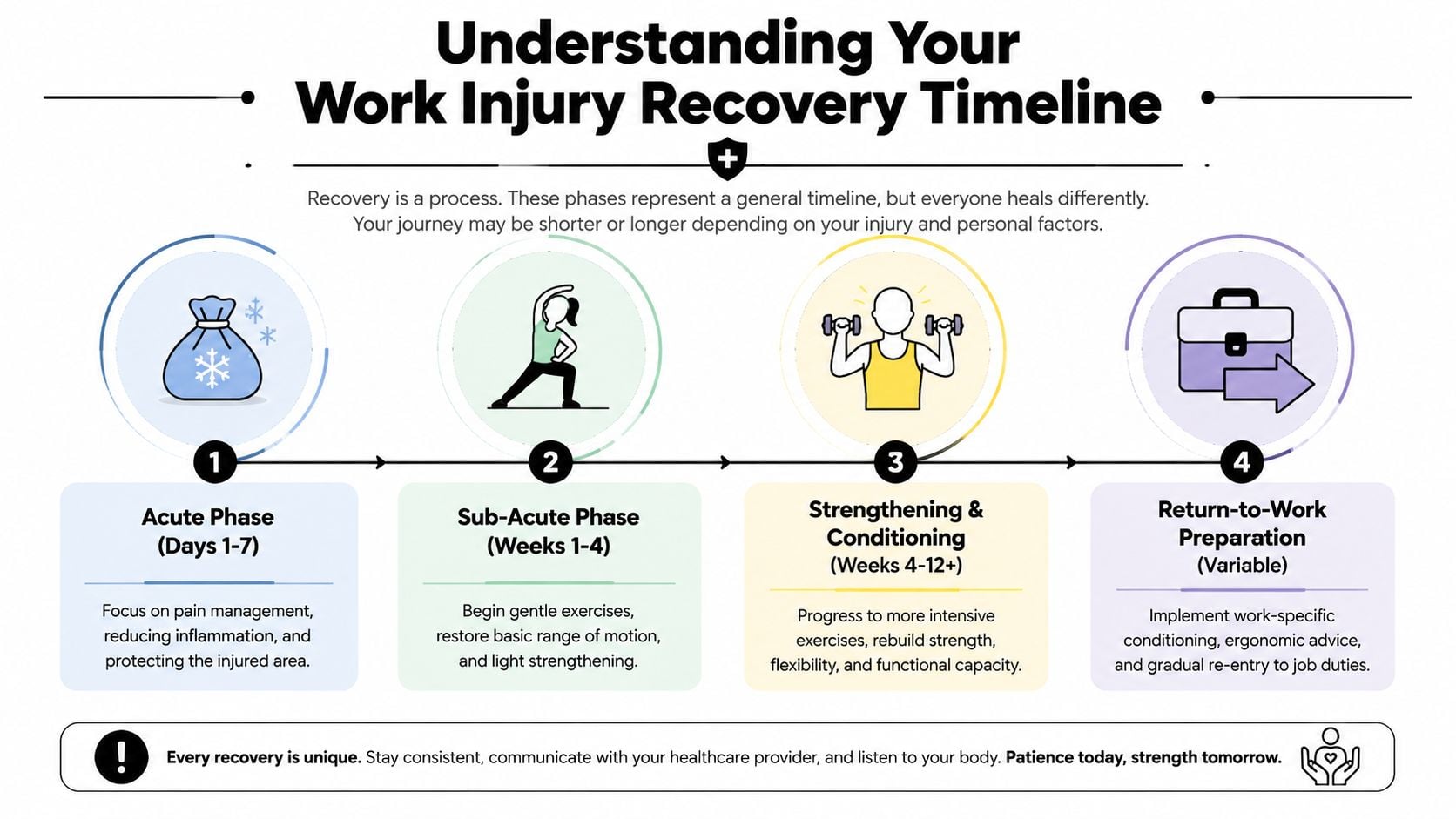
The phases most workers move through
Early phase
The focus is calming the area down enough to restore basic movement. That may mean reducing pain, protecting an irritated structure, and getting you out of the pattern of guarding every motion.
Rebuild phase
Once movement improves, treatment shifts toward strength, range, balance, and tolerance. At this point, people often feel impatient because they're better, but not ready.
Work-specific phase
Now the question becomes whether you can repeat the demands of your job with control. Can you lift from the floor. Push a loaded cart. Reach overhead repeatedly. Work through a whole shift's worth of positions.
What safe return to work usually looks like
A good return doesn't require you to be symptom-free in every circumstance. It does require that you can perform your essential tasks safely and recover well afterward. Sometimes that means modified duty first. Sometimes it means restrictions that change as capacity improves.
The field itself is built to support this kind of access. The Bureau of Labor Statistics reports a median annual wage of $101,020 for physical therapists in May 2024, projects 11% employment growth from 2024 to 2034, and projects about 13,200 openings per year on average in the profession on its physical therapist occupation page. For South Shore workers, that reinforces why timely access to outpatient PT matters when a work injury threatens to stall.
Don't measure progress only by pain. Measure it by what you can do, how long you can do it, and how your body responds the next day.
A common workers' comp term to know
If your case goes on for a while, you may hear the phrase MMI. That stands for maximum medical improvement. It has legal and benefits implications, and patients often misunderstand it as meaning "fully healed," which isn't always how the term is used in claims. This plain-language explanation of maximum medical improvement and your benefits can make that part easier to follow.
For deeper education on injury-specific recovery patterns, anatomy, and rehab principles, visit the clinical resources at Highbar Health. That's the right place if you want a broader educational breakdown beyond this local guide.
Work Injury PT FAQs for South Shore Patients
Can I start PT if my workers' comp claim is still pending
Sometimes yes, sometimes not. It depends on how the claim is being handled and whether authorization is required before visits begin. The fastest way to avoid surprises is to ask the clinic exactly what documentation is needed before your first appointment is confirmed.
What if therapy isn't helping enough
Say that early. Don't wait three weeks pretending everything is fine. A good PT plan should adjust if you're not responding. That may mean changing the exercise dose, looking harder at work triggers, checking whether the diagnosis needs to be revisited, or communicating with the referring provider.
Do I have to go where the insurer tells me to go
Coverage rules can affect your options, but you should still ask questions before assuming you have no say. Find out whether the clinic has experience with work injuries, whether they can coordinate documentation well, and whether the location is realistic for consistent attendance from your part of the South Shore.
Will my physical therapist talk to my doctor
Often yes, especially when work status, restrictions, or progress need clarification. Good communication between the therapist and referring provider helps everyone stay on the same page.
Will my employer get all my medical details
Employers typically care most about work status, restrictions, and whether you can perform certain duties safely. If you have concerns about privacy and what gets shared, ask directly so expectations are clear.
What if my injury isn't a simple strain
That's important. Not every work injury follows the usual orthopedic path. Falls, head impacts, dizziness, concussion symptoms, persistent pain, and mixed presentations may need a different rehab pathway or a different specialist involved. If your symptoms don't fit the usual pattern, say that clearly at the first visit.
If you feel dizzy, foggy, off-balance, or unusually sensitive to motion after a work incident, don't assume it's just a routine muscle injury.
What should I wear to PT
Wear clothes you can move in. If your therapist needs to see your knee, shoulder, or ankle move, restrictive workwear makes that harder. Sneakers are usually a safe choice unless you've been told otherwise.
How often will I go
That depends on the injury, your stage of recovery, and what the referral authorizes. Some workers need closer follow-up early. Others do better with a mix of in-clinic care and a home program they can stick with consistently.
What can I do between visits
Usually the basics matter most.
- Follow the home plan exactly instead of adding random exercises from the internet.
- Track what flares you up so your therapist can spot patterns.
- Use good pacing at home and work if you're on light duty.
- Keep your appointments steady because long gaps make progress harder to judge.
When should I worry that something else is going on
Speak up if symptoms are spreading, changing quickly, or not matching the expected pattern. New numbness, worsening balance problems, ongoing dizziness, severe headaches after a head impact, or pain that keeps escalating deserve attention.
Start Your Recovery at a Peak Clinic Near You
If you're dealing with a work injury, the hardest part is often getting started. Once you have a clear plan, the process usually feels much more manageable. South Shore workers need care that is close to home, practical about paperwork, and focused on getting real job function back.
Peak has clinics across the region, including Braintree, Quincy, Weymouth, Cohasset, Duxbury, East Bridgewater, Hanover, Kingston, Milton, Norwell, Pembroke, Plymouth, and Scituate. If you want a convenient local option, this guide to physical therapy near me on the South Shore can help you find the right location.
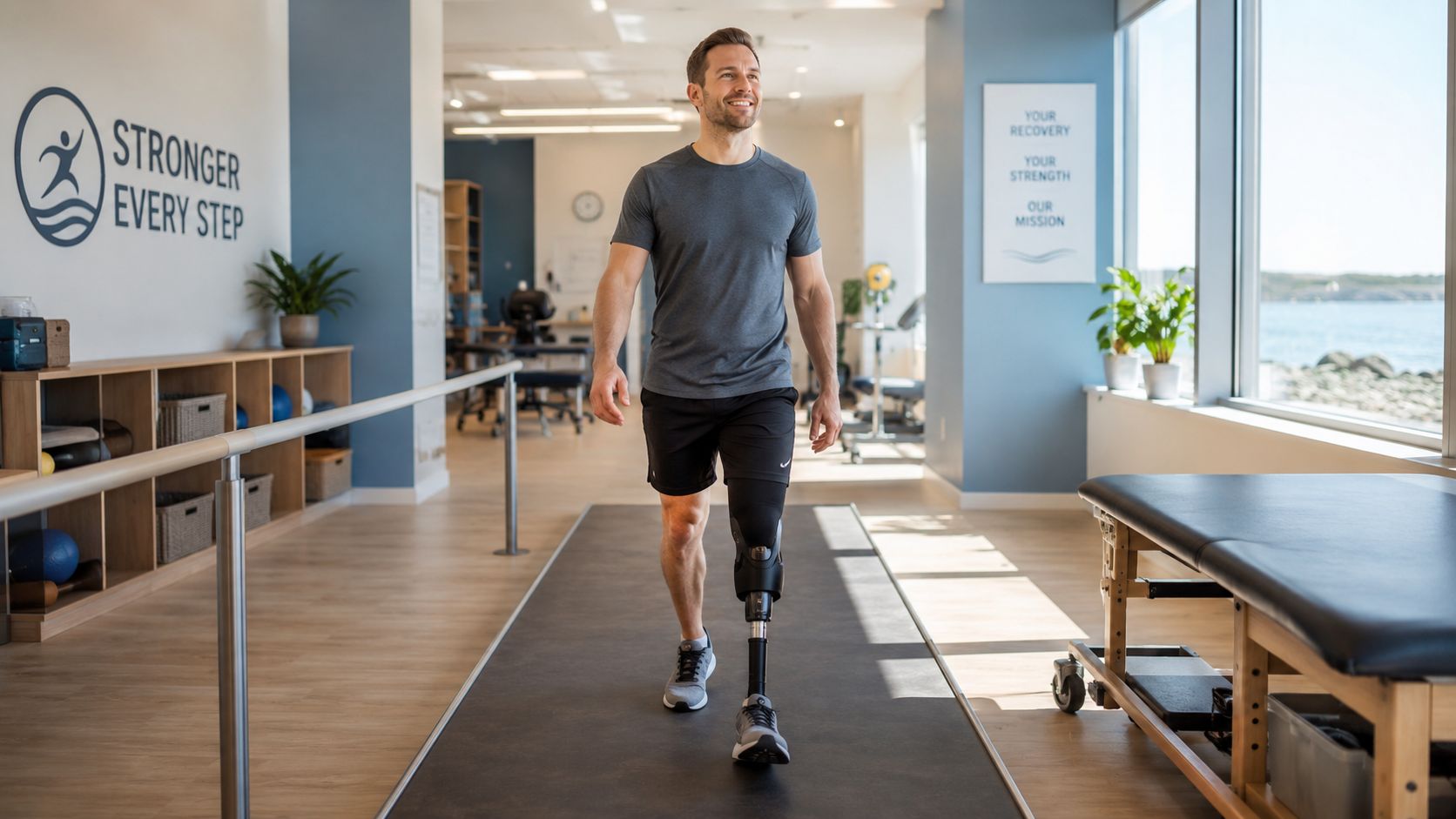
Book your evaluation, bring your work injury details, and let the clinic help you sort out the next step. The sooner the process is clear, the sooner recovery can start.
If you've been searching for work injury physical therapy in South Shore MA, Peak Physical Therapy and Sports Performance can help you take the next step. Schedule an appointment, verify your insurance information, and find a nearby South Shore location so you can start moving toward a safer return to work.