You wake up planning for a normal South Shore day. Then your back locks up getting into the car. Your knee swells after a walk. Your shoulder still hurts from lifting, serving, throwing, or sleeping on the wrong side. Suddenly the search becomes practical fast. You're not looking for a lecture. You're looking for physical therapy near me on the South Shore, MA that's close, appropriate for your problem, and easy to start.
That's usually where people get stuck. Not on whether physical therapy can help, but on the logistics. Which clinic is convenient from Braintree, Quincy, Weymouth, or Plymouth? Which one handles your kind of issue? Can you get in quickly? Will your insurance work? If you've been asking those questions, you're in the right place.
Table of Contents
- Your Partner in Health on the South Shore
- Find a Peak Physical Therapy Clinic Near You
- What to Expect From Your Care at Peak
- Specialized PT Services for Every South Shore Resident
- Meet Your Neighbors Your Physical Therapists
- How to Schedule an Appointment and Verify Insurance
- South Shore Physical Therapy FAQs
Your Partner in Health on the South Shore
You feel it in the spots that matter first. Getting out of the car in Quincy. Carrying groceries into the house in Hanover. Walking the beach in Duxbury and cutting the route short because your knee or back starts talking halfway through.

That is usually when individuals look for physical therapy near me on the South Shore. They are not looking for a long lecture. They want to know three practical things. Can I get in soon, will my insurance work here, and is this the right clinic for the problem I have?
Physical therapy has been part of community care on the South Shore for decades because the same pattern keeps showing up. People try to work around pain until work, parenting, commuting, or sleep gets harder. By the time they call, they need a plan that fits real life, not a generic set of exercises.
Why local care matters more than people think
Location affects follow-through. If visits require a difficult drive, awkward parking, or a schedule that clashes with school pickup and train timing, care often gets delayed or cut short before the problem is fully addressed.
The better choice is the clinic that fits your week and your condition. For a commuter, that may be a clinic near the route to work, such as the Braintree physical therapy clinic. For someone recovering after surgery, it may be the location that can see them at the right frequency without turning each visit into a project.
I tell patients to look at treatment the same way they look at any other routine on the South Shore. If it does not fit into traffic, family schedules, and the way you move through the week, it usually does not last.
What actually helps you choose the right PT clinic
Start with the problem, then match the clinic to it.
A sore shoulder from lifting at the gym, dizziness when you roll in bed, pelvic floor symptoms after pregnancy, and stiffness after a knee replacement should not all be funneled into the same type of visit. The right fit depends on whether the clinic can handle your diagnosis, coordinate with your physician if needed, and keep the scheduling process simple.
Before you book, check these points:
- Insurance fit: Ask whether your plan is accepted and whether you need a referral or authorization.
- Clinical fit: Confirm the clinic treats your specific issue, especially for vestibular care, pelvic health, pediatrics, sports injuries, or post-operative rehab.
- Schedule fit: Look for appointment times and a location you can realistically attend more than once.
- Care style: Choose a clinic that evaluates progress and updates the plan instead of repeating the same session every week.
The common mistakes that slow recovery
Waiting is one problem. Choosing based only on the fastest phone answer is another.
Good physical therapy on the South Shore should reduce friction from the start. That means clear scheduling, help verifying coverage, and access to the right specialty early, before a simple issue turns into weeks of missed activity. Pain changes routines fast. Getting the right care quickly is often what keeps it from taking over the rest of your month.
Find a Peak Physical Therapy Clinic Near You
If you searched for physical therapy near me South Shore MA, the first practical question is simple. Where can you go without turning every appointment into a half-day project?
Peak has clinics across the South Shore in Braintree, Quincy, Weymouth, Cohasset, Duxbury, East Bridgewater, Hanover, Kingston, Milton, Norwell, Pembroke, Plymouth, and Scituate. That matters because true convenience is sought, avoiding clinics that look good on a map but prove a hassle in traffic, between work calls, or around school pickup.
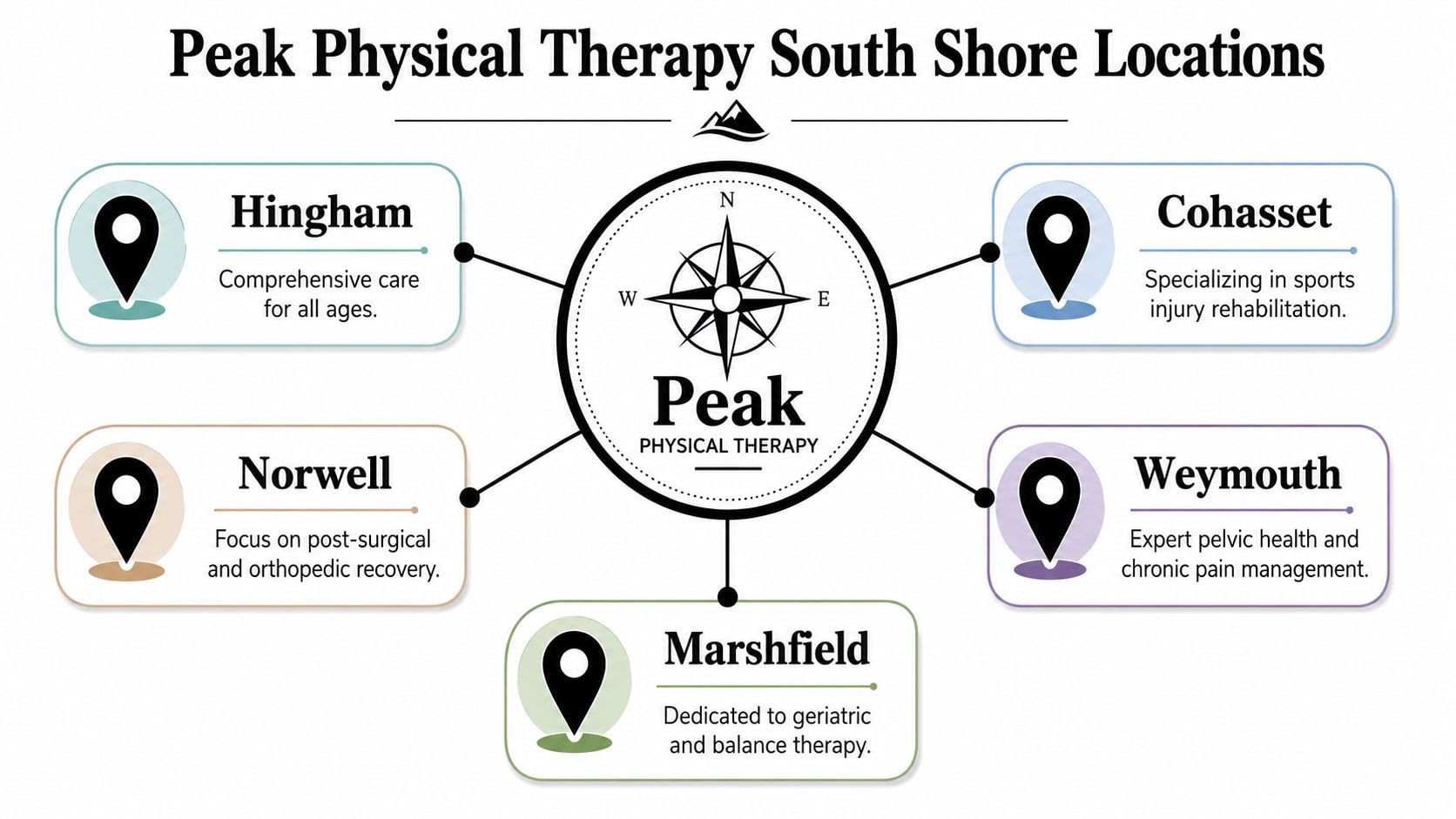
Choose the location that fits your real routine
Don't just pick the town closest to home. Pick the clinic that fits the way your week works.
For some people, that's the location near work. For others, it's the one that avoids the worst traffic pattern or sits near a child's practice field. If you're north of the South Shore or commuting through that corridor, the Braintree physical therapy clinic is one example of a location people consider when they want care that's easy to reach during a busy week.
Here's a practical way to narrow it down:
- If you commute daily: choose the clinic that sits on your normal route.
- If you're recovering from surgery: choose the location that makes repeat visits easiest.
- If pain flares with driving: shorter trips usually improve consistency.
- If you're coordinating family schedules: pick the town where errands, school, or work already happen.
A simple way to pick the right clinic
Many people overthink this and delay starting. You don't need the perfect map analysis. You need a clinic you'll attend consistently.
Ask yourself:
- Which location is easiest to reach twice a week if needed?
- Which location lines up with my workday or caregiving schedule?
- Do I need a clinic that can connect me to a more specific service if my case is more involved?
Missed visits slow recovery more than people expect. The best plan on paper still depends on showing up.
If you're comparing towns like Quincy, Weymouth, Norwell, or Plymouth, the smart choice is usually the one that removes friction. Starting sooner at a realistic location often beats waiting for an ideal appointment that doesn't fit your life.
What to Expect From Your Care at Peak
You finally get an opening that fits your week. The visit should leave you with more than a few exercises and a vague plan. You should walk out knowing what is causing the problem, what needs to improve first, and how treatment will fit your schedule, insurance limits, and day-to-day demands on the South Shore.
At Peak, care starts with a clear evaluation. We look at how you move, where strength or mobility breaks down, what brings symptoms on, and what matters in your routine. For one person, that means getting through a commute without back pain. For another, it means returning to youth sports, lifting a child, or getting back to beach walks after surgery.
Good therapy is specific.
Your plan of care should be tied to findings you can feel and measures we can recheck over time, such as motion, strength, balance, walking quality, and function during the tasks that matter to you. That usually leads to fewer wasted visits because treatment has a target. It also helps if you need authorization or visit approval through insurance, since documented progress makes the case for continued care much clearer.
A useful first visit often answers questions like these:
- What movement problem is driving the pain or stiffness?
- What can I safely do right now at home, at work, or in the gym?
- How often should I come in based on my goals and insurance plan?
- What signs would show that the plan is working over the next few visits?
That last point matters more than people expect. Someone training for spring races in Hingham has different benchmarks than a retiree in Plymouth working on balance, or a parent in Weymouth trying to carry groceries and a toddler without flaring a shoulder.
Treatment should also change as your body changes. If stairs still irritate your knee, we adjust the plan. If your shoulder moves better but still pinches when you reach overhead, we test why and treat that limitation directly. Sessions should build on each other instead of repeating the same routine every week.
If surgery is part of your situation, structure matters even more. A phased plan helps you know what to protect, what to start, and when to progress. This guide to post-surgical rehab on the South Shore gives a practical overview of that process.
Some patients also need care that goes beyond a standard orthopedic visit. Pelvic floor symptoms, for example, can show up as back, hip, or core issues, and they are often missed when nobody asks the right questions. If that sounds familiar, this expert advice on pelvic health is a helpful starting point.
A good PT plan should feel organized, practical, and realistic for your life. You should know what you are working on, why it matters, and what the next step is before you leave the clinic.
Specialized PT Services for Every South Shore Resident
A runner in Hingham trying to train around Achilles pain needs a different plan than a new mom in Weymouth dealing with pelvic pressure, or a retired homeowner in Plymouth who feels unsteady on stairs. On the South Shore, that difference matters because people are trying to get back to very specific parts of daily life, fast.
The practical question is not whether a clinic offers physical therapy. The better question is whether the clinic can match the right kind of therapy to the problem you have, without sending you in circles or delaying care.
Why specialty access matters
Specialty care changes the plan from day one.
After surgery, rehab usually needs clear protection phases, range-of-motion goals, strength progressions, and gait work. Dizziness calls for vestibular testing and treatment, not general exercise. Pelvic floor symptoms often need a private, more specific evaluation than a standard orthopedic visit. If a clinic can handle those needs in-house, patients usually spend less time searching for the next referral and more time making progress.
That matters on the South Shore, where schedules are tight and commute time adds up. Getting to a convenient Peak location for the right specialty can save a lot of frustration.
Services that fit common South Shore needs
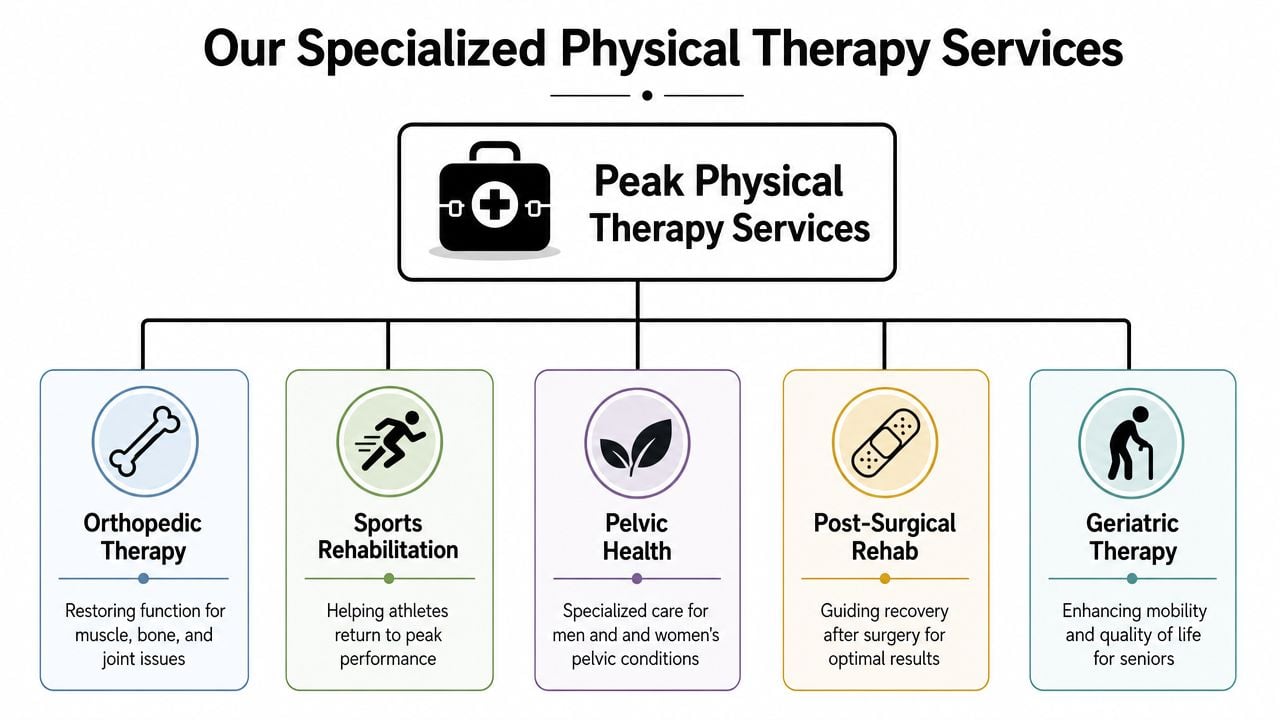
- Post-surgical rehab for joint replacements, ligament repairs, and other orthopedic procedures where timing and progression matter.
- Sports rehabilitation for athletes and active adults who want a safer return to running, lifting, field sports, or weekend recreation.
- Pelvic health therapy for pregnancy, postpartum recovery, leaking, pelvic pain, pressure, and core-related symptoms. If you want a plain-language overview alongside clinical care, this article with expert advice on pelvic health is a useful starting point.
- Pediatric physical therapy for children who need help with coordination, strength, movement skills, or developmental support.
- Balance and vestibular care for dizziness, fall risk, gait changes, or feeling less steady than usual.
- Orthopedic physical therapy for the back, neck, shoulder, hip, knee, ankle, and the everyday aches that make work, sleep, or errands harder.
Find the right fit for your goals
| Your Goal or Condition | Peak Specialty Service | How It Helps You |
|---|---|---|
| Recover after an operation | Post-surgical rehab | Rebuilds mobility, strength, walking quality, and confidence in a staged way |
| Get back to sports safely | Sports rehabilitation | Restores movement, loading capacity, and return-to-play readiness |
| Manage pregnancy or postpartum symptoms | Pelvic health therapy | Addresses pelvic floor concerns, pressure, pain, and function in daily life |
| Help a child move more confidently | Pediatric physical therapy | Supports motor skills, coordination, and functional movement |
| Feel steadier on your feet | Balance and vestibular care | Targets dizziness, gait issues, and fall-risk concerns |
| Reduce joint or muscle pain in daily life | Orthopedic physical therapy | Improves movement quality, strength, and tolerance for normal activities |
The right specialty should make booking easier, not harder. If you already know your problem is sports-related, post-surgical, pelvic health, or balance-based, ask for that service when you schedule so the first visit starts with the right clinician.
Meet Your Neighbors Your Physical Therapists
You tweak your back lifting a cooler into the car before a weekend on the water, or your knee starts barking after a few days of commuting, errands, and chasing kids between fields. By the time you look up physical therapy, you usually want two things fast. A clinician who gets what your day looks like, and a clinic process that does not add more friction.
That first conversation matters more than people expect. Patients may not remember every exercise name, but they do remember whether the therapist listened carefully, explained the plan in plain language, and gave them a realistic sense of what improvement should look like.
Good care feels personal because it is built around specifics. The details change the plan.
- How the problem started, including whether it came on suddenly or built up over time
- What is limiting you now, from stairs and sleep to work tasks, driving, or weekend activity
- What you need to get back to, not just what hurts
- How your symptoms respond between visits, so the program can be adjusted instead of repeated out of habit
I see this often on the South Shore. Two people can both say, "I have shoulder pain," but one needs to lift overhead at work and the other needs to sleep through the night without waking up every time they roll over. The exercises may overlap. The treatment plan should not.
That is also why the right therapist fit matters. Some cases are straightforward. Others need a clinician who can spot when progress is slower than expected, when symptoms point to a more specific issue, or when scheduling with a certain specialty at a convenient Peak location will save time and frustration. For many patients, that practical piece matters just as much as the treatment itself.
A local clinic should also understand local routines. South Shore patients are often balancing long drives, train schedules, school pickups, youth sports, home projects, and seasonal activity that ramps up fast. Physical therapy works better when the plan matches real life, not an ideal week that never happens.
If you want to avoid a slow start, ask about therapist fit and insurance details when you book. Peak makes that easier with insurance information and coverage guidance, so you can spend less time sorting out logistics and more time getting started with the right clinician.
How to Schedule an Appointment and Verify Insurance
It often goes like this. Your back flares up after a long commute on Route 3, or your knee starts barking after coaching on the weekend, and by Monday you are trying to figure out two things at once. Can I get in soon, and will my insurance cover this?
That practical side matters. A good treatment plan helps, but delays often start before the first visit. The fastest path is usually choosing a clinic you can get to consistently, having your insurance details ready, and booking the first appointment that fits your week.
What to have ready before you book
A short prep step saves time on the call and helps the front desk match you to the right location and clinician.
- Your insurance card
- The town or clinic area that fits your real routine
- A plain-language description of the problem, such as shoulder pain, post-op rehab, vertigo, pelvic floor concerns, or a sports injury
- Your actual availability, including before work, lunch hour, after work, or specific days
- Any referral or prescription, if your plan requires one
One common mistake is picking the clinic that looks closest on a map, then missing visits because the drive does not work with work, school pickup, or the commuter rail. Choose the location you can return to without reshuffling your whole week.
How to book without getting stuck in delays
Keep the first call simple.
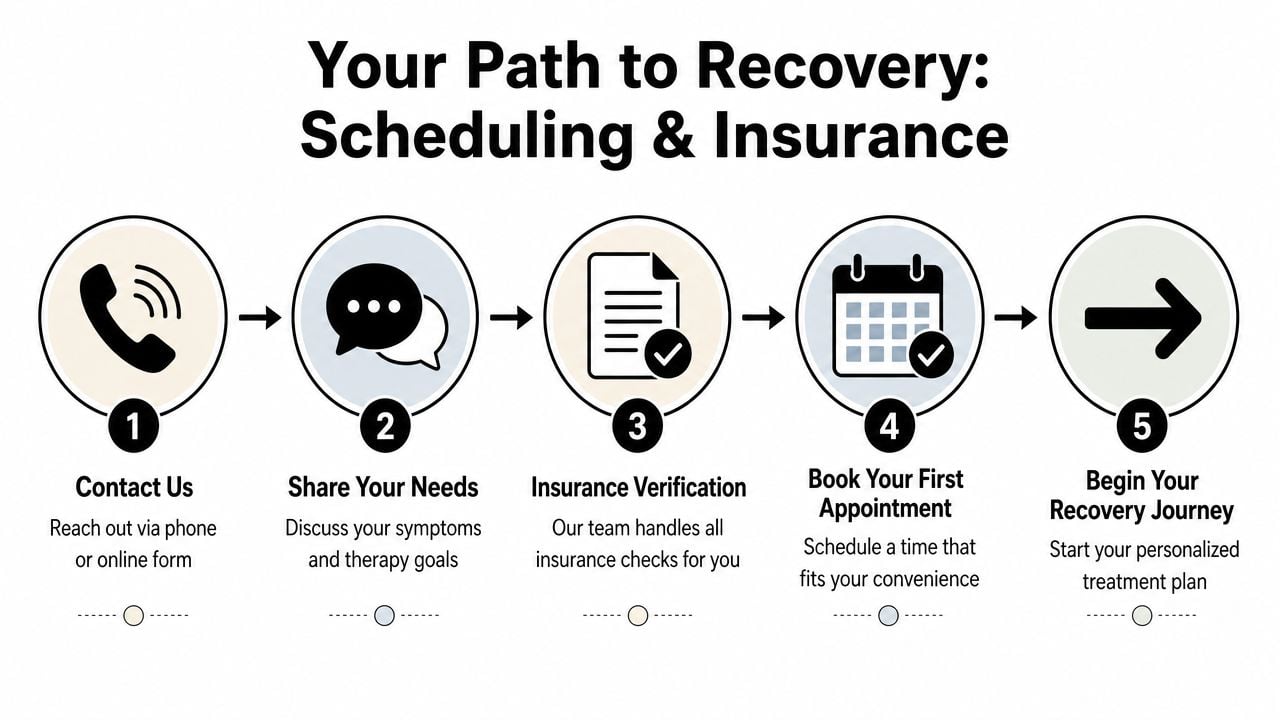
- Call or request an appointment online
- State the main issue and how it is affecting daily activity
- Ask whether your plan needs authorization, a referral, or specific visit rules
- Request the earliest appointment you can realistically keep
- Confirm what to bring on day one
If you want the insurance details ahead of time, review Peak's insurance plans and coverage information before you book. That gives you a better idea of what questions to ask and what paperwork to have ready.
You will likely do better if you secure the first workable visit instead of waiting for a perfect week.
Patients searching for physical therapy near me South Shore MA are usually trying to solve access first, then recovery. The clinics that make scheduling clear, explain insurance plainly, and get you to the right specialty faster tend to save you time and frustration at the start.
South Shore Physical Therapy FAQs
A lot of South Shore patients call after trying to fit pain around work, school pickup, the train, or weekend plans. By the time they reach out, they usually want clear answers fast.
| Question | Answer |
|---|---|
| How do I choose between South Shore clinic locations? | Choose the clinic you can get to consistently. The right location is the one that fits your work hours, family schedule, and typical drive, so you can keep the visits that matter. |
| Should I wait to see if the pain goes away on its own? | Short-term soreness can settle down. Pain that keeps showing up, changes how you walk, interrupts sleep, or makes you avoid stairs, lifting, exercise, or work tasks deserves an evaluation. |
| Can PT help if I'm recovering from surgery? | Yes. Good post-surgical rehab follows the surgeon's precautions, restores movement in stages, and adjusts as swelling, strength, and function change. |
| What if I'm not an athlete? | That is a common reason people come in. We treat runners and athletes, but we also help parents lifting kids, commuters with back pain, older adults working on balance, and anyone whose normal routine has become harder. |
| Is there a difference between general PT and specialty care? | Yes. Some cases respond well to standard orthopedic care. Others do better with a therapist who focuses on vestibular issues, pelvic health, post-operative rehab, pediatric care, or sports performance. Getting matched well early can save time. |
| What should I bring to my first appointment? | Bring your insurance card, photo ID, any referral or prescription if your plan requires one, and a short list of the movements or activities that are bothering you most. |
| What if I'm not sure which specialty I need? | That is normal. Start with the main problem you want to solve, such as dizziness, leakage, shoulder pain, or trouble getting back to a sport. The front desk and clinical team can help place you with the right provider. |
One practical tip matters more than people expect. Book the appointment you can attend this week, even if it is not your ideal time. Starting sooner with the right clinic and the right specialty usually works better than waiting for a perfect opening that keeps getting pushed back.
If you're ready to stop searching and start moving better, book an appointment with Peak Physical Therapy and Sports Performance. Choose the South Shore location that fits your schedule, ask about insurance verification, and get a plan built around your actual goals.