


A lot of South Shore soreness starts the same way. You spend Saturday doing yard work in Duxbury, take a long run near Nantasket, play pickup basketball in Quincy, or shovel heavy, wet snow after a Plymouth storm. Then the next morning, something feels off. Your calves are barking, your low back is tight, or your shoulder feels like it got into a fight overnight.
That’s usually when the same question comes up. Is cold or heat better for sore muscles?
The short answer is that both can help, but they help in different situations. A fresh strain after lifting mulch in Hanover is not the same as next-day leg soreness after a race in Weymouth. And neither one is the same as a long-standing, cranky back that stiffens up every morning in Cohasset.
Generic internet advice usually stops at “ice for acute, heat for chronic.” That rule is a decent starting point, but it misses some important nuance. The type of soreness matters. Timing matters. Swelling matters. And in some cases, especially with sensitized or nerve-driven pain, heat can make things worse.
Table of Contents
- Your Guide to Sore Muscle Relief on the South Shore
- How Cold and Heat Actually Work on Your Muscles
- When to Use Ice vs Heat for Different Types of Pain
- Applying Cold and Heat Safely and Effectively
- A Quick Decision Flowchart for Your Sore Muscles
- Common Mistakes and When Generic Advice Fails
- Your Local Solution for Pain Relief in Braintree to Plymouth
- Frequently Asked Questions About Heat and Cold Therapy
Your Guide to Sore Muscle Relief on the South Shore
A Saturday on the South Shore can set this up fast. You spend the morning walking Nantasket, help your kid carry hockey gear in Quincy, rake wet leaves in Norwell, or squeeze in hill repeats before work in Plymouth. By evening, something feels off. The next morning, the question shows up. Do you reach for ice or heat?
The right answer depends on what kind of soreness you are dealing with, not just how uncomfortable it feels. In the clinic, I see people get stuck when they use the old rule too loosely. New pain with swelling is one situation. Post-workout muscle soreness is another. A stiff low back after a long Route 3 commute can call for a different plan. Then there is sensitized pain, where the area feels irritated and protective even though there is no fresh tissue damage or obvious swelling.
That distinction matters.
Sharp, hot, and puffy pain usually needs a different approach than dull, tight, hard-to-get-going stiffness. A calf that aches a day after beach running in Scituate is different from a shoulder that flares up every time you shovel snow or lift overhead at work. If the pain feels out of proportion, spreads easily, or stays touchy long after the activity ended, the issue may be more about a sensitive nervous system than a muscle that needs to be cooled down or warmed up.
A better starting question is simple. What is the body reacting to right now?
South Shore residents need advice that fits real routines. Weekend yard work. Pickleball in Hanover. Construction work in Braintree. Walking the shoreline in Duxbury. Youth sports, long drives, desk work, and stop-and-go lifting all load the body in different ways, and the same sore muscle rule does not fit all of them.
This guide uses a practical framework based on timing, swelling, stiffness, and pain behavior. It is built to help you sort out whether your soreness acts more like a fresh irritation, delayed exercise soreness, ongoing stiffness, or a sensitized pain pattern that needs a calmer and more targeted response. The goal is straightforward. Make a better home decision, and know when it is time to get a physical therapist involved at Peak Physical Therapy and Sports Performance, whether you are in Braintree, Quincy, Weymouth, Cohasset, Duxbury, East Bridgewater, Hanover, Kingston, Milton, Norwell, Pembroke, Plymouth, or Scituate.
How Cold and Heat Actually Work on Your Muscles
Cold and heat aren’t opposites in the sense that one is right and one is wrong. They’re different tools. Each changes what your body does in that area, and that’s why choosing the right one matters.
What cold does
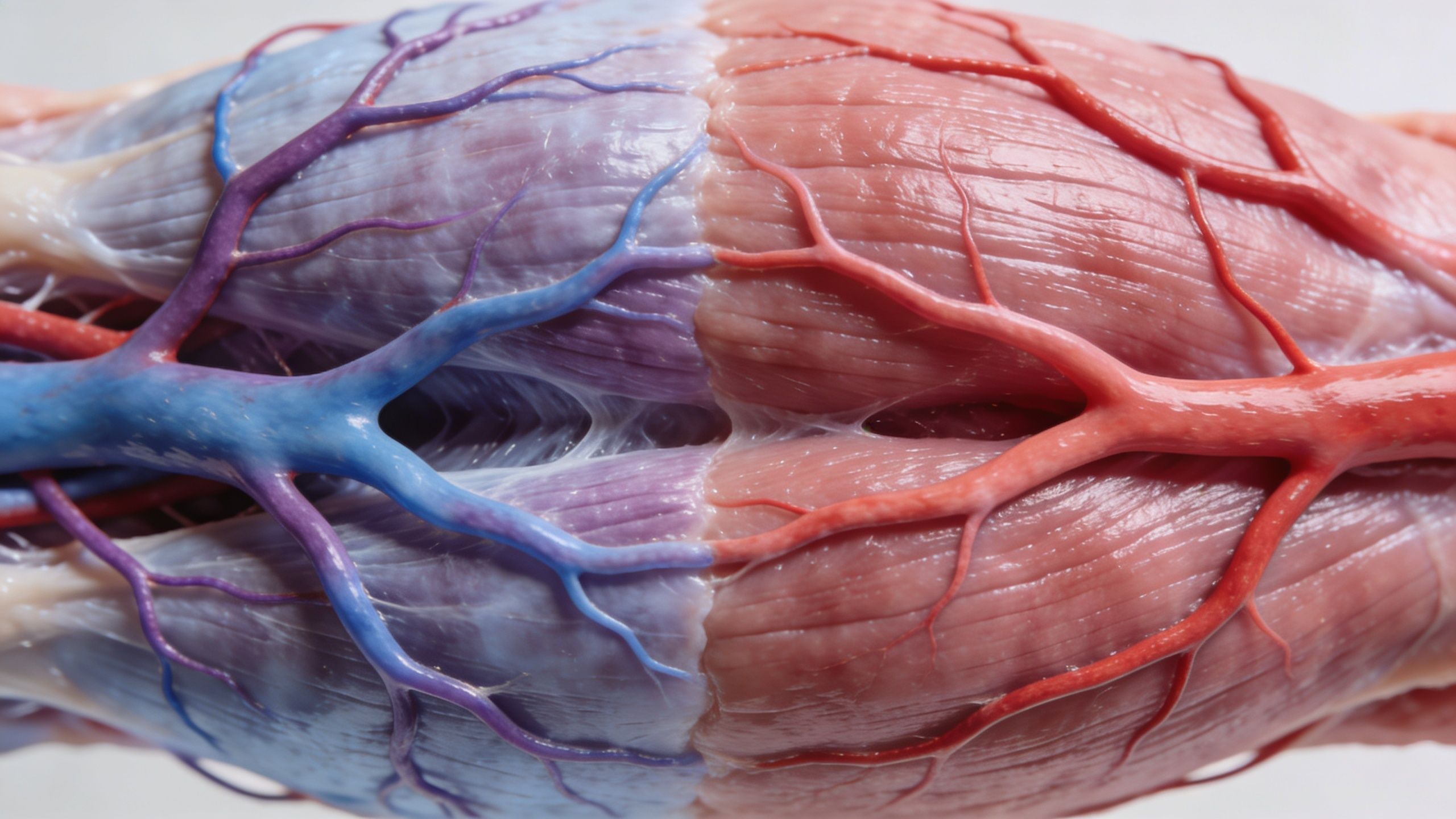
Cold therapy, or cryotherapy, narrows local blood vessels. Clinicians call that vasoconstriction. In plain English, it helps calm things down.
That can be useful when a muscle or surrounding tissue is freshly irritated and starting to swell. Cold also slows nerve signaling in the area, which is why it can make pain feel more dull and manageable for a while. If you’ve ever put ice on a newly tweaked ankle and felt that numb, quieting effect, that’s what’s happening.
Cold often makes the most sense when the body is acting like the alarm just went off. There’s pain, maybe visible swelling, maybe some heat in the tissue itself, and your system is reacting hard.
What heat does
Heat therapy, or thermotherapy, does the opposite with blood vessels. It encourages vasodilation, which means those vessels open more and circulation increases.
That added blood flow can help stiff tissue loosen up. It can also make movement easier. For many people, heat works well when the main problem is tightness, guarding, or that old familiar “I feel locked up” sensation, especially in the low back, hips, neck, or calves.
Think of heat as a way to make tissue more willing to move. It doesn’t fix the cause by itself, but it can create a better window for stretching, walking, mobility work, or getting through the morning without moving like a robot.
Why timing matters
The biggest mistake people make is assuming the body wants the same thing at every stage of recovery. It doesn’t.
A controlled study of 100 subjects found that after exercise, the control group lost 24% of strength, while people who used immediate cold or heat therapy lost only 4%. The same study found blood myoglobin, a marker of muscle damage, averaged 106.1% of baseline in the immediate heat and cold groups versus 135.1% in delayed or no-treatment groups, showing that early treatment protected muscle function and reduced muscle damage markers according to this PubMed study on post-exercise cold and heat therapy.
That’s an important point. Both cold and heat can help when used at the right time after exertion. It’s not always a simple showdown where one wins and the other loses.
Sometimes the better question isn’t “Which is better overall?” It’s “What does this tissue need right now?”
What neither one does
Neither cold nor heat solves a movement problem, a strength deficit, or a bad loading pattern. If your shoulder keeps flaring every time you lift overhead, or your calves tighten up every time you increase mileage, a pack can help symptoms but won’t address the reason it keeps happening.
That’s where assessment matters. But as a home strategy, cold and heat are useful. You just need to match the tool to the problem in front of you.
When to Use Ice vs Heat for Different Types of Pain
The best answer depends on what kind of soreness you’re dealing with. That’s where a common misunderstanding arises. Individuals often treat all muscle pain like it’s the same problem, when it really isn’t.
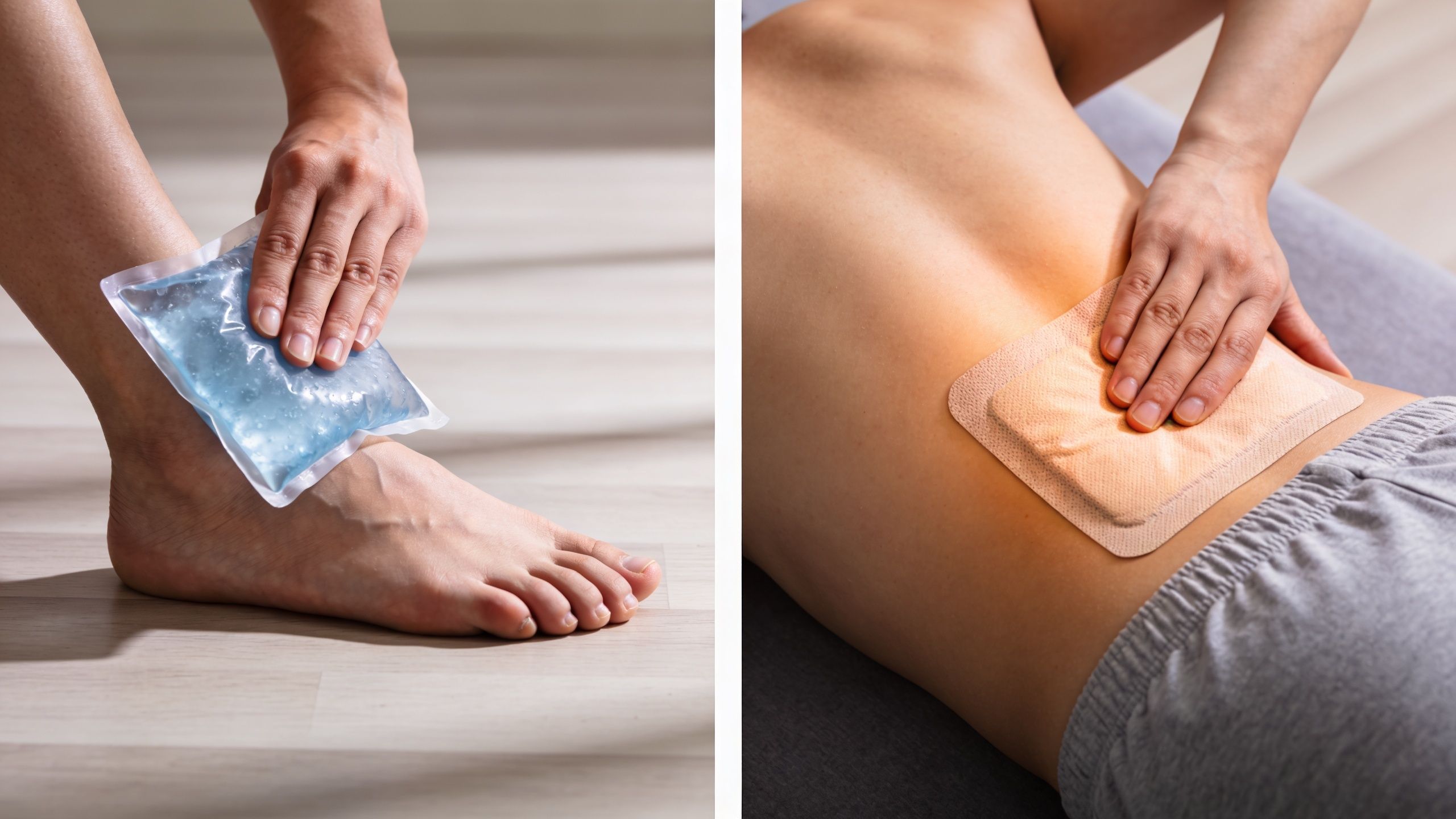
Quick Guide to Cold Therapy vs Heat Therapy
| Factor | Cold Therapy (Cryotherapy) | Heat Therapy (Thermotherapy) |
|---|---|---|
| Best fit | Fresh injuries, visible swelling, irritated tissue | Stiff muscles, chronic tightness, achy tissue without swelling |
| What it tends to do | Calms pain, reduces swelling, quiets the area | Loosens tissue, improves comfort with movement, eases stiffness |
| Common examples | Rolled ankle, strained calf, new muscle pull | Tight back, morning stiffness, postural tension |
| What it usually feels like | Numbing, calming, dulling | Soothing, loosening, warming |
| When to be careful | Poor tolerance to cold, numb skin, circulation issues | New swelling, hot inflamed tissue, sensitized pain patterns |
For a related read on early self-care when swelling is part of the picture, Peak has a practical guide on how to reduce swelling.
Fresh injury and visible swelling
If the pain is new, there’s puffiness, and the area feels irritated, cold is usually the better opening move.
This is the classic Hanover weekend-warrior scenario. You step off a curb awkwardly, tweak a calf in a rec league game, or lift something heavy and feel a sudden pull. The tissue is often reactive, and swelling may be part of the problem even if it’s mild.
In this situation, heat can backfire. If the area is already angry, warming it up may increase that irritated feeling. Cold is often the better fit because it helps quiet pain and control the early response.
Signs cold may fit better:
- Pain started recently: The tissue feels newly aggravated, not just stiff.
- You see or feel swelling: The area looks puffy or feels fuller than the other side.
- The pain is sharp or hot: It feels more reactive than tight.
- Movement makes it feel unstable or guarded: Your body is protecting the area.
A lot of South Shore athletes and active adults do well using cold after a fresh strain, then shifting toward gentle motion as things settle. If low back soreness is part of the picture and you’re also exploring broader self-management options, some people find resources on non-invasive back pain solutions helpful alongside a PT plan.
Post-workout soreness and delayed muscle pain
That is the point where the old rule breaks down.
Delayed onset muscle soreness, or DOMS, is that day-after or two-days-after soreness you feel after a tougher-than-usual workout, hill run, lifting session, or long game. On the South Shore, this is common after spring training starts, summer beach workouts ramp up, or adults jump back into activity too fast after a busy winter.
For DOMS, timing changes the answer. A major meta-analysis found that hot packs were the most effective option for pain relief within the first 48 hours after exercise, while cryotherapy ranked first after 48 hours for pain relief, based on this network meta-analysis on DOMS treatments.
That means if your quads are miserable the day after squats or your calves are wrecked after running the Quincy shoreline, heat may help more early on. Later in the soreness cycle, cold may be the better option.
Here’s the practical version:
- Within the first 48 hours of DOMS: Heat may help more if your main complaint is pain and stiffness.
- Beyond 48 hours: Cold may make more sense if the soreness is lingering and you want better pain relief later in recovery.
- If you mainly need to move better: Use the option that helps you walk, stretch, and recover without aggravating symptoms.
Practical question: Are you trying to calm a fresh injury, or are you trying to survive leg day fallout? Those are not the same decision.
Chronic stiffness without swelling
Now take the Cohasset version of soreness. Your pain isn’t exactly new. It’s not visibly swollen. It’s more like a recurring stiffness in the back, neck, hips, or shoulders that gets worse after sitting, driving, or sleeping in one position.
That’s where heat often works well.
Heat can make chronic tightness feel less guarded and more movable. Many people like it before walking, mobility work, or a home exercise session because it helps them get going. This is especially common for:
- Morning back stiffness
- Tight hips after commuting
- Shoulder tightness after desk work
- General muscle ache without swelling
Heat tends to work best when the tissue feels restricted, not inflamed. If the area isn’t puffy and the pain feels dull, achy, or stiff, warmth is often the better fit.
Still, there’s a catch. Some pain that looks “chronic” isn’t really a simple stiffness problem. It may have a nerve-driven or sensitized component. That’s where generic advice starts to fail, and that’s a good place to pause and reassess rather than repeatedly heating the area because someone once told you chronic pain always equals heat.
Applying Cold and Heat Safely and Effectively
The right choice still won’t help much if you use it poorly. Most problems here are simple. People put the pack on too long, use it directly on skin, or apply heat to tissue that’s clearly still irritated.
Simple ways to use cold
Cold doesn’t have to mean a dramatic ice bath. For most sore muscles, a basic setup works fine.
Common options include:
- Gel packs: Easy to mold around knees, ankles, calves, or shoulders.
- Bag of frozen vegetables: Still one of the most practical home options because it conforms well.
- Ice massage: Useful for small, focused areas when guided by a clinician.
- Cold water immersion: More common for athletes after heavy training sessions.
If you’re curious about longer cold exposure, these effective ice bath recovery tips can help you think through comfort and tolerance. At home, though, simpler cold methods are generally easier to use consistently.
Simple ways to use heat
Heat comes in a few forms too, and comfort matters.
You can use:
- Heating pads for low back, upper traps, or hamstrings.
- Warm towels when you want a gentler, less intense option.
- Warm shower or bath if soreness is spread across a larger area.
- Microwavable packs for easy, targeted use.
A lot of people prefer heat before activity instead of after. If the main issue is stiffness, warming the area before walking, stretching, or doing your home routine can make movement feel smoother.
For a practical home-care breakdown focused on icing methods, Peak also has a guide on using an ice pack in physical therapy.
Basic safety rules that matter
Most of the safety advice is simple, but it matters.
- Use a barrier: Put a towel or layer of fabric between your skin and the pack.
- Keep sessions brief: A short session is usually better than trying to force a result.
- Check your skin: If the area looks irritated, stop.
- Don’t fall asleep with heat on: That’s one of the easiest ways to get burned.
- Don’t use heat on obvious swelling: If it looks puffy and fresh, that’s a poor match.
- Be careful with numbness or reduced sensation: If you don’t feel temperature well, home use gets riskier.
If the treatment makes the area feel more reactive instead of calmer, stop using that method and rethink the plan.
Contrast therapy can also help in some cases. That means alternating heat and cold rather than committing to one. It’s not the first move for a fresh injury, but for some muscle soreness patterns, especially later in recovery, alternating can feel useful. The key is that it should leave you moving better, not chasing symptoms in circles.
A Quick Decision Flowchart for Your Sore Muscles
When you’re standing in the kitchen after a long day holding an ice pack in one hand and a heating pad in the other, you don’t need a lecture. You need a quick decision.
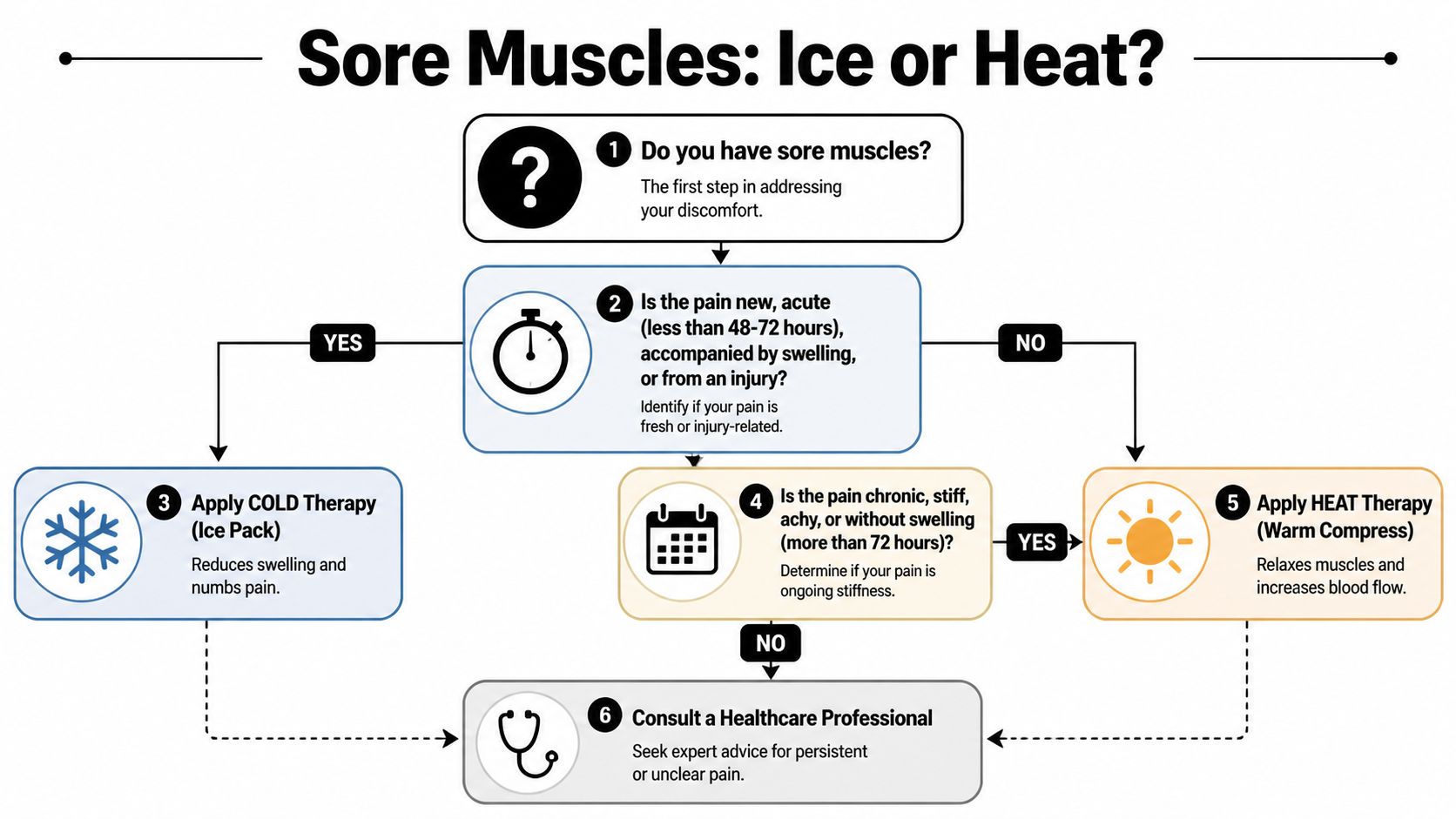
Start with these questions
Use this simple text version of the flowchart.
Did the pain start recently, and is there swelling?
If yes, start with cold. This fits a new strain, sprain, or flare after a clear aggravating event.Is it more of a stiff, achy, long-running problem without swelling?
If yes, try heat. This fits the classic tight back, neck stiffness, or chronic muscle tension pattern.Did it show up a day or two after a workout?
If yes, think about DOMS, not injury. Heat may feel better earlier when pain and stiffness are strongest. If soreness is hanging around later, cold may be worth trying.Does the pain feel strange, unpredictable, burning, or easily provoked?
Be careful with heat. Some pain patterns are more sensitized, and warming them can be a poor fit.Are you unsure what kind of pain this is?
Don’t keep guessing. That’s the point where professional evaluation saves time.
A few local examples make this easier:
- Rolled ankle after a trail walk in Norwell: Cold first.
- Back feels locked after a long drive from Boston to Scituate: Heat may help.
- Legs sore two days after a hard run in Plymouth: Consider where you are in the DOMS window and what feels limiting.
- Old pain that flares randomly and doesn’t behave consistently: Don’t assume heat is the answer.
Use the pack that helps you move better afterward. If neither one does, the issue probably needs more than temperature.
The flowchart is simple on purpose. It won’t diagnose the root cause, but it can stop you from making the most common wrong turn.
Common Mistakes and When Generic Advice Fails
A lot of South Shore residents run into trouble here. They use the same answer for every sore muscle, whether the pain came from yard work in Hanover, a long beach walk in Duxbury, or a shoulder flare after rec league softball.
The problem usually is not one bad choice. It is repeating a decent idea after the body has already shown it is the wrong fit.
The mistakes people make most often
Heat gets overused on fresh injuries because it feels comforting fast. I see this with calf strains, tweaked backs, and pulled hamstrings. The area loosens for a bit, then feels more irritated later because the tissue was still reactive.
Cold gets overused too. If someone has months of stiffness, no swelling, and a lot of protective muscle guarding, icing can leave them feeling tighter and less willing to move.
A few other mistakes show up often in clinic:
- Keeping a pack on too long: More time does not mean more relief.
- Putting heat or ice right on the skin: That can irritate skin or cause a mild burn.
- Treating the symptom and missing the pattern: Repeated flares usually point to load, movement habits, strength, recovery, or technique.
- Choosing heat just because the pain is old: A problem can be long-running and still be irritable.
- Using whatever worked for a different body part: A stiff neck, a swollen ankle, and post-run quad soreness do not behave the same way.
Why generic advice breaks down
The old rule of ice for new pain and heat for old pain helps a little, but it misses a lot of real-life cases.
Some soreness is straightforward muscle fatigue. Some is joint-driven. Some is protective guarding after doing too much too soon. Some is a more sensitized pain pattern, where the nervous system has become quick to react and slow to settle. Those people often say the pain feels burning, spreading, jumpy, or strangely easy to provoke. In that situation, heat may feel good for ten minutes and then stir the whole area up.
That is one reason I tell patients to judge the response after the pack comes off. Can you move easier? Walk better? Turn your neck farther? Sit, bend, or climb stairs with less irritation? If the answer is no, the temperature choice was probably not helping enough to keep.
A few examples make this clearer:
- Persistent low back pain that feels worse after a heating pad: That may be a sensitized flare, not simple tightness.
- Post-surgical pain that feels hot, burning, or electrically irritable: More warmth is not always the right call.
- Widespread soreness with poor sleep and random flare-ups: That pattern often needs pacing, graded movement, and a better plan than temperature alone.
- A runner from Plymouth with recurring calf soreness every weekend: The issue may be training load or mechanics, not a need for more ice.
A broader explanation of how physiotherapy looks at these patterns is covered in Lagom Clinic's physiotherapy services.
Pain that is widespread, unpredictable, or oddly sensitive deserves a closer look.
That is where generic advice fails. It treats every sore muscle like the same problem, and people lose weeks guessing.
If your symptoms keep changing, keep coming back, or stop matching the usual soreness pattern, it makes sense to get the area assessed in person. For South Shore residents dealing with repeat flare-ups, a visit to Peak PT's physical therapy clinic in Plymouth can help sort out whether the problem is tissue irritation, stiffness, training error, or a sensitized pain response.
Your Local Solution for Pain Relief in Braintree to Plymouth
Cold and heat can help. They’re useful tools. But they don’t tell you why your shoulder keeps tightening after softball, why your calves keep seizing after runs, or why your back always flares after a weekend of house projects.
What happens when home care is not enough
That’s where physical therapy becomes more valuable than trial and error.

A PT looks at the full picture. Not just where it hurts, but how you move, what loads the area, what calms it down, and what keeps bringing it back. That process often includes hands-on treatment, targeted exercise, a return-to-activity plan, and practical advice for work, sports, and daily life.
If you’ve been managing things with packs, stretches, and guesswork, Peak Physical Therapy and Sports Performance is one local option for a more specific plan. Care is available across the South Shore in Braintree, Quincy, Weymouth, Cohasset, Duxbury, East Bridgewater, Hanover, Kingston, Milton, Norwell, Pembroke, Plymouth, and Scituate.
That local access matters. If you’re trying to stay active through youth sports schedules, beach-season running, lifting, golf, hockey, pickleball, or recovery after surgery, a nearby clinic makes follow-through easier. If you’re looking for a town-specific option, you can start with physical therapy in Plymouth, MA.
For readers who want a broader perspective on what musculoskeletal physiotherapy involves, this overview of Lagom Clinic's physiotherapy services gives a useful general explanation of the rehab process.
A pack on the couch can reduce symptoms. A PT plan aims to change the pattern behind them. That’s the difference between short-term relief and a full return to normal activity with more confidence.
Frequently Asked Questions About Heat and Cold Therapy
Can I use both heat and cold together
Yes, sometimes. Alternating them is often called contrast therapy. It’s usually more useful after the earliest irritated phase has settled down, not right after a fresh injury. If you try both, pay attention to how you move afterward. That matters more than the routine itself.
What’s better for arthritis
For day-to-day stiffness, heat is often the more comfortable choice. For a flare that feels swollen or more inflamed than usual, cold may fit better. Arthritis pain can shift, so the right answer can change from week to week.
How soon should I see a physical therapist after an injury
Sooner than generally expected. If the pain is limiting walking, lifting, sleeping, sports, or work, it’s reasonable to get it checked early instead of waiting for weeks. In Massachusetts, you can often see a physical therapist without a physician referral, which makes it easier to get moving in the right direction faster.
If you’re tired of guessing whether to ice it, heat it, or just wait it out, schedule a visit with Peak Physical Therapy and Sports Performance. With clinics across the South Shore, Peak helps local patients figure out what type of pain they’re dealing with, what will calm it down, and what will keep it from coming back.