

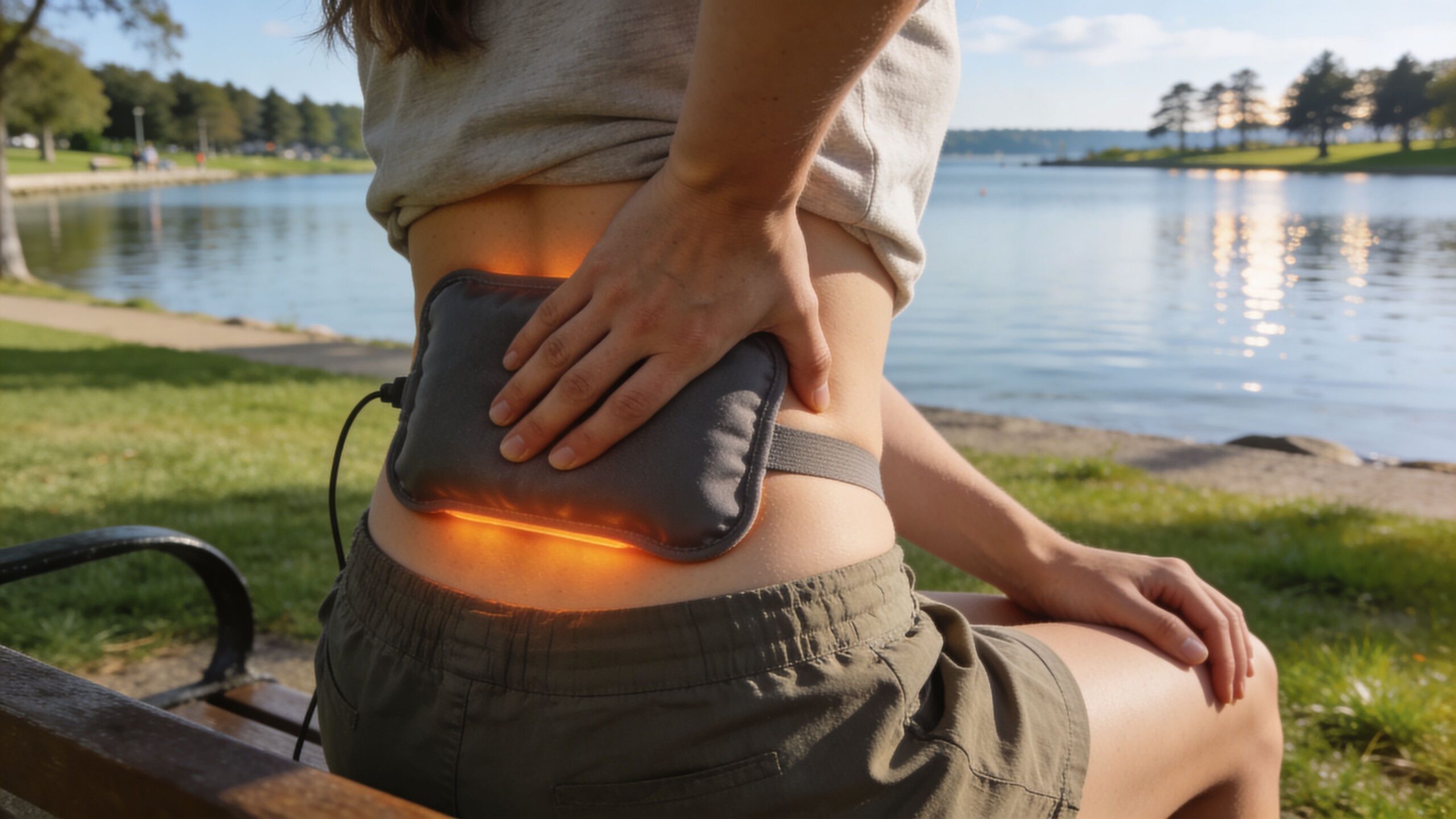
After a long day on the South Shore, the pattern is familiar. A few hours at Webb Memorial Park, a beach setup that involved more lifting than expected, an afternoon of yard work, or a weekend game can leave your back, neck, or shoulders tight by evening. Heat is often the first thing people try, and for mild muscle soreness, that can be a sensible place to start.
The main question is whether soreness is all you are dealing with.
Heat can calm a stiff, overworked muscle and make it easier to move. It does not fix every kind of pain. If the same ache keeps showing up after running, tennis, commuting, or long shifts on your feet, the problem may be more than simple post-activity tightness. In the clinic, that difference matters because the right treatment depends on the source of the pain, not just how it feels ultimately.
For South Shore residents searching for physical therapy Weymouth MA, the goal is usually straightforward. Get relief now, avoid making it worse, and figure out when home care is enough. At Peak Physical Therapy and Sports Performance on Main Street in Weymouth, we help people sort out that decision every day so they can get back to beach walks, gardening, workouts, and youth sports without guessing.
Table of Contents
- Feeling Sore on the South Shore? When Heat Can Help
- Understanding How Heat Soothes Sore Muscles
- Your Guide to Heat Therapy Modalities at Home and in the Clinic
- The Big Debate Should You Use Heat or Ice
- Applying Heat Safely to Avoid Burns and Injury
- When Self-Care Isnt Enough for Your Weymouth Lifestyle
- Get Back to Your Life on the South Shore Pain-Free
Feeling Sore on the South Shore? When Heat Can Help
You spend a Saturday at the beach, coach a few innings, or knock out a yard project you have been putting off. Later that evening, your back feels tight, your hips feel heavy, and turning your neck is more annoying than painful. That pattern is common in Weymouth and across the South Shore.
Heat often helps in that situation. It works best when the problem feels stiff, sore, or guarded, rather than swollen, sharp, or freshly injured. For plenty of people, a heating pad or warm shower is enough to settle things down and make the next walk, stretch, or trip up the stairs feel easier.
That said, there is a real trade-off. Heat can calm symptoms, but it does not fix the reason the same pain keeps coming back. If your low back tightens up after every weekend of gardening, or your calf always flares after a run along the South Shore, home care may help for the day while the underlying movement problem stays in place.
When heat is usually a reasonable first step
Heat is usually a good first option when pain acts more like stiffness than injury:
- Morning tightness: Your back, neck, or hips loosen once you get moving.
- Post-activity soreness: You did a little too much, but there is no major swelling and you can still walk and bend.
- Recurring aches: An old shoulder irritation after painting, or a back that stiffens after a long drive.
- Work and commute tension: Sitting all day leaves you feeling locked up, especially through the neck and low back.
A simple rule helps here. If warmth makes movement easier and the relief carries over after you remove it, home heat is often a reasonable choice.
If the relief only lasts while the heat is on, or the same soreness keeps interrupting your routine, it is time to look deeper. At Peak PT on Main Street in Weymouth, we help South Shore residents sort out that difference every day. Sometimes the answer is simple self-care. Sometimes it takes a hands-on evaluation and a plan that addresses strength, mobility, and the way you move through work, sports, and daily life.
Understanding How Heat Soothes Sore Muscles
After a long afternoon of yard work in Weymouth or a weekend game on the South Shore, soreness often feels less like sharp injury pain and more like a body part that does not want to move. That is where heat tends to help. It can calm a tight, protective muscle and make the area feel easier to use.
The main effect is simple. Warmth increases local circulation and helps soft tissue loosen enough for movement to feel less restricted. For a stiff low back after a Route 3 commute or shoulders tightened up from carrying coolers and beach gear, that change can be enough to reduce the sense of being stuck.
What patients usually notice is not a dramatic fix. It is a small but useful shift.
- Stiff areas move more freely: Bending, turning, and straightening feel less limited.
- Muscles guard less: You stop bracing around the sore spot quite so much.
- Everyday tasks feel easier: Standing up, walking, or reaching overhead takes less effort.
- Pain feels less distracting: The ache often settles down enough that you can move normally again.
Heat tends to work best for soreness, chronic tightness, and mild flare-ups that build over time. A neck that stiffened up after sleep, a back that gets tight after gardening, or calves that feel heavy after a run are common examples. In those situations, heat can create a short window where movement feels better and exercise is easier to tolerate.
That trade-off matters. Heat can improve symptoms, but it does not correct the reason the same area keeps getting irritated.
I usually tell patients to treat heat as preparation, not the whole plan. Use it, then follow it with gentle motion. Walk for a few minutes. Loosen the area with easy mobility work. If you are not sure whether warmth or cold fits your situation better, our guide on when to use an ice pack in physical therapy can help you sort that out.
If soreness keeps returning after beach days, rec league sports, lifting at work, or weekends in the yard, it is time to look beyond the heating pad. At Peak PT on Main Street in Weymouth, we help South Shore residents figure out whether simple home care is enough or whether the problem needs hands-on treatment and a plan to improve how the body is moving.
Your Guide to Heat Therapy Modalities at Home and in the Clinic
A heating pad that helps after a long day at Nantasket Beach may not be the right choice for a stiff neck after desk work or a back that tightens up halfway through yard work. The method matters.
Dry heat for quick simple relief
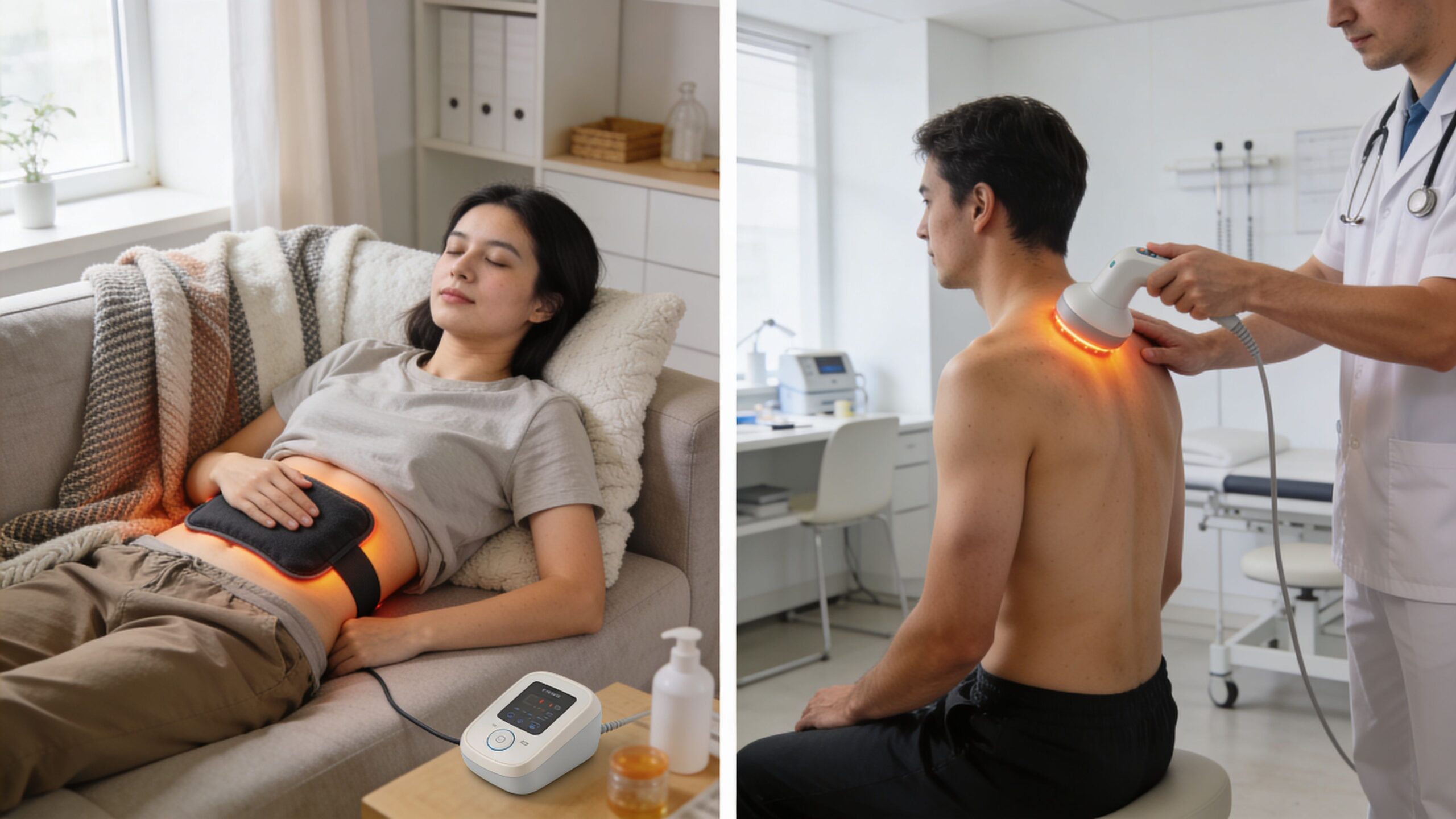
Dry heat is the option many South Shore residents use first because it is easy to set up and easy to repeat. Heating pads, adhesive wraps, and reusable heated packs all fit here.
This type of heat works well when the goal is short-term relief in one specific area. A low back that feels tight after commuting, a shoulder that stiffens up after pickleball, or calves that feel heavy after a run usually respond well to a brief session.
The trade-off is simple. Dry heat is convenient, but that convenience makes it easy to overdo. If you leave it on too long or turn it up too high, the skin gets irritated and the muscle often feels no better by the end of the night.
Moist heat for broader stiffness
Moist heat usually feels better when the whole region is tight instead of one small spot. Warm showers, baths, steamed towels, and moist packs are common examples.
I often recommend moist heat when stiffness shows up across a larger area:
- Back tightness in the morning: A warm shower can make it easier to get moving before work.
- Hip and leg stiffness after walking the beach or working in the yard: A bath may relax the full area better than a small heating pad.
- Neck and shoulder tension after a long drive or computer work: A warm compress can settle things down enough to restore normal motion.
Moist heat feels good, but it is less targeted and harder to keep in place for long. For home care, that is often fine. For a more irritable area, people sometimes need a more specific plan.
If you are unsure whether warmth is the right choice for the problem in front of you, our guide on when to use an ice pack in physical therapy can help you make a better home decision.
Clinic-based heat options
In the clinic, heat is rarely the whole treatment. We use it to make the next part of the session more productive.
A short heat application can help loosen a stiff area before hands-on work. It can also reduce guarding enough for someone to tolerate mobility drills or strengthening that would otherwise feel too uncomfortable. That matters for the person whose back always tightens after lifting, the golfer whose rotation is limited, or the gardener whose hips and knees never quite loosen up on their own.
At Peak Physical Therapy and Sports Performance on Main Street in Weymouth, heat is used with a purpose. If it helps, we follow that window with movement, manual therapy, and exercise that address why the same area keeps flaring up.
A heating pad can make you feel looser. The real value comes from what you do once the area starts moving better.
At home, heat is often enough for occasional soreness that settles within a day or two. In the clinic, we look at the pattern. If the same shoulder, back, knee, or neck problem keeps limiting work, sports, sleep, or weekends around the South Shore, treatment needs to go beyond temporary relief.
The Big Debate Should You Use Heat or Ice
People mix these up all the time. The simplest rule is this: use ice for new injuries with irritation or swelling, and use heat for older stiffness and muscle tightness.
That doesn’t cover every edge case, but it works well for most home decisions.
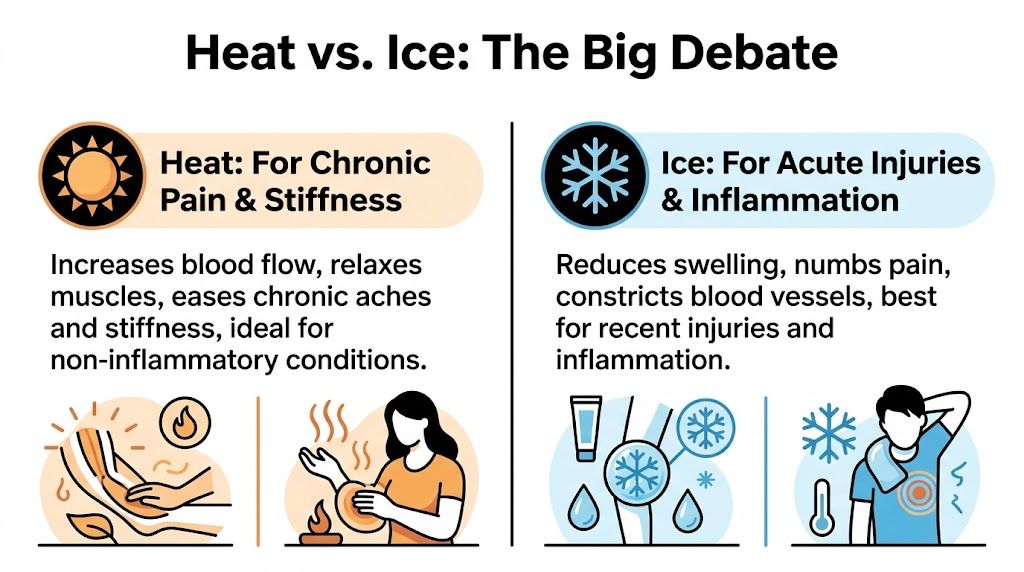
Heat vs Cold Therapy Decision Guide
| Symptom / Condition | Use This | Why It Works |
|---|---|---|
| Stiff back after sitting or driving | Heat | Warmth helps muscles relax and makes movement feel easier |
| Tight neck or shoulders after work | Heat | Better for guarding and chronic tension than for swelling |
| Sore muscles after a long weekend of activity | Heat | Often helps with non-inflammatory post-activity stiffness |
| Fresh ankle twist with swelling | Ice | Cooling can calm irritated tissue and reduce swelling response |
| Knee that became puffy right after activity | Ice | More appropriate for a recent flare with visible inflammation |
| Old ache that improves once you get moving | Heat | Matches the pattern of stiffness rather than acute injury |
| Sharp pain after a new strain | Ice | Better early choice when the area feels newly aggravated |
A fast way to choose
Ask yourself three questions:
- Did this just happen? If yes, lean toward ice.
- Is it swollen, hot, or visibly irritated? If yes, don’t start with heat.
- Does it feel stiff and better once I get moving? If yes, heat is often the better fit.
A lot of Weymouth patients use the wrong tool because the symptom is confusing. A low back flare can feel tight, but if it started suddenly and the area is very reactive, heat may not be the best first move. A chronic shoulder problem can feel sore after activity, but if it’s really a longstanding mobility issue, icing it every night may not change much.
For a more detailed local-friendly breakdown, read this explanation of when to use ice vs heat.
If you have to guess every time, or if neither one seems to help for long, the problem usually needs assessment rather than another round of self-treatment.
Applying Heat Safely to Avoid Burns and Injury
Heat is simple, but it still needs rules. Most problems happen when people fall asleep on a heating pad, turn the setting too high, or keep reheating an area that’s already irritated.
Non-negotiable safety rules
Start with the lowest setting that feels effective. Warm is enough. You don’t need intense heat to get the benefit.
Use these basics every time:
- Limit the time: Keep sessions brief rather than continuous.
- Use a barrier: Put a towel or layer of clothing between your skin and the heat source if needed.
- Check your skin: If the area looks overly red or feels irritated, stop.
- Move afterward: Heat works better when followed by light movement instead of more sitting.
One practical mistake is using heat late at night and then falling asleep with it still on. That’s how minor skin injuries happen, especially in people who are already tired or taking medication that makes them less aware of discomfort.
When heat is the wrong choice
There are also times when heat just isn’t appropriate.
Avoid heating an area when:
- Swelling is present: Heat can aggravate a fresh inflammatory response.
- The injury is brand new: A recent twist, strain, or impact usually needs a different approach at first.
- Sensation is reduced: If you can’t feel the area normally, you can't judge whether the heat is too strong.
- The skin is broken or irritated: Don’t apply heat over open wounds or compromised skin.
- Symptoms are spreading: If pain is traveling, intensifying, or paired with marked weakness, don’t self-treat repeatedly.
Safety note: If heat keeps helping for a few minutes but leaves you just as limited afterward, stop chasing temporary relief and get the problem assessed.
That’s especially true for people trying to stay active through work, commuting, lifting, parenting, or sports. The goal isn’t to become better at using a heating pad. The goal is to move well enough that you don’t need it all the time.
When Self-Care Isnt Enough for Your Weymouth Lifestyle
You spend Saturday pulling weeds, carrying mulch, or chasing kids across the beach, and by Sunday night the heating pad is back on the same spot. That pattern matters.
Heat can make you feel looser for a while, but repeated flare-ups usually mean something in the way you move, lift, reach, train, or recover is still irritating the area. Around Weymouth, I see this often with people who want to keep up with yard work, golf, pickup sports, long walks, commuting, and jobs that keep them on their feet.
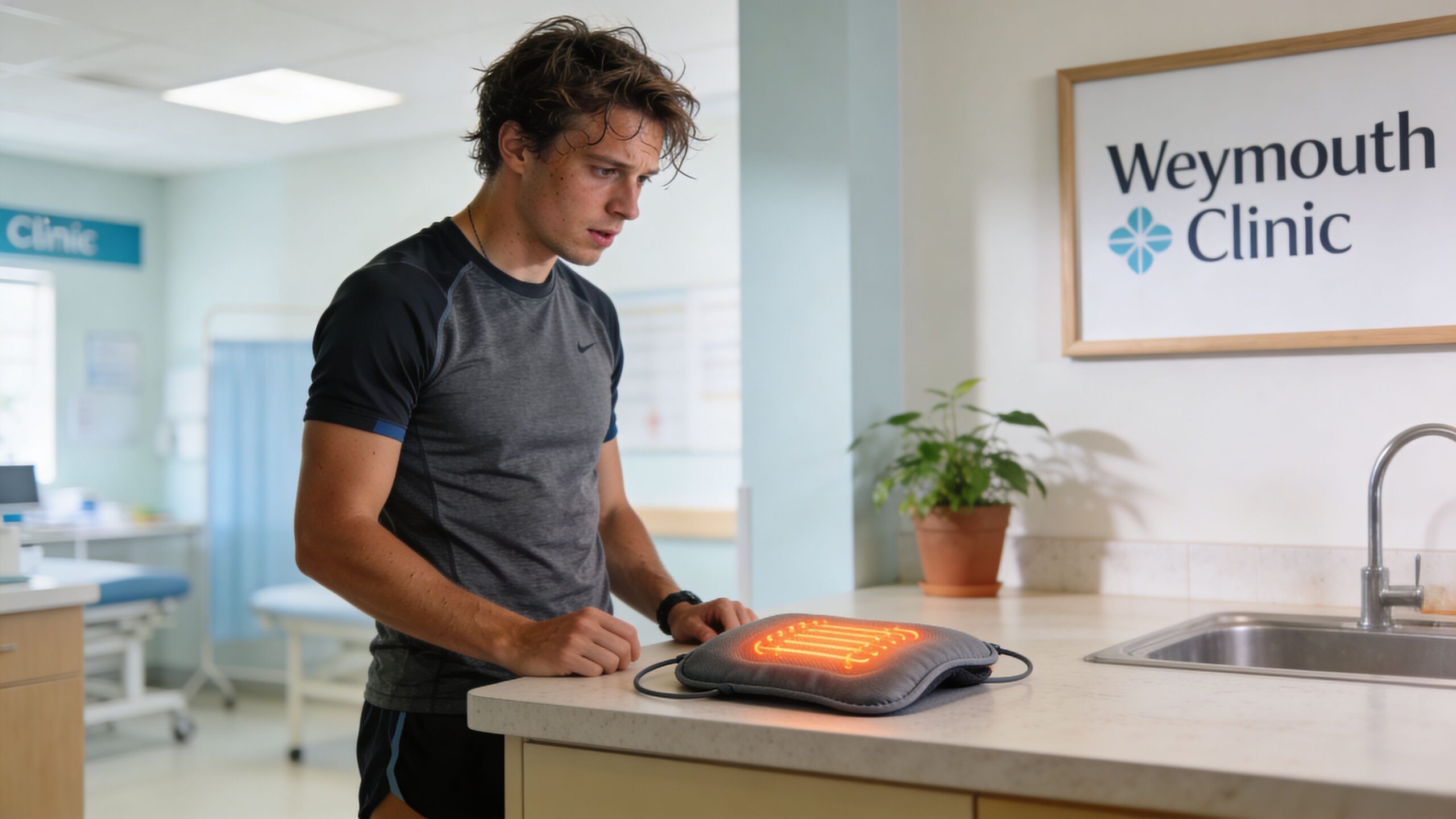
What heat helps and what it doesn't
Heat can calm muscle guarding, ease stiffness, and make it easier to start moving. It does not tell you why your back tightens every time you rake, why your shoulder complains after overhead work, or why your knee gets stiff after every walk on the South Shore.
The reason matters because the fix changes with the problem. Sometimes the driver is limited mobility. Sometimes it is poor load tolerance, weakness, irritated tissue, or a movement habit that keeps stressing the same area. If symptoms keep returning after the same activities, home care has probably done all it can do on its own.
Self-treatment still has a place. For people with muscle tension between visits, Signature Lacrosse's guide to recovery includes practical ball-based soft tissue ideas that can help active adults and athletes manage soreness.
What a PT evaluation changes
A good evaluation answers the questions a heating pad cannot. We look at what movement brings symptoms on, what eases them, how strength and mobility compare side to side, and whether the issue acts more like a muscle problem, joint restriction, tendon overload, or nerve irritation.
That leads to a plan you can use.
For one person, that might mean hip mobility and trunk control so yard work stops aggravating the low back. For another, it is shoulder strength and better overhead mechanics for painting, serving, or throwing with the kids. For a runner or field athlete, it may be load progression so pain settles without giving up activity completely.
If your symptoms keep cycling back, an exam at our Weymouth physical therapy clinic on Main Street can help sort out what is safe to keep doing, what needs to change, and how to build tolerance without guessing.
Temporary relief is useful. Lasting progress usually comes from finding the trigger, correcting the deficit, and matching treatment to the way you actually live on the South Shore.
Get Back to Your Life on the South Shore Pain-Free
You feel this most on a Saturday. Your back loosens up with heat before yard work, or your shoulder settles down enough to throw with the kids at the beach, but the same pain shows up again a day later. At that point, temporary relief is not the goal. Staying active without the same flare-up is.
Heat still has a role. It can calm stiffness, ease sore muscles, and help you move more comfortably before activity or exercise. What it does not do is fix the reason your symptoms keep returning. If pain keeps interrupting golf, pickleball, lifting, gardening, commuting, or long walks along the South Shore, it is time to look at the pattern behind it.
That is where a physical therapy plan helps. We assess the movement, strength, mobility, and loading habits that keep the problem going, then match treatment to your routine. For one person, that means better hip and trunk control so weekends in the yard do not trigger back pain. For another, it means shoulder strength and mechanics so overhead activity stops pinching. Some patients also benefit from hands-on care or dry needling when muscle tension is part of the picture.
People also do better when rehab fits how they train and recover outside the clinic. If you are interested in the coaching side of that idea, Expert strategies for fitness businesses offers an outside perspective.
If home care is no longer enough, the Peak Physical Therapy and Sports Performance team can help you sort out what is safe to keep doing, what needs to change, and how to build back up without guessing. The Weymouth clinic is at 544 Main Street, Weymouth, MA 02190, and you can call 781-817-3435 to get started.
If you're ready to stop guessing and start addressing the cause of your pain, schedule an appointment with Peak Physical Therapy and Sports Performance. Our Weymouth team helps South Shore residents move better, recover from injury, and get back to the activities that matter.