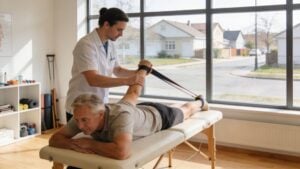
You hit your head a few days ago. Maybe it was a youth hockey collision in Braintree, a fender bender in Quincy traffic, or a slip on an icy walkway in Scituate. At first, you figured you just needed rest. But now the headache lingers, screens feel awful, quick head turns make you dizzy, and normal errands feel strangely hard.
That's the part that worries people. You look mostly fine, but you don't feel like yourself.
On the South Shore, this occurs with surprising frequency. Concussion symptoms don't always fade on their own in a clean, predictable way. Dizziness, neck pain, motion sensitivity, fatigue, and “brain fog” can stick around and interfere with work, school, driving, exercise, and sleep. The good news is that you usually don't need to sit in a dark room and just hope time fixes it.
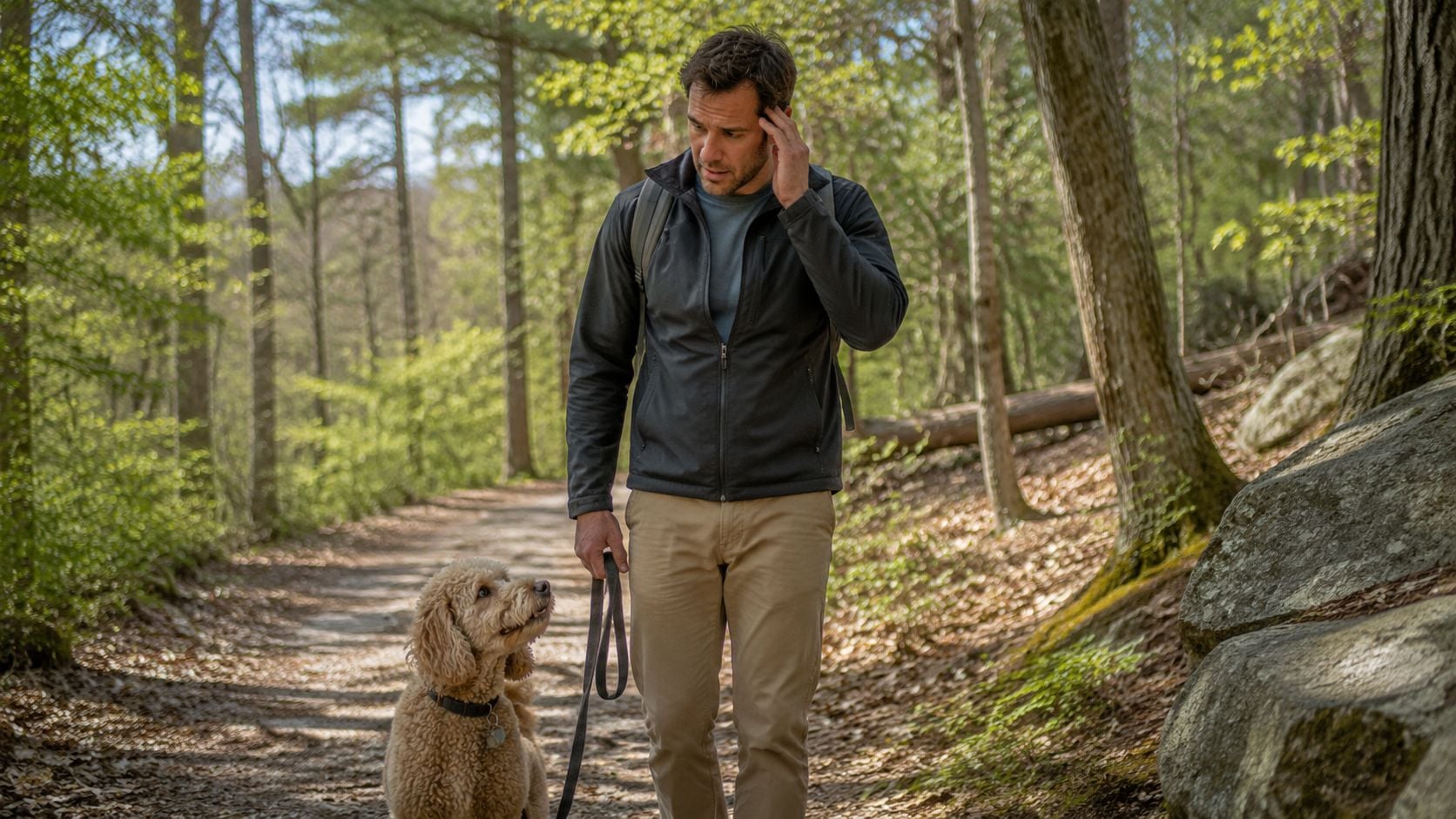
Modern concussion rehab has moved toward active, symptom-limited treatment. A 2023 systematic review of athlete concussion rehabilitation found that physical therapy interventions, including aerobic exercise and multimodal treatment, improved time to recovery and reduced post-concussion symptoms, and early care started as early as a couple of days after injury showed no significant adverse effects in the studies reviewed.
If you're in Hanover, Pembroke, Weymouth, or anywhere nearby, that matters. It means lingering symptoms aren't something you “wait out” by default. They're often signs that the balance system, neck, vision, or exercise tolerance needs targeted treatment.
Table of Contents
- Your Guide to Concussion Recovery on the South Shore
- What Is Concussion Physical Therapy
- Your First Appointment What to Expect
- The Pillars of Concussion Treatment
- Recovery Timelines and Measurable Progress
- Is Concussion PT Right for You
- Start Your Recovery on the South Shore Today
Your Guide to Concussion Recovery on the South Shore
A Braintree parent may be trying to help a teen after a hard hit in youth hockey. A Scituate neighbor may have slipped on an icy path, bumped their head, and now feels off balance in the grocery store. An office worker in Quincy may be back at the laptop but can only tolerate the screen for 20 minutes before the headache builds.
Those are all common concussion stories. They do not all look like sports medicine cases, and they should not all be handled with the same advice.
On the South Shore, I see plenty of people who are not focused on getting back into a game. They want to drive without nausea, sit through a work meeting, read without losing their place, or feel steady on stairs again. That is where concussion physical therapy can help. It gives us a way to test what is bothering you instead of waiting and hoping the symptoms fade on their own.
Why waiting can slow recovery
A short period of rest can make sense early on. After that, pure waiting often creates its own problems.
If dizziness starts every time you turn your head, if headaches climb after computer work, or if balance feels worse in busy places, those symptoms usually point to a system that needs retraining. Rest alone does not improve eye tracking, neck mobility, motion tolerance, or balance control. It can also leave adults less active, more anxious about movement, and less sure about what is safe.
The goal is not to push through symptoms. The goal is to find the source, then build activity back in at the right dose.
Why this matters for adults and older patients
A lot of concussion advice is written for athletes. That helps some families, but it misses a large part of the South Shore community.
Many adults need a plan for screen sensitivity, commuting, child care, and job demands. Older adults often need help sorting out whether the main issue is concussion, neck strain, dizziness, balance loss, or a mix of all four. Those details matter because the right treatment depends on what your exam shows, not just on the fact that you hit your head.
That is also why it helps to read a broader guide to recovering from a concussion alongside local medical advice. Good recovery guidance should address work, daily routines, and safety at home, not only return-to-sport checklists.
When to stop guessing and get assessed
If symptoms are lasting more than a few days, if work or school feels harder than it should, or if dizziness is changing how you move through the day, it is reasonable to get checked by a PT with concussion experience.
I would be quicker to recommend an evaluation when someone says:
- reading or screen time brings on headache or nausea
- driving, grocery stores, or busy environments feel overwhelming
- neck pain started with the injury
- balance feels less steady, especially for an older adult
- exercise causes a sharp symptom spike instead of a mild, short-lived increase
One practical local option is Peak Physical Therapy and Sports Performance, which provides concussion management and vestibular-related care in South Shore clinics. The value of a proper exam is simple. It tells you whether you should keep waiting, start treatment, or involve another medical provider sooner.
What Is Concussion Physical Therapy
A South Shore concussion does not always look dramatic. It might be a youth hockey collision in Braintree, a rear-end crash on Route 3, or a slip on an icy walkway in Scituate. A few days later, the problem is not just headache. It is dizziness in the grocery store, nausea with screen time, neck pain while driving, or a sense that your balance is off for no clear reason.
Concussion physical therapy addresses those day-to-day problems with a focused exam and a treatment plan built around the systems that are not working well. That often includes balance, eye movement control, neck function, motion sensitivity, and exercise tolerance.
For adults who are not athletes, this matters. A return-to-play checklist does not help much if your real goal is getting through a workday, reading email without a headache, or feeling steady on stairs.
PT treats the pieces of concussion symptoms that can be tested and retrained
After a concussion, symptoms often come from more than one source. The brain injury matters, but so do the neck, the visual system, and the inner ear balance system. That is why two people with the same diagnosis can feel very different.
In practice, concussion PT is used to sort out questions like these:
- Is dizziness coming from head movement, visual overload, a balance deficit, or the neck?
- Are headaches being triggered by screen use, exertion, cervical strain, or a mix of those factors?
- Is fatigue showing up because activity tolerance dropped, or because basic tasks now take more effort?
- Is someone avoiding movement because rest still helps, or because nobody has shown them how to increase activity safely?
Those distinctions shape treatment. Waiting alone does not answer them.
Good concussion rehab is active, but it is not aggressive
Early rest can help calm things down. After that point, too much rest often keeps people stuck, especially adults trying to get back to work, drive, manage a household, or stay independent.
Treatment is usually symptom-guided and specific:
- For dizziness, therapy may work on head and eye coordination, balance, and motion tolerance. Patients who are unsure whether their symptoms fit a vestibular problem can read more about what causes dizziness and vertigo.
- For headaches with neck pain, treatment may focus on cervical mobility, muscle tension, posture, and movement control.
- For screen sensitivity or reading trouble, therapy may address visual tracking, focusing, and tolerance to cognitive and visual load.
- For exercise intolerance, rehab often uses controlled exertion so activity can build without a major symptom flare.
There is a trade-off here. Push too little, and recovery can drag on. Push too hard, and symptoms spike enough to shut the day down. The job of PT is to find the middle ground that lets progress happen.
The goal is function, not just symptom tracking
Patients often come in asking, "Is this normal?" A better question is, "What is getting in the way of normal life right now?"
That shift matters for non-athlete adults and older adults on the South Shore. If fluorescent lights at work trigger headaches, if busy environments feel overwhelming, or if your balance changed after a fall, treatment should match that problem directly. The point is not to collect symptoms on a checklist. The point is to help you read, work, drive, walk, exercise, and move through the day with more confidence.
If you want a broader legal and practical overview after an injury, this guide to recovering from a concussion adds useful context around the recovery process.
Your First Appointment What to Expect
A typical first visit starts with a real-life problem, not a generic checklist. A Braintree parent may come in after a youth hockey collision and say the rink lights now trigger headaches. A Scituate retiree may report feeling off balance since a winter slip, especially on stairs or uneven sidewalks. An office worker in Quincy may be able to get through a meeting but not 20 minutes of screen time.
Those details matter because concussion rehab is not only for athletes trying to get back on the field. On the South Shore, many adults wait too long because they assume rest should fix everything. If symptoms are hanging on, work feels harder, reading is rough, driving feels uncomfortable, or balance is less steady than usual, the first appointment should answer a simple question. What is limiting daily life, and why?
The evaluation looks at patterns, not just symptoms
The visit begins with a detailed history. We look at how the injury happened, what symptoms started first, what has changed since then, and what still sets things off. That may include scrolling on your phone, riding in the car, shopping under bright lights, turning over in bed, walking the dog, or trying to get through a workday without a headache.
Then the exam gets more specific. A concussion can affect eye movements, balance, neck function, motion tolerance, and activity tolerance in different combinations. Two people can both say "I feel dizzy" and need very different treatment. For some patients, it helps to review what causes dizziness and vertigo so the description is clearer during the exam.
A first concussion PT assessment often includes:
- Eye movement testing to see if tracking, focusing, or shifting your gaze brings on symptoms.
- Neck assessment to check stiffness, joint irritation, muscle tension, and movement control that may be contributing to headache or dizziness.
- Balance testing in standing and during movement, especially for older adults or anyone who feels less steady since the injury.
- Activity or exertion screening to see whether symptoms rise with physical effort, screen use, or busy environments.
Why this visit often brings relief
Patients are often worried about two bad outcomes. Being told to wait it out with no direction, or being pushed into activity that flares symptoms for the rest of the day. A good evaluation avoids both.
The goal is to find your current limit and use it well. That matters for adults who need to work, parents who need to drive kids around, and older adults who cannot afford a balance problem after a fall. If a person can tolerate a short walk but not a crowded store, or can answer email for ten minutes but not an hour, that difference shapes the plan.
This is also the point where PT can help clarify whether you are dealing with one main driver or several. Headaches may be tied to the neck. Dizziness may show up mainly with head turns or visual motion. Fatigue may spike with screen exposure or exertion. Sorting that out early saves time.
What you should leave with
By the end of the first visit, you should know what seems to be driving the symptoms and what the first steps look like at home, at work, and during activity. That plan may include pacing advice, a few targeted exercises, changes to screen use, or guidance on how much walking or exercise is appropriate right now.
You should also know when not to keep waiting. If symptoms are interfering with job duties, reading, driving, sleep, or balance, structured rehab is often more useful than hoping another week of rest will solve it.
Some patients also like reading outside material on recovery options and science-backed TBI wellness strategies. That can be helpful background, but the main value of the appointment is practical. You leave with a plan that fits your symptoms and your day-to-day life on the South Shore.
The Pillars of Concussion Treatment
Most concussion rehab works best when it's multimodal and impairment-based. That means treatment is built around the specific problems you show on exam, not a generic checklist. Peer-reviewed evidence supports combining vestibular, oculomotor, manual therapy, and progressive exercise as a safe and feasible approach in the first few weeks after injury, as described in this multimodal concussion PT study.
Vestibular rehabilitation
This is the part people usually notice first when dizziness, unsteadiness, or motion sensitivity is the main complaint. Think of it as retraining your internal GPS. Your therapist uses symptom-limited head movement, gaze stabilization, and balance work to help your brain interpret motion more accurately again.
For a South Shore patient, that can mean getting back to walking downtown Plymouth, navigating a crowded grocery store in Weymouth, or turning your head while driving without that floaty, off-balance feeling.
Cervical treatment
A lot of post-concussion headaches don't come only from the concussion itself. The neck often gets involved in the same incident, especially after a fall or car crash.
Treatment here may include manual therapy, mobility work, postural retraining, and strengthening. If headaches tend to start in the neck or get worse after desk work, this part matters. Patients dealing with overlapping headache symptoms may also find this resource on physical therapy and migraines useful.
Vision and oculomotor retraining
When screens feel terrible, reading seems slow, or busy environments make symptoms spike, the visual system is often under strain. Exercises may target tracking, focus shifts, and eye-head coordination.
This is especially relevant for adults who need to return to laptop work, students trying to tolerate classwork, and parents who can't avoid multitasking in visually busy environments.
Graded exertion
Many patients say, “I'm okay sitting still, but everything falls apart when I try to do more.” That's a clue. Controlled exertion helps reintroduce activity without a big symptom spike.
This doesn't mean random workouts. It means planned, monitored progression so endurance returns without overshooting.
Patient education
Good recovery depends on good decisions between visits. Patients need to know how to pace activity, how to interpret symptom flares, when to scale back, and when to keep going.
For readers exploring broader wellness ideas after brain injury, these science-backed TBI wellness strategies can add perspective. They're not a substitute for a targeted PT exam, but they can help patients think more broadly about recovery habits.
Recovery Timelines and Measurable Progress
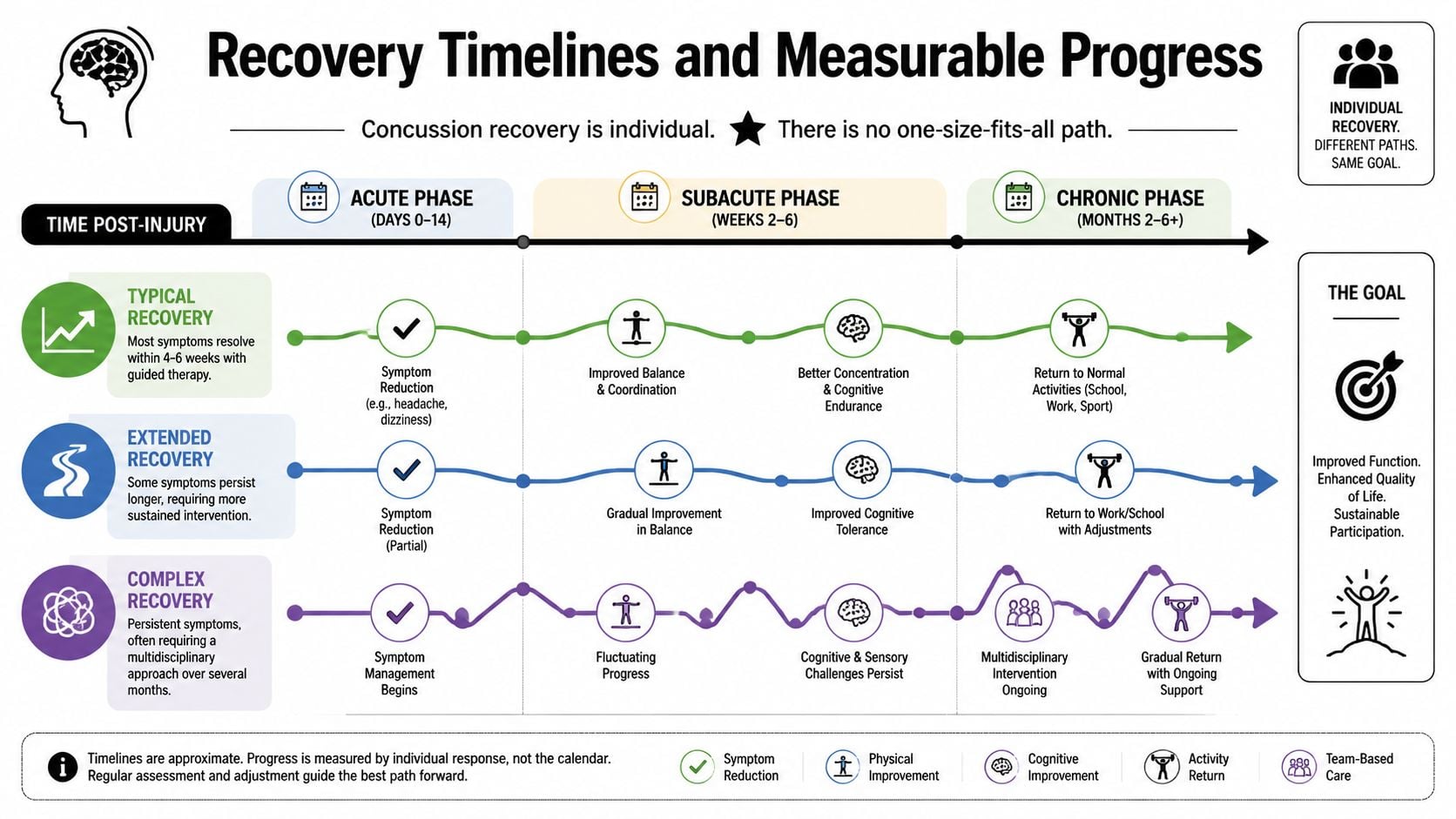
No honest clinician should promise one fixed concussion timeline. Recovery depends on the symptom pattern, the person's daily demands, and how quickly the right impairments are identified.
What matters more than a calendar is whether the right things are improving.
What progress looks like early
In the early phase, patients often notice small but meaningful wins:
- Daily tasks feel less provocative such as showering, walking the dog, or riding in the car
- Dizziness episodes settle faster after quick movement
- Headaches become more predictable instead of random and discouraging
- Screen tolerance improves enough to answer emails or read for longer stretches
These changes matter because they show the nervous system is becoming less reactive.
Early progress often looks ordinary from the outside. Fewer symptoms during errands, less fatigue after work, steadier walking in low light. Those are real gains.
What changes over the next phase
As recovery builds, treatment shifts from symptom reduction to function. The question becomes less “Can I make it through the day?” and more “Can I do what my life requires?”
A return-to-work plan for a Braintree office worker may focus on computer tolerance, commuting, and meeting stamina. A return-to-play plan for a Hanover athlete will look different. An older adult in Duxbury may need confidence on stairs, better balance outdoors, and lower fall risk.
A few common markers of measurable progress include:
| Area tracked | Example of improvement |
|---|---|
| Balance | Steadier stance and walking with less hesitation |
| Gaze stability | Less dizziness with head turns |
| Neck function | Easier movement and fewer headache triggers |
| Activity tolerance | Better tolerance for walking, biking, or daily chores |
The right timeline is the one that matches your symptoms and your goals. In concussion physical therapy on the South Shore, the best sign isn't just “feeling somewhat better.” It's seeing daily function come back in a way you can trust.
Is Concussion PT Right for You
A Scituate parent slips on an icy path, bumps their head, and tries to push through the week. A Braintree office worker gets rear-ended, then finds that 20 minutes on a laptop brings on headache and fogginess. A teen takes a hit during youth hockey and says they feel "mostly fine," but school and practice both make symptoms flare. Those are different stories, but the question is the same. Is it smart to wait, or is it time to start physical therapy?
Concussion PT is often framed around sports. On the South Shore, plenty of people who need help are not focused on getting back on the field. They need to get through a workday, drive without dizziness, walk stairs without feeling unsteady, or get back to errands and family routines without paying for it later.
PT is usually a good fit when symptoms are hanging on, daily function has changed, or balance, vision, and neck issues are all getting tangled together. That includes adults who had a "minor" injury but still cannot tolerate screens, busy stores, or quick head turns. It also includes older adults who feel less steady after a fall, even if the injury seemed mild at first.
The youth athlete
For a young athlete, the test is not just whether they want to play this weekend. The better question is whether they can handle school, reading, exercise, and sport movement without symptoms building as the day goes on.
A hockey player in Braintree may skate hard enough to look fine, then struggle with concentration in class or develop a headache that night. That pattern matters. PT can sort out exertion tolerance, balance, eye movement problems, and neck involvement so return-to-play decisions are based on function, not guesswork.
The office worker or parent
This group gets missed all the time.
A concussion does not have to come from a dramatic accident. I see people after a short fall, a low-speed crash, or a hit on a cabinet door who are still having a hard time doing normal life. If your day depends on email, meetings, commuting, cooking dinner, or keeping up with kids, mild symptoms can become a real problem fast.
PT may make sense if you notice:
- Screen sensitivity that limits work or reading
- Headaches during desk work or driving
- Dizziness in stores, crowds, or bright environments
- Fatigue after routine chores or errands
- Neck pain or stiffness that started after the injury
If you are sorting through provider options, this guide on how to choose a physical therapist can help you ask the right questions.
The older adult with dizziness or balance loss
For older adults, one head injury can change movement habits quickly. People start avoiding stairs, curbs, dog walks, or carrying laundry because they no longer trust their balance. Waiting this out is not always the safer choice, especially if there has already been a fall or a near-fall.
Concussion PT can focus on walking, turning, getting in and out of bed, looking down without losing balance, and lowering fall risk during daily tasks. That plan looks different from sports rehab, and it should.
A simple rule helps here. If symptoms are still affecting work, school, driving, exercise, sleep, or balance after the first several days, get assessed. If dizziness, headaches, or unsteadiness are getting in the way of normal life, PT is worth considering now, not just after weeks of hoping it settles down on its own.
Start Your Recovery on the South Shore Today
A common South Shore scenario looks like this. A parent in Braintree is trying to get through work after a child's hockey weekend and still cannot tolerate a full screen. An older adult in Scituate slips on an icy path, feels “off,” and starts avoiding stairs and errands because turning too quickly brings on dizziness. In both cases, waiting another week rarely brings clarity. A good evaluation does.
You do not need to keep guessing whether you should be farther along by now. If a head injury is still interfering with your job, driving, reading, exercise, sleep, or steady walking, get it checked. That matters for athletes, but it also matters for office workers, parents, retirees, and anyone trying to handle normal life without headaches or balance problems slowing them down.
Common questions
Do I need a doctor's referral?
Massachusetts patients can often start physical therapy through direct access. Some cases still benefit from coordination with your physician, especially if symptoms are more complex or you have other medical concerns.
Do you take insurance?
Coverage depends on your plan. Call the clinic before your first visit and ask about benefits, copays, and whether a referral is needed for your specific insurance.
Where can I go on the South Shore?
Peak has clinics in Braintree, Quincy, Weymouth, Cohasset, Duxbury, East Bridgewater, Hanover, Kingston, Milton, Norwell, Pembroke, Plymouth, and Scituate.
How do I book?
Choose the location that makes your week easier, then request an evaluation online. If you are not sure which clinic fits your symptoms, call first. A concussion patient with neck pain, light sensitivity, and dizziness in busy stores may need a different PT match than a teen returning to hockey.
The goal is simple. Figure out what is driving your symptoms, what can improve now, and what needs a little more time.
If you're dealing with dizziness, headaches, screen sensitivity, neck pain, or balance problems after a head injury, book an evaluation with Peak Physical Therapy and Sports Performance. Choose the South Shore clinic that's easiest for you, get a clear plan, and start moving toward normal daily life again.