You notice it in ordinary moments first. Getting out of the car in Norwell feels stiff. Stairs feel annoying instead of automatic. A walk that should clear your head turns into a quiet calculation about how far your knee will let you go before it starts talking back.
That's usually when people start searching for knee pain physical therapy Norwell MA. Not because they want a long lecture about knees, but because they want to know one thing. Can this get better, and what happens if I come in?
At our Norwell clinic, knee rehab is built around that exact question. The goal isn't to hand you a generic sheet of exercises and hope for the best. The goal is to figure out why your knee hurts, what's keeping it irritated, and what needs to change so you can get back to your South Shore routine with more confidence and less hesitation.
Table of Contents
- Is Knee Pain Limiting Your Life in Norwell
- When to See a Physical Therapist for Your Knee
- What to Expect at Your First PT Visit in Norwell
- Our Evidence-Based Knee Pain Treatment Options
- Your Recovery Timeline and Success Milestones
- Schedule Your Knee Pain Evaluation in Norwell Today
Is Knee Pain Limiting Your Life in Norwell
Your knee usually does not shut your life down all at once. It starts smaller than that. A walk on the Norris Reservation feels shorter than usual. You hesitate before kneeling to help with shin guards. You plan errands around how many times you will need to get in and out of the car. After a while, those little adjustments become your normal.
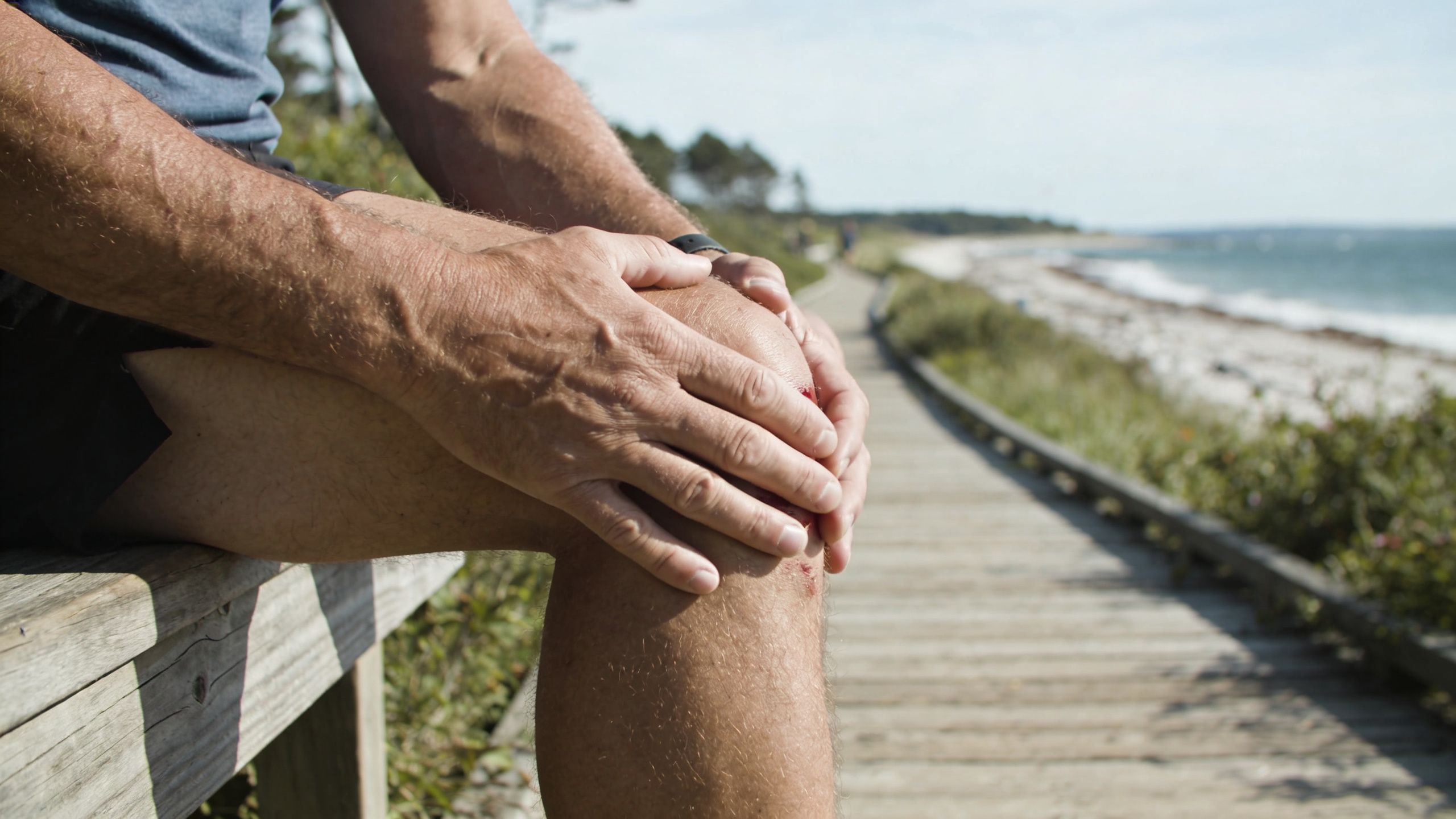
In the clinic, I often meet people who have been trying to work around the problem for weeks or months. The knee may seem manageable at first, especially if the pain comes and goes. The trouble is that your body starts adapting. You shift weight to the other side, avoid bending fully, or change how you climb stairs, squat, walk, or exercise. Over time, the knee can become more irritated, and the movement habits around it usually get harder to break.
Why local, hands-on care makes a difference
In Norwell, access to focused orthopedic rehab means you do not have to settle for generic advice like rest, stretch, and hope it passes. Peak Physical Therapy treats knee conditions, including ACL and meniscus rehab, as part of everyday clinical care. That changes the experience for patients who need someone to sort out whether the underlying issue is joint irritation, strength loss, reduced mobility, poor load tolerance, or a mix of several factors.
A knee problem rarely affects just one part of your day. It can show up during workouts, after long drives, on stairs at home, or while getting back to the field or court. If your symptoms started after a twist, pivot, or deep squat, our guide on recovering from a meniscus injury with physical therapy may help you understand what that pattern can look like.
Knee pain recovery starts to feel more straightforward once the problem is measured clearly and treated based on how your knee actually moves.
What patients usually want back
In my experience, people are rarely asking for a vague improvement in function. They want specific parts of life to feel normal again, and they want a plan that makes sense.
- Daily movement without hesitation: Walking, standing from a chair, carrying laundry, or getting through the grocery store without bracing for pain.
- Confidence on stairs and uneven ground: Important for busy homes, sidelines, sidewalks, and everyday South Shore routines.
- A safe return to exercise or sport: From gym sessions and pickup games to longer walks, runs, and organized athletics.
That is what knee pain physical therapy in Norwell MA should lead to. The goal is not only to calm symptoms down. The goal is to help you trust your knee again, understand what is driving the pain, and build a recovery plan that fits your life.
When to See a Physical Therapist for Your Knee
Some knee pain deserves more than rest and guesswork. If the pain keeps showing up in the same movements, or if your knee feels less reliable than it used to, that's usually a sign to get it assessed.
There's a big difference between temporary soreness and a knee that's starting to change how you move. The longer you push through the second one, the more often people end up building compensations into their walking, squatting, workouts, or sport.
Signs it's time to stop waiting
A physical therapy evaluation makes sense if you notice any of these:
- Pain with stairs or squatting: If going up stairs, getting into the car, or lowering into a chair consistently hurts, your knee is giving you useful information.
- Stiffness after sitting: A knee that feels locked up after driving, working at a desk, or watching a game often needs more than stretching.
- Instability or distrust: If your knee feels shaky, wobbly, or like it might give out, don't ignore that feeling.
- Swelling or post-activity flare-ups: If activity predictably leads to increased discomfort, the joint may not be tolerating load well.
- Trouble returning to sports: Whether it's youth sports coaching, recreational running, or weekend competition, hesitation matters almost as much as pain.
Why earlier care usually works better
South Shore orthopedic rehab has moved far beyond one-size-fits-all advice. South Shore Health's sports-medicine PT teams work with board-certified orthopedic clinical specialists to treat injuries ranging from sprains to ligament tears, reflecting a condition-specific model rather than generic exercise handouts, according to South Shore Health sports medicine physical therapy.
That same shift is why people do better when they come in before the knee has been irritated for months. Early care gives you a better chance to address the actual driver of the problem instead of chasing symptoms.
Practical rule: If your knee pain is changing how you walk, train, work out, or keep up with family life, it's worth getting checked.
For people who suspect twisting pain, catching, or lingering joint-line irritation, this guide on recovering from a meniscus injury with physical therapy is a helpful next step. It won't replace an exam, but it can help you recognize a pattern that shouldn't be brushed off.
What usually doesn't work
A few common approaches tend to stall people out:
| Approach | Why it falls short |
|---|---|
| Waiting for complete rest to fix it | Many knee problems improve with the right loading, not endless avoidance |
| Random online exercises | Good exercises done for the wrong problem can still aggravate the knee |
| Pushing through sharp pain | That often increases irritability without improving capacity |
If your knee keeps interrupting your week, that's enough reason to book.
What to Expect at Your First PT Visit in Norwell
Patients often arrive a little unsure of what the first visit will feel like. They're wondering if they should wear gym clothes, if they'll be pushed too hard, or if they're about to be handed a long list of exercises before anyone really understands the problem.
A good first visit feels much more practical than that. It's a conversation, a movement assessment, and a plan.
We start with your story and your goals
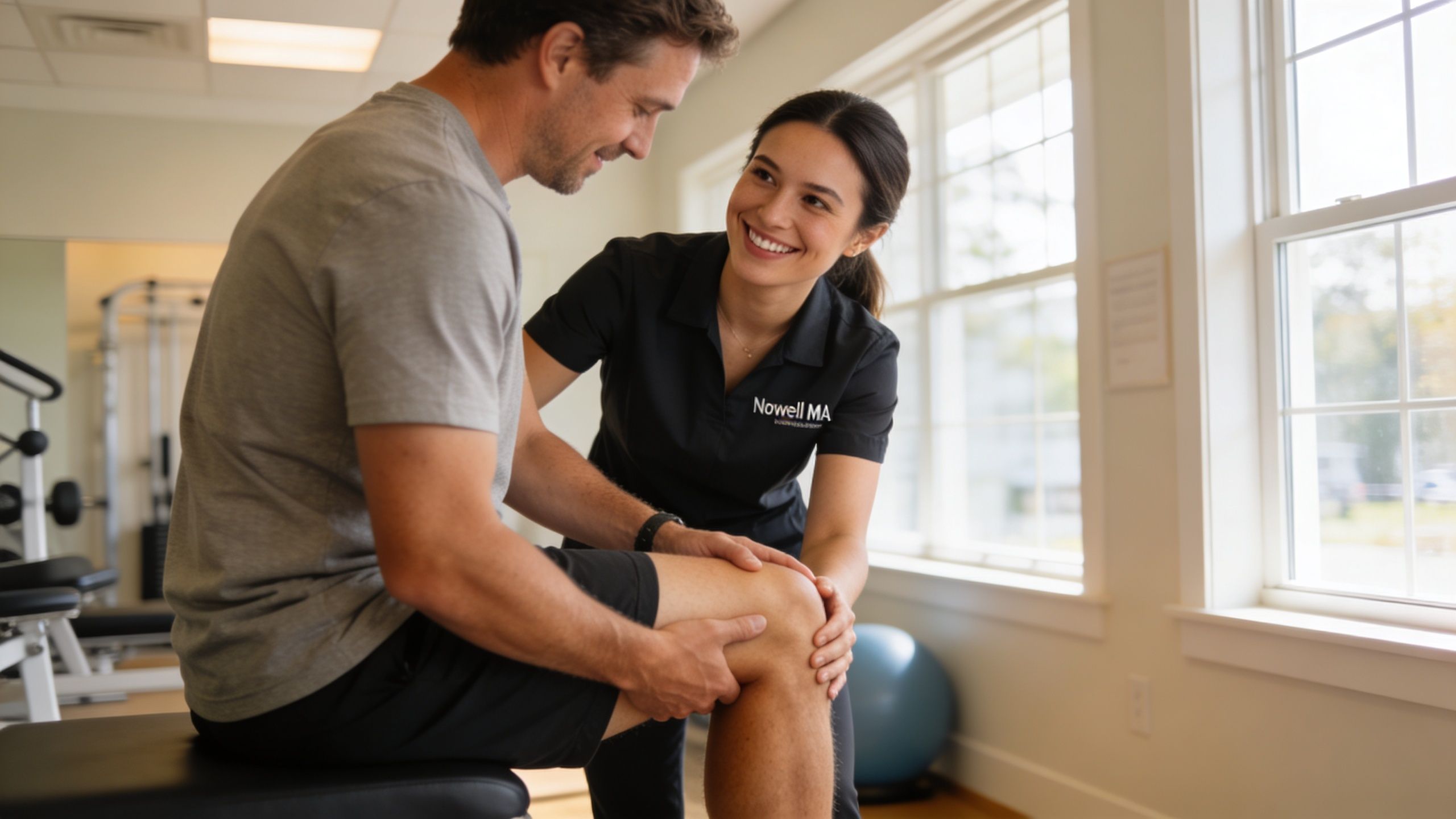
The first part is simple. We talk about what the knee is doing, what makes it worse, what makes it settle down, and what you're trying to get back to. That could be walking the dog, getting through work without limping, returning to lifting, or feeling ready for sport again.
That conversation matters because the same pain location can mean very different things depending on the pattern. Front-of-knee pain going downstairs is different from sharp twisting pain, and both are different from post-surgical stiffness or arthritis-related irritation.
Then we look at how the knee behaves
After that, we assess movement. We may watch you walk, squat, balance on one leg, step up, or move through a motion that usually reproduces your symptoms. We also check range of motion, strength, and how the knee responds to loading.
Modern knee rehab starts by identifying the cause, not just treating the symptom. Norwell clinicians use objective measures such as pain during squats, knee range of motion, and single-leg balance tests to determine whether the main issue is strength, mobility, or dynamic control, as described on Bay State Physical Therapy's knee pain overview.
The exam shouldn't feel like a pass-fail test. It should tell us what your knee tolerates today and what needs to improve next.
What you'll leave with
By the end of the visit, you should understand three things clearly:
- What seems to be driving the pain
- What movements or loads need to change right now
- What the first phase of treatment will focus on
Sometimes the first priority is calming down an irritated knee so you can move more normally. Sometimes it's restoring extension or bending. Sometimes the biggest limiter is weakness, poor landing mechanics, or loss of trust in the leg.
What not to expect
You shouldn't expect vague advice like “just strengthen it” with no explanation. You also shouldn't expect the whole plan to revolve around pain alone. Pain matters, but function matters too.
A useful first session gives you a map. You know what we found, what we're targeting, and what improvement will look like in real life.
Our Evidence-Based Knee Pain Treatment Options
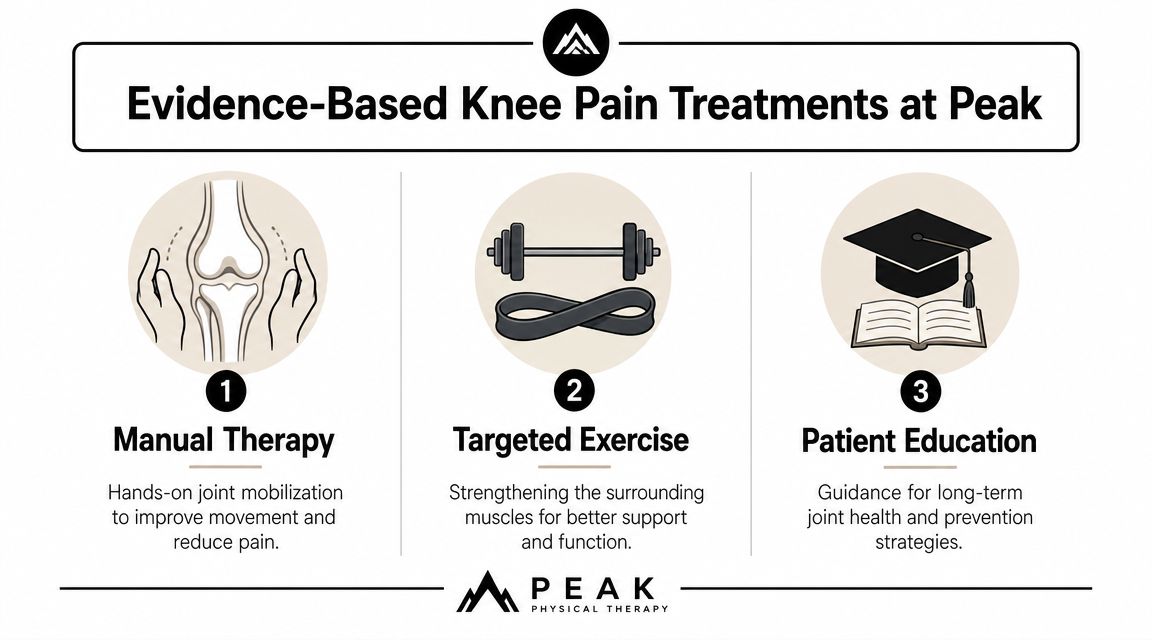
Once we know what's driving the pain, treatment gets much more specific. At this point, many people finally feel relief, not just because symptoms start changing, but because the plan makes sense.
At our Norwell clinic, treatment is built around how your knee responds to load, motion, and movement quality. Different knees need different tools. A stiff post-surgical knee doesn't need the same approach as an irritated runner's knee, and neither one should be treated like a vague “bad knee.”
Hands-on care that creates a window for progress
Manual therapy can help reduce guarding and improve mobility when the knee is too irritable for good exercise tolerance. That may include joint mobilization, soft tissue work, or techniques aimed at helping the joint move more comfortably.
Until knee pain quiets down enough to tolerate strengthening, some individuals struggle to strengthen effectively. While not the entire solution, hands-on work often opens the door to better movement.
Strengthening that matches the problem
The lasting change usually comes from progressive exercise. That often includes quadriceps work, hip strengthening, balance tasks, and movement retraining based on what the exam showed. The goal isn't to collect exercises. The goal is to build capacity where your knee is currently falling short.
For some patients, we keep loading simple at first. Sit-to-stands, step work, controlled squats, and guided lower-body strength can go a long way when the dosing is right. For people who want ideas on modifying squatting patterns outside the clinic, these squat variations for knee health can be a useful general resource alongside your treatment plan.
Advanced options when they fit
Some cases benefit from additional tools. Peak Physical Therapy and Sports Performance offers services relevant to knee rehab such as dry needling, aquatic therapy, post-surgical rehabilitation, and return-to-sport programming within its South Shore network. Those tools aren't used because they sound advanced. They're used when they solve a specific problem.
Here's how that usually breaks down:
- Dry needling: Helpful when muscle tone, guarding, or persistent soft tissue pain is making movement harder than it should be.
- Aquatic therapy: Useful when land-based loading is too uncomfortable early on and you still need to restore gait, confidence, and motion.
- Post-surgical rehab: Focused on restoring mobility, strength, swelling control, and function after procedures involving the knee.
- Return-to-sport progression: Built for athletes and active adults who need more than “it feels okay today.”
A treatment plan works best when every exercise and technique has a job. If there's no reason for it, it doesn't belong in the session.
Education that keeps the knee from flaring again
Good rehab also includes honest coaching. We'll talk about what to push, what to scale back, and how to tell the difference between normal rehab soreness and true overload. That's often the missing piece for people who've been stuck in a cycle of doing too much on good days and too little on bad ones.
If you want a deeper educational breakdown of knee rehab concepts, exercise progressions, and related conditions, visit Highbar Health. For a more local exercise-focused read, this guide to knee pain strengthening exercises can help you understand how a home program supports clinic work.
Your Recovery Timeline and Success Milestones
The question almost everyone asks is how long recovery will take. The honest answer is that it depends on what's driving the pain, how irritated the knee is, and what you need the knee to do. Walking comfortably again has a different bar than cutting, landing, and returning to sport.
That said, recovery should never feel random. A good plan uses milestones so you know whether things are moving in the right direction.
What progress looks like early on
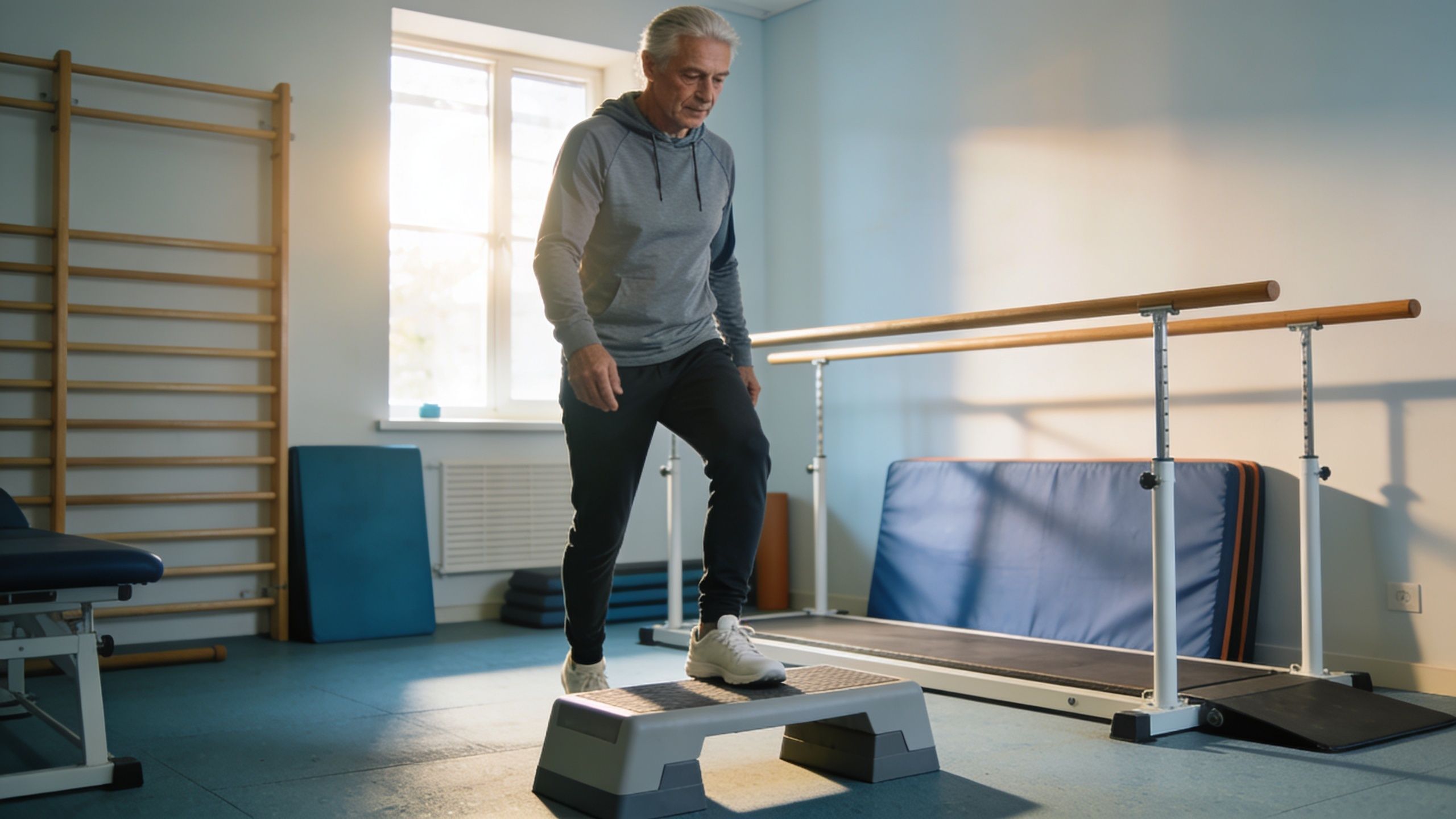
In the beginning, success is often pretty practical. Less pain getting out of a chair. Better tolerance for stairs. More knee motion. Less swelling or stiffness after activity. Better single-leg control.
For older adults with arthritis-related knee pain, milestones may center on walking, balance, and daily comfort. For active adults, the markers often shift faster toward strength, control, and confidence under higher loads.
Why we don't rely on the calendar alone
For ACL and meniscus rehab especially, modern care emphasizes criteria-based progression over simple time-based rest, with measurable milestones such as strength targets and proper landing mechanics guiding return to activity, as noted by Paula Morosino Physical Therapy.
That's an important distinction. Time matters, but it doesn't tell the whole story. A knee can be several weeks out from injury or surgery and still not be ready for running, jumping, or change of direction if the underlying function isn't there yet.
If your knee is calmer but still weak, unstable, or poorly controlled, you're not done. Durable recovery means symptoms and performance both improve.
Common milestones we use
- Pain and irritability: Is the knee less reactive during daily activity?
- Motion and mobility: Can you bend and straighten the knee more comfortably?
- Strength and symmetry: Is the involved leg doing its share again?
- Movement quality: Can you squat, step, land, or balance without obvious compensation?
- Return to life tasks: Are you back to stairs, walks, workouts, or sport-specific demands with confidence?
A recovery timeline is most useful when it's tied to these markers instead of a vague promise. That's what gives people both realism and momentum.
Schedule Your Knee Pain Evaluation in Norwell Today
If your knee keeps interrupting your day, you don't need to keep guessing. The next step is a proper evaluation with a plan built around your symptoms, your goals, and the way you live here on the South Shore.
Some people come in after a recent flare-up. Others have been dealing with the same knee for months and are tired of the cycle. Both are valid reasons to start. The key is getting clear on what your knee needs instead of hoping it eventually sorts itself out.
Getting started is simple
You can book directly through the Norwell clinic page. That gives you local scheduling information and the easiest path to setting up an appointment.
If insurance is part of what's holding you back, ask about benefits when you contact the clinic. Our team can help you understand the practical side so it feels less like one more thing to figure out.
Why booking now helps
Waiting rarely makes an ongoing knee problem easier to solve. In most cases, it gives the pain more time to shape your movement, your workouts, and your confidence. Starting now gives you a clearer answer sooner.
Bring the questions you already have. Tell us what you've tried. Tell us what you need to get back to. That first conversation is where the recovery process begins.
If you're ready to take the next step, book an appointment with Peak Physical Therapy and Sports Performance. We'll help you understand what's driving your knee pain, what your recovery should focus on, and how to get back to your South Shore routine with a plan that fits real life.