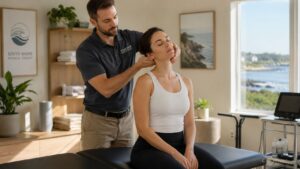
A lot of people on the South Shore wait too long to get help for dizziness. They hope it was a fluke. Maybe the room spun when they rolled over in bed. Maybe they felt pulled sideways walking on sand in Duxbury, or got queasy turning quickly to watch a grandchild at a weekend game. Then it happens again, and life starts shrinking around the symptom.
That's usually the point where vestibular therapy becomes worth talking about. If you're searching for vestibular therapy in South Shore MA, you probably don't need a dense medical lecture. You need to know whether what you're feeling is treatable, what an appointment is like, and where to go locally so getting care doesn't become another obstacle.
Table of Contents
- That Dizzy Spell Wasn't Just a Passing Moment
- Recognizing the Signs You Need Vestibular Therapy
- Your First Vestibular Therapy Appointment at Peak
- How Vestibular Therapy Helps You Recover
- Your Path to Stability and Confidence
- Convenient Vestibular Therapy Across the South Shore
- Your Questions Answered and How to Get Started
That Dizzy Spell Wasn't Just a Passing Moment
One dizzy spell can change how you move through your whole week. People start avoiding stairs, bending down, busy stores, long car rides, beach walks, and quick head turns. They stop trusting their body, which is often the hardest part.
On the South Shore, that loss of confidence shows up in ordinary places. A walk on uneven ground in Scituate feels risky. Looking up to grab something from a shelf brings on a wave of spinning. Getting on a boat in Cohasset sounds fun until motion sensitivity turns it into something you dread.
That's why vestibular rehab matters. It isn't fringe care or a last resort. It's part of a long-established rehab system on the South Shore, where local providers have treated vertigo, dizziness, vestibular balance disorders, and concussion-related issues for decades through integrated physical therapy services, as described by South Shore Health's physical therapy program.
Practical reality: Waiting to see if dizziness “just goes away” often leads people to move less, avoid more, and feel less steady.
The good news is that dizziness isn't one thing. Some cases respond to very specific positional treatment. Others improve with a structured program that retrains balance, eye movement control, and motion tolerance. What works depends on the pattern behind the symptom.
That's where a local, diagnosis-driven approach makes a difference. If the goal is getting back to beach walks, errands, workouts, driving, or rolling over in bed without that drop-in-your-stomach feeling, treatment needs to match the cause, not just the complaint.
Recognizing the Signs You Need Vestibular Therapy
Some people describe it as spinning. Others say they feel foggy, off-balance, floaty, seasick, or unstable. The wording varies. The common thread is that your system for balance and spatial orientation doesn't feel reliable.
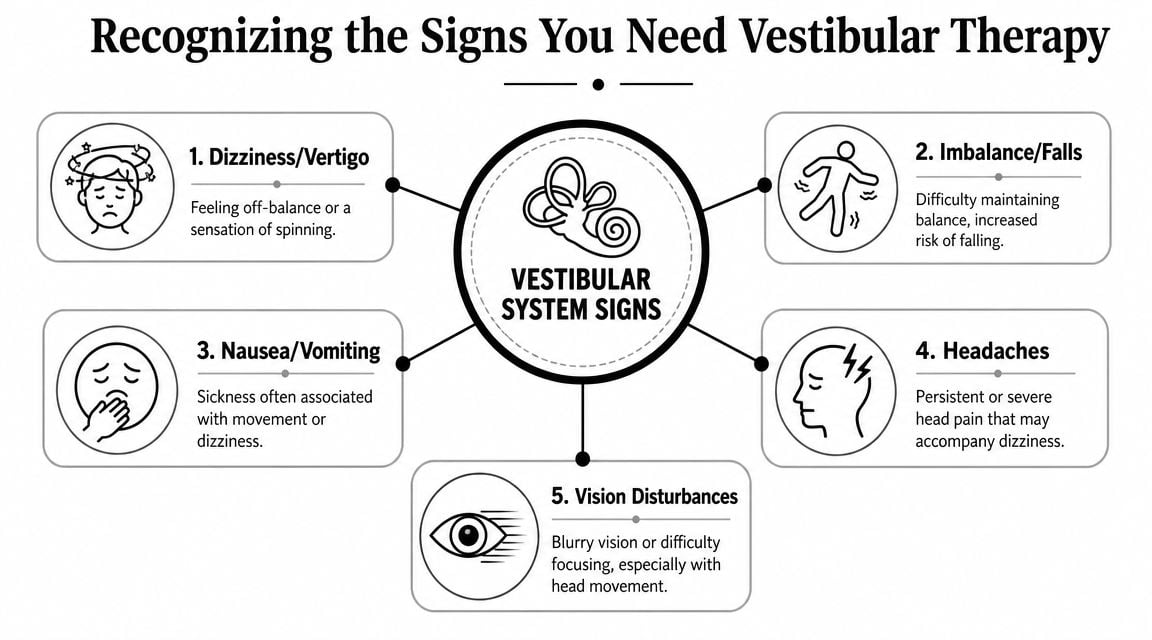
What people usually notice first
The first signs are often easy to downplay, especially if they come and go.
- Spinning with position changes can show up when you roll in bed, look up, or tip your head back in the shower.
- General dizziness may feel more like wooziness or disorientation than true vertigo.
- Imbalance while walking often becomes obvious on uneven ground, curbs, grass, or sand.
- Nausea with motion can happen in stores, in the car, or when turning quickly.
- Visual strain may feel like your eyes can't keep up when your head moves.
If you want a local read on common triggers and symptom patterns, Peak's article on what causes dizziness and vertigo is a useful starting point.
When the pattern matters
Two people can both say “I'm dizzy” and need completely different treatment. That's why timing and triggers matter so much.
A short burst of spinning tied to rolling in bed points in a different direction than lingering unsteadiness after a concussion, illness, or sudden vestibular event. One pattern is often very positional. The other may show up with head movement, busy visual environments, or walking.
If your symptoms keep returning with the same movements, that repeatable pattern is useful information, not a coincidence.
Bring details if you can remember them:
- What starts it: Rolling, bending, turning, looking up, walking in crowds
- How long it lasts: Seconds, minutes, or a more constant off-balance feeling
- What it changes: Driving, sleep, reading, exercise, shopping, stairs
- What comes with it: Nausea, headache, blurred vision, motion sensitivity
You don't need to self-diagnose before coming in. You just need to notice the pattern. That's often the fastest way to move from “something feels wrong” to a treatment plan that fits.
Your First Vestibular Therapy Appointment at Peak
The first visit is usually a relief because someone is finally watching the symptom happen in a structured way instead of asking you to describe a feeling that's hard to put into words.
What the first conversation covers
The appointment starts with your story. When did this begin. What movements trigger it. Did it start after an illness, a concussion, a long car ride, or seemingly out of nowhere. Are you avoiding certain tasks because you don't trust your balance.
That conversation matters because vestibular symptoms live in daily life, not on a checklist. A therapist wants to know whether the issue shows up getting out of bed, scanning aisles at the grocery store, walking the dog, or turning your head while driving through rotary traffic.
If you're anxious before any first healthcare visit, some of the same essential tips for your initial therapy meeting can help here too. Write down your symptoms, list your questions, and note the movements or situations that make you feel worse.
What the movement testing feels like
The exam is hands-on and observation-based. You may be asked to track a target with your eyes, turn your head, change positions, walk, stand in different balance setups, or perform specific movements that bring on your symptom pattern in a safe way.
Some tests are designed to reproduce dizziness briefly. That can sound intimidating, but it's often the clearest way to identify what's driving the problem. The goal isn't to make you miserable. The goal is to gather accurate information so treatment doesn't become guesswork.
A good first visit usually gives you three things:
- A clearer working diagnosis based on how your symptoms behave.
- A plain-language explanation of why those symptoms happen.
- A practical starting plan for treatment, activity modification, and home exercises.
A vestibular evaluation should feel specific. If every dizzy complaint gets the same exercises, the plan is too generic.
In this setting, Peak Physical Therapy and Sports Performance offers vestibular rehab as part of its local physical therapy services across the South Shore, which makes it easier to start care near home instead of adding a long drive to an already uncomfortable day.
How Vestibular Therapy Helps You Recover
Vestibular rehab works best when the treatment matches the problem. That sounds simple, but it's where many people get stuck. Not all dizziness should be treated the same way, and generic balance exercises alone often miss the underlying issue.
When repositioning is the right fix
A classic example is BPPV, a positional vertigo pattern often triggered by rolling in bed or looking up. In that case, treatment is often mechanical rather than “exercise-based” in the usual sense. According to APRPT's overview of vestibular rehabilitation, a repositionable problem like BPPV is treated with canalith-repositioning maneuvers such as the Epley, which are used to move displaced inner-ear crystals out of the semicircular canal.
When BPPV is the driver, the right maneuver can do far more than telling someone to rest, hydrate, or wait it out. Those strategies may sound harmless, but they don't correct the underlying positional problem.
A few things usually don't work well for true positional vertigo:
- Avoiding movement completely often makes people more fearful without fixing the trigger.
- Random online exercises can be the wrong match if the diagnosis is off.
- Only relying on medication may dull symptoms while the mechanical issue remains.
When the brain needs retraining
Other vestibular problems need a different path. If symptoms come from vestibular neuritis, post-concussion dizziness, unilateral vestibular loss, or a broader hypofunction pattern, treatment often focuses on adaptation and compensation.
That typically includes:
- Gaze stabilization, which helps your eyes and inner ear coordinate better during head movement
- Balance work, often progressed across different surfaces and positions
- Visual tracking tasks, which can reduce discomfort in motion-heavy or visually busy settings
- Habituation, where repeated, controlled exposure helps lower motion sensitivity over time
For patients dealing with lingering imbalance, the body often needs more than “be careful.” It needs practice. Structured, repeated exposure teaches the nervous system to interpret movement more accurately and respond with less alarm.
Recovery often starts when patients stop chasing a perfect stillness and begin rebuilding tolerance to normal movement.
If you're looking for a local care path, Peak's page on balance and gait disorder treatment gives a useful overview of how balance-focused physical therapy fits into broader rehab.
For a deeper educational look at vestibular anatomy and recovery concepts, Highbar Health has additional condition resources at highbarhealth.com.
Your Path to Stability and Confidence
People usually ask one question early on. “Will this get better?” In many cases, yes. Not always overnight, and not always in a straight line, but vestibular rehab has a strong track record when the diagnosis is clear and treatment is targeted.

What progress often feels like
Progress is usually practical before it feels dramatic. You notice you can turn your head while walking without drifting. You get out of bed with less hesitation. The grocery store doesn't feel as visually overwhelming. You stop bracing every time you bend over.
For many people, success looks local and personal:
- Walking on the beach without feeling pulled off balance
- Going out on the water with less motion-triggered nausea
- Playing with grandkids without avoiding quick turns or floor transfers
- Driving around town without that uneasy, floaty feeling at intersections
Spaulding Rehabilitation's Hanover Balance and Vestibular Center describes vestibular rehabilitation as a high-success intervention, with success rates as high as 90% using approaches such as repositioning maneuvers, visual system training, and balance activities, according to their balance and vestibular program page.
Why consistency matters more than intensity
Most vestibular rehab isn't about pushing harder. It's about repeating the right dose of the right movement. Too little exposure may not move the system forward. Too much can flare symptoms and make people want to quit.
That's especially important when dizziness starts feeding anxiety. Many people begin to fear the symptom itself. Their body tenses up, they avoid movement, and ordinary sensations start to feel threatening. If that sounds familiar, it can help to learn about anxiety and panic attacks so you can better separate vestibular symptoms from the stress response that sometimes builds around them.
A simple way to judge progress is to ask:
| Daily task | Early on | Later in recovery |
|---|---|---|
| Rolling in bed | Avoided or symptomatic | More normal and less guarded |
| Walking outside | Careful and short | More confident and less effortful |
| Busy environments | Overwhelming | More manageable |
| Head turns | Provoking | Better tolerated |
For older adults who want to keep building steadiness between visits, Peak's guide to the best balance exercises for seniors offers safe ideas that fit home routines.
Convenient Vestibular Therapy Across the South Shore
When you're dizzy, convenience isn't a luxury. It changes whether you follow through. A short drive is easier to manage when car motion bothers you, when quick turns make you uneasy, or when you're already nervous about leaving the house.

Care close to home changes follow-through
Local access matters for another reason too. Vestibular recovery often involves progression. You come in, your therapist adjusts the plan, symptoms change, and the next step gets a little more specific. That process is easier when appointments fit normal life.
On the South Shore, that can mean getting care near work, near school pickup, or near the town where you already run errands. It reduces friction, which matters more than commonly understood.
The best plan on paper won't help if getting to treatment feels harder than the symptom itself.
South Shore towns served
For people searching for vestibular therapy South Shore MA, having multiple clinic options across the region makes care more practical. Peak serves patients in:
- Braintree
- Quincy
- Weymouth
- Cohasset
- Duxbury
- East Bridgewater
- Hanover
- Kingston
- Milton
- Norwell
- Pembroke
- Plymouth
- Scituate
That kind of spread is useful whether your dizziness is new, has lingered for a while, or is part of a broader recovery after concussion or balance decline. The closer care is to home, the easier it is to stay consistent and keep momentum.
For many South Shore families, that's the difference between finally addressing the problem and continuing to work around it.
Your Questions Answered and How to Get Started
By the time many are ready to book, the clinical part makes sense. The remaining barriers are usually logistical.
Common questions people ask before booking
Do I need a doctor's referral?
That depends on your insurance plan and your situation. The easiest move is to call the clinic and ask before scheduling. The front desk can usually help you sort out what's needed.
Will insurance cover vestibular therapy?
Coverage varies by plan. It's worth verifying benefits up front so you know what to expect. Ask about visits, copays, and whether a referral or authorization applies.
What should I wear?
Wear comfortable clothes and supportive shoes. You may be walking, turning, changing positions, and doing balance testing. Clothing that lets you move easily makes the visit smoother.
What if my symptoms are severe?
Tell the clinic when you book. That helps the staff plan appropriately and advise you on anything helpful before arrival, including whether someone should drive you.
What if dizziness is affecting my ability to work long-term?
If your situation has broader functional or disability questions, it may help to review general information on SSDI qualifying conditions so you understand the bigger picture. That isn't a treatment resource, but it can be useful for people dealing with complex, longer-lasting limitations.
What to do next
If dizziness, vertigo, motion sensitivity, or imbalance is changing how you move through your day, don't wait for it to become your new normal. Start with an evaluation. A good vestibular assessment can tell you whether the problem looks positional, compensation-based, concussion-related, or part of a broader balance issue.
Write down your main triggers before you call. Think about when it happens, how long it lasts, and what you've stopped doing because of it. Those details help the first visit move faster and more clearly.
You don't need to have the right terminology. You just need to describe what you feel and what it's keeping you from doing.
If you're ready to get back to steady walks, easier head turns, and more confidence in daily life, book an evaluation with Peak Physical Therapy and Sports Performance. With clinics across the South Shore, it's easier to start care close to home and take the first step toward feeling stable again.