


A lot of people wait too long with ankle pain when walking because the story sounds small. You stepped off a curb awkwardly months ago. You rolled your ankle during a pickup game. You tweaked it on an icy Massachusetts sidewalk and figured it would settle down on its own.
Then life keeps asking you to walk anyway.
You feel it on the commute into Boston, crossing uneven pavement, carrying groceries, chasing kids through the yard, or trying to enjoy a South Shore path without thinking about every step. The pain may be sharp, stiff, achy, or strangely unstable. Some days it is barely there. Other days it flares for no obvious reason.
That pattern is frustrating because it makes people doubt themselves. If the ankle is not badly swollen anymore, why does it still hurt? If you can walk, why does every walk feel like a risk? And if the pain started after someone else caused the injury, practical questions can pile on too, including how much your pain and suffering might be worth while you are also trying to figure out what recovery should look like.
That Sharp Pain in Your Ankle Is More Than Just an Annoyance
Ankle pain changes the way you move before many realize it. You shorten your stride. You turn your foot out. You avoid hills, stairs, sand, and uneven ground. You start planning your day around what your ankle can tolerate.
As a physical therapist, I see this often in Massachusetts patients who are not training for anything dramatic. They are trying to walk the dog, get through a school drop-off, make it from the train to the office, or keep up on a weekend in Plymouth, Quincy, or Duxbury. Routine movement becomes mentally tiring when every step comes with a question mark.
The encouraging part is that ankle pain when walking usually follows patterns. Once you identify the likely driver, treatment becomes much clearer. The ankle might be irritated from a recent sprain, overloaded from a tendon problem, stiff from arthritis, or reacting to a bone stress injury. In many cases, the key issue is not just pain. It is a loss of joint control, balance, and confidence.
Key takeaway: Ongoing ankle pain is not something you have to tolerate. A clear diagnosis and the right rehabilitation plan can change how the joint feels and how safely you move on it.
Good care starts by matching the symptoms to the mechanics. Where the pain sits, when it appears in your step, what makes it worse, and whether the ankle feels weak or unstable all matter. Those details tell us far more than “my ankle hurts.”
Why Does My Ankle Hurt When I Walk? Common Causes Explained
The ankle is a small joint that handles a lot. Every step asks it to accept body weight, adapt to the ground, stay stable, and help push you forward. If any structure in that system gets irritated, walking exposes it quickly.

Ankle sprain and lingering ligament pain
The most common cause is a sprain. Ankle sprains are the most frequent reason for ankle pain during walking. They usually happen when the foot inverts beyond its normal range, stretching or tearing ligaments such as the ATFL. If a Grade II or III sprain is not managed well, it can progress to chronic ankle instability in 20 to 40% of cases, and pain may show up during walking when ground forces reach 1.5 to 2 times body weight (OSI Fort Lauderdale).
A useful way to think about a ligament is a rope that has been frayed. It may still connect the joint, but it no longer controls motion as cleanly. During walking, that can feel like:
- Pain with push-off: The ankle aches or catches as you move over the foot.
- A wobbly step: You do not trust the joint on uneven ground.
- A delayed reaction: The ankle feels slow to respond if you misstep.
If you are unsure whether the injury is a sprain or something more serious, this guide on how to tell the difference between an ankle sprain and a break is a useful starting point.
Achilles tendon irritation
When pain sits more toward the back of the ankle or just above the heel, the Achilles tendon is often involved. Tendons do not like sudden spikes in load. A jump in walking volume, hill work, running, or even a long day in unsupportive shoes can irritate them.
This pain often shows up as stiffness at the start of a walk and may ease slightly once you warm up, then return later. That pattern tricks many people into thinking the problem is improving when the tissue is being repeatedly irritated.
What helps is gradual loading. What usually does not help is complete rest for too long, followed by a sudden return to full activity.
Arthritis and joint stiffness
Arthritic ankle pain tends to feel deeper and stiffer. The first few steps after sitting can be the worst. Cold weather can make it more noticeable, which many people in Massachusetts recognize quickly in winter.
The joint may not glide well, so walking becomes less smooth. Instead of one sharp pain, people often describe a grinding, pinching, or blocked feeling. The trade-off here is important. Gentle movement often helps. Too much impact or prolonged walking on a stiff ankle usually does not.
Stress fracture and bone pain
A stress fracture is different from a typical soft tissue problem. The pain is usually more localized and tends to worsen with weight-bearing. People often point to one small spot and say, “It hurts right there.”
Common clues include:
- Pain that builds with activity
- Tenderness in a precise area
- Discomfort that does not match a simple twist or strain
That kind of pattern needs medical attention sooner rather than later. Walking through it can make the situation worse.
Less obvious mechanical causes
Not every painful ankle is freshly injured. Sometimes the problem is front-of-ankle pinching, tendon overload on the inside or outside of the joint, or altered foot mechanics that keep transferring stress to the same tissues.
Tip: If your ankle pain changes the way you walk, the walking pattern itself can become part of the problem. Limping, turning the foot out, or avoiding push-off may protect the ankle briefly, but those habits often keep symptoms going.
From a Simple Sprain to Chronic Pain The Unseen Progression
A lot of chronic ankle problems begin with a very ordinary sentence: “I rolled it a while ago, but it wasn’t that bad.”
That is exactly why these cases get missed. The swelling comes down. You can walk. You get back to work, sports, errands, and stairs. But the ankle never quite feels normal again.
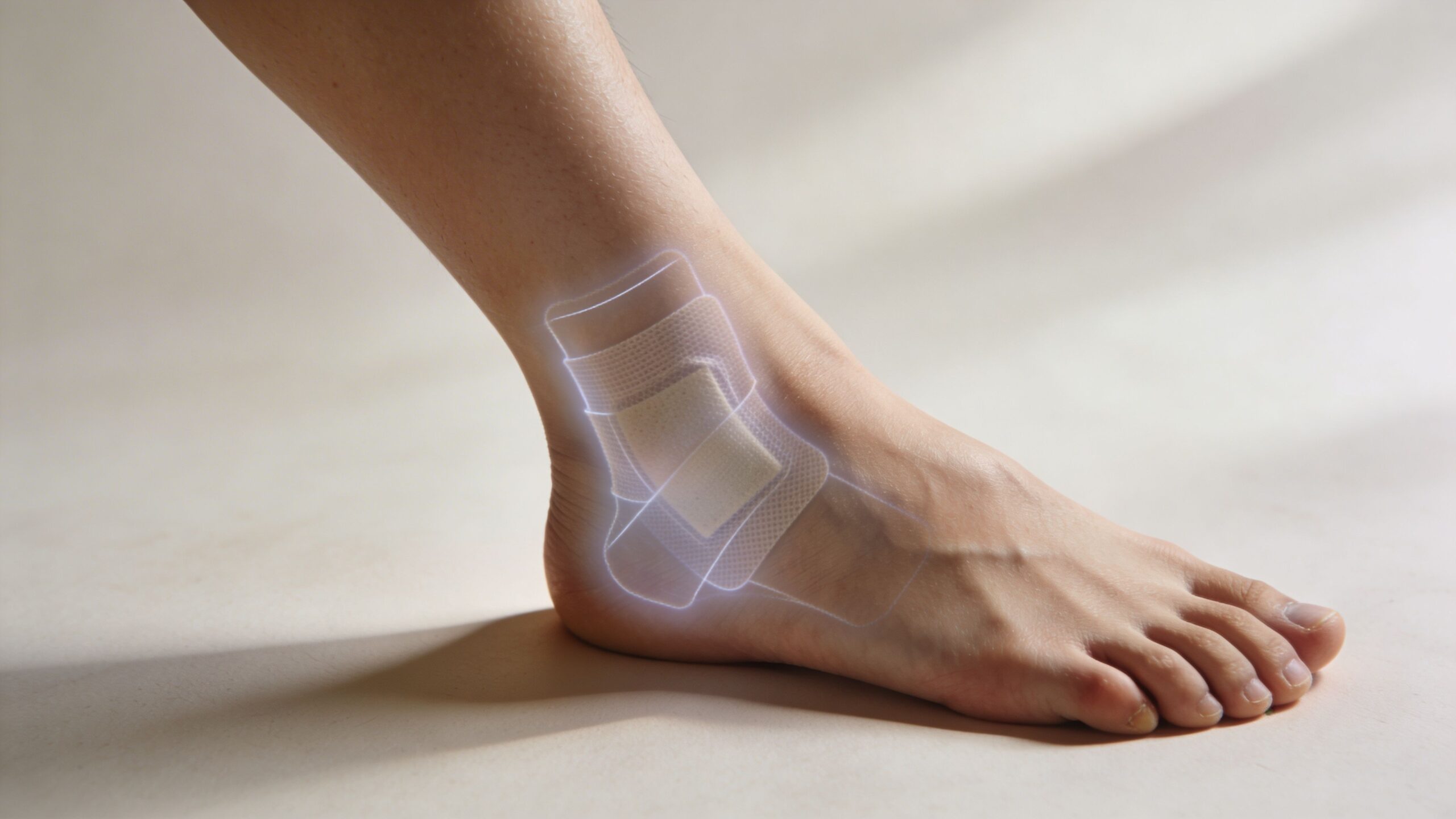
What chronic ankle instability feels like
This pattern often develops into chronic ankle instability, or CAI. It is a common result of past sprains, and ankle pain during walking is present in 50% to 79% of individuals with CAI. Studies also found that 8% experience pain specifically from walking. In the United States, about 23,000 ankle injuries occur daily, and without proper rehabilitation, many can move into this chronic state (PMC).
CAI is not just pain. It is also the feeling that the ankle could give way, especially when you least want it to. Patients describe it as unreliable.
On Massachusetts terrain, that often shows up in familiar places:
- Cobblestones and uneven brick sidewalks: The ankle feels hesitant and loose.
- Sandy beaches and coastal paths: The shifting surface exposes weakness fast.
- Winter slush and hidden curb edges: Small corrections become painful corrections.
Why rest stops working
Rest and ice can help early symptoms. They do much less once the problem becomes one of movement control.
After a sprain, the ankle can lose more than simple strength. It can lose timing. The muscles that protect the joint may react late. Your sense of joint position can become less accurate. Balance gets worse in subtle ways. Then every uneven step becomes a bigger challenge than it should be.
That is why people often say, “It hurts for no reason.” There usually is a reason. The trigger is just small enough that it goes unnoticed.
The missing piece is often rehab, not toughness
The common mistake is trying to manage a chronic instability problem like a fresh injury. People keep cycling through rest, a brace, and activity as tolerated. That can calm a flare-up, but it rarely rebuilds the underlying control that the ankle needs.
A better model is to think in layers:
| Problem layer | What you notice | What usually helps |
|—|—|
| Pain and swelling | Soreness, stiffness, tenderness | Short-term symptom control |
| Mobility loss | Tightness, blocked motion, limited squat or stairs | Joint and soft tissue work |
| Strength deficit | Weak push-off, fatigue, hesitancy | Progressive strengthening |
| Balance and control deficit | Giving way, unsteadiness, fear on uneven ground | Proprioception and gait training |
Clinical insight: If an ankle still feels unsteady months after a sprain, the issue is rarely solved by waiting longer. The joint usually needs targeted retraining.
This is the point where people often feel relieved, not discouraged. The pain makes more sense. It did not linger because you were careless or because your body is broken. It lingered because the ankle never fully regained the mobility, strength, and control that walking requires.
When to Seek Help Getting a Diagnosis for Your Ankle Pain
Not every ankle problem needs urgent care, but some do. The challenge is knowing which is which.
Ankle sprains are one of the most common musculoskeletal injuries in the U.S., with an incidence rate of 2.15 per 1,000 person-years. The rate peaks in teens ages 15 to 19, and basketball is the leading sports cause. The volume of roughly 23,000 ankle injuries daily shows why prompt diagnosis matters if you want to avoid longer-term problems (Waterman epidemiology review).
Signs you should get medical attention quickly
Some symptoms deserve immediate evaluation because they may point to fracture or a more significant injury.
Watch for these:
- You cannot take four steps: Inability to bear weight for four steps is one of the key practical triggers used in the Ottawa Ankle Rules.
- There is visible deformity: If the joint looks out of place, do not try to push through it.
- Swelling is severe or rapidly worsening: Especially after a clear twist, fall, or sports injury.
- Pain is sharply localized on bone: This raises concern for fracture or stress injury.
- You have numbness, significant color change, or unusual coldness in the foot: That warrants urgent assessment.
Signs a physical therapy evaluation makes sense
Many people do not need the emergency room. They do need a careful musculoskeletal exam.
A physical therapy evaluation is a good next step when:
- Pain lingers beyond the expected few days
- Walking still feels off even if swelling improved
- The ankle keeps giving way
- You avoid activity because you do not trust the joint
- Symptoms recur with hills, stairs, sand, sports, or long workdays
If you want a sense of the conditions commonly treated in outpatient rehab, this overview of hip, knee, foot and ankle pain relief gives a practical picture.
What a good diagnostic visit should include
A useful ankle assessment should not stop at “does it hurt here?” It should answer why the pain shows up when you walk.
That usually includes:
History of the injury or onset
Old sprains, changes in footwear, training spikes, and work demands all matter.Observation of gait
A limp, shortened stance time, or lack of push-off often reveals more than a resting exam.Range of motion testing
Limited ankle motion can create pain even if the injured tissue itself is not severely damaged anymore.Strength testing
Weak calf, foot, or lateral ankle muscles often leave the joint underprotected.Balance and control assessment
Single-leg stance, step-down tasks, and surface challenges can uncover hidden instability.
Good diagnosis is not about labeling the ankle. It is about identifying the movement problem that keeps reproducing the pain.
Immediate Relief Self-Care Strategies You Can Start Today
If your ankle pain when walking is recent and not showing urgent red flags, early self-care can calm symptoms and protect healing. The biggest mistake I see is swinging between two extremes. People either do nothing but rest, or they test the ankle too aggressively because they are tired of slowing down.
A better approach is PEACE & LOVE. It gives you a practical way to handle the first phase of recovery and then transition into safe movement.
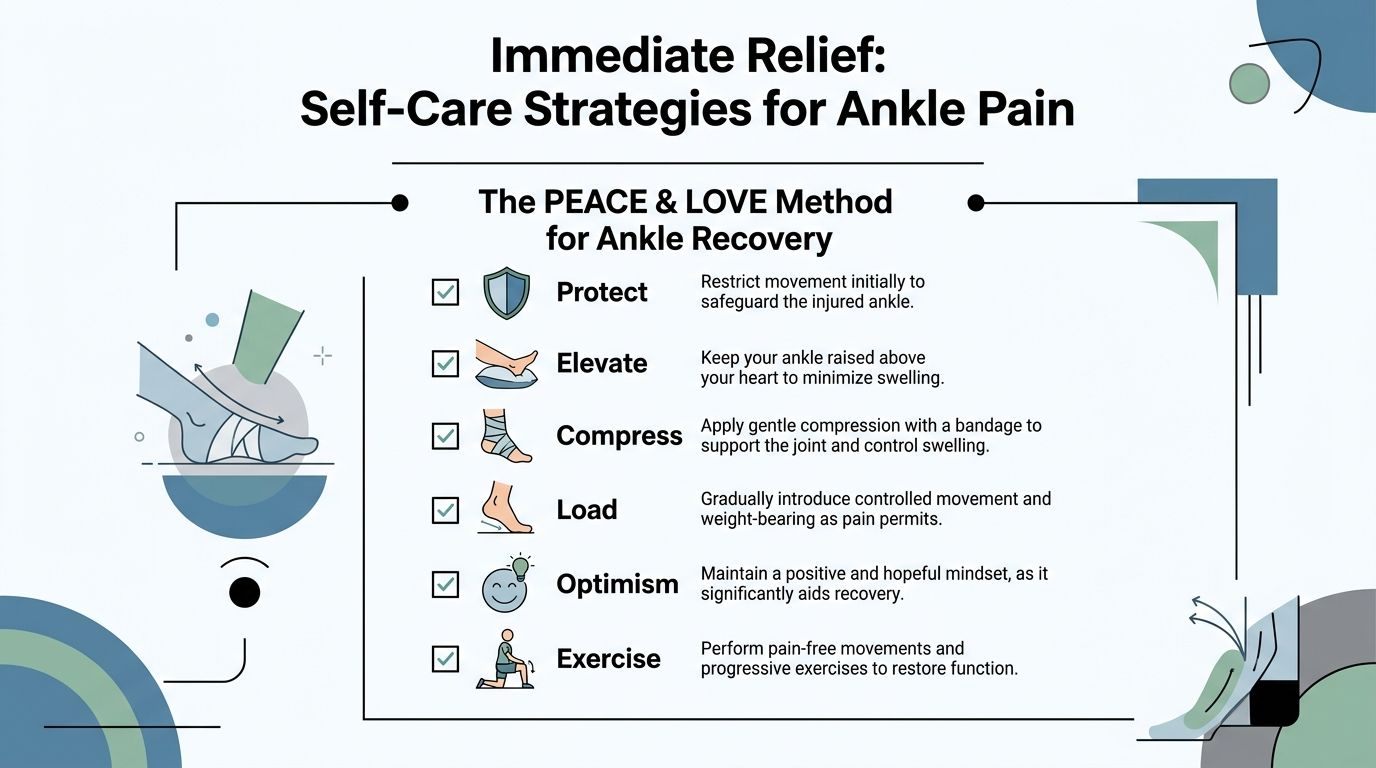
What to do in the first phase
In the early period after an ankle injury, calm things down without completely shutting the joint off.
- Protect: Reduce activities that clearly aggravate the ankle. That may mean shorter walks, fewer stairs, or temporary support.
- Elevate: Prop the leg up when swelling is active.
- Compress: Use an elastic wrap or compression sleeve if it feels supportive and comfortable.
- Educate yourself: Pain does not always mean damage is worsening, but sharp increases after activity are useful feedback.
Some people still reach immediately for complete immobilization and prolonged bed rest. That usually backfires unless a clinician has told you the injury needs strict protection.
What to do as pain settles
As symptoms ease, the focus shifts. The ankle needs load to recover, but the load has to be the right amount.
Try this:
- Load gradually: Start with short, controlled walking on even ground.
- Keep circulation up: Gentle movement often helps stiffness and swelling more than total inactivity.
- Add simple exercises: Ankle pumps, alphabet motions, and pain-free calf work are common starting points.
- Choose stable footwear: A supportive sneaker is usually a better choice than flat sandals, unsupportive slip-ons, or worn-out shoes.
Practical tip: If your ankle is more painful or more swollen later the same day, the activity was probably too much. Scale back, do not stop everything.
What usually works and what usually does not
Here is the trade-off in simple terms.
| Often helpful | Often unhelpful |
|---|---|
| Relative rest | Total rest for too long |
| Compression and support | Testing the ankle repeatedly to “see if it’s better” |
| Short, frequent movement | One long walk because it felt okay at the start |
| Supportive shoes | Barefoot walking on hard floors during a flare-up |
If the ankle is not trending in the right direction, self-care should be a bridge to professional evaluation, not a substitute for it.
The Path to Recovery Evidence-Based Physical Therapy Treatments
When ankle pain has been hanging around, the goal of treatment changes. It is no longer just “get the swelling down.” The primary goal is to restore a joint that moves well, accepts load, and feels trustworthy again.
That is where physical therapy is most useful. Good ankle rehab is specific. It addresses the structures involved, the way you walk, and the reason symptoms keep returning.

Hands-on care to restore motion
Many painful ankles are also stiff ankles. When the joint does not glide well, the body finds a workaround. That compensation can irritate other tissues quickly.
Hands-on treatment may include joint mobilization and soft tissue work to improve motion and reduce guarding. For patients who want a plain-language overview, this article on manual physical therapy explains the role of hands-on treatment well.
Manual treatment is not the whole answer, but it often creates the window needed for better walking mechanics and more effective exercise.
Strength work that transfers to walking
Ankle rehab should not stop at generic band exercises. Those can help, but they are only part of the picture.
Useful strengthening often includes:
- Calf strengthening: Walking depends heavily on push-off strength.
- Lateral ankle work: The muscles on the outside of the ankle help control inversion and sudden shifts.
- Foot and hip strengthening: If the foot collapses or the hip fails to control the leg, the ankle takes extra stress.
The trade-off is simple. Exercises that are too easy do not rebuild enough capacity. Exercises that are too painful create guarding and poor mechanics. The right program sits between those extremes and progresses over time.
Neuromuscular retraining and balance work
This is the part many people skip on their own, and it is often the part that matters most after a sprain.
Balance work retrains the ankle to react to real life. That means controlled single-leg tasks, surface changes, step patterns, and gait work. The point is not to make you good at standing still on one leg. The point is to rebuild fast, accurate control so the ankle can handle sidewalks, curbs, trails, gym floors, and quick direction changes.
Key takeaway: Pain relief matters, but lasting recovery usually depends on restoring confidence, timing, and control.
Options for older adults and persistent cases
Some patients need more than a basic exercise sheet. This is especially true for older adults with long-standing symptoms, subtle malalignment, or reduced balance.
For that group, advanced approaches can matter. In older adults, 35% of “idiopathic” ankle pain may stem from subtle joint malalignment, and emerging trials reported that blood flow restriction training can boost ankle strength 30% faster in seniors, helping address a 25% reduction in proprioception that raises fall risk (Orthopedic NJ).
Not every patient needs BFR, dry needling, aquatic therapy, or a highly specific gait retraining program. But when basic care stalls, those tools can become useful because they target the reason progress has slowed.
What effective PT does better than generic advice
Generic advice says rest, stretch, and be careful. That is fine for the first few days.
Evidence-based physical therapy does more:
| Generic advice | Skilled rehab approach |
|---|---|
| “Take it easy” | Defines what load is safe and what load is too much |
| “Do ankle exercises” | Selects exercises based on your deficits |
| “Wear supportive shoes” | Connects footwear to your gait and symptoms |
| “Give it time” | Measures progress and changes the plan if needed |
That difference matters when the ankle has become a recurring problem instead of a one-time injury.
Building a Resilient Ankle Home Exercises and Prevention
Clinic work matters, but your ankle also gets better between visits. The goal at home is not to do a huge routine. It is to build consistency.
For many, a small number of well-chosen exercises works better than a long list done once.
A simple progression you can start with
These are common starting options when pain is manageable and weight-bearing is tolerated.
Ankle alphabet
Sit with the leg supported and trace the alphabet with your foot. This helps restore motion without a lot of load.Calf raises
Hold onto a counter and rise up slowly. Start with both feet. Progress to one leg when control improves.Single-leg balance
Stand near a support surface and practice holding one leg. The goal is steady control, not wobbling through it.Step control practice
Use a low step and focus on smooth lowering and controlled push-off.
If you are working on the way pain has changed your walking pattern, this guide on how to improve gait can help you understand the larger movement picture.
How to judge whether an exercise is helping
A good home program should challenge the ankle without provoking a clear setback.
Use these simple rules:
- Mild effort is fine: Some muscle fatigue or mild discomfort can be acceptable.
- Sharp pain is not a green light: That usually means the exercise is too aggressive or not the right fit.
- Later response matters: If the ankle becomes distinctly more sore or swollen afterward, lower the dosage.
Tip: Progression beats intensity. A small amount done well and done regularly is more useful than one ambitious workout that flares the ankle for two days.
Prevention for Massachusetts routines and seasons
Preventing ankle pain when walking is not only about sports. Daily life in Massachusetts gives ankles a lot to deal with.
Consider these habits:
- For winter sidewalks: Wear shoes or boots with reliable traction and enough support that your foot is not sliding inside the shoe.
- For runners: Increase mileage, speed, and hill work gradually. A sudden jump in demand is hard on ankles and Achilles tendons.
- For beach and trail walkers: Sand, roots, and uneven surfaces challenge stability more than pavement. Build tolerance slowly.
- For court and field athletes: Warm up before sudden cutting and jumping. Ankles do not love going from sitting to explosive movement.
- For commuters and busy parents: Rotate out shoes that are worn down. Old footwear changes load distribution even if it still feels familiar.
The bigger prevention point
Resilient ankles come from three things working together:
| Piece | Why it matters |
|---|---|
| Mobility | Lets the joint move without pinching or compensating |
| Strength | Helps the ankle tolerate body weight and push-off |
| Balance and control | Protects the joint when surfaces or direction change |
If one of those pieces is missing, the ankle can remain the weak link even after pain improves.
Your Next Step to Pain-Free Walking in Massachusetts
If your ankle pain when walking has been lingering, recurring, or changing how you move, there is usually a reason. It is often not just inflammation. It is a mix of mobility loss, strength deficit, and reduced trust in the joint.
That is good news because those problems are treatable.
People do best when they stop guessing and get specific. A clear exam can tell you whether you are dealing with a recent sprain that needs proper loading, a chronic instability pattern, a tendon issue, joint stiffness, or something that should be referred for further medical workup. Once that is clear, recovery stops feeling random.
For many people across the South Shore, convenience matters too. If you are trying to fit care around work, school, family, or commuting, access makes follow-through easier. Options across communities like Quincy, Braintree, Hanover, and Plymouth can make it more realistic to complete a plan rather than starting and stopping.
Frequently Asked Questions About Ankle Pain Treatment
| Question | Answer |
|---|---|
| Do I need a referral for physical therapy in Massachusetts? | In many cases, Massachusetts patients can start physical therapy through Direct Access. Insurance rules can vary, so it is smart to verify your specific plan. |
| How long does ankle recovery take? | It depends on the cause, how long the pain has been present, and whether instability or gait changes are involved. A mild problem may improve quickly, while chronic issues usually need a more structured progression. |
| Should I keep walking if my ankle hurts? | Sometimes yes, but not always at the same volume or intensity. Shorter, controlled walking on even ground is often better than pushing through long walks that cause a flare-up. |
| What should I wear if my ankle hurts when walking? | Usually a supportive, stable shoe. During a flare-up, flat unsupportive footwear often makes symptoms worse. |
| Can old ankle sprains still cause pain years later? | Yes. A past sprain can leave behind stiffness, weakness, balance deficits, or chronic instability that only becomes obvious during walking, stairs, uneven ground, or sports. |
| What happens at the first PT visit? | Expect questions about your history, a walking assessment, range of motion and strength testing, and a plan built around the factors driving your symptoms. |
You do not need to wait until the pain becomes constant or severe. If walking is starting to feel like a negotiation, that is enough reason to get it assessed.
If ankle pain is limiting your walks, workouts, commute, or day-to-day confidence, Peak Physical Therapy and Sports Performance offers patient-centered care across Massachusetts’ South Shore, with convenient clinics in Braintree, Quincy, Weymouth, Cohasset, Duxbury, East Bridgewater, Hanover, Kingston, Milton, Norwell, Pembroke, Plymouth, and Scituate. Their licensed physical therapists provide personalized evaluations, evidence-based treatment, and clear plans to help you move comfortably and confidently again.